
Margaret Leroy
Author of The Soldier's Wife
About the Author
Image credit: photo credit: niki gibbs
Works by Margaret Leroy
Tagged
Common Knowledge
- Birthdate
- unknown
- Gender
- female
- Education
- University of Oxford
- Nationality
- UK
- Associated Place (for map)
- UK
Members
Reviews

A beautifully moving and lushly descriptive novel about the expectations and disappointments of marriage. Living in a home in which their mother was repeatedly abused by her husband, their father, Virginia and Ursula coped differently. Ginnie, the more realistic and practical of the 2 girls becomes a child psychologist helping abused children while Ursula works in the field of decorative fantasy, continuing in a way to 'hide' from the ugliness of life.
Ginnie, now in her mid-forties feels a show more sense of loss as her 2 teen daughters don't need her as they head into adulthood. They share few confidences. And her husband has mostly absented himself by focusing exclusively on completing his novel. They haven't slept together in years!. Additionally her mother is aging and experiencing health issues.
So when she meets Will Ginnie doesn't think rationally; her emotions kick in. Will is under stress as well from his job as a police officer, and because his son suffers from Aspergers Syndrome. They easily make poor choices.
It all comes apart when a young woman is found dead near the Thames river. Ginnie believes she may have witnessed something relevant to the case. But Will discourages her from coming forward; he doesn't want their affair to become known.
Excellent plot, writing, and timing. Thoughtful, compassionate and smart. Leroy captures the realities of a failing marriage so well showing how its more common than we'd like to believe. show less
Ginnie, now in her mid-forties feels a show more sense of loss as her 2 teen daughters don't need her as they head into adulthood. They share few confidences. And her husband has mostly absented himself by focusing exclusively on completing his novel. They haven't slept together in years!. Additionally her mother is aging and experiencing health issues.
So when she meets Will Ginnie doesn't think rationally; her emotions kick in. Will is under stress as well from his job as a police officer, and because his son suffers from Aspergers Syndrome. They easily make poor choices.
It all comes apart when a young woman is found dead near the Thames river. Ginnie believes she may have witnessed something relevant to the case. But Will discourages her from coming forward; he doesn't want their affair to become known.
Excellent plot, writing, and timing. Thoughtful, compassionate and smart. Leroy captures the realities of a failing marriage so well showing how its more common than we'd like to believe. show less
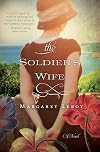
This is an absorbing story written in beautiful, evocative prose with characters that are occasionally frustrating but all the more realistic for it. Set during World War II, the story takes us from the last day that Guernsey Islanders can evacuate for London before the arrival of the Germans in June, 1940, through all of the war, to an epilogue in 1946.
Vivienne de la Mare lives with her two children, Blanche, 14, and Millie, 4, in a lovely isolated home on the island. Her widowed show more mother-in-law Evelyn lives with them also. Vivienne’s husband Eugene has gone to war, but he had been gone in most senses before that; they had never truly been in love, and in any event had not had any sexual relations since Millie was conceived. Vivienne knows that Eugene has had a mistress.
When the Germans come, four German soldiers move into the deserted house next door. After a long struggle against her needs and her obvious attraction, Vivienne begins a relationship with one of them, Gunther Lehmann. Gunther too has a marriage back home in Germany that is inadequate in many ways, and Vivienne can sense his loneliness before they even speak. Gunther finds in Vivienne the love he never expected to have, and releases in her a passion that she only dreamed about. But it is an awkward situation. Vivienne feels like a traitor, and comes to loathe the behavior of the Germans wearing Nazi uniforms who supervise the slave laborers on the island. She never knows how much Gunther participates or knows about it; he prefers to leave all talk of the war outside of her door. She doesn’t understand how so much good and evil can coexist in the same universe.
Somewhat by accident and reluctantly, Vivienne becomes involved in the underground resistance on the island. She does this during the day, and makes love to a German at night. It is tearing Vivienne apart, and something has to give. It finally does, in the senseless way that so often happens in wartime.
Discussion: Complex issues raised by this story dilute the black and white of war with shades of gray that muddy any obvious judgments. The most salient issue is the tendency to lump all persons from an enemy nation into one category, refusing to consider that individuals vary, even in wartime. Part of the tragedy in this story is not only what war does to both the victims and the perpetrators, but that it leads to classifying all sorts of human beings with different interests and pasts and presents into only either victims or perpetrators.
The inability to communicate is another big problem for Vivienne and Gunther, and it is compounded by the fact that they are on two different sides of the war. Does love supplant loyalty to one’s country when under occupation? Is love even real in such circumstances, or is it a response to the fear and adrenaline and heightened senses of wartime?
But the biggest issue has nothing really to do with war at all, although the war affects it, and it is about trusting someone you love. Vivienne found she could not trust the love of her mother, who died when she was three, nor that of her husband, and she never learned how to give that trust to anyone else. Trust, trust is harder for Vivienne than questions of war and peace, or of good and evil. Ultimately, she must decide if she can take a chance on love. Her decision will haunt you long after you close the last page of this memorable book.
Evaluation: This book is really an excellent exposé of both the overt, obvious horrors of war, and the little everyday ones, that can rip up peoples’ hearts and lives, or make them stronger from the unexpected dawns that always come even after the darkest nights. show less
Vivienne de la Mare lives with her two children, Blanche, 14, and Millie, 4, in a lovely isolated home on the island. Her widowed show more mother-in-law Evelyn lives with them also. Vivienne’s husband Eugene has gone to war, but he had been gone in most senses before that; they had never truly been in love, and in any event had not had any sexual relations since Millie was conceived. Vivienne knows that Eugene has had a mistress.
When the Germans come, four German soldiers move into the deserted house next door. After a long struggle against her needs and her obvious attraction, Vivienne begins a relationship with one of them, Gunther Lehmann. Gunther too has a marriage back home in Germany that is inadequate in many ways, and Vivienne can sense his loneliness before they even speak. Gunther finds in Vivienne the love he never expected to have, and releases in her a passion that she only dreamed about. But it is an awkward situation. Vivienne feels like a traitor, and comes to loathe the behavior of the Germans wearing Nazi uniforms who supervise the slave laborers on the island. She never knows how much Gunther participates or knows about it; he prefers to leave all talk of the war outside of her door. She doesn’t understand how so much good and evil can coexist in the same universe.
Somewhat by accident and reluctantly, Vivienne becomes involved in the underground resistance on the island. She does this during the day, and makes love to a German at night. It is tearing Vivienne apart, and something has to give. It finally does, in the senseless way that so often happens in wartime.
Discussion: Complex issues raised by this story dilute the black and white of war with shades of gray that muddy any obvious judgments. The most salient issue is the tendency to lump all persons from an enemy nation into one category, refusing to consider that individuals vary, even in wartime. Part of the tragedy in this story is not only what war does to both the victims and the perpetrators, but that it leads to classifying all sorts of human beings with different interests and pasts and presents into only either victims or perpetrators.
The inability to communicate is another big problem for Vivienne and Gunther, and it is compounded by the fact that they are on two different sides of the war. Does love supplant loyalty to one’s country when under occupation? Is love even real in such circumstances, or is it a response to the fear and adrenaline and heightened senses of wartime?
But the biggest issue has nothing really to do with war at all, although the war affects it, and it is about trusting someone you love. Vivienne found she could not trust the love of her mother, who died when she was three, nor that of her husband, and she never learned how to give that trust to anyone else. Trust, trust is harder for Vivienne than questions of war and peace, or of good and evil. Ultimately, she must decide if she can take a chance on love. Her decision will haunt you long after you close the last page of this memorable book.
Evaluation: This book is really an excellent exposé of both the overt, obvious horrors of war, and the little everyday ones, that can rip up peoples’ hearts and lives, or make them stronger from the unexpected dawns that always come even after the darkest nights. show less

I loved the atmosphere in this one. Grace's young daughter Sylvie is creepy, and as her behavior begins to alienate all of Grace's social contacts, Grace's situation gets more desperate. She turns to a psychologist who specializes in past life theories to try to help Sylvie. The book isn't perfect. For one, the relationship between Grace & Adam doesn't feel quite right. Also, Grace seems way older than 22. And there are a couple of very convenient coincidences in the plotting. Still, this is show more a thrilling, gothic-tinged ride. show less
 This review was written for LibraryThing Early Reviewers.
Some novels are written in such a way that every sentence fills the reader with a sense of peace ad profound delight. The language may not be poetic per se, but the impression left upon the reader is one of simple beauty. Every word needs to be savored and every scene to be absorbed. The entire novel benefits from the melodious language, as does the reader. Margaret Leroy's The Soldier's Wife is one such novel.
Another story about the occupation of Guernsey during World War II, the topic show more could be construed as redundant and just a copy of The Guernsey Literary and Potato Peel Pie Society. The Soldier's Wife is anything but a copy. Rather than an outsider looking in, Ms. Leroy focuses her novel around Vivienne, mother and wife of a soldier and caretaker for her failing mother-in-law. The reader is able to get an intimate look at how islanders were able to survive with the severe rations, surrounded by enemies. More importantly, Vivienne's experiences showcase just how easily the line between duty and morality, black and white, can blur during the confusion surrounding war.
Vivienne stands in as the symbol for anyone living in an occupied country. Even though the individual experiences may be different, the same conflicts continue to arise. At what point in time does friendliness towards the enemy become treason and a betrayal of one’s country? Is it as black and white as the enemy as the bad guy? Is the enemy to be afforded no civility because of the uniform he wears? As Vivienne gets drawn further and further in the gray areas of occupation, her struggles really begin. Is one to ignore all happiness for the sake of one’s duty to his or her country? Does someone have a moral obligation to fight against repression and barbarism once made aware of it? The questions are endless but handled with the utmost care and respect.
There is a depth to the novel that is not apparent on the surface. Combine that with the lush descriptions of the island and Vivienne’s hidden valley, and it is enough to entice the reader to sink down and just be swept under by the beautiful prose and thought-provoking story. Ms. Leroy balances the more melodramatic moments with gut-wrenchingly honest scenes that remind the reader all too brutally that war is not love and kindness. It is harsh and unfair; it is a scramble for survival.
The Soldier's Wife is a welcome addition to the World War II canon, as it shares with the reader a relatively new perspective on occupation and the ambiguity that comes with it. Vivienne and the entire island of Guernsey simply come alive under Ms. Leroy’s pen. Beautifully written, it is worth reading as much for its descriptions as it is for the picture it presents and lessons shared about the difference between duty and morality.
Thank you to Bryan Christian from Hyperion Books for my review copy! show less
Another story about the occupation of Guernsey during World War II, the topic show more could be construed as redundant and just a copy of The Guernsey Literary and Potato Peel Pie Society. The Soldier's Wife is anything but a copy. Rather than an outsider looking in, Ms. Leroy focuses her novel around Vivienne, mother and wife of a soldier and caretaker for her failing mother-in-law. The reader is able to get an intimate look at how islanders were able to survive with the severe rations, surrounded by enemies. More importantly, Vivienne's experiences showcase just how easily the line between duty and morality, black and white, can blur during the confusion surrounding war.
Vivienne stands in as the symbol for anyone living in an occupied country. Even though the individual experiences may be different, the same conflicts continue to arise. At what point in time does friendliness towards the enemy become treason and a betrayal of one’s country? Is it as black and white as the enemy as the bad guy? Is the enemy to be afforded no civility because of the uniform he wears? As Vivienne gets drawn further and further in the gray areas of occupation, her struggles really begin. Is one to ignore all happiness for the sake of one’s duty to his or her country? Does someone have a moral obligation to fight against repression and barbarism once made aware of it? The questions are endless but handled with the utmost care and respect.
There is a depth to the novel that is not apparent on the surface. Combine that with the lush descriptions of the island and Vivienne’s hidden valley, and it is enough to entice the reader to sink down and just be swept under by the beautiful prose and thought-provoking story. Ms. Leroy balances the more melodramatic moments with gut-wrenchingly honest scenes that remind the reader all too brutally that war is not love and kindness. It is harsh and unfair; it is a scramble for survival.
The Soldier's Wife is a welcome addition to the World War II canon, as it shares with the reader a relatively new perspective on occupation and the ambiguity that comes with it. Vivienne and the entire island of Guernsey simply come alive under Ms. Leroy’s pen. Beautifully written, it is worth reading as much for its descriptions as it is for the picture it presents and lessons shared about the difference between duty and morality.
Thank you to Bryan Christian from Hyperion Books for my review copy! show less
Lists
Awards

You May Also Like


Associated Authors
Statistics
- Works
- 15
- Members
- 1,219
- Popularity
- #21,067
- Rating
- 3.8
- Reviews
- 95
- ISBNs
- 97
- Languages
- 5
- Favorited
- 1
