
Kirsten Hubbard
Author of Wanderlove
Works by Kirsten Hubbard
Red Rocks (Cloudforest #2) 1 copy
Tagged
Common Knowledge
- Gender
- female
Members
Reviews
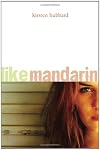
I didn't just read this book; I absolutely devoured it. Like Mandarin is the stuff of what a teenage girl's life is made of: a whirlwind of jealousy, desire, ambition, low self-esteem, adventure, betrayal and acceptance, and not a bit of it is written in a shallow way. Whether you've been the odd girl out, that girl, or somewhere in between, this is a book that will have you thinking about the importance of relationships among females: how we get into them, how they shape us, support us and show more rip us down.
Grace Carpenter is the daughter of a disappointed mother with illusions of grandeur. Her father is dead and she never knew him anyway. Her little sister, Taffeta, is the delight of her mother's world and almost the sole focus of her attention. Grace has no true friends to speak of, only a group of lunch table pals. She's been skipped ahead a grade, so at 14-going-on-15, she is the youngest sophomore and the brightest student in a class full of cowboys and their pickups.
Yeah, you could says she's lonely.
Enter Mandarin Ramey. She's 17, also alone, but prefers it that way. She doesn't give two cents about what anyone thinks of her. She's promiscuous, openly defiant, has a reputation for fighting, and the only thing she does is exactly what she wants. She's the Angelina Jolie of her school, and no one knows it better than Grace:
"Sure, maybe most of the attention Mandarin got was negative. But it wasn’t the kind of disdainful brainfreak attention that I got, when I got any at all. Hers was lustful. And jealous. Because even as they condemned her, every single girl wanted to be her.
But nobody more than me."
-Grace, Like Mandarin
Once the friendship ignites, what follows is Grace walking on a tightrope to keep Mandarin 'happy' and 'interested' in her. If that sounds like more like a romance, then you kind of/sort of have it right. Grace immerses herself into Mandarin's personality exactly like a lovestruck girl does over the guy of her dreams. Except that Grace doesn't harbor romantic feelings for Mandarin; it's much more a tale of wanting to be her, so much so that Grace studies the way that Mandarin walks, holds herself and dresses. What Grace doesn't realize is how very damaged and fragile Mandarin is. . . and, like all wounded creatures, Mandarin is also unpredictable and manipulative. She puts Grace through little quirky conversation tests, and very much adopts a, "if you're not with me, you're against me" attitude when it comes to Grace. However, while the turbulent friendship between Grace and Mandarin takes center stage, the book is really about all sorts of different relationships between women: teenagers, middle-agers, mother-daughter (or lack thereof), there's even a teacher-student relationship for Grace. Hubbard does an excellent job of showing how these different relationships shape who we are, and how past and present ones can help lead us to our new ones.
Then there are the characters, and all of you know how much I love a character-driven book! Grace is definitely her own person, although she doesn't think enough of herself to be it sometimes, especially not when a twister of a character like Mandarin enters the scene. DO NOT get her mixed up with the vapid, feel free to [insert yourself] female protagonists that we sometimes are confronted with in YA lit. Grace is intelligent and knows what she wants in her future, but loneliness does funny things to people, and it's easy to get sidetracked when you are 14. Mandarin is an incredibly well-drawn character, although it does take time for vulnerability to show through, but her magnetism is palpable through the pages (I think we've all known a Mandarin-type). At times, she felt one part Rizzo from Grease, one part Dicey Tillerman from The Tillerman Family Cycle and one part Stepmother from Cinderella. She's extremely complex, and any answers you get about her mysteries are hard-won and bitterly bequeathed.
Besides the two main characters, the ones you will see the most of are Grace's mother and younger sister, Taffeta. Grace's mom is a very definite sort of person and lives vicariously through Taffeta's success on the beauty pageant circuit. Grace feels forever worthless in her eyes do an incident that happened almost eight years ago that crushed her mother's hopes for her. Mother Dear also has the unfortunate characteristic of phrasing things precisely so they simultaneously shame you, but also leave little room for argument. On the other hand, Taffeta might be the most intelligent six year-old I've ever read, and if there is one fault that I can find with the book, it's that she sometimes seemed more like a ten year-old, rather than a small child in kindergarten.
I cannot begin to tell you what a good writer Hubbard is. . . when I read the synopsis, I was like, ehhhh, this could go either way. Well, it went all the way to the brilliant side of the scale. Hubbard writes with simple elegance, but there is always this feeling of constantly being carried forward. You aren't rushed, but you are anxious to read what happens next. Normally, I will drift through a book this size over a couple of evenings, but all of the sudden, I realized that I had far more pages held in my left hand than in my right. It was a pleasant surprise and a testament to how smoothly the book moves along. And in case you were wondering if you can have good time in Smalltown, Wyoming, hold on: Grace and Mandarin show you how it's done. For a place that most of us likely are not famaliar with, Kirsten does a wonder of world building, and I don't doubt that Washokey is the beautiful, barren landscarpe with splaces of color and high winds that Grace so vividly describes for us.
You're not going to find any romance or nookie in this book, although the boys do try. What are you going to find is a path that most of us travel at one point: the area of our lives where friends can overrun our affection for family and sense-of-self. Where living in the moment and thrill of getting caught was all you needed for a good time. When you finally learned to look at people and saw them from precisely who they are, and not just who they are in relation to you. Like Mandarin is a beautiful debut, an exquisitely written book about the people, places and emotions that hold us down, and the ones that urge us forward. I can't recommend it enough. show less
Grace Carpenter is the daughter of a disappointed mother with illusions of grandeur. Her father is dead and she never knew him anyway. Her little sister, Taffeta, is the delight of her mother's world and almost the sole focus of her attention. Grace has no true friends to speak of, only a group of lunch table pals. She's been skipped ahead a grade, so at 14-going-on-15, she is the youngest sophomore and the brightest student in a class full of cowboys and their pickups.
Yeah, you could says she's lonely.
Enter Mandarin Ramey. She's 17, also alone, but prefers it that way. She doesn't give two cents about what anyone thinks of her. She's promiscuous, openly defiant, has a reputation for fighting, and the only thing she does is exactly what she wants. She's the Angelina Jolie of her school, and no one knows it better than Grace:
"Sure, maybe most of the attention Mandarin got was negative. But it wasn’t the kind of disdainful brainfreak attention that I got, when I got any at all. Hers was lustful. And jealous. Because even as they condemned her, every single girl wanted to be her.
But nobody more than me."
-Grace, Like Mandarin
Once the friendship ignites, what follows is Grace walking on a tightrope to keep Mandarin 'happy' and 'interested' in her. If that sounds like more like a romance, then you kind of/sort of have it right. Grace immerses herself into Mandarin's personality exactly like a lovestruck girl does over the guy of her dreams. Except that Grace doesn't harbor romantic feelings for Mandarin; it's much more a tale of wanting to be her, so much so that Grace studies the way that Mandarin walks, holds herself and dresses. What Grace doesn't realize is how very damaged and fragile Mandarin is. . . and, like all wounded creatures, Mandarin is also unpredictable and manipulative. She puts Grace through little quirky conversation tests, and very much adopts a, "if you're not with me, you're against me" attitude when it comes to Grace. However, while the turbulent friendship between Grace and Mandarin takes center stage, the book is really about all sorts of different relationships between women: teenagers, middle-agers, mother-daughter (or lack thereof), there's even a teacher-student relationship for Grace. Hubbard does an excellent job of showing how these different relationships shape who we are, and how past and present ones can help lead us to our new ones.
Then there are the characters, and all of you know how much I love a character-driven book! Grace is definitely her own person, although she doesn't think enough of herself to be it sometimes, especially not when a twister of a character like Mandarin enters the scene. DO NOT get her mixed up with the vapid, feel free to [insert yourself] female protagonists that we sometimes are confronted with in YA lit. Grace is intelligent and knows what she wants in her future, but loneliness does funny things to people, and it's easy to get sidetracked when you are 14. Mandarin is an incredibly well-drawn character, although it does take time for vulnerability to show through, but her magnetism is palpable through the pages (I think we've all known a Mandarin-type). At times, she felt one part Rizzo from Grease, one part Dicey Tillerman from The Tillerman Family Cycle and one part Stepmother from Cinderella. She's extremely complex, and any answers you get about her mysteries are hard-won and bitterly bequeathed.
Besides the two main characters, the ones you will see the most of are Grace's mother and younger sister, Taffeta. Grace's mom is a very definite sort of person and lives vicariously through Taffeta's success on the beauty pageant circuit. Grace feels forever worthless in her eyes do an incident that happened almost eight years ago that crushed her mother's hopes for her. Mother Dear also has the unfortunate characteristic of phrasing things precisely so they simultaneously shame you, but also leave little room for argument. On the other hand, Taffeta might be the most intelligent six year-old I've ever read, and if there is one fault that I can find with the book, it's that she sometimes seemed more like a ten year-old, rather than a small child in kindergarten.
I cannot begin to tell you what a good writer Hubbard is. . . when I read the synopsis, I was like, ehhhh, this could go either way. Well, it went all the way to the brilliant side of the scale. Hubbard writes with simple elegance, but there is always this feeling of constantly being carried forward. You aren't rushed, but you are anxious to read what happens next. Normally, I will drift through a book this size over a couple of evenings, but all of the sudden, I realized that I had far more pages held in my left hand than in my right. It was a pleasant surprise and a testament to how smoothly the book moves along. And in case you were wondering if you can have good time in Smalltown, Wyoming, hold on: Grace and Mandarin show you how it's done. For a place that most of us likely are not famaliar with, Kirsten does a wonder of world building, and I don't doubt that Washokey is the beautiful, barren landscarpe with splaces of color and high winds that Grace so vividly describes for us.
You're not going to find any romance or nookie in this book, although the boys do try. What are you going to find is a path that most of us travel at one point: the area of our lives where friends can overrun our affection for family and sense-of-self. Where living in the moment and thrill of getting caught was all you needed for a good time. When you finally learned to look at people and saw them from precisely who they are, and not just who they are in relation to you. Like Mandarin is a beautiful debut, an exquisitely written book about the people, places and emotions that hold us down, and the ones that urge us forward. I can't recommend it enough. show less
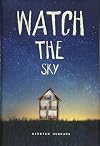
This is a new middle-grade novel -- appropriate for 5th grade and up. Not sure how I feel about it yet. I tore through it in two sittings because it is so compelling, yet it left so much unanswered. Young Jory is an outsider: his stepfather Caleb has always instructed him to trust no one, and to ask himself hard questions about authority and about what he learns in school. No one is safe. There are signs -- an increasing number of them -- that indicate that some kind of catastrophic event is show more about to happen, and the family takes care to prepare, but only Caleb knows for what. Jory endures the awkwardness of school, but for the first time he is making friends and experiencing life outside his family. Just as this is happening, the family's preparations become urgent, leaving Jory torn between his family and his burgeoning independent consciousness.
There is a sense of unease throughout that never is fully resolved -- in fact, the reader is left with more questions than answers at the book's end. In some ways that is a strength -- when authors feel that they need to resolve everything is when credulity stretches to the breaking point. I attribute some of the unease to everyone knowing someone who is very like Caleb the stepfather. An upright man, a strong man, a man determined to protect his family, and a man with a paranoid distrust of authority and belief that some kind of apocalypse is impending. Listens to talk radio all day... super secretive... the only trait this fictional character lacks that his real-life counterparts have is being armed to the teeth. Kids seem to be very sophisticated these days, yet I wonder if the book will seem more sinister to adults and more adventurous (in a kid versus world way) to kids. I can't decide if I love it or even like it, but I am thinking about it a lot, and that is a good thing! show less
There is a sense of unease throughout that never is fully resolved -- in fact, the reader is left with more questions than answers at the book's end. In some ways that is a strength -- when authors feel that they need to resolve everything is when credulity stretches to the breaking point. I attribute some of the unease to everyone knowing someone who is very like Caleb the stepfather. An upright man, a strong man, a man determined to protect his family, and a man with a paranoid distrust of authority and belief that some kind of apocalypse is impending. Listens to talk radio all day... super secretive... the only trait this fictional character lacks that his real-life counterparts have is being armed to the teeth. Kids seem to be very sophisticated these days, yet I wonder if the book will seem more sinister to adults and more adventurous (in a kid versus world way) to kids. I can't decide if I love it or even like it, but I am thinking about it a lot, and that is a good thing! show less
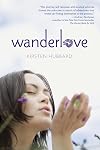
A great alternative if you’re feeling a bit burnt out by beach house and lake house novels yet still crave summer vibes in your reading.
Setting plays a fantastic role in this one, from marketplaces to beaches and vistas, stops for food and accommodations, the author very much takes you there.
Really the only part of this I didn’t enjoy as much as the rest was Lobsterfest. I guess attending some big blowout party didn’t really fit with my idea of who Bria and Rowan were by that point show more in the story, and their behavior that night/early morning, it’s the only time when something in this novel felt kind of forced. I liked the aftermath of it, the direction it sent Bria in, how it tests her, I guess I just felt like maybe there could have been another way to get her to that test that seemed a little truer to their characters.
Aside from the feeling of vicarious travel, what I most loved here was that the romance wasn’t at the forefront. I liked them together, the chemistry is evident from the beginning, I enjoyed their shared scenes but I appreciated that Bria does most of her growing apart from Rowan, in particular where her character and this book truly hooked me was in Bria’s journey to reclaim her art, that was almost entirely explored on her own, in private, and as someone interested in creative pursuits and processes and who very much identified with Bria’s fragility surrounding her art, those moments had me invested and eager to turn the pages, to see if she’d get that important side of herself back on track. I really do like it when the girl has bigger things at stake than just getting the boy. show less
Setting plays a fantastic role in this one, from marketplaces to beaches and vistas, stops for food and accommodations, the author very much takes you there.
Really the only part of this I didn’t enjoy as much as the rest was Lobsterfest. I guess attending some big blowout party didn’t really fit with my idea of who Bria and Rowan were by that point show more in the story, and their behavior that night/early morning, it’s the only time when something in this novel felt kind of forced. I liked the aftermath of it, the direction it sent Bria in, how it tests her, I guess I just felt like maybe there could have been another way to get her to that test that seemed a little truer to their characters.
Aside from the feeling of vicarious travel, what I most loved here was that the romance wasn’t at the forefront. I liked them together, the chemistry is evident from the beginning, I enjoyed their shared scenes but I appreciated that Bria does most of her growing apart from Rowan, in particular where her character and this book truly hooked me was in Bria’s journey to reclaim her art, that was almost entirely explored on her own, in private, and as someone interested in creative pursuits and processes and who very much identified with Bria’s fragility surrounding her art, those moments had me invested and eager to turn the pages, to see if she’d get that important side of herself back on track. I really do like it when the girl has bigger things at stake than just getting the boy. show less
"We're both made of stars, Jory Birch. Everybody is."
(Full disclosure: I received a free electronic ARC for review through NetGalley.)
Signs were everywhere.
Everywhere and anywhere, Caleb said. That was the problem. They came at any time. And they could be almost anything.
Red leaves in the springtime. Pages torn from a library book. All the fish in an aquarium facing the same way. A cracked egg with twin yolks.
"How do you know?" Jory had asked his stepdad once. "I mean, how do you know show more you're seeing a sign? Instead of a bunch of coincidental fish?"
"You'll just know," Caleb had replied.
Caleb was fickle with explanations. Sometimes he shared them. Sometimes he didn't. But he had no problem giving orders - mostly camouflaged as suggestions.
###
Eleven-year-old Jory Birch has been looking for signs for the better part of five years - ever since his stepfather, Caleb, swooped in and "saved" him and his mother. From what, Jory's not exactly sure.
A veteran who served "in a desert war Jory didn't know much about," Caleb is convinced that something's coming. Something big. That's why he moved his family - mom; Jory; and Jory's younger siblings, Kit and Ansel - to the farm at the edge of town. Why mom spends most of her day picking and preserving cucumbers and squash from the garden; why Caleb is growing a stockpile in the locked barn; why the kids are discouraged from socializing with outsiders or confiding in anyone outside of the family. Jory's life is a maze of secrets - secrets which become increasingly harder to keep once Jory starts fifth grade and finds himself (gasp!) making friends: with the affable Erik Dixon and outgoing Alice Brooks-Diaz.
Everything comes to a head when Caleb, convinced that the time has come, orders his family to begin nighttime construction on a bunker in the barren canyon behind their farm. Physically and mentally exhausted, Jory's nosedive in school doesn't go unnoticed; and before long, The dreaded Officials are knocking at the Birch's door. It's a sign if ever there was one, but of what?
How best to describe Watch the Sky? It kind of reminds me of a younger, middle grade version of Mary Miller's The Last Days of California - but instead of traveling cross-country to welcome the apocalypse, Jory and his family are tunneling underground, into "the extraordinary darkness of a place the sun will never reach."
While the writing is quite lovely in some places, the overall story didn't do it for me. Maybe it's because some of the harsher, more sinister edges were softened for younger readers, but the story lacked that little extra oomph!. The ending in particular felt unrealistic; a man like Caleb, when challenged or betrayed, is more likely to resort to violence than turn tail and run. (And we already saw him hit Kit, so we know he has a propensity for domestic violence.) When considered in relation to Caleb's war stories, the ending has a certain sense of poetic beauty, but it still felt a little off. Ultimately the denouement lacked tension and left me unsatisfied.
Much of the interplay that drives the story is between Jory and Caleb, but I found mom and Kit to be infinitely more interesting. Kit, especially, who at six years old suddenly appears in the Birch's pumpkin patch and whispers but one word (her name) in her first three years with the family.
That said, Watch the Sky is wonderfully diverse. Disability issues take center stage, of course; Caleb is suffering from PTSD as well as paranoia; meanwhile, mom gets crippling migraines and clearly struggles with an anxiety disorder of some type (generalized anxiety? agoraphobia?). Because of this, it's difficult to view any of the adults as true villains (even as you love to hate the narcissistic, domineering Caleb), which makes for a more complex and nuanced story.
There's also a fair amount of racial diversity. Kit has brown eyes and "olive skin...several shades darker than [Jory's]" - and I can't help but wonder if racism underlies at least some of Caleb's animosity towards the girl. There's also Alice Brooks-Diaz; she has "dark eyes, dark skin, and curly hair, which she sport[s] in twin buns." While her father is Mexican - the Diaz half of the equation - Mrs. Brooks is described as darker than her daughter, which suggests that she's a WOC as well. And let's not forget the Mendoza twins and Sam Kapur, whose surnames suggest Latino and Indian heritage.
Ultimately I think that Watch the Sky is one of those middle grade books that will appeal specifically to that demographic; in particular, Jory's journey to think critically and for himself can serve as a positive example to younger readers.
http://www.easyvegan.info/2015/04/13/watch-the-sky-by-kirsten-hubbard/ show less
(Full disclosure: I received a free electronic ARC for review through NetGalley.)
Signs were everywhere.
Everywhere and anywhere, Caleb said. That was the problem. They came at any time. And they could be almost anything.
Red leaves in the springtime. Pages torn from a library book. All the fish in an aquarium facing the same way. A cracked egg with twin yolks.
"How do you know?" Jory had asked his stepdad once. "I mean, how do you know show more you're seeing a sign? Instead of a bunch of coincidental fish?"
"You'll just know," Caleb had replied.
Caleb was fickle with explanations. Sometimes he shared them. Sometimes he didn't. But he had no problem giving orders - mostly camouflaged as suggestions.
###
Eleven-year-old Jory Birch has been looking for signs for the better part of five years - ever since his stepfather, Caleb, swooped in and "saved" him and his mother. From what, Jory's not exactly sure.
A veteran who served "in a desert war Jory didn't know much about," Caleb is convinced that something's coming. Something big. That's why he moved his family - mom; Jory; and Jory's younger siblings, Kit and Ansel - to the farm at the edge of town. Why mom spends most of her day picking and preserving cucumbers and squash from the garden; why Caleb is growing a stockpile in the locked barn; why the kids are discouraged from socializing with outsiders or confiding in anyone outside of the family. Jory's life is a maze of secrets - secrets which become increasingly harder to keep once Jory starts fifth grade and finds himself (gasp!) making friends: with the affable Erik Dixon and outgoing Alice Brooks-Diaz.
Everything comes to a head when Caleb, convinced that the time has come, orders his family to begin nighttime construction on a bunker in the barren canyon behind their farm. Physically and mentally exhausted, Jory's nosedive in school doesn't go unnoticed; and before long, The dreaded Officials are knocking at the Birch's door. It's a sign if ever there was one, but of what?
How best to describe Watch the Sky? It kind of reminds me of a younger, middle grade version of Mary Miller's The Last Days of California - but instead of traveling cross-country to welcome the apocalypse, Jory and his family are tunneling underground, into "the extraordinary darkness of a place the sun will never reach."
While the writing is quite lovely in some places, the overall story didn't do it for me. Maybe it's because some of the harsher, more sinister edges were softened for younger readers, but the story lacked that little extra oomph!. The ending in particular felt unrealistic; a man like Caleb, when challenged or betrayed, is more likely to resort to violence than turn tail and run. (And we already saw him hit Kit, so we know he has a propensity for domestic violence.) When considered in relation to Caleb's war stories, the ending has a certain sense of poetic beauty, but it still felt a little off. Ultimately the denouement lacked tension and left me unsatisfied.
Much of the interplay that drives the story is between Jory and Caleb, but I found mom and Kit to be infinitely more interesting. Kit, especially, who at six years old suddenly appears in the Birch's pumpkin patch and whispers but one word (her name) in her first three years with the family.
That said, Watch the Sky is wonderfully diverse. Disability issues take center stage, of course; Caleb is suffering from PTSD as well as paranoia; meanwhile, mom gets crippling migraines and clearly struggles with an anxiety disorder of some type (generalized anxiety? agoraphobia?). Because of this, it's difficult to view any of the adults as true villains (even as you love to hate the narcissistic, domineering Caleb), which makes for a more complex and nuanced story.
There's also a fair amount of racial diversity. Kit has brown eyes and "olive skin...several shades darker than [Jory's]" - and I can't help but wonder if racism underlies at least some of Caleb's animosity towards the girl. There's also Alice Brooks-Diaz; she has "dark eyes, dark skin, and curly hair, which she sport[s] in twin buns." While her father is Mexican - the Diaz half of the equation - Mrs. Brooks is described as darker than her daughter, which suggests that she's a WOC as well. And let's not forget the Mendoza twins and Sam Kapur, whose surnames suggest Latino and Indian heritage.
Ultimately I think that Watch the Sky is one of those middle grade books that will appeal specifically to that demographic; in particular, Jory's journey to think critically and for himself can serve as a positive example to younger readers.
http://www.easyvegan.info/2015/04/13/watch-the-sky-by-kirsten-hubbard/ show less
Lists
Awards


You May Also Like


Statistics
- Works
- 7
- Members
- 594
- Popularity
- #42,286
- Rating
- 3.9
- Reviews
- 63
- ISBNs
- 22