
Matthew B. Miles
Author of Qualitative Data Analysis: An Expanded Sourcebook
Works by Matthew B. Miles
Tagged
Common Knowledge
There is no Common Knowledge data for this author yet. You can help.
Members
Reviews
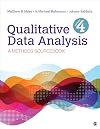
Professionally, I work a lot with quantitative data, through mathematics/biostatistics, building software, and research design. The world of words has long been a domain that has enchanted me even though symbols have comprised my main language. Recently, my wife has started graduate work using qualitative methods. I decided to fill my deficits in this world by reading this book. I am by no means expert or even experienced in it, but I merely have an interest.
This book seems to be the seminal show more work in its field. The authors share their wisdom and experiences in this accessible textbook, now in a fourth edition. They cover the entire process from design and data collection to building a theory. They talk at length about coding as well as how to present your data. They even have a chapter on writing, with many encouragements to not be boring!
The graphics and illustrations in this book are excellent and inspirational. I am always interested in creating visualizations to communicate research data effectively, and this book provided many muses in that regard. They talked about converting written accounts into concept maps and linking those to address “influences and affects” of a weak sort of causality. This book helped slow my mind down about the many moving parts in qualitative research so that I can focus more on a work’s reality and substance.
This book is obviously geared towards researchers, whether new or old. The writing and presentation are accessible enough so that graduate students would be well-served by reading this work. Practitioners, of course, can benefit as well, but they likely would have read one of the prior three editions of this book. Those who, like me, are involved in other parts of the research enterprise can learn about their colleagues’ work, too. Finally, those who spend significant time building visuals to communicate concepts can learn from these authors’ analytical techniques.
After finishing this work, I’m inspired about the myriad of ways non-quantitative data can be analyzed and concisely communicated to readers – especially in ways that aren’t written prose. Poetry, artful presentations, summarizing graphics, and matrix-tables together can create a mosaic to comport meaningful and accurate understanding to readers. My personal bar has been raised, and I suspect many other readers’ bars will be, too. show less
This book seems to be the seminal show more work in its field. The authors share their wisdom and experiences in this accessible textbook, now in a fourth edition. They cover the entire process from design and data collection to building a theory. They talk at length about coding as well as how to present your data. They even have a chapter on writing, with many encouragements to not be boring!
The graphics and illustrations in this book are excellent and inspirational. I am always interested in creating visualizations to communicate research data effectively, and this book provided many muses in that regard. They talked about converting written accounts into concept maps and linking those to address “influences and affects” of a weak sort of causality. This book helped slow my mind down about the many moving parts in qualitative research so that I can focus more on a work’s reality and substance.
This book is obviously geared towards researchers, whether new or old. The writing and presentation are accessible enough so that graduate students would be well-served by reading this work. Practitioners, of course, can benefit as well, but they likely would have read one of the prior three editions of this book. Those who, like me, are involved in other parts of the research enterprise can learn about their colleagues’ work, too. Finally, those who spend significant time building visuals to communicate concepts can learn from these authors’ analytical techniques.
After finishing this work, I’m inspired about the myriad of ways non-quantitative data can be analyzed and concisely communicated to readers – especially in ways that aren’t written prose. Poetry, artful presentations, summarizing graphics, and matrix-tables together can create a mosaic to comport meaningful and accurate understanding to readers. My personal bar has been raised, and I suspect many other readers’ bars will be, too. show less

This book was by far, one of the most thoroughgoing research assessments undertaken into the pertinent contributing aspects of the then mushrooming endeavor to foster programs for bringing about significant personal behavioral change -- widely sought at that time in both the United States and Western Europe -- particularly those designed and conducted by such places as, e.g. the Human Development Institute in Atlanta (founded by Jerome I. Berlin and Benjamin Wyckoff, both very established show more original research members of those two classical and predominant Rogerian and Skinnerian research traditions respectively, of which I was the very last director before it was sold by Bell & Howell to the purchasing company). Its major "leaderless" or 'self-directed' group program was even featured on a special instance (titled "Circle of Love") of Walter Cronkite's special national television program in the 1970s of his then widely-known "The 21st Century" news program.
(From the preface: "Anyone aware of the burgeoning accumulation of literature on encounter groups may well ask, "Is this book necessary?" Our answer has been affirmative because the explosive expansion of the use of groups for personal change has not been matched by corresponding concern for information about what such groups do and how well they do it. Innovation has exceeded evaluation. Much so-called encounter group theory has been contributed by expert, often prestigious, practitioners in an effort to abstract the essence of their own skill. Often the very artfulness and perspicacity of the originatiors has too sharply shaped tyheir perspective, rendering their theories into self-fulfilling prophecies. The time seemed at hand for a comparative investigation of the broad range of theories and methods currently brought together under the rubric of encounter.") show less
(From the preface: "Anyone aware of the burgeoning accumulation of literature on encounter groups may well ask, "Is this book necessary?" Our answer has been affirmative because the explosive expansion of the use of groups for personal change has not been matched by corresponding concern for information about what such groups do and how well they do it. Innovation has exceeded evaluation. Much so-called encounter group theory has been contributed by expert, often prestigious, practitioners in an effort to abstract the essence of their own skill. Often the very artfulness and perspicacity of the originatiors has too sharply shaped tyheir perspective, rendering their theories into self-fulfilling prophecies. The time seemed at hand for a comparative investigation of the broad range of theories and methods currently brought together under the rubric of encounter.") show less
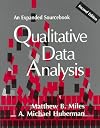
A most excellent resource for the researcher, student of research, or teacher of research methodology.
You May Also Like


Associated Authors
Statistics
- Works
- 6
- Members
- 375
- Popularity
- #64,332
- Rating
- 3.9
- Reviews
- 3
- ISBNs
- 17
- Languages
- 1