
Beni Montresor (1926–2001)
Author of Cinderella
About the Author
Image credit: Photo by Carl Van Vechten, Mar. 17, 1964 (Library of Congress, Carl Van Vechten Collection, Digital ID: van 5a52445)
Works by Beni Montresor
I saw a ship a-sailing; or, The wonderful games that only little flower-plant children can play (1967) 6 copies, 1 review
Associated Works
Tagged
Common Knowledge
- Legal name
- Montresor, Benito
- Birthdate
- 1926-03-31
- Date of death
- 2001-10-11
- Gender
- male
- Nationality
- Italy
- Associated Place (for map)
- Italy
Members
Reviews

First published in 1963, and then reprinted in this 1989 edition, Beni Montresor's The Witches of Venice is an original fairy-tale that makes use of a number of traditional folkloric themes, and which was, in the mid 1990s, made into an opera by composer Philip Glass. Opening with the childless King and Queen of Venice, it develops along fairly standard lines at first, with two Fairies of the Lagoon, in a move reminiscent of such tales as Thumbelina, offering the king a magic plant that will show more blossom into a boy. Here the narrative departs from the conventional fairy-tale trajectory, however, as the king refuses to believe the fairies - dismissing them rudely as "stupid girls" - and chucks the plant out the window. Even when it blossoms (a kind maid having planted it), and produces a boy, the king refuses to relent, and the little flower-plant boy is made a prisoner in the castle courtyard. It is only when he learns of the existence of a little flower-plant girl, said to be in the keeping of the two Witches of Venice, that he takes heart and, with the help of the Wind, sets out to find her...
I really liked the way in which Montresor set this story up, with all the narrative clues initially pointing in one direction, and raising the expectation that this would be a certain kind of tale - the kind in which a childless couple obtain a tiny infant through extraordinary magical means, whether by plant generation, or honey-comb construction - and then departing from that expected story trajectory into something else. Something similar, but different. What an interesting character the king is, unable to admit his mistake, even when the evidence is staring him in the face - determined, in fact, to bury that evidence, and keep it from the eyes of all around him. Montresor's artwork is just as compelling as his text, with a definite vintage sensibility that is difficult to describe. I like the simultaneous detail (the intricate lines) and obscurity (the "fuzziness") of his illustrations, and particularly appreciated the pigeon-vehicle that the flower-plant boy uses, and the faces of the anthropomorphized Sun and Wind, who help him.
Definitely something unique, The Witches of Venice is a book I would recommend to fairy-tale lovers in the mood for something a little bit strange and a lot bit lovely, and to fans of Beni Montresor's art. show less
I really liked the way in which Montresor set this story up, with all the narrative clues initially pointing in one direction, and raising the expectation that this would be a certain kind of tale - the kind in which a childless couple obtain a tiny infant through extraordinary magical means, whether by plant generation, or honey-comb construction - and then departing from that expected story trajectory into something else. Something similar, but different. What an interesting character the king is, unable to admit his mistake, even when the evidence is staring him in the face - determined, in fact, to bury that evidence, and keep it from the eyes of all around him. Montresor's artwork is just as compelling as his text, with a definite vintage sensibility that is difficult to describe. I like the simultaneous detail (the intricate lines) and obscurity (the "fuzziness") of his illustrations, and particularly appreciated the pigeon-vehicle that the flower-plant boy uses, and the faces of the anthropomorphized Sun and Wind, who help him.
Definitely something unique, The Witches of Venice is a book I would recommend to fairy-tale lovers in the mood for something a little bit strange and a lot bit lovely, and to fans of Beni Montresor's art. show less
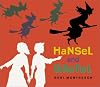
In this version of the classic tale, Beni Montresor uses illustrations to portray the story much more than he uses words. The actual writing style present in the book definitely isn't the greatest; language is very simple, and honestly, a bit dull. The words are neither exciting nor lively and they do very little for readers. Much of the emphasis is placed on the illustrations, where brightly colored silhouettes carry the story. This is a great version of story to read with younger children, show more when the interest isn't necessarily in the writing but in the pictures. Because of the simplicity of the language, this version of the story is probably the least gruesome of the many out there, but the images do help to portray the "anyone can overcome evil" theme that all versions of "Hansel and Gretel" have. show less
In this story, Beni Montresor puts a little twist on the classic tale of Hansel and Gretel. A young brother and sister venture out into the woods to pick strawberries when they are captured by an evil witch that eats children. Once they escape, they burn the witch and then set all of the other captured children free. Older children might like this book because of its interesting plot and bold pictures while a witch that eats children may frighten younger ones. I may be skeptical to share show more this book with a future class. show less

LIttle red riding hood is about a little girl who is going to visit her grandmother and she has to go through the woods. She comes across a wolf and tells him where she is going. The wolf beats her there and eats the grandmother. He tricks the girl into thinking he is the grandmother and the he eats her too.
I think the story is too frightening for little children. they do not need to be reading about the wolf eating the grandmother and the girl. Also the pictures of her in the wolfs stomach show more is disturbing.
You could make this into a play without the devouring of the people for your students. You could also make cookies to bring to grandmother. show less
I think the story is too frightening for little children. they do not need to be reading about the wolf eating the grandmother and the girl. Also the pictures of her in the wolfs stomach show more is disturbing.
You could make this into a play without the devouring of the people for your students. You could also make cookies to bring to grandmother. show less
Awards

You May Also Like
Associated Authors
Statistics
- Works
- 8
- Also by
- 6
- Members
- 100
- Popularity
- #190,119
- Rating
- 3.9
- Reviews
- 15
- ISBNs
- 13