

Rachel Hore
Author of A Place of Secrets
About the Author
Image credit: (AP Watt)
Works by Rachel Hore
The Girl in the Picture 4 copies
Tagged
Common Knowledge
- Birthdate
- 1960
- Gender
- female
- Occupations
- editor
novelist
university lecturer (Publishing and Creative Writing) - Organizations
- Harper Collins
University of East Anglia - Agent
- Sheila Crowley (AP Watt)
- Relationships
- Taylor, D J (husband)
- Nationality
- UK
- Birthplace
- Epsom, Surrey, England, UK
- Places of residence
- Surrey, England, UK
Hong Kong
Norwich, Norfolk, England, UK - Associated Place (for map)
- England, UK
Members
Reviews
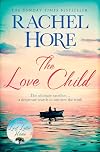
‘The Love Child’ by Rachel Hore is not just an adoption story of birth mother and daughter, it is a story of women’s lives between the wars when shame and public expectation, not love, governed family decisions. In 1917 Alice Copeman, a 19-year old nurse, falls in love with a soldier home on leave. They expect to marry but he is killed. No one else knows of their relationship, it is wartime and everything happened so quickly. But Alice is pregnant.
Mourning for Jack, Alice is forced by show more her father and stepmother to give the child up for adoption. In the Essex seaside town of Farthingsea, Edith and Philip Burns long for their own child. When they adopt a baby girl Irene, they expect their family to be happily complete. But Irene feels different from her parents and grows frustrated at the lies told about her birth; in particular she struggles to connect with her mother Edith and often feels rejected. At school she is bullied. At home she feels second rate to her younger brother, conceived by Edith and Philip after they adopted Irene. Things improve for Irene when she makes friends with a boy from the disreputable artistic part of town; Tom lives with his single mother and he too is different. Both Tom and his mother are positive influences on Irene.
This is a story told in two strands – Alice and Irene – first as each makes her own way in the world, and then as their paths come closer together. Alice’s story – qualifying as a doctor and working as a GP – is fascinating and a glimpse of a time when female doctors were starting to appear. Irene is also independent, leaving Farthingsea to work in London at an art gallery. In these inter-war years it was still difficult for independent women to make their own way. Old-fashioned standards and expectations prove a challenge for both Alice and for Irene and often at the hands of other women.
A little slow to start, not helped as the storyline jumps around from year to year, it settled down halfway through. At times I confused Irene’s adoptive mother Edith with Alice’s stepmother Gwen, both are sharp-edged women whose words can wound.
This is a novel of love, separation, shame and mother and daughter dynamics; it ultimately shows how the road to love can take many diversions and twists along the way. Both Alice and Irene are rather self-contained and defensive, afraid of being hurt, but they are also capable of being loved if they allow their self-protection to drop. This is a reflective and sensitive portrayal of the adoption dilemma when the hunger of one individual for the truth may cause pain to others.
A note about the cover; I could see no link between the story and a rowing boat at sunset.
Read more of my book reviews at http://www.sandradanby.com/book-reviews-a-z/ show less
Mourning for Jack, Alice is forced by show more her father and stepmother to give the child up for adoption. In the Essex seaside town of Farthingsea, Edith and Philip Burns long for their own child. When they adopt a baby girl Irene, they expect their family to be happily complete. But Irene feels different from her parents and grows frustrated at the lies told about her birth; in particular she struggles to connect with her mother Edith and often feels rejected. At school she is bullied. At home she feels second rate to her younger brother, conceived by Edith and Philip after they adopted Irene. Things improve for Irene when she makes friends with a boy from the disreputable artistic part of town; Tom lives with his single mother and he too is different. Both Tom and his mother are positive influences on Irene.
This is a story told in two strands – Alice and Irene – first as each makes her own way in the world, and then as their paths come closer together. Alice’s story – qualifying as a doctor and working as a GP – is fascinating and a glimpse of a time when female doctors were starting to appear. Irene is also independent, leaving Farthingsea to work in London at an art gallery. In these inter-war years it was still difficult for independent women to make their own way. Old-fashioned standards and expectations prove a challenge for both Alice and for Irene and often at the hands of other women.
A little slow to start, not helped as the storyline jumps around from year to year, it settled down halfway through. At times I confused Irene’s adoptive mother Edith with Alice’s stepmother Gwen, both are sharp-edged women whose words can wound.
This is a novel of love, separation, shame and mother and daughter dynamics; it ultimately shows how the road to love can take many diversions and twists along the way. Both Alice and Irene are rather self-contained and defensive, afraid of being hurt, but they are also capable of being loved if they allow their self-protection to drop. This is a reflective and sensitive portrayal of the adoption dilemma when the hunger of one individual for the truth may cause pain to others.
A note about the cover; I could see no link between the story and a rowing boat at sunset.
Read more of my book reviews at http://www.sandradanby.com/book-reviews-a-z/ show less

I love Rachel Hore's books and it's been far too long since I've read one so I was really keen to read The Love Child.
Alice Copeman is a young woman who, as the story begins, is about to give birth to a baby girl. Unfortunately, she is unmarried and this is 1917 when single motherhood was an unthinkable scandal. She is forced by her father and overbearing stepmother to give her baby up for adoption. Sadly, the father of the baby, Jack, has been killed fighting in the war and Alice has no show more choice but to go along with the adoption.
Irene is that baby and she is adopted by a childless couple, Philip and Edith Burns. But whilst Philip dotes on Irene, Edith is distant and Irene is very much aware of not being a natural child of the family.
I loved this story of the two women. We follow them through the years as Alice strives to become a doctor and Irene grows up and eventually leaves home. Both are wonderfully drawn characters, very different yet Irene has that streak of strength running through her that most definitely comes from Alice. The stories are not told in alternating chapters but in longer sections for each woman and I was always reluctant to be pulled away from one strand, but keen to see what the other strand would offer.
I found Alice's journey through medical school and beyond so fascinating. At the end of the book the author says that she struggled to find any research material to help her with this part of the story. Women doctors were frowned upon and apparently if Alice had wanted to use her skills as a hospital doctor she would have had to basically pretend to be a man! I particularly liked Alice's work with birth control, especially amongst working class families. She is very ahead of her time and I loved that about her.
The Love Child is a charming and gentle story with so many levels to it. I suppose you might call it a slice of life story and despite that gentle feel many difficult issues are tackled, not least adoption and all its associated issues, women's place in society and fighting to be more than simply a wife and mother, war, love, friendship and family.
I thought it was so evocative of the time, so beautifully portrayed and the writing is just wonderful. The inter-war years are so interesting, that sense of 'never again' and yet the Second World War looming ever closer. Things are starting to change, particularly for women, and I felt like I was living in the 1920s and 30s, observing as an onlooker rather than a reader. I think it's a skilled writer who can make a slice of life story compelling reading and that's exactly what Rachel Hore has achieved with this book.
In case you were in any doubt, I really enjoyed The Love Child. It's a simply gorgeous piece of fiction. show less
Alice Copeman is a young woman who, as the story begins, is about to give birth to a baby girl. Unfortunately, she is unmarried and this is 1917 when single motherhood was an unthinkable scandal. She is forced by her father and overbearing stepmother to give her baby up for adoption. Sadly, the father of the baby, Jack, has been killed fighting in the war and Alice has no show more choice but to go along with the adoption.
Irene is that baby and she is adopted by a childless couple, Philip and Edith Burns. But whilst Philip dotes on Irene, Edith is distant and Irene is very much aware of not being a natural child of the family.
I loved this story of the two women. We follow them through the years as Alice strives to become a doctor and Irene grows up and eventually leaves home. Both are wonderfully drawn characters, very different yet Irene has that streak of strength running through her that most definitely comes from Alice. The stories are not told in alternating chapters but in longer sections for each woman and I was always reluctant to be pulled away from one strand, but keen to see what the other strand would offer.
I found Alice's journey through medical school and beyond so fascinating. At the end of the book the author says that she struggled to find any research material to help her with this part of the story. Women doctors were frowned upon and apparently if Alice had wanted to use her skills as a hospital doctor she would have had to basically pretend to be a man! I particularly liked Alice's work with birth control, especially amongst working class families. She is very ahead of her time and I loved that about her.
The Love Child is a charming and gentle story with so many levels to it. I suppose you might call it a slice of life story and despite that gentle feel many difficult issues are tackled, not least adoption and all its associated issues, women's place in society and fighting to be more than simply a wife and mother, war, love, friendship and family.
I thought it was so evocative of the time, so beautifully portrayed and the writing is just wonderful. The inter-war years are so interesting, that sense of 'never again' and yet the Second World War looming ever closer. Things are starting to change, particularly for women, and I felt like I was living in the 1920s and 30s, observing as an onlooker rather than a reader. I think it's a skilled writer who can make a slice of life story compelling reading and that's exactly what Rachel Hore has achieved with this book.
In case you were in any doubt, I really enjoyed The Love Child. It's a simply gorgeous piece of fiction. show less
I don't generally read novels marketed as "women's fiction" but this was pushed into my hands by a co-worker who convincingly raved about it, and so I dutifully worked my way through it. Maybe it’s too strong to say I was disappointed as I didn’t have sky-high expectations, but I was certainly unimpressed.
For me the story failed to live up to a number of promises. The ‘blurb’ hints at a supernatural element that never appears, and the intimations of menace came to nothing of show more interest. Despite the potential for intrigue it was simply rather dull and entirely predictable. There were far too many contrived and transparent coincidences in the plot and denouement – in fact I felt maybe the novel should have been more accurately called ‘A Place of Coincidences’. I do feel over-reliance on coincidences and the reader’s willingness to accept implausible plot devices is the mark of lazy writing.
Another reason why I failed to be gripped was the characterisation. The female lead, Jude, was rather wearying and not particularly likeable. I just wanted to give her a good shaking! The romantic hero, Euan, was stereotypically New Man – rescuing bunnies and living in a gypsy caravan. I couldn’t care for them individually or as a couple. Most of the supporting cast were two-dimensional clichés. The most interesting were the 18th century astronomer Anthony Wickham and his adoptive daughter Esther. Actually, the 18th century parts were the most appealing in the book - it was the astronomical details that kept me reading rather than the trite modern day romance.
Ultimately, although I found it entertaining enough for a lightweight read to while away a few hours I think I’m just the wrong reader for this type of novel. show less
For me the story failed to live up to a number of promises. The ‘blurb’ hints at a supernatural element that never appears, and the intimations of menace came to nothing of show more interest. Despite the potential for intrigue it was simply rather dull and entirely predictable. There were far too many contrived and transparent coincidences in the plot and denouement – in fact I felt maybe the novel should have been more accurately called ‘A Place of Coincidences’. I do feel over-reliance on coincidences and the reader’s willingness to accept implausible plot devices is the mark of lazy writing.
Another reason why I failed to be gripped was the characterisation. The female lead, Jude, was rather wearying and not particularly likeable. I just wanted to give her a good shaking! The romantic hero, Euan, was stereotypically New Man – rescuing bunnies and living in a gypsy caravan. I couldn’t care for them individually or as a couple. Most of the supporting cast were two-dimensional clichés. The most interesting were the 18th century astronomer Anthony Wickham and his adoptive daughter Esther. Actually, the 18th century parts were the most appealing in the book - it was the astronomical details that kept me reading rather than the trite modern day romance.
Ultimately, although I found it entertaining enough for a lightweight read to while away a few hours I think I’m just the wrong reader for this type of novel. show less

In the late 1920s, a secretary is recruited to put her skills to good use helping to find out what some Communist Party activists are up to.. Her new role will dominate her life for years to come. My political views are very different from those of Minnie Grey, the novel's heroine, but I enjoy stories about secretaries who are a bit more than they seem, and this was quite an entertaining read. I was also interested by the author's exploration of how lonely the life of a single female spy in show more her era must have been, and the mundane and even rather dull side of such espionage is also portrayed. show less
Lists
Awards

You May Also Like


Associated Authors
Statistics
- Works
- 19
- Members
- 1,643
- Popularity
- #15,627
- Rating
- 3.6
- Reviews
- 84
- ISBNs
- 179
- Languages
- 6
- Favorited
- 4
