
Mike Meginnis
Author of Drowning Practice
Works by Mike Meginnis
Navigators 2 copies
Associated Works
Tagged
Common Knowledge
There is no Common Knowledge data for this author yet. You can help.
Members
Reviews
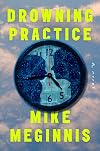
3.5+ Really appreciated the writing and the imagination needed to create it, but didn't entirely enjoy reading the book - tough premise. YA dystopian lit has been flourishing for almost 15 years (thanks to Hunger Games, etc.) and it seems like adult lit is catching up with a vengeance, although Handmaid's Tale was well ahead of the curve. But the stakes just seem higher, or else our reality is uncomfortably close. Here there is an interesting premise: the entire world population dreams the show more same dream: On November 1, the world (as we know it) will end by drowning. When the story kicks in, it is already May. The author does a great job of showing the varied responses - with apathy being highest on the list, followed closely by violence, and then, distantly, determination to achieve long-deferred goals. For the trio of protagonists, the first and last seem to be the most important, and violence is the constant threat that could interrupt either approach. Lyd (mother, and writer) and Mott, (13-year old daughter) were already avoiding violence in the person of David (ex-husband, father) when the dream occurred. His goal is strongly at odds with theirs: to get them back together as a family before the end. Lyd just wants to keep Mott safe, and Mott wants to write a novel like her mother has done, in part to please her, and in part to achieve something. There are some humorous aspects here: David works for the FBI, has everyone (including Lyd and Mott) under intense surveillance, but is also a total pot-head, running what is essentially a commune or flop-house for beautiful young people who he sees as his pseudo family. His hippie approach to his work: ask the universe for what you need, yields comic and coincidental results, which make him appear brilliant to the higher-ups. However, his mind-control abilities are pretty frightening, especially when it comes to Lyd, who really had to talk herself into divorce, but has been miserable ever since - medicating mostly with alcohol. Really, Mott is the parent (and the teacher when her 7th grade class is abandoned by their teacher who cries all day) and her capacity for understanding and empathy are the best part of this book, despite the vast amount of adult life she doesn't/can't understand with her limited years. Lyd and Mott go on the lam, avoiding David's all-seeing eyes with trickery and ingenuity, hiding out at Lyd's college alma mater, then a MI cabin with family friends, but David's power is closing in, along with the calendar and the Mott's need to finish writing. The dream's manifestation at the end is well done and a little surprising, maybe not as ominous as supposed, but thought-provoking for sure. Definitely not a vacation read - my mistake - but certainly worthwhile for anyone who would like to grapple with apocalyptic possibilities. Some great reflections on relationships and creativity: Lyd's explanation to Mott about why they are running from David: "I'm not saying he was always a bad father, I'm saying he was a terrible husband. You need to understand that marriage isn't about being kind. It's a step beyond kindness. It requires constant, active mercy. But your father couldn't handle that. He held everything against me, saw everything, recorded it all. He was never merciful with me." (184) And Eugene (cabin family friend) about his constant reading as the end approaches: Before, when he finished a book, "there used to be a sense that I was changed. After reading any halfway decent book, I felt both larger and smaller. Larger because I could see more and had more perspective. Smaller because you can't help feeling small when you see the world.....[now] I don't feel changed anymore, I feel swollen. No matter how broadly you read, there are limits to what you can learn. Any given person's only willing to see so much, and you see some part of it in everything, and once you've read enough, you have all the parts you'll ever have, and everything will be repetition....not because there isn't more to know, but because you can't or won't see it...[I keep reading] because it is enough for me to know that the books are still great, even it I can't see it anymore." (271) show less
(...)
Biggest draw are the characters. Lyd, Mott and David are realistic and recognizable, even though they have severe personal issues. Meginnis’ main focus is on how certain people try to dominate others emotionally: both the mother and the father are quite cunning on that front. I’d go as far and say the book is connected to Shirley Jackson’s We Have Always Lived in the Castle, in the sense that this book too is a thinly disguised story about mental problems, resulting in a similar show more eerie atmosphere. It didn’t surprise me when I read in an interview that Meginnis has suffered from a deep depression – like Jackson.
Meginnis makes this aspect of psychological horror something that is both timeless and very much about our time, like when he has a character parrot discourse about personal growth, exposing a culture high on its own catchphrases & meritocratic therapeutic delusions.
I also felt a connection to the work of visual artist Paul McCarthy, as Meginnis has his characters move inside a social landscape of decay, dysfunction and a certain form of timid excess. I use the adjective ‘timid’ here because Meginnis never outdoes it, striking a difficult balance between certain satirical elements and realism, and between genre stuff and originality. McCarthy’s video work comes to mind because he also exposes – admittedly much more explicitly – dark undercurrents in American society.
(...)
Full review on Weighing A Pig Doesn't Fatten It show less
Biggest draw are the characters. Lyd, Mott and David are realistic and recognizable, even though they have severe personal issues. Meginnis’ main focus is on how certain people try to dominate others emotionally: both the mother and the father are quite cunning on that front. I’d go as far and say the book is connected to Shirley Jackson’s We Have Always Lived in the Castle, in the sense that this book too is a thinly disguised story about mental problems, resulting in a similar show more eerie atmosphere. It didn’t surprise me when I read in an interview that Meginnis has suffered from a deep depression – like Jackson.
Meginnis makes this aspect of psychological horror something that is both timeless and very much about our time, like when he has a character parrot discourse about personal growth, exposing a culture high on its own catchphrases & meritocratic therapeutic delusions.
I also felt a connection to the work of visual artist Paul McCarthy, as Meginnis has his characters move inside a social landscape of decay, dysfunction and a certain form of timid excess. I use the adjective ‘timid’ here because Meginnis never outdoes it, striking a difficult balance between certain satirical elements and realism, and between genre stuff and originality. McCarthy’s video work comes to mind because he also exposes – admittedly much more explicitly – dark undercurrents in American society.
(...)
Full review on Weighing A Pig Doesn't Fatten It show less
This reminded me of the strange and wicked desperation of the series The Leftovers crossed with the quirky brilliance of character that Wes Anderson brings to each of his films. Needless to say, I loved this odd, dreamy and unsettling story about a mother and daughter and the impending end of the world. Very original and left me with a swollen heart and a tear choked throat. A great read for conspiracy theorists and fanatics of apocalyptic tales.
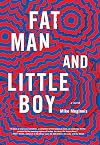
This novel posits the personification of the two atomic bombs dropped on Japan at the end of World War II and sends them on their way through the world in what begins as a picaresque set in the devastation they have wrought and ends in a domestic comedy when they settle down to family life in a community of oddballs. Our protagonists are hardly sympathetic figures; they are stubborn, quarrelsome, and rather dim, though I suppose that one can make the case that those are the characteristics show more that a bomb would exhibit if it became a human. At the start of the story our heroes possess several powers, extraordinary if not supernatural; some of these are somewhat trivial, but others are destructive, and, trivial or not, none of their effects are good. At some point these powers (along with the story's undertones of musings on the deeper meanings of atomic devastation) seem to disappear, unremarked, never to be mentioned again, which is puzzling. Since this, along with the novel's structure, which is episodic, especially at first, gives the book a disjointed quality, and the book is far too long, it's an enjoyable read only occasionally and thus qualifies as something of a waste of an enormously pregnant premise. show less
Lists
You May Also Like
Associated Authors
Statistics
- Works
- 4
- Also by
- 1
- Members
- 93
- Popularity
- #200,858
- Rating
- 3.6
- Reviews
- 5
- ISBNs
- 10