
About the Author
Joshua R. Eyler is the director of the Center for Teaching Excellence and adjunct associate professor of humanities at Rice University. He has a PhD in medieval studies from the University of Connecticut and has published on a range of topics, including evidence-based pedagogy, technology in the show more classroom, and disability studies. show less
Works by Joshua R. Eyler
How Humans Learn: The Science and Stories behind Effective College Teaching (Teaching and Learning in Higher Education) (2018) 96 copies, 3 reviews
Failing Our Future: How Grades Harm Students, and What We Can Do about It (2024) 11 copies, 1 review
Associated Works
Tagged
Common Knowledge
- Gender
- male
- Education
- Gettysburg College
Members
Reviews
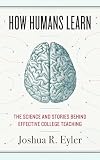
In How Humans Learn: The Science and Stories behind Effective College Teaching, Joshua Eyler brings together the latest in sociological and neurological research and asks what it can tell us about processes of teaching and learning. Eyler's synthesis is lucid and succinct and he makes some helpful points as to how these pedagogical insights can be applied in the college classroom.
However, I couldn't help feel a little frustrated at various moments while reading this book. I absolutely agree show more with his observations about how toxic grades are, and how limited a motivational tool they are—but are any of the tweaks he offers to the system really going to change that much for the vast majority of us who teach at institutions which mandate grades and which use them as a proxy for success? What I think hampers Eyler's analysis a little is his lack of engagement with the systems within which the teaching takes place. Perhaps this is an unfair criticism—only so much can fit into a 200-page book, after all—and regardless, this is still a worthwhile read for any college educator. show less
However, I couldn't help feel a little frustrated at various moments while reading this book. I absolutely agree show more with his observations about how toxic grades are, and how limited a motivational tool they are—but are any of the tweaks he offers to the system really going to change that much for the vast majority of us who teach at institutions which mandate grades and which use them as a proxy for success? What I think hampers Eyler's analysis a little is his lack of engagement with the systems within which the teaching takes place. Perhaps this is an unfair criticism—only so much can fit into a 200-page book, after all—and regardless, this is still a worthwhile read for any college educator. show less
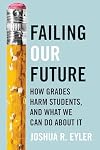
This is a great primer for those uninitiated to the idea of alternative grading, or those who need a baseline rationale. Beautifully researched and convincingly argued, Eyler demonstrates, on multiple levels, the actual harm of grading as a system, without resorting to heavy-handed rhetoric or sanctimonious finger-wagging. Eyler's audience should be parents, educators, and administrators, and there is wisdom here for both K-12 and higher ed. For the purposes of this particular book, his show more grouping of several alternative grading models under "Standards Based Grading" (SBG) makes sense, but it means that this is not the book if you are looking for nuanced explanations of the differences between, for example, SBG and Specifications (or "Specs") Grading. For that I recommend Grading for Growth by David Clark and Robert Talbert -- a book Eyler cites. Some of the stats and case studies make for tough reading, so consider this a content warning as he does briefly mention suicides at particular institutions (hopefully that doesn't shock anyone working for more than a few years in higher ed). Eyler covers a lot of ground in terms of providing both background and practical advice, and the rich bibliography is a fruitful place for further exploration. show less
How Humans Learn: The Science and Stories behind Effective College Teaching (Teaching and Learning in Higher Education) by Joshua R. Eyler
This book digs a little deeper into lots of research so is a somewhat slower read than Small Teaching. What I liked about the book is how it connects current scientific understanding of how the brain works with how we teach, giving us a clearer sense of the why - why certain teaching and learning methods are more effective than others. The chapters focus on curiosity, sociality, emotion, authenticity, and failure, with some teaching ideas. If you want just a lot of teaching ideas, this book show more may be a bit much, but if you want some deeper sense of what is going on in our brains while we are learning, this is probably a good fit. show less
How Humans Learn: The Science and Stories behind Effective College Teaching (Teaching and Learning in Higher Education) by Joshua R. Eyler
Not as helpful as some other books of the same genre. I don't really find the whole "evolution made us that way" segment particularly helpful and I don't teach pre-k nor k-12. But going through all that leaves very limited space for the practical higher ed stuff.
Lists
You May Also Like
Associated Authors
Statistics
- Works
- 5
- Also by
- 1
- Members
- 123
- Popularity
- #162,200
- Rating
- 4.1
- Reviews
- 4
- ISBNs
- 9