
Sufiya Ahmed
Author of The History Book: Our World in Pictures
Series
Works by Sufiya Ahmed
Famous Five Colour Short Stories: Timmy and the Treasure (Famous Five: Short Stories) (2022) 11 copies
Famous Five Colour Short Stories: The Library Mystery: Book 16 (Famous Five Adventures) (2024) 4 copies
Associated Works
It's Not About the Burqa: Muslim Women on Faith, Feminism, Sexuality and Race (2019) — Contributor — 245 copies, 9 reviews
Tagged
Common Knowledge
- Canonical name
- Ahmed, Sufiya
- Gender
- female
- Occupations
- Advertising
Politics
children's author - Short biography
- Sufiya Ahmed was born in India and arrived in the UK as a baby. She lived in Bolton, Lancashire, before moving to London where she still lives. Sufiya has worked in advertising and in the House of Commons, but is now a full-time author. In 2010 Sufiya set up the BIBI Foundation, a non-profit organisation, to arrange visits to the Houses of Parliament for diverse and underprivileged school children.
- Nationality
- India (birth)
UK (naturalized) - Places of residence
- Bolton, Lancashire, England, UK
London, England, UK - Map Location
- UK
Members
Discussions
Found: YA Literary Fiction Arrange Marriage Not Romance in Name that Book (May 2025)
Reviews

One of the most convincing explanations I have seen, of the rise of the girls' school-story novel in the late nineteenth century, and of its continued appeal, long after the popularity of the boys' school story was on the wane, is that it coincided with, and was tied to, the beginning of a dramatic rise in the formal educational opportunities available to young women and girls in Britain. Its role, in celebrating and promoting the more widespread education of girls - a new and progressive show more development in society - gives it a very different social significance than its male counterpart, something which makes its treatment, by many scholars, as an insignificant afterthought to the "real" school-story genre (the boys' one), particularly irksome.
I don't want to overstate the case, of course. In many ways, particularly as it relates to class, older school-stories can be quite conservative, even regressive at times, but the progressive potential of the genre, as a whole, as it relates to gender, is definitely part of what draws me to it; and, since founding a girls' school-story discussion group, on another site, part of why I have been looking around for contemporary examples. I have been quite curious to see whether that progressive potential is at all evident in more recent works.
All of which was at the back of my mind, when I first became aware of Sufiya Ahmed's series of children's novels about a young girl at an Islamic boarding school in Britain. Self-published - Ahmed founded her own company, Bibi Publishing, when mainstream British publishers wouldn't accept her work - these books are an outgrowth of the author's general belief, as expressed in interviews, that there was a shortage of juvenile fiction with Muslim characters - "British Muslim characters with all their complex make up intact, but who were proud to be British and proud to be Muslim, equally" - and her specific desire to write "about female Muslim characters who were both confident and empowered." Clearly, here was a contemporary example of the girls' school-story that fit perfectly into the schema outlined above, and I lost no time in obtaining a copy!
Zahra's First Term at the Khadija Academy follows the story of eleven-year-old Zahra Khan, a young British Muslim girl, whose doctor parents - her father is of Pakistani origin, her mother English, and a convert to Islam - send her to an Islamic boarding school, the Khadija Academy of Aspiring Young Women (named in honor of the Prophet Muhammad's first wife), when they travel to Africa as part of a medical mission. Zahra, a much-indulged only child, is angry and hurt by this development - she is convinced her parents no longer love her, and resentful of the African children whom she imagines have usurped her parents' affections - and decides to get herself expelled as soon as possible. But as she becomes better acquainted with her new classmates, from her Scots room-mate Marya Yusuf, to her "next-door-neighbors" Hannah Joseph and Jobena Leroy, and becomes involved in her new classes, including modern and classical Arabic, and the exciting Media Monitoring, whose purpose is to examine the portrayal of Muslims in the media, Zahra gradually, almost without realizing it, begins to settle in. Then a prank gone wrong gives her the chance at escape that she thinks she's wanted all along, and Zahra begins to have second thoughts. Is leaving the Khadija Academy really what she wants...?
I enjoyed this first foray into Zahra's world, not least because, in addition to penning an entertaining story, Sufiya Ahmed really manages to capture a young girl's complicated feelings, during a time of change, and her sometimes turbulent reaction to the first real separation between herself and her parents. The scene in which Zahra fumes about her parents going "gallivanting off to help sick children in Africa," was particularly apt (and humorous), as Zahra decides she "hates" Africa, as well as everyone and everything else in the world. Whilst not very admirable, feelings of anger and jealousy are something with which all young readers will be able to identify, I think.
I also really appreciated the author's inspirational message for young Muslim women: that they, and they alone, must speak up for and defend themselves, rather than relying on Muslim men, or non-Muslim women. That they must seize the opportunity to educate themselves, and be advocates for their community, in the wider multicultural world. Islam is obviously very central to the story (and the characters) here, and I felt, as an outsider, that I learned a little bit about the ideals and beliefs of this religion (as understood by the author), from the respect and kindness one should show to elders, to the equality of all Muslims, regardless of race or class. There were certainly ideas presented, with which I would vehemently disagree - particularly as it concerns the infallibility of any book (the Quran) or man (the Prophet Muhammad) - but then, I would have those same disagreements with any number of religious groups/beliefs.
I was struck, in the course of my reading, by how well Ahmed's purpose - in promoting the ideal of educated, self-confident Muslim girls - is suited to the girls' school-story, and I liked that so many of the traditional elements of such a story - the initially reluctant girl who is "reformed," the midnight feasts and pranks, the schoolgirl enemy (in the form of the snobby Saira Choudhury) - found their way into the book. There were some odd word choices, and some typos that any copy editor would have immediately caught (at one point, Zahra "actions" a plan, rather than "acting on" it), but I put that down to this being a self-published effort. The storytelling itself is very engaging. I would recommend Zahra's First Term at the Khadija Academy to any young Muslim woman, but particularly those living in the west, and to school-story lovers looking for something a little different. American readers, in particular, could benefit from a story like this, I feel, which makes it unfortunate that it is not easily obtainable in this country. All in all, well worth a read - I've already started the sequel! show less
I don't want to overstate the case, of course. In many ways, particularly as it relates to class, older school-stories can be quite conservative, even regressive at times, but the progressive potential of the genre, as a whole, as it relates to gender, is definitely part of what draws me to it; and, since founding a girls' school-story discussion group, on another site, part of why I have been looking around for contemporary examples. I have been quite curious to see whether that progressive potential is at all evident in more recent works.
All of which was at the back of my mind, when I first became aware of Sufiya Ahmed's series of children's novels about a young girl at an Islamic boarding school in Britain. Self-published - Ahmed founded her own company, Bibi Publishing, when mainstream British publishers wouldn't accept her work - these books are an outgrowth of the author's general belief, as expressed in interviews, that there was a shortage of juvenile fiction with Muslim characters - "British Muslim characters with all their complex make up intact, but who were proud to be British and proud to be Muslim, equally" - and her specific desire to write "about female Muslim characters who were both confident and empowered." Clearly, here was a contemporary example of the girls' school-story that fit perfectly into the schema outlined above, and I lost no time in obtaining a copy!
Zahra's First Term at the Khadija Academy follows the story of eleven-year-old Zahra Khan, a young British Muslim girl, whose doctor parents - her father is of Pakistani origin, her mother English, and a convert to Islam - send her to an Islamic boarding school, the Khadija Academy of Aspiring Young Women (named in honor of the Prophet Muhammad's first wife), when they travel to Africa as part of a medical mission. Zahra, a much-indulged only child, is angry and hurt by this development - she is convinced her parents no longer love her, and resentful of the African children whom she imagines have usurped her parents' affections - and decides to get herself expelled as soon as possible. But as she becomes better acquainted with her new classmates, from her Scots room-mate Marya Yusuf, to her "next-door-neighbors" Hannah Joseph and Jobena Leroy, and becomes involved in her new classes, including modern and classical Arabic, and the exciting Media Monitoring, whose purpose is to examine the portrayal of Muslims in the media, Zahra gradually, almost without realizing it, begins to settle in. Then a prank gone wrong gives her the chance at escape that she thinks she's wanted all along, and Zahra begins to have second thoughts. Is leaving the Khadija Academy really what she wants...?
I enjoyed this first foray into Zahra's world, not least because, in addition to penning an entertaining story, Sufiya Ahmed really manages to capture a young girl's complicated feelings, during a time of change, and her sometimes turbulent reaction to the first real separation between herself and her parents. The scene in which Zahra fumes about her parents going "gallivanting off to help sick children in Africa," was particularly apt (and humorous), as Zahra decides she "hates" Africa, as well as everyone and everything else in the world. Whilst not very admirable, feelings of anger and jealousy are something with which all young readers will be able to identify, I think.
I also really appreciated the author's inspirational message for young Muslim women: that they, and they alone, must speak up for and defend themselves, rather than relying on Muslim men, or non-Muslim women. That they must seize the opportunity to educate themselves, and be advocates for their community, in the wider multicultural world. Islam is obviously very central to the story (and the characters) here, and I felt, as an outsider, that I learned a little bit about the ideals and beliefs of this religion (as understood by the author), from the respect and kindness one should show to elders, to the equality of all Muslims, regardless of race or class. There were certainly ideas presented, with which I would vehemently disagree - particularly as it concerns the infallibility of any book (the Quran) or man (the Prophet Muhammad) - but then, I would have those same disagreements with any number of religious groups/beliefs.
I was struck, in the course of my reading, by how well Ahmed's purpose - in promoting the ideal of educated, self-confident Muslim girls - is suited to the girls' school-story, and I liked that so many of the traditional elements of such a story - the initially reluctant girl who is "reformed," the midnight feasts and pranks, the schoolgirl enemy (in the form of the snobby Saira Choudhury) - found their way into the book. There were some odd word choices, and some typos that any copy editor would have immediately caught (at one point, Zahra "actions" a plan, rather than "acting on" it), but I put that down to this being a self-published effort. The storytelling itself is very engaging. I would recommend Zahra's First Term at the Khadija Academy to any young Muslim woman, but particularly those living in the west, and to school-story lovers looking for something a little different. American readers, in particular, could benefit from a story like this, I feel, which makes it unfortunate that it is not easily obtainable in this country. All in all, well worth a read - I've already started the sequel! show less

Zahra Khan returns in this second adventure, full of good intentions, and determined to have a better term (with far fewer visits to headmistress Sister Zainab's office!) than she did in the first book in Sufiya Ahmed's series, Zahra's First Term at the Khadija Academy. To start with, she's not looking to get expelled, this time around! But although she continues to excel in her studies, and is even chosen, along with her partner Farida, to represent the first year students of the Khadija show more Academy of Aspiring Young Women in their upcoming debate with the pupils of the Aisha School of Excellence (run by Sister Zainab's sibling, Sister Zeenat), Zahra finds that there are still any number of schoolgirl controversies and crises that pull her in.
From a disturbing incident in which a book at the local library is vandalized by students who object to its criticism of the Prophet Muhammad, to a mysterious series of thefts at the academy, Zahra and her friends - Marya Yusuf, Jobena Leroy, and Hannah Joseph - are on the case. But although Zahra sympathizes with those who suspect and dislike Saira Choudhury - her snobby schoolgirl enemy - and finds herself going along with the various schemes against her, she also begins to take a hard look at the assumptions of those on "her" side, from Marya's obsession with getting revenge, to Jo's apparent unconcern at the idea of physically destroying things that displease her. It's definitely another tumultuous term at the Khadija Academy!
I enjoyed Zahra's Great Debate, which continues the engaging story of a young British Muslim girl and her time at a progressive Islamic girls' boarding school. As with the first book, I appreciated Sufiya Ahmed's inspirational message for young Muslim girls: that they are the equals of boys, and need to educate and advocate for themselves. Ahmed isn't afraid to address controversial topics, from the failure of many in the Muslim community to address criticism with "words alone," rather than violence (or vandalism), to the racism sometimes displayed by those in the Arab world, who see Islam as an exclusively Arab institution, and look down on the faithful from other areas of the world (like Asia).
There are some weaknesses here, from the fairly obvious identity of the thief (in fact, I guessed that there would be such a subplot almost from the very beginning), to the continued editing errors, also seen in the first installment. Of course, I'm an adult reader who is very interested in the school-story, so it may be that what I found obvious would be less readily apparent to younger readers. I'm also an editor (of sorts), and very attentive to odd word choices, so the errors ("she had planning," rather than "she had planned") may have stuck out more, for me. In any case, despite these issues, and some more philosophical ones (I'm not a big proponent of parochial schooling), I found the story engaging, and many of the ideas put forward quite interesting. I will definitely want to pick up the third installment of the series, Zahra's Trip to Misr, whenever it is published! show less
From a disturbing incident in which a book at the local library is vandalized by students who object to its criticism of the Prophet Muhammad, to a mysterious series of thefts at the academy, Zahra and her friends - Marya Yusuf, Jobena Leroy, and Hannah Joseph - are on the case. But although Zahra sympathizes with those who suspect and dislike Saira Choudhury - her snobby schoolgirl enemy - and finds herself going along with the various schemes against her, she also begins to take a hard look at the assumptions of those on "her" side, from Marya's obsession with getting revenge, to Jo's apparent unconcern at the idea of physically destroying things that displease her. It's definitely another tumultuous term at the Khadija Academy!
I enjoyed Zahra's Great Debate, which continues the engaging story of a young British Muslim girl and her time at a progressive Islamic girls' boarding school. As with the first book, I appreciated Sufiya Ahmed's inspirational message for young Muslim girls: that they are the equals of boys, and need to educate and advocate for themselves. Ahmed isn't afraid to address controversial topics, from the failure of many in the Muslim community to address criticism with "words alone," rather than violence (or vandalism), to the racism sometimes displayed by those in the Arab world, who see Islam as an exclusively Arab institution, and look down on the faithful from other areas of the world (like Asia).
There are some weaknesses here, from the fairly obvious identity of the thief (in fact, I guessed that there would be such a subplot almost from the very beginning), to the continued editing errors, also seen in the first installment. Of course, I'm an adult reader who is very interested in the school-story, so it may be that what I found obvious would be less readily apparent to younger readers. I'm also an editor (of sorts), and very attentive to odd word choices, so the errors ("she had planning," rather than "she had planned") may have stuck out more, for me. In any case, despite these issues, and some more philosophical ones (I'm not a big proponent of parochial schooling), I found the story engaging, and many of the ideas put forward quite interesting. I will definitely want to pick up the third installment of the series, Zahra's Trip to Misr, whenever it is published! show less

Schoolgirl Zahra Khan and her fellow pupils at the Khadija Academy set out for Misr (or Egypt, as it is known here in the West) in this third installment of Sufiya Ahmed's series of children's novels chronicling the doings at a progressive Islamic boarding school for girls in Britain. Excited at the prospect of spending time abroad together, Zahra and her best mates - Marya Yusuf, Hannah Joseph and Jobena Leroy - are no sooner embarked on the flight when trouble arises, in the form of toxic show more school bully and snob, Saira Choudhury, who locks the claustrophobic Jo in the plane's tiny bathroom. The excitement continues in Cairo, as the girls pray at the Al Azhar Mosque, shop at the famous market Khan-e-Khalili, and visit the pyramids; but when Hannah and Jo's efforts to repay Saira in kind for her actions on the flight over go horribly wrong, and the two are confined to the hotel, it looks like the trip might be spoiled. Then the girls, together with some newfound friends from St. Mary's school (also on a school trip in Cairo), discover that a fellow guest at their hotel may be in danger. Can they discover what ails the girl-with-the-sad-face, and if so, will they be able to come up with a plan to help her...?
An engaging continuation of the story begun in Zahra's First Term at the Khadija Academy and Zahra's Great Debate, this slim volume - like the others in the series, it is put out by Ahmed's own Bibi Publishing, as mainstream publishers in the UK would not accept it - was a lot of fun to read. I enjoyed Zahra's Trip to Misr, with its continuation of the Zahra & Co vs. Saira Choudhury rivalry (which looks to only get more interesting in the forthcoming Zahra's Second Year at the Khadija Academy, if the conclusion here is anything to judge by!), and its introduction of new characters, such as Anu Apa, the daughter of Khadija Academy headmistress, Sister Zainab. As with its predecessors, I learned some new things, such as the fact that Allah has ninety-nine names, in the Islamic tradition, or that nasheeds (a cappella songs praising various Islamic figures and themes) are so immensely popular in the Muslim world. There were a few errors - at one point one of the characters describes the pyramids as the oldest structure on earth, when this honor belongs to Newgrange, in the Irish Brú na Bóinne (I had the pleasure of visiting it for the second time, last month) - and I didn't care for the way in which Aunt Sandra's reaction to being told she would look better in a hijab, at the beginning of the book, was dismissed as embarrassing by Zahra. On the other hand, I really liked the way that the girls from the Khadija Academy and from St. Mary's worked together to respond to the crisis involving Mumtaz, and although I wish that the larger impact of modern slavery in the Middle East had been mentioned, was glad to see the issue being raised at all.
Despite these relatively minor criticisms, I did enjoy Zahra's Trip to Misr, which, in addition to presenting an engaging story, seemed a lot better edited that previous installments of the series. I continue to think that it is a shame that such fun stories, featuring contemporary young Muslim girls, aren't more widely available, both to British readers, and to American ones. I will definitely be keeping an eye out for the next installment of the Zahra series, and will be hunting down a copy of Ahmed's more serious young adult title, Secrets of the Henna Girl, which marks her entry into the conventional publishing world. show less
An engaging continuation of the story begun in Zahra's First Term at the Khadija Academy and Zahra's Great Debate, this slim volume - like the others in the series, it is put out by Ahmed's own Bibi Publishing, as mainstream publishers in the UK would not accept it - was a lot of fun to read. I enjoyed Zahra's Trip to Misr, with its continuation of the Zahra & Co vs. Saira Choudhury rivalry (which looks to only get more interesting in the forthcoming Zahra's Second Year at the Khadija Academy, if the conclusion here is anything to judge by!), and its introduction of new characters, such as Anu Apa, the daughter of Khadija Academy headmistress, Sister Zainab. As with its predecessors, I learned some new things, such as the fact that Allah has ninety-nine names, in the Islamic tradition, or that nasheeds (a cappella songs praising various Islamic figures and themes) are so immensely popular in the Muslim world. There were a few errors - at one point one of the characters describes the pyramids as the oldest structure on earth, when this honor belongs to Newgrange, in the Irish Brú na Bóinne (I had the pleasure of visiting it for the second time, last month) - and I didn't care for the way in which Aunt Sandra's reaction to being told she would look better in a hijab, at the beginning of the book, was dismissed as embarrassing by Zahra. On the other hand, I really liked the way that the girls from the Khadija Academy and from St. Mary's worked together to respond to the crisis involving Mumtaz, and although I wish that the larger impact of modern slavery in the Middle East had been mentioned, was glad to see the issue being raised at all.
Despite these relatively minor criticisms, I did enjoy Zahra's Trip to Misr, which, in addition to presenting an engaging story, seemed a lot better edited that previous installments of the series. I continue to think that it is a shame that such fun stories, featuring contemporary young Muslim girls, aren't more widely available, both to British readers, and to American ones. I will definitely be keeping an eye out for the next installment of the Zahra series, and will be hunting down a copy of Ahmed's more serious young adult title, Secrets of the Henna Girl, which marks her entry into the conventional publishing world. show less
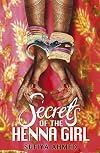
16 year old Zeba Khan thinks she's just going to Pakistan for the summer with her parents to visit her Nannyma, but when she gets there she finds out that she is there to officially become engaged to her cousin Asif, who she has NO intention of marrying. Her parents transform into people she can hardly recognize, and refuse to consider her happiness or desires. The book does a great job of providing some history without being dry or dull, and Zeba is a character you can't help but root for. show more Won't tell you what happens, but will tell you that it's a very enjoyable read, and when you occasionally break for a tea break, you'll be surprised to see you're not in Pakistan. show less
Awards


You May Also Like
Associated Authors
Statistics
- Works
- 31
- Also by
- 1
- Members
- 204
- Popularity
- #108,206
- Rating
- 3.7
- Reviews
- 7
- ISBNs
- 46
- Languages
- 3
- Favorited
- 2