

Thomas B. Fowler
Author of Evolution Controversy, The: A Survey of Competing Theories
About the Author
Image credit: Used by permission of Baker Publishing Group, copyright © 2008. All rights to this material are reserved. Materials are not to be distributed to other web locations for retrieval, published(see © info.)
Works by Thomas B. Fowler
Tagged
Common Knowledge
- Gender
- male
Members
Reviews
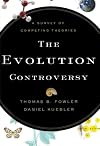
The authors (F&K) proceed to outline, with dogged even-handedness and in a somewhat plodding and repetitive manner, four schools of thought about the origins of life. Here is one non-scientist’s impression of their attempt.
According to F&K, the evidence (geology, fossils, genetics, physiology, astrophysics) points overwhelmingly to an apparently old earth & evolution by common descent. But the evidence is somewhat more tentative when it comes to demonstrating gradual evolution by natural show more selection of beneficial genetic mutations (called “Neo-Darwinism” in this work, what I would have called the Standard Darwinian Synthesis). Better explanations are needed to explain how beneficial genetic information and structural novelty is introduced into the system to give rise to new genera or families (“macro-evolution”) as opposed to adaptations within species or genera (“micro-evolution”). In their assessment, “Neo-Darwinism” is by many measures a superior scientific explanation of the evidence, notwithstanding significant caveats.
“Meta-Darwinism” describes alternative approaches to explaining evolutionary mechanisms. These range from punctuated equilibrium (same Darwinian mechanism, different conditions and rates) to supplementary and even alternative explanations to natural selection. All of these explanations invoke only natural causes and mechanisms. F&K judge that “Meta-Darwinian” explanations hold intriguing possibilities, but need far more evidence and testing to rival the explanatory power of “Neo-Darwinism”.
Intelligent Design, while generally not disputing the general scientific interpretation of the evidence, seeks to show that purely “naturalistic” mechanisms cannot have given rise to key biological novelties. This is done through an examination of the probabilities of natural selection interacting with beneficial genetic mutations, and testing which biological novelties could not have arisen through purely naturalistic mechanisms (“irreducible complexity”). F&K think that ID’s interpretation of probabilities overstates its case, and question exactly how we are to know when we actually find an example of irreducible complexity.
To this reviewer, it is unclear to me how ID can even be considered a comparable theory of origins. Its approach can be wedded to many theories (all the way from creationism to a modified view of Darwinism). ID works by seeking to exclude some phenomena from scientific investigation rather than proposing exactly how those phenomena arose. On that count Creationism is more scientific. So its inclusion as one competing school of origins in this book is somewhat anomalous.
Young earth Creationism (F&K dismiss old earth creationists as not really disputing the available evidence) challenges accepted interpretations of the evidence to posit a young universe spontaneously created thousands, not billions, of years ago. While good at finding some holes in evolutionary theory, it seems that F&K think that this school struggles to satisfactorily explain the evidence.
On a scientific level, the book seems to be a good guide which tries to be even-handed and evaluates pros and cons in each school. I am not scientifically trained, so it is beyond me to fully assess how accurate is their representation of the science. One review of this book (http://www.amazon.com/review/R39AEOKM8TYQ02/ref=cm_cr_rdp_perm) has found some errors of fact.
A concluding “Policy & Outlook” section is somewhat shallower, but again seeks the same even-handedness. F&K advocate that alternatives to Neo-Darwinism be taught in schools because it is a good exercise in thinking critically about science. In no way do they favour a ban on the teaching of Neo-Darwinism, or even equal time being given to alternatives.
At the end F&K concede that no resolution will be possible without decoupling the philosophical/theological issues from the scientific issues. One has to question if this can really be done.
My main problem with F&K’s overview of the debate is that they don’t really come to terms with the theological/philosophical issues. Perhaps it is right that a purely scientific approach be taken. Yet the authors need to develop a philosophy of science, because this seems one of the key issues at stake: can science accommodate non-naturalistic explanations? Do naturalistic explanations exclude divine activity? Or vice versa? What is a scientific model for explaining the past?
Additionally, is it right that scientific theories be driven by non-scientific frameworks? While creationists can make scientific statements (which should be tested), can creationism be properly be called “scientific”. It does not proceed from observations about the world that give rise to testable hypotheses. Rather, it seeks to fit the natural world into a pre-ordained dogmatic framework. While it is true that Darwinism can also be dogmatic, it arose and survives as a product of the scientific method.
The authors make the distinction between naturalistic methodology (ie. scientific method deals with the natural, not supernatural) and a naturalistic world view (the only valid explanations are based on scientific method), and rightly criticise many proponents of evolution for advocating philosophical naturalism as the only corollary of biological evolution. Yet, lacking a explicit philosophy of science, F&K are unable to rightly criticise the reductionism of philosophical naturalists (there is nothing that cannot be scientifically tested, and all things have only a naturalistic explanation) and the equally erroneous premise of creationists and IDers (to preserve divine activity in creation, a Christian account of natural origins must have some aspects that cannot be described scientifically).
Ultimately this book shows the limits of understanding, let alone resolving, these conflicting views without a recourse to underlying philosophy and theology. Therefore it continually annoyed me that the authors dismiss “theistic evolution” (an oxymoron), claiming that it (as well as old earth or progressive creationism) add nothing to the science of the debate. However a great many Christian scientists do operate happily in some form of evolutionary framework. I came away from this book with an unpleasant impression that there is little room between the scientific if godless evolutionists (Neo- and Meta-) and the sub-scientific but well-meaning proponents of Christian alternatives. Yet there is, and only a proper examination of the underlying non-scientific issues, as well as the science, can hope to move forward to any solution.
As a reviewer, as a Christian, as someone who holds that an evangelical reading of scripture does not mandate a particular scientific view on natural origins, I find that the following two propositions, beyond the scope of this book, help clarify the issues.
1. All aspects of physical and natural reality are amenable to both scientific and theological/moral explanation. As I read scripture, I see a God who works in and through the natural order, created through and for Jesus Christ. Therefore, everything I see in nature is evidence of an intelligent, a divine, design. This is not demonstrated by a new version of the “God of the gaps”, but grasped through faith in Christ. God is therefore free to intervene miraculously (contra to natural laws), but this is no more his activity than the sun rising and setting every day. And, on the other hand, while I do not find it disturbing that many human behaviours have an evolutionary explanation, that does not mean explain away any need for moral consideration. After all, who made behavioural scientists experts in morality and ethics?
2. The Bible does not mandate a particular theory of origins. Creationism would have no raison d’être were it not for its view that Genesis 1 (and, subsidiary to it, chapters 2-11) have to be interpreted in a particular, more literal way. Questions of scriptural interpretation are rarely voiced among churches (their natural habitat) where creationism is assumed. Yet they need to be. The concerns of those chapters are with issues contemporary with their ancient audiences, not modern science. Their style cannot support the scientific questions asked of them. In fact, there are elements that contradict a scientific understanding. When the poetic and narrative power of those chapters of the Bible come to the fore, and are loosened from the polemical baggage that has been imposed upon them, then they speak with a freshness and power that is liberating. They give rise to a robust and even militant theology of creation that can truly challenge the false gods of our society. show less
According to F&K, the evidence (geology, fossils, genetics, physiology, astrophysics) points overwhelmingly to an apparently old earth & evolution by common descent. But the evidence is somewhat more tentative when it comes to demonstrating gradual evolution by natural show more selection of beneficial genetic mutations (called “Neo-Darwinism” in this work, what I would have called the Standard Darwinian Synthesis). Better explanations are needed to explain how beneficial genetic information and structural novelty is introduced into the system to give rise to new genera or families (“macro-evolution”) as opposed to adaptations within species or genera (“micro-evolution”). In their assessment, “Neo-Darwinism” is by many measures a superior scientific explanation of the evidence, notwithstanding significant caveats.
“Meta-Darwinism” describes alternative approaches to explaining evolutionary mechanisms. These range from punctuated equilibrium (same Darwinian mechanism, different conditions and rates) to supplementary and even alternative explanations to natural selection. All of these explanations invoke only natural causes and mechanisms. F&K judge that “Meta-Darwinian” explanations hold intriguing possibilities, but need far more evidence and testing to rival the explanatory power of “Neo-Darwinism”.
Intelligent Design, while generally not disputing the general scientific interpretation of the evidence, seeks to show that purely “naturalistic” mechanisms cannot have given rise to key biological novelties. This is done through an examination of the probabilities of natural selection interacting with beneficial genetic mutations, and testing which biological novelties could not have arisen through purely naturalistic mechanisms (“irreducible complexity”). F&K think that ID’s interpretation of probabilities overstates its case, and question exactly how we are to know when we actually find an example of irreducible complexity.
To this reviewer, it is unclear to me how ID can even be considered a comparable theory of origins. Its approach can be wedded to many theories (all the way from creationism to a modified view of Darwinism). ID works by seeking to exclude some phenomena from scientific investigation rather than proposing exactly how those phenomena arose. On that count Creationism is more scientific. So its inclusion as one competing school of origins in this book is somewhat anomalous.
Young earth Creationism (F&K dismiss old earth creationists as not really disputing the available evidence) challenges accepted interpretations of the evidence to posit a young universe spontaneously created thousands, not billions, of years ago. While good at finding some holes in evolutionary theory, it seems that F&K think that this school struggles to satisfactorily explain the evidence.
On a scientific level, the book seems to be a good guide which tries to be even-handed and evaluates pros and cons in each school. I am not scientifically trained, so it is beyond me to fully assess how accurate is their representation of the science. One review of this book (http://www.amazon.com/review/R39AEOKM8TYQ02/ref=cm_cr_rdp_perm) has found some errors of fact.
A concluding “Policy & Outlook” section is somewhat shallower, but again seeks the same even-handedness. F&K advocate that alternatives to Neo-Darwinism be taught in schools because it is a good exercise in thinking critically about science. In no way do they favour a ban on the teaching of Neo-Darwinism, or even equal time being given to alternatives.
At the end F&K concede that no resolution will be possible without decoupling the philosophical/theological issues from the scientific issues. One has to question if this can really be done.
My main problem with F&K’s overview of the debate is that they don’t really come to terms with the theological/philosophical issues. Perhaps it is right that a purely scientific approach be taken. Yet the authors need to develop a philosophy of science, because this seems one of the key issues at stake: can science accommodate non-naturalistic explanations? Do naturalistic explanations exclude divine activity? Or vice versa? What is a scientific model for explaining the past?
Additionally, is it right that scientific theories be driven by non-scientific frameworks? While creationists can make scientific statements (which should be tested), can creationism be properly be called “scientific”. It does not proceed from observations about the world that give rise to testable hypotheses. Rather, it seeks to fit the natural world into a pre-ordained dogmatic framework. While it is true that Darwinism can also be dogmatic, it arose and survives as a product of the scientific method.
The authors make the distinction between naturalistic methodology (ie. scientific method deals with the natural, not supernatural) and a naturalistic world view (the only valid explanations are based on scientific method), and rightly criticise many proponents of evolution for advocating philosophical naturalism as the only corollary of biological evolution. Yet, lacking a explicit philosophy of science, F&K are unable to rightly criticise the reductionism of philosophical naturalists (there is nothing that cannot be scientifically tested, and all things have only a naturalistic explanation) and the equally erroneous premise of creationists and IDers (to preserve divine activity in creation, a Christian account of natural origins must have some aspects that cannot be described scientifically).
Ultimately this book shows the limits of understanding, let alone resolving, these conflicting views without a recourse to underlying philosophy and theology. Therefore it continually annoyed me that the authors dismiss “theistic evolution” (an oxymoron), claiming that it (as well as old earth or progressive creationism) add nothing to the science of the debate. However a great many Christian scientists do operate happily in some form of evolutionary framework. I came away from this book with an unpleasant impression that there is little room between the scientific if godless evolutionists (Neo- and Meta-) and the sub-scientific but well-meaning proponents of Christian alternatives. Yet there is, and only a proper examination of the underlying non-scientific issues, as well as the science, can hope to move forward to any solution.
As a reviewer, as a Christian, as someone who holds that an evangelical reading of scripture does not mandate a particular scientific view on natural origins, I find that the following two propositions, beyond the scope of this book, help clarify the issues.
1. All aspects of physical and natural reality are amenable to both scientific and theological/moral explanation. As I read scripture, I see a God who works in and through the natural order, created through and for Jesus Christ. Therefore, everything I see in nature is evidence of an intelligent, a divine, design. This is not demonstrated by a new version of the “God of the gaps”, but grasped through faith in Christ. God is therefore free to intervene miraculously (contra to natural laws), but this is no more his activity than the sun rising and setting every day. And, on the other hand, while I do not find it disturbing that many human behaviours have an evolutionary explanation, that does not mean explain away any need for moral consideration. After all, who made behavioural scientists experts in morality and ethics?
2. The Bible does not mandate a particular theory of origins. Creationism would have no raison d’être were it not for its view that Genesis 1 (and, subsidiary to it, chapters 2-11) have to be interpreted in a particular, more literal way. Questions of scriptural interpretation are rarely voiced among churches (their natural habitat) where creationism is assumed. Yet they need to be. The concerns of those chapters are with issues contemporary with their ancient audiences, not modern science. Their style cannot support the scientific questions asked of them. In fact, there are elements that contradict a scientific understanding. When the poetic and narrative power of those chapters of the Bible come to the fore, and are loosened from the polemical baggage that has been imposed upon them, then they speak with a freshness and power that is liberating. They give rise to a robust and even militant theology of creation that can truly challenge the false gods of our society. show less
Statistics
- Works
- 2
- Members
- 74
- Popularity
- #238,153
- Rating
- 4.8
- Reviews
- 2
- ISBNs
- 3