
Peter Linehan (1943–2020)
Author of The Medieval World
Works by Peter Linehan
Cross, Crescent and Conversion: Studies on Medieval Spain and Christendom in Memory of Richard Fletcher (The Medieval Mediterranean) (2007) — Editor — 15 copies
The Spanish Church and the Papacy in the Thirteenth Century (Cambridge Studies in Medieval Life and Thought: Third Series) (1971) 5 copies
Historical Memory and Clerical Activity in Medieval Spain and Portugal (Variorum Collected Studies Series) (2012) 3 copies
Las dueñas de Zamora secretos, estupro y poderes en la Iglesia española del siglo XIII (2000) 2 copies
Portugalia pontificia : materials for the history of Portugal and the papacy, 1198-1417 (2013) 2 copies
Associated Works
The New Cambridge Medieval History: Volume 4, c.1024-c.1198, Part 1 (2004) — Contributor — 75 copies, 1 review
Tagged
Common Knowledge
- Legal name
- Linehan, Peter Anthony
- Birthdate
- 1943-07-11
- Date of death
- 2020-07-09
- Gender
- male
- Education
- St, Benedict’s School, Ealing
University of Cambridge (St. John’s College) - Occupations
- historian of Spain
Fellow of St. John’s College, Cambridge - Cause of death
- heart disease
- Nationality
- UK
- Birthplace
- Mortlake, London, Uk
- Associated Place (for map)
- Mortlake, London, Uk
Members
Reviews
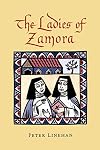
This is supposedly a study of a community of Dominican sisters at Zamora (in what is today Spain) in their socio-political context. Instead, The Ladies of Zamora is a snide and ill-conceived work, one which confuses tortured syntax for wit and assumption for analysis.
Neither Peter Linehan's bibliography nor his understanding of the sisters of Zamora shows much engagement with the burgeoning body of work on women religious which was in existence by the late 90s when this work was published. show more I don't think he engages with a female historian's work except to snipe at it (feminist history, by the way, is "ideological colonisation, indeed, of the as yet uncharted past" which is "historiographical modishness [...] the ladies themselves being sacrificed to the pitiless imperatives of the dialectic") Yet while Linehan insists over and over that his is strictly a just-the-facts-ma'am account, he consistently treats his male and female subjects differently, and holds them to different evidential standards—hardly the model of impartial reason he clearly prides himself on being.
This is apparent throughout. While the cathedral canons of the city devote themselves to "extending and rationalising" their estates, the sisters' stewardship of their estates shows them to be caught up by "the spirit of limited-term investment rather than permanent commitment" to the religious life. Based on the evidence of an (abbreviated! scribally created! non-vernacular!) deposition transcript, Linehan concludes that the sisters were sex-crazed "harridans", "thin-lipped", "sullen", "a community of possibly vindictive women", and compares these grown women to immature female undergrads. (Wow, it must have been fun to be a woman and one of his students.)
The sisters of Zamora are, in Linehan's account, not truly agential or integrated parts of the political and religious lives of their city—but they sure are shrews! Hence, I presume, why he uses a misogynist quotation from Byron as a chapter epigraph, and an even worse one from Ovid (Casta est quam nemo rogavit) as a pithy, "haha ladies amirite?" summation of some kind of eternal truth about women.
Add in a soupçon of xenophobia (living in the south of Spain would offer northern European settlers only "endless olive oil and the prospect of stomach cramps in perpetuity"), disjointed organisation, and some truly tortured syntax, and this makes for a truly horrendous book. Avoid. show less
Neither Peter Linehan's bibliography nor his understanding of the sisters of Zamora shows much engagement with the burgeoning body of work on women religious which was in existence by the late 90s when this work was published. show more I don't think he engages with a female historian's work except to snipe at it (feminist history, by the way, is "ideological colonisation, indeed, of the as yet uncharted past" which is "historiographical modishness [...] the ladies themselves being sacrificed to the pitiless imperatives of the dialectic") Yet while Linehan insists over and over that his is strictly a just-the-facts-ma'am account, he consistently treats his male and female subjects differently, and holds them to different evidential standards—hardly the model of impartial reason he clearly prides himself on being.
This is apparent throughout. While the cathedral canons of the city devote themselves to "extending and rationalising" their estates, the sisters' stewardship of their estates shows them to be caught up by "the spirit of limited-term investment rather than permanent commitment" to the religious life. Based on the evidence of an (abbreviated! scribally created! non-vernacular!) deposition transcript, Linehan concludes that the sisters were sex-crazed "harridans", "thin-lipped", "sullen", "a community of possibly vindictive women", and compares these grown women to immature female undergrads. (Wow, it must have been fun to be a woman and one of his students.)
The sisters of Zamora are, in Linehan's account, not truly agential or integrated parts of the political and religious lives of their city—but they sure are shrews! Hence, I presume, why he uses a misogynist quotation from Byron as a chapter epigraph, and an even worse one from Ovid (Casta est quam nemo rogavit) as a pithy, "haha ladies amirite?" summation of some kind of eternal truth about women.
Add in a soupçon of xenophobia (living in the south of Spain would offer northern European settlers only "endless olive oil and the prospect of stomach cramps in perpetuity"), disjointed organisation, and some truly tortured syntax, and this makes for a truly horrendous book. Avoid. show less
Bueno, tal vez muy específico para un lector flaneur como yo, que le interesa conocer algo pero no tan al detalle
Aug 24, 2020Spanish
You May Also Like
Associated Authors
Statistics
- Works
- 15
- Also by
- 3
- Members
- 188
- Popularity
- #115,782
- Rating
- 3.8
- Reviews
- 2
- ISBNs
- 48
- Languages
- 2