
Brad R. Torgersen
Author of A Fantastic Holiday Season, Volume 2: The Gift of Stories
About the Author
Image credit: Photo by Annie O'Connell-Torgersen
Series
Works by Brad R. Torgersen
A Fantastic Holiday Season, Volume 2: The Gift of Stories (2014) — Contributor — 114 copies, 6 reviews
Into the New Millennium: Trailblazing Tales From Analog Science Fiction and Fact, 2000 - 2010 (2011) 6 copies
Associated Works
Tagged
Common Knowledge
- Birthdate
- 1974-04-06
- Gender
- male
- Organizations
- The Church of Jesus Christ of Latter-day Saints
- Nationality
- USA
- Associated Place (for map)
- USA
Members
Reviews
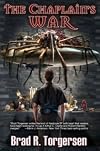
I received an early copy of this book through NetGalley.
The Chaplain's War is based on Torgerson's short story "The Chaplain's Assistant" that was published in Analog in September 2011. It's an excellent story, and one that I remember well years later. The book uses that story at the start and builds it from there, creating a frightening scenario where humanity is in danger of annihilation by aliens. That sounds like a stale trope, but Torgersen makes it bright and fascinating by utilizing show more the viewpoint of an enlisted chaplain's assistant--an agnostic at that--as he copes with curious alien bugs who have no concept of religion, god, or soul. I think the best mash-up I can think of for comparison's sake is Scalzi's Old Man's War crossed with Mary Doria Russell's The Sparrow. It's not as deep (or devastating) as The Sparrow, but it definitely has the fast pace and readability of Old Man's War as it explores religion and faith.
The author's experience as a United States Army Reserve Warrant Officer grants the book a lot of military realism, too. It made me laugh out loud more than once--my husband was in the Navy--and the scenes of boot camp and a holding unit rang as so very true.
It's a fast, strong read. I became incredibly fond of a regal character who plays a major role through the book--something I would never have expected. The very end even brought a tear to my eye as a tribute was paid to a character that didn't make it. show less
The Chaplain's War is based on Torgerson's short story "The Chaplain's Assistant" that was published in Analog in September 2011. It's an excellent story, and one that I remember well years later. The book uses that story at the start and builds it from there, creating a frightening scenario where humanity is in danger of annihilation by aliens. That sounds like a stale trope, but Torgersen makes it bright and fascinating by utilizing show more the viewpoint of an enlisted chaplain's assistant--an agnostic at that--as he copes with curious alien bugs who have no concept of religion, god, or soul. I think the best mash-up I can think of for comparison's sake is Scalzi's Old Man's War crossed with Mary Doria Russell's The Sparrow. It's not as deep (or devastating) as The Sparrow, but it definitely has the fast pace and readability of Old Man's War as it explores religion and faith.
The author's experience as a United States Army Reserve Warrant Officer grants the book a lot of military realism, too. It made me laugh out loud more than once--my husband was in the Navy--and the scenes of boot camp and a holding unit rang as so very true.
It's a fast, strong read. I became incredibly fond of a regal character who plays a major role through the book--something I would never have expected. The very end even brought a tear to my eye as a tribute was paid to a character that didn't make it. show less
Author Doris Lessing once noted that "That function of a writer is to raise questions not find answers."
A Nobel Prize winner, Lessing famously responded to a critic of her Canopus in Argos series--a work of science fiction, in contrast to what critics considered her more serious literature--by saying: "What they didn't realize was that in science fiction is some of the best social fiction of our time."
That was thirty years ago. Today, Brad Torgersen (a Hugo, Nebula, and Campbell award show more nominee in 2013) carries on that tradition, raising and addressing questions in his science fiction. His first novel, The Chaplain's War, is as much an examination of society, belief, and technology as it is of aliens, spaceships, and interstellar war. Whether you're looking for military scifi or existential introspection, you'll find it here. And, because Torgersen is a military man himself, his description of life in a boot camp in a near future war against alien species feels authentic and accurate.
Torgerson's The Chaplain's War began as the short story "The Chaplain’s Assistant," which he later expanded into the novella "The Chaplain's Legacy" before filling it out into a full novel. I discovered him for the first time at the 2013 Salt Lake Comic Con, where he was sitting on several panels on writing and science fiction.
The Chaplain's War follows Harrison Barlow, a young soldier who is to become the pivotal figure in humanity's war against a fearsome half cyborg, half insect alien race that is bent on humanity's eradication from the universe. Alternating between the present--where Barlow is sequestered with other humans as POWs--and the past, Barlow is a Chaplain's Assistant, becoming so almost by accident. It's a story of the path less traveled making all the difference, and Torgersen executes it with a deft and sensitive touch.
It makes for a tale that is both exciting and thought-provoking, fresh even while harking back to a time when science fiction was less about the political agendas and more about the fantastic possibility and wonder that the future holds. He aims for broad appeal, not the narrow "diversity" crowd of science fiction literati struggling to find readers among the average Joes just looking for a good story.
This isn't to say that Torgersen shies away from the controversial. Indeed, his story--that one man for peace can be as powerful as a whole armada of space going warships--may be controversial in itself. This is especially notable when you consider that movie audiences are flocking to see superhumans and lovable scoundrels (think Man of Steel, Thor, Captain America, or Guardians of the Galaxy) duke it out with the enemies of liberty, justice, and the American way, saving humanity by violence and destruction writ large.
Torgersen's implicit question, never directly addressed, but clearly central to the solution, is whether violence is necessary.
But he doesn't leave it at that. Torgersen weaves in themes on faith and technology, using the cyborg-insect alien menace to raise questions about the existence of deity, providence, and a divine guiding hand, both in the universe and in the individual lives of all sentient beings. At the same time, it's impossible to miss Torgersen's reticence to fully embrace technological innovation without thought for the consequences. Could acceptance and use of technology with humanity come at the cost of our humanity and our ability to connect to the natural and transcendent?
Even though his title character is a chaplain, he is by no means a believer. Belief in God is a bridge too far for him, and yet, it is his role as the Chaplain's assistant that thrusts him into his place as a mediator between two enemy races. There are scenes that seem reminiscent of Enemy Mine (take your pick: the novella by Barry Longyear or the movie starring Dennis Quaid and Louis Gossett, Jr.), but Torgersen takes a more existential and transcendent approach and walks his readers through the process of how an unbeliever might begin to believe, even while trying to survive to live through another day.
Meanwhile, the bullets are flying and the action is intense. It's cliche to say that there are no atheists in foxholes, and Torgersen seems willing to test that proposition.
And yet, his message--if there is one--is not a heavy handed paean to religion. Rather, his approach seems to be a new spin on an oft addressed question: are we alone in the universe?
Torgersen's perspective may just be that perhaps our existence alone, as that of any sentient race, is evidence that we are not alone, but that there is in nature a force greater than us with an interest in our happiness and progress. But it is a journey that every man, or woman, must walk on their own terms.
As I finished The Chaplain's War, it was clear to me that Torgersen had raised as many questions as he had intimated answers. Rather than sewing confusion with his inquiries, though, his aim is towards hope and possibility, encouraging the reader to look out from himself rather than in.
I've often heard Torgersen note--at cons, on his blog, and in social media--that his aim is to entertain, reach a broad audience, and regain some of the footing that the science fiction genre lost when it became obsessed with pet ideological projects. The Chaplain's War is a step in that direction (and one is tempted to make comparisons to Heinlein), entertaining and thoughtful at the same time, without forgetting what made science fiction great during its golden age. It bodes well for Torgersen's career, and I look forward to what he crafts next. show less
A Nobel Prize winner, Lessing famously responded to a critic of her Canopus in Argos series--a work of science fiction, in contrast to what critics considered her more serious literature--by saying: "What they didn't realize was that in science fiction is some of the best social fiction of our time."
That was thirty years ago. Today, Brad Torgersen (a Hugo, Nebula, and Campbell award show more nominee in 2013) carries on that tradition, raising and addressing questions in his science fiction. His first novel, The Chaplain's War, is as much an examination of society, belief, and technology as it is of aliens, spaceships, and interstellar war. Whether you're looking for military scifi or existential introspection, you'll find it here. And, because Torgersen is a military man himself, his description of life in a boot camp in a near future war against alien species feels authentic and accurate.
Torgerson's The Chaplain's War began as the short story "The Chaplain’s Assistant," which he later expanded into the novella "The Chaplain's Legacy" before filling it out into a full novel. I discovered him for the first time at the 2013 Salt Lake Comic Con, where he was sitting on several panels on writing and science fiction.
The Chaplain's War follows Harrison Barlow, a young soldier who is to become the pivotal figure in humanity's war against a fearsome half cyborg, half insect alien race that is bent on humanity's eradication from the universe. Alternating between the present--where Barlow is sequestered with other humans as POWs--and the past, Barlow is a Chaplain's Assistant, becoming so almost by accident. It's a story of the path less traveled making all the difference, and Torgersen executes it with a deft and sensitive touch.
It makes for a tale that is both exciting and thought-provoking, fresh even while harking back to a time when science fiction was less about the political agendas and more about the fantastic possibility and wonder that the future holds. He aims for broad appeal, not the narrow "diversity" crowd of science fiction literati struggling to find readers among the average Joes just looking for a good story.
This isn't to say that Torgersen shies away from the controversial. Indeed, his story--that one man for peace can be as powerful as a whole armada of space going warships--may be controversial in itself. This is especially notable when you consider that movie audiences are flocking to see superhumans and lovable scoundrels (think Man of Steel, Thor, Captain America, or Guardians of the Galaxy) duke it out with the enemies of liberty, justice, and the American way, saving humanity by violence and destruction writ large.
Torgersen's implicit question, never directly addressed, but clearly central to the solution, is whether violence is necessary.
But he doesn't leave it at that. Torgersen weaves in themes on faith and technology, using the cyborg-insect alien menace to raise questions about the existence of deity, providence, and a divine guiding hand, both in the universe and in the individual lives of all sentient beings. At the same time, it's impossible to miss Torgersen's reticence to fully embrace technological innovation without thought for the consequences. Could acceptance and use of technology with humanity come at the cost of our humanity and our ability to connect to the natural and transcendent?
Even though his title character is a chaplain, he is by no means a believer. Belief in God is a bridge too far for him, and yet, it is his role as the Chaplain's assistant that thrusts him into his place as a mediator between two enemy races. There are scenes that seem reminiscent of Enemy Mine (take your pick: the novella by Barry Longyear or the movie starring Dennis Quaid and Louis Gossett, Jr.), but Torgersen takes a more existential and transcendent approach and walks his readers through the process of how an unbeliever might begin to believe, even while trying to survive to live through another day.
Meanwhile, the bullets are flying and the action is intense. It's cliche to say that there are no atheists in foxholes, and Torgersen seems willing to test that proposition.
And yet, his message--if there is one--is not a heavy handed paean to religion. Rather, his approach seems to be a new spin on an oft addressed question: are we alone in the universe?
Torgersen's perspective may just be that perhaps our existence alone, as that of any sentient race, is evidence that we are not alone, but that there is in nature a force greater than us with an interest in our happiness and progress. But it is a journey that every man, or woman, must walk on their own terms.
As I finished The Chaplain's War, it was clear to me that Torgersen had raised as many questions as he had intimated answers. Rather than sewing confusion with his inquiries, though, his aim is towards hope and possibility, encouraging the reader to look out from himself rather than in.
I've often heard Torgersen note--at cons, on his blog, and in social media--that his aim is to entertain, reach a broad audience, and regain some of the footing that the science fiction genre lost when it became obsessed with pet ideological projects. The Chaplain's War is a step in that direction (and one is tempted to make comparisons to Heinlein), entertaining and thoughtful at the same time, without forgetting what made science fiction great during its golden age. It bodes well for Torgersen's career, and I look forward to what he crafts next. show less
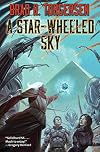
This is an engaging hard science fiction novel, with four main viewpoint characters. There are two star states that are competing against each other. Three of the characters are from one of the star states, and the other character is from the later star state. I found it interesting to have these different view points as I read. Each character has different motivations and objectives, and their interactions form a good portion of the backbone of the story.
I enjoyed the book, but I found the show more focus to be a bit off, as the conclusion seemed to leap out and not be quite as fulfilling as I had hoped - it is possible that a sequel will be written. show less
I enjoyed the book, but I found the show more focus to be a bit off, as the conclusion seemed to leap out and not be quite as fulfilling as I had hoped - it is possible that a sequel will be written. show less

This is another story for which I am not the target audience. I needed to know a lot more about the military to understand much of what was going on. I do know who Chesty Puller was, and that tells me a lot about this story's intended audience and confirms it isn't me. I did like the robots-in-space idea, where instead of sending people we send suits that are guided by people, and how that's part of the new space race. Also the space battles were totally cool.
Lists
Awards


You May Also Like


Associated Authors
Statistics
- Works
- 27
- Also by
- 20
- Members
- 376
- Popularity
- #64,174
- Rating
- 3.6
- Reviews
- 22
- ISBNs
- 15
- Favorited
- 2