
Tom Kratman
Author of Watch on the Rhine
About the Author
Image credit: via fantasticfiction.com
Series
Works by Tom Kratman
Training for War 1 copy
Associated Works
Free Nonfiction 2020 — Contributor, some editions — 2 copies
Tagged
Common Knowledge
- Birthdate
- 1956-09-04
- Gender
- male
- Education
- Boston College
- Occupations
- attorney
soldier - Organizations
- United States Army
- Nationality
- USA
- Birthplace
- Boston, Massachusetts, USA
- Associated Place (for map)
- Massachusetts, USA
Members
Reviews
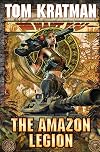
Wow. This is truly pathetic "military sci fi." Remind me to never read Kratman again. This book centers around a division of female warriors defending their country against a bigger, tougher, stronger, richer invader, and presumably how they overcome their weaknesses in kicking ass. I guess. All I got out of the first few pages was, "Oh, look at the baby. How cute. Who's going to take care of the baby. Oh, it's good that she was hired to take care of children and babies. She may be a show more grandmother, but she's damn good for the military. And my baby does so well with her." And on and on. Jesus.
Needless to say, I didn't get far. There was another reason too, and this is a pet peeve of mine. It's the 24th century, I believe. Colonies have been established by Earth, spaceships/warships abound, technology has come far, right? So, why the HELL are we still fighting with 20th century weapons??? Most sci fi writers invent new types of weapons as technology in the future advances, certainly, lasers being the easiest and most popular. Plasma weapons are also quite popular. Asimov had his neuronic whips, and he wrote these in the 1950s. So, why the HELL do some authors, including this so called one, persist in using antiquated weaponry like M-16s and AK-47s, 1911s and RPGs? Is it not possible that the defense industry, the most heavily financed industry in America, could advance its technology just a L I T T L E bit in the next 300+ years? Is that too much to ask for? To me, authors like Tom Kratman, desperately trying to prove their military sci fi legitimacy, do just the opposite in writing their military units using antiquated weaponry like that. Every now and then, I'll read an author that includes some "slug throwers" with lasers and the like and to me, that's acceptable because at least they're mixing it up, but when everything is exactly as it was in the Vietnam War, screw that bullshit!
Furthermore, this information comes from reviews I read online, but it appears that about 70% of this book is taken up with basic training and with the "Amazonian" warriors trying to have all sorts of lesbian encounters as often as possible. I have nothing against lesbians. I have several who are good friends. It's just when you use that to get your rocks off without advancing the plot that it makes me suspect that you're a shitty writer with no talent whatsoever.
Finally, the only thing actually "sci fi" about this novel is it happens upon another planet. Otherwise, it might as well happen upon Earth. There's no sci fi in this book. This book is an imposter to sci fi. The author is a fake, a fraud, and should be called on it. I'm doing that right now, as a matter of fact. It's just a shame he's written other similar books because I'm certain that if they're like this, they're equally as bad and shamelessly fraudulent. Most military sci fi writers have a bio on the backs of the books, usually inside the back cover. He does not. Perhaps it's because he was never in the military and therefore knows nothing about which he speaks. I certainly wouldn't attempt to write a military sci fi book. I'd criticize one though, because I know good ones and bad ones when I see them. David Weber is the standard by which all great military sci fi writers are measured. Kratman is the antithesis of Weber. Avoid this book. It's truly horrible and at times, simply laughable. One star. Definitely not recommended. show less
Needless to say, I didn't get far. There was another reason too, and this is a pet peeve of mine. It's the 24th century, I believe. Colonies have been established by Earth, spaceships/warships abound, technology has come far, right? So, why the HELL are we still fighting with 20th century weapons??? Most sci fi writers invent new types of weapons as technology in the future advances, certainly, lasers being the easiest and most popular. Plasma weapons are also quite popular. Asimov had his neuronic whips, and he wrote these in the 1950s. So, why the HELL do some authors, including this so called one, persist in using antiquated weaponry like M-16s and AK-47s, 1911s and RPGs? Is it not possible that the defense industry, the most heavily financed industry in America, could advance its technology just a L I T T L E bit in the next 300+ years? Is that too much to ask for? To me, authors like Tom Kratman, desperately trying to prove their military sci fi legitimacy, do just the opposite in writing their military units using antiquated weaponry like that. Every now and then, I'll read an author that includes some "slug throwers" with lasers and the like and to me, that's acceptable because at least they're mixing it up, but when everything is exactly as it was in the Vietnam War, screw that bullshit!
Furthermore, this information comes from reviews I read online, but it appears that about 70% of this book is taken up with basic training and with the "Amazonian" warriors trying to have all sorts of lesbian encounters as often as possible. I have nothing against lesbians. I have several who are good friends. It's just when you use that to get your rocks off without advancing the plot that it makes me suspect that you're a shitty writer with no talent whatsoever.
Finally, the only thing actually "sci fi" about this novel is it happens upon another planet. Otherwise, it might as well happen upon Earth. There's no sci fi in this book. This book is an imposter to sci fi. The author is a fake, a fraud, and should be called on it. I'm doing that right now, as a matter of fact. It's just a shame he's written other similar books because I'm certain that if they're like this, they're equally as bad and shamelessly fraudulent. Most military sci fi writers have a bio on the backs of the books, usually inside the back cover. He does not. Perhaps it's because he was never in the military and therefore knows nothing about which he speaks. I certainly wouldn't attempt to write a military sci fi book. I'd criticize one though, because I know good ones and bad ones when I see them. David Weber is the standard by which all great military sci fi writers are measured. Kratman is the antithesis of Weber. Avoid this book. It's truly horrible and at times, simply laughable. One star. Definitely not recommended. show less
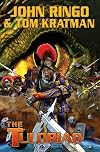
I say this affectionately: this is a piece of junk science fiction. Space opera. Rail guns and decapitations and swearing and space ships with boobs (really). Anybody who tries to critically deconstruct Ringo's militaristic science fiction probably doesn't get The Terminator movies either. I remember a movie reviewer complaining about the violence in those movies once (think ... Ahnold ... killer cyborgs ... apocalyptic end of the world - WHADDYA EXPECT!!!???). Same with Ringo's work.
The show more Tuloriad is actually one of Ringo's (and Kratman's) more "cerebral" pieces in that it takes on the morality of xenocide coupled with religions (plural). The last gasp remnant of the super killer alien Posleen are finally confronted by a Vatican sponsored intelligent space ship (with boobs) giving them the choice of religions to which to convert. The Jews have declined sending a representative since they wouldn't want to be coupled with the species that killed 6 billion humans. Islam sends an Imam who drinks vodka (it's made from potatoes so it doesn't count); the Protestants are represented by an apostate Posleen warrior who saw the light (and also had his genitalia chomped off by an alligator in Panama during the fighting against the humans); and the Roman Catholics get a Jesuit priest who is married to the physical avatar of the intelligent battleship.
And then there's the Swiss Guard contingent equipped with mono-molecular halberds, automatic weapons, and a predisposition to womanize.
This book isn't for everyone, but if you like your sci-fi junky, space opera-y, rude and crude, broad and irreverent, you might find this a fun read. show less
The show more Tuloriad is actually one of Ringo's (and Kratman's) more "cerebral" pieces in that it takes on the morality of xenocide coupled with religions (plural). The last gasp remnant of the super killer alien Posleen are finally confronted by a Vatican sponsored intelligent space ship (with boobs) giving them the choice of religions to which to convert. The Jews have declined sending a representative since they wouldn't want to be coupled with the species that killed 6 billion humans. Islam sends an Imam who drinks vodka (it's made from potatoes so it doesn't count); the Protestants are represented by an apostate Posleen warrior who saw the light (and also had his genitalia chomped off by an alligator in Panama during the fighting against the humans); and the Roman Catholics get a Jesuit priest who is married to the physical avatar of the intelligent battleship.
And then there's the Swiss Guard contingent equipped with mono-molecular halberds, automatic weapons, and a predisposition to womanize.
This book isn't for everyone, but if you like your sci-fi junky, space opera-y, rude and crude, broad and irreverent, you might find this a fun read. show less
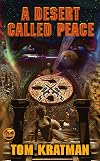
I won this book on librarything.com.
Sorry folks. I was already irritated by story's erratic jumping around backflash forwardflash and by some episodes that suggested that full-blown misogyny might be on the horizon. I quit reading immediately Mr. Kratman incorporated the events of 11 September 2001 into the text verbatim: Muslims pilot airship into highrise building. Protagonist's lovely, pregnant wife, three children, and uncle jump to their deaths to avoid the flames. Protagonist watching show more scene on TV. Revolting.
Mr. Kratman's writing is good (except for the inability to handle narrative jumps cleanly) but I will not let him grind axes. show less
Sorry folks. I was already irritated by story's erratic jumping around backflash forwardflash and by some episodes that suggested that full-blown misogyny might be on the horizon. I quit reading immediately Mr. Kratman incorporated the events of 11 September 2001 into the text verbatim: Muslims pilot airship into highrise building. Protagonist's lovely, pregnant wife, three children, and uncle jump to their deaths to avoid the flames. Protagonist watching show more scene on TV. Revolting.
Mr. Kratman's writing is good (except for the inability to handle narrative jumps cleanly) but I will not let him grind axes. show less

I don't read a lot of military scifi, but if Tom Kratman's [b:Big Boys Don't Cry|20882829|Big Boys Don't Cry|Tom Kratman|https://d.gr-assets.com/books/1393024750s/20882829.jpg|40223487] is any indication of what I'm missing, I may start reading more.
Nominated for the 2015 Hugo Award for Best Novella (a story with a word count between 17,500 words and 40,000 words), Big Boys Don't Cry held me from the first page. This review is part of my effort to read and evaluate the 2015 Hugo nominees show more prior to the final vote later this year. I’ve previously reviewed “Totaled” by [a:Kary English|6427054|Kary English|https://s.gr-assets.com/assets/nophoto/user/u_50x66-632230dc9882b4352d753eedf9396530.png], Flow by [a:Arlan Andrews Sr.|2953875|Arlan Andrews Sr.|https://s.gr-assets.com/assets/nophoto/user/u_50x66-632230dc9882b4352d753eedf9396530.png], and I’ll post other reviews as I write them.
Although there's been a bit of controversy around the Hugo Awards this year (okay, a lot more than just a bit), I've decided to plow ahead and evaluate as many of the nominees as possible. Much of what has been written and said seems driven by emotion and a scarcity mentality bent on controlling and manipulating the award, where little seems to address the quality of the nominees. With some exception in the novel category (I've already finished Annie Leckie's Ancillary Sword, many of the nominees appear to be new (to me), which presents an opportunity to meet some new authors, expand my regular reading, and perhaps add to the conversation. Once I've been able to get a better grasp of the quality of writing, perhaps I can examine it against the larger conversation (or, if you will, screaming match) happening in science fiction right now over the politics, future, and fandom around the Hugo Award.
But I digress. Where was I?
Oh, yes. [a:Tom Kratman|159596|Tom Kratman|https://s.gr-assets.com/assets/nophoto/user/m_50x66-82093808bca726cb3249a493fbd3bd0f.png]. Big Boys Don't Cry. Novella. Hugo nominee A thought provoking read.
In the far future, man has expanded throughout to the universe, overcoming the light barrier. In an imperialistic surge, we have designed autonomous tanks with artificial intelligence. Initially designed to work hand in hand with soldiers, they eventually replace them, becoming the main line of an imperial ground force. Intelligent beyond our own capacity, but tempered by very human like emotions, they are more human than we realize.
Prior to becoming a full time author, Kratman was a career military officer, and it shows in his writing. Big Boys Don't Cry is written by a mind steeped in the culture and history of a trained soldier and officer. That said, Kratman is no conformist, but portrays a critical awareness of the dark side of war and military culture. Underlying his story about an artificial intelligence that becoming self-aware and developing a conscience is a cautionary tale about the dangers of hubris, of becoming to distanced from the violence and pain of war, and of allowing machines to do for us what we are unwilling to do ourselves.
I loved Kratman's description of how the hardware for the artificial intelligence is grown, as well as how the AI is trained to become a warrior. He gives special attention to explaining--in mostly comprehensible technojargon--how the gigantic tanks are mobile and powered under their immense weight. He interweaves his story with requisite back story, almost in the form of a chiasmus (poetic, not genetic), coming to the end of his story just as the denouement arrives.
If I were to lodge a sole complaint, it would be that Kratman's humans are superficially all of one breed, a selfish and greedy race, consumed with domination and control. It does, however, serve to put the protagonist tank, Maggie, in high relief as a more sympathetic character.
Big Boys Don't Cry got me thinking, and that's one of my main criteria for a competitive nominee for the Hugo. I hope all the best for Kratman as the voters start to tally their ballots. At the very least, I'm glad to discover a new author, and I look forward to reading more by Kratman in the future. show less
Nominated for the 2015 Hugo Award for Best Novella (a story with a word count between 17,500 words and 40,000 words), Big Boys Don't Cry held me from the first page. This review is part of my effort to read and evaluate the 2015 Hugo nominees show more prior to the final vote later this year. I’ve previously reviewed “Totaled” by [a:Kary English|6427054|Kary English|https://s.gr-assets.com/assets/nophoto/user/u_50x66-632230dc9882b4352d753eedf9396530.png], Flow by [a:Arlan Andrews Sr.|2953875|Arlan Andrews Sr.|https://s.gr-assets.com/assets/nophoto/user/u_50x66-632230dc9882b4352d753eedf9396530.png], and I’ll post other reviews as I write them.
Although there's been a bit of controversy around the Hugo Awards this year (okay, a lot more than just a bit), I've decided to plow ahead and evaluate as many of the nominees as possible. Much of what has been written and said seems driven by emotion and a scarcity mentality bent on controlling and manipulating the award, where little seems to address the quality of the nominees. With some exception in the novel category (I've already finished Annie Leckie's Ancillary Sword, many of the nominees appear to be new (to me), which presents an opportunity to meet some new authors, expand my regular reading, and perhaps add to the conversation. Once I've been able to get a better grasp of the quality of writing, perhaps I can examine it against the larger conversation (or, if you will, screaming match) happening in science fiction right now over the politics, future, and fandom around the Hugo Award.
But I digress. Where was I?
Oh, yes. [a:Tom Kratman|159596|Tom Kratman|https://s.gr-assets.com/assets/nophoto/user/m_50x66-82093808bca726cb3249a493fbd3bd0f.png]. Big Boys Don't Cry. Novella. Hugo nominee A thought provoking read.
In the far future, man has expanded throughout to the universe, overcoming the light barrier. In an imperialistic surge, we have designed autonomous tanks with artificial intelligence. Initially designed to work hand in hand with soldiers, they eventually replace them, becoming the main line of an imperial ground force. Intelligent beyond our own capacity, but tempered by very human like emotions, they are more human than we realize.
Prior to becoming a full time author, Kratman was a career military officer, and it shows in his writing. Big Boys Don't Cry is written by a mind steeped in the culture and history of a trained soldier and officer. That said, Kratman is no conformist, but portrays a critical awareness of the dark side of war and military culture. Underlying his story about an artificial intelligence that becoming self-aware and developing a conscience is a cautionary tale about the dangers of hubris, of becoming to distanced from the violence and pain of war, and of allowing machines to do for us what we are unwilling to do ourselves.
I loved Kratman's description of how the hardware for the artificial intelligence is grown, as well as how the AI is trained to become a warrior. He gives special attention to explaining--in mostly comprehensible technojargon--how the gigantic tanks are mobile and powered under their immense weight. He interweaves his story with requisite back story, almost in the form of a chiasmus (poetic, not genetic), coming to the end of his story just as the denouement arrives.
If I were to lodge a sole complaint, it would be that Kratman's humans are superficially all of one breed, a selfish and greedy race, consumed with domination and control. It does, however, serve to put the protagonist tank, Maggie, in high relief as a more sympathetic character.
Big Boys Don't Cry got me thinking, and that's one of my main criteria for a competitive nominee for the Hugo. I hope all the best for Kratman as the voters start to tally their ballots. At the very least, I'm glad to discover a new author, and I look forward to reading more by Kratman in the future. show less
Lists
Awards


You May Also Like


Associated Authors
Statistics
- Works
- 26
- Also by
- 1
- Members
- 2,893
- Popularity
- #8,858
- Rating
- 3.5
- Reviews
- 54
- ISBNs
- 81
- Languages
- 3
- Favorited
- 1