
S. M. Stirling
Author of Dies the Fire
About the Author
Stephen Michael Stirling is a French-born Canadian-American science fiction and fantasy author. His Birthday is September 30, 1953. He has lived in several countries and currently resides in the United States in New Mexico with his wife. He is probably best known for his Draka series of novels and show more his more recent time travel/alternate history Nantucket series and Emberverse series. In 2014 his title The Golden Princess made The New York Times Best Seller List. (Bowker Author Biography) show less
Series
Works by S. M. Stirling
The Sixth Sun 2 copies
Armor Propre — Author — 2 copies
Blood Wolf 2 copies
Ancestral Voices 2 copies
First to Fight 2 copies
The Change: 8 - Summerland 2 copies
Pain and Suffering 2 copies
Nantucket Series: Alien Space Bats, Island in the Sea of Time, Against the Tide of Years, on the Oceans of Eternity (2010) 1 copy
Ice, Iron, and Gold 1 copy
Ancient Ways 1 copy
Home Is Where The Heart Is 1 copy
Riding Shotgun To Armageddon 1 copy
The Peaceable Kingdom 1 copy
Upon Their Backs To Bite 'Em 1 copy
Hunting The Snark 1 copy
The Park 1 copy
A Walk In 1 copy
The Last Word 1 copy
The Greatest Danger 1 copy
Cops and Robbers 1 copy
The Big Lie 1 copy
The Tradesmen 1 copy
A Story Of The Draka 1 copy
Written By The Wind 1 copy
Hewn in Pieces for the Lord 1 copy
Custer Under The Baobab 1 copy
The Crystal Method 1 copy
The Waters of Knowing 1 copy
Three Walls-32nd Campaign 1 copy
Roachstompers 1 copy
Pronouncing Doom 1 copy
The Jasoom Project 1 copy
The Three Walls— 32 Nd Campaign — Author — 1 copy
Lion's Soul related novel 1 copy
Lion's Heart related novel 1 copy
Separation Anxiety 1 copy
Constant Never 1 copy
The General 1 copy
Something For Yew 1 copy
The Charge of Lee's Brigade 1 copy
Compadres 1 copy
Lost Legion 1 copy
Taking Freedom 1 copy
Associated Works
Wolf of the Steppes: The Complete Cossack Adventures, Volume 1 (2006) — Introduction — 107 copies, 3 reviews
The Year's Best Science Fiction and Fantasy for Teens: First Annual Collection (2005) — Contributor — 84 copies, 2 reviews
L. Ron Hubbard Presents Writers of the Future, Volume 39 (2023) — Contributor — 29 copies, 6 reviews
L. Ron Hubbard Presents Writers of the Future, Volume 40 (2024) — Contributor — 27 copies, 9 reviews
Shapers of Worlds Volume II: Science fiction and fantasy by authors featured on The Worldshapers podcast (2021) — Contributor — 9 copies
Tagged
Common Knowledge
- Legal name
- Stirling, Stephen Michael
- Other names
- Stirling, Steve
Stirling, S. - Birthdate
- 1953-09-30
- Gender
- male
- Occupations
- science fiction writer
fantasy writer - Organizations
- Science Fiction and Fantasy Writers of America
- Awards and honors
- Jack Williamson Lectureship (2018)
- Relationships
- Stirling, Jan (wife)
- Nationality
- Canada
USA (naturalized) - Birthplace
- Metz, Moselle, France
- Places of residence
- New Mexico, USA
Metz, France (birth)
Members
Discussions
Pant(s)ing for Revenge in Good Show Sir! — bad science fiction and fantasy covers (September 2025)
Happy Fathers Day! in Good Show Sir! — bad science fiction and fantasy covers (June 2025)
S. M. Stirling in FantasyFans (January 2014)
Reviews
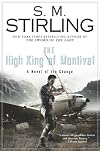
So I've stopped screaming "find an editor" and just given in to the fact that I'm fascinated by the world and ideas in these books more than I care about flaws in the storytelling craft. I love the tapestry of cultures I get to visit and the play on social structures that makes this perhaps more properly speculative fiction than true fantasy, no matter the number of Tolkien references. The depth of imagination is worth the pedantic dialogue and pacing problems - give in like me and just show more enjoy the ride. FWIW the pacing is better in this installment than some others. show less
Conan - Blood of the Serpent: The All-New Chronicles of the Worlds Greatest Barbarian Hero by S. M. Stirling
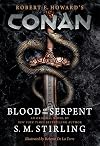
I didn’t think it was possible to write a boring Conan story. Apparently I was wrong.
In this latest adventure—a prequel to Howard’s superior Red Nails—Conan meets Valeria for the first time and together they lead a mercenary group to escort a relief troop for a local mine. After a brief slave rebellion, Valeria kills a nobleman who tries to have his way with her and escapes the authorities by running headlong into the wilderness (Hyperborea’s African savannah) whilst being pursued show more by the nobleman’s vengeful brother and Conan himself (for the sole reason of wanting to have his way with her).
We aren’t off to a great start here and the author does nothing to lift it either. A rather chatty Conan spends much of his time describing Stygian culture, geographical landscapes, cooking, how he dresses and accounts of the various grasses and trees he sees. All the stuff that most accomplished authors know to leave out—especially in a sword and sorcery tale.
Occasionally Conan fights something in his way, including crocodiles, baboons and a cheetah. The fights are brief and end in the same way—a quick two handed sword slash. No tension and very little brutality that often hallmarks his fight scenes. Eventually he gets into slightly more robust fights, but it really wasn’t worth trudging through 250 pages of tedious exposition to get there.
Lacking in the punchy, action packed and darkly atmospheric prose of Howard’s originals or the high adventure of later authors who took up the mantle (Sprague de Camp, Karl Edward Wagner, Poul Anderson and so forth), it’s very hard to recommend this to any fan of Conan or even fantasy stories. Some amazing illustrations by Robert De La Torre and brief moments of fun are unable to offset what is otherwise an utterly dull, bloated and padded out adventure. show less
In this latest adventure—a prequel to Howard’s superior Red Nails—Conan meets Valeria for the first time and together they lead a mercenary group to escort a relief troop for a local mine. After a brief slave rebellion, Valeria kills a nobleman who tries to have his way with her and escapes the authorities by running headlong into the wilderness (Hyperborea’s African savannah) whilst being pursued show more by the nobleman’s vengeful brother and Conan himself (for the sole reason of wanting to have his way with her).
We aren’t off to a great start here and the author does nothing to lift it either. A rather chatty Conan spends much of his time describing Stygian culture, geographical landscapes, cooking, how he dresses and accounts of the various grasses and trees he sees. All the stuff that most accomplished authors know to leave out—especially in a sword and sorcery tale.
Occasionally Conan fights something in his way, including crocodiles, baboons and a cheetah. The fights are brief and end in the same way—a quick two handed sword slash. No tension and very little brutality that often hallmarks his fight scenes. Eventually he gets into slightly more robust fights, but it really wasn’t worth trudging through 250 pages of tedious exposition to get there.
Lacking in the punchy, action packed and darkly atmospheric prose of Howard’s originals or the high adventure of later authors who took up the mantle (Sprague de Camp, Karl Edward Wagner, Poul Anderson and so forth), it’s very hard to recommend this to any fan of Conan or even fantasy stories. Some amazing illustrations by Robert De La Torre and brief moments of fun are unable to offset what is otherwise an utterly dull, bloated and padded out adventure. show less

Like I say about most Niven stuff: Utterly cool.: In the future, an antidepressant-pacified and docile humanity, (sound familiar? Look around), goes into massive culture shock when the first aliens they meet don't even attempt contact, but only try to kill them from the getgo. Once again, utterly cool, and I agree with the message I think that is embedded in these stories: Don't get TOO comfortable in peacetime, and DON'T start believing that you're safe, or it'll come back around again and show more get you!!! WWI, the war to end all wars!!!!???? WWII anybody? It'll happen again and again, as Niven nimbly demonstrates. Plus the Kzinti themselves are vastly interesting creatures, because you have to wonder how a society based solely on violence and dominance rituals remains stable enough to conquer space, and then keep it. Read it. show less
Conan - Blood of the Serpent: The All-New Chronicles of the Worlds Greatest Barbarian Hero by S. M. Stirling
Well, that was underwhelming as all hell. So much for the "pulse pounding" return of Conan.
I think this should have been called Conan - Plod of the Serpent because man, this book dragged. Very little actually happens, and Stirling pads out the books with explanations on...well, everything.
The food. The money. Hunting techniques. Cultural things for the various countries. Strategy. Landscape.
...so...much...explanation...
Which, if it helps the story, okay. But one of Elmore Leonard's most show more famous writing rules is to leave out the parts that people skip. Stirling seems to have gathered up all those skippable parts and stuffed them into this story to make it novel length when, at best, this should have been a novella.
I didn't really think Conan could be boring, but I found myself drifting all the time I was reading this.
Honestly, I think Stirling read a bunch of Conan stuff just so he could make fact lists. I think he completely ignored the snappy tautness of Robert E. Howard's writing...one of the main strengths of any Conan story. Oh, well, that and the sorcery that Stirling hints at, but doesn't really dive into with both feet like Howard did.
Absolutely not recommended. And by god, I hope to hell he doesn't write another one, but if he does, this kid's staying well away from it. show less
I think this should have been called Conan - Plod of the Serpent because man, this book dragged. Very little actually happens, and Stirling pads out the books with explanations on...well, everything.
The food. The money. Hunting techniques. Cultural things for the various countries. Strategy. Landscape.
...so...much...explanation...
Which, if it helps the story, okay. But one of Elmore Leonard's most show more famous writing rules is to leave out the parts that people skip. Stirling seems to have gathered up all those skippable parts and stuffed them into this story to make it novel length when, at best, this should have been a novella.
I didn't really think Conan could be boring, but I found myself drifting all the time I was reading this.
Honestly, I think Stirling read a bunch of Conan stuff just so he could make fact lists. I think he completely ignored the snappy tautness of Robert E. Howard's writing...one of the main strengths of any Conan story. Oh, well, that and the sorcery that Stirling hints at, but doesn't really dive into with both feet like Howard did.
Absolutely not recommended. And by god, I hope to hell he doesn't write another one, but if he does, this kid's staying well away from it. show less
Lists
Awards


You May Also Like


Associated Authors
Statistics
- Works
- 149
- Also by
- 49
- Members
- 32,550
- Popularity
- #595
- Rating
- 3.7
- Reviews
- 626
- ISBNs
- 467
- Languages
- 8
- Favorited
- 72

