

Nicholas Freudenberg
Author of Lethal But Legal: Corporations, Consumption, and Protecting Public Health
About the Author
Nicholas Freudenberg, DrPH, is Distinguished Professor of Public Health at the City University of New York School of Public Health and Hunter College. He is founder and director of Corporations and Health Watch (www.corporationsandhealth.org), an international network of activists and researchers show more that monitors the business practices of the alcohol, automobile, firearms, food and beverage, pharmaceutical, and tobacco industries. show less
Works by Nicholas Freudenberg
Lethal But Legal: Corporations, Consumption, and Protecting Public Health (2014) 27 copies, 1 review
Tagged
Common Knowledge
- Gender
- male
- Education
- Columbia University (PhD)
Columbia University (MPH)
Hunter College (BS) - Nationality
- USA
- Associated Place (for map)
- USA
Members
Reviews

Nicholas Freudenburg attacks what ails us from a slightly different angle. He collects a litany of woes under the rubric of what he calls the Corporate Consumption Complex, as opposed to the military-industrial complex made famous in a warning by Dwight Eisenhower three days before he left office – to someone who expanded it greatly.
There are half a dozen fat targets in this book, with copious footnotes to back the figures that are so frequent they are largely forgettable. But the show more underlying theme is that corporations want us to consume more, far more than a normal diet has ever required. This includes not just processed food, (Hyperpalatable processed food is softer and easier to chew than real food, leading to faster and increased consumption), alcohol and tobacco, but also cars and guns. It’s all about larger share of bank account, and anything that stands in the way, eg. health services, inspectors, government – be damned.
He is particularly incensed at all the marketing to children. From Ronald McDonald and Happy Meals toys to underage drinking (every year, there are 4 million hospital visits and 4700 deaths from alcohol for those under 21) and shootings (every day, 60 children are shot, and 12 die of it). These are avoidable, expensive, not to mention pointless, premature deaths. As for tobacco, Freudenburg says that for every dollar made by Phillip Morris, $7.39 has to be spent in healthcare.
Meanwhile, the new non-communicable (chronic) diseases account for 75% of US healthcare costs. 44% of Americans have one and 13% have three or more. Freudenburg doesn’t say, but they are the result of chemical compounds, 88,000 of them, that have never been tested or approved. They are in processed food, the air, manufactured furniture, fish, animals, and water.
He traces this corporate hegemony back to the Nixon administration, when the president swapped out his Agriculture Secretary to become CEO of Ralston Purina, in exchange for a Ralston Purina Director, Earl Butz. Butz was notorious for promoting agribusiness against the small farmer. In the Reagan era, government became the problem instead of the solution. As agencies’ budgets were cut back, critics pointed to how ineffective they were. And of course, corporations have infiltrated agencies, commissions and government to ensure the rules favor them over all comers. Including the UN.
Finally, in a single paragraph on the third to last page, Freudenburg mentions (almost in passing) what I consider to be the linchpin of the entire problem. Corporations have all the rights of a real person (“Companies are people too, my friend” – Mitt Romney), plus the superpowers of limited liability and bottomless financial resources. This leads to bullying tactics and overwhelming the opposition with truckloads of money, lobbying, lawsuits and absurd settlements that don’t require admission of wrongdoing. It all stems from an incorrectly expressed (and therefore misinterpreted) statement by Supreme Court Justice Oliver Wendell Holmes at the turn of the last century. It needs to be undone and rationalized but at very least examined. One paragraph won’t do it. Fixing this one problem would change everything in the direction Freudenburg seeks. show less
There are half a dozen fat targets in this book, with copious footnotes to back the figures that are so frequent they are largely forgettable. But the show more underlying theme is that corporations want us to consume more, far more than a normal diet has ever required. This includes not just processed food, (Hyperpalatable processed food is softer and easier to chew than real food, leading to faster and increased consumption), alcohol and tobacco, but also cars and guns. It’s all about larger share of bank account, and anything that stands in the way, eg. health services, inspectors, government – be damned.
He is particularly incensed at all the marketing to children. From Ronald McDonald and Happy Meals toys to underage drinking (every year, there are 4 million hospital visits and 4700 deaths from alcohol for those under 21) and shootings (every day, 60 children are shot, and 12 die of it). These are avoidable, expensive, not to mention pointless, premature deaths. As for tobacco, Freudenburg says that for every dollar made by Phillip Morris, $7.39 has to be spent in healthcare.
Meanwhile, the new non-communicable (chronic) diseases account for 75% of US healthcare costs. 44% of Americans have one and 13% have three or more. Freudenburg doesn’t say, but they are the result of chemical compounds, 88,000 of them, that have never been tested or approved. They are in processed food, the air, manufactured furniture, fish, animals, and water.
He traces this corporate hegemony back to the Nixon administration, when the president swapped out his Agriculture Secretary to become CEO of Ralston Purina, in exchange for a Ralston Purina Director, Earl Butz. Butz was notorious for promoting agribusiness against the small farmer. In the Reagan era, government became the problem instead of the solution. As agencies’ budgets were cut back, critics pointed to how ineffective they were. And of course, corporations have infiltrated agencies, commissions and government to ensure the rules favor them over all comers. Including the UN.
Finally, in a single paragraph on the third to last page, Freudenburg mentions (almost in passing) what I consider to be the linchpin of the entire problem. Corporations have all the rights of a real person (“Companies are people too, my friend” – Mitt Romney), plus the superpowers of limited liability and bottomless financial resources. This leads to bullying tactics and overwhelming the opposition with truckloads of money, lobbying, lawsuits and absurd settlements that don’t require admission of wrongdoing. It all stems from an incorrectly expressed (and therefore misinterpreted) statement by Supreme Court Justice Oliver Wendell Holmes at the turn of the last century. It needs to be undone and rationalized but at very least examined. One paragraph won’t do it. Fixing this one problem would change everything in the direction Freudenburg seeks. show less
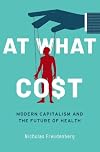
https://lccn.loc.gov/2020044862
https://global.oup.com/academic/product/at-what-cost-9780190078621?cc=us&lan...; bookpagina
https://www.youtube.com/watch?v=E0y7H-l0VSg book presentation 1:19:26
Table of Contents
Preface
Acknowledgments
Part I. Introduction
1. The Changing Face of U.S. and Global Capitalism
Part II. The Pillars of Health
2. Food: Ultraprocessed Products Become the Global Diet
3. Education: Private Capital Goes to School
4. Health Care: the Medical Care Industry's War on Cancer
5. show more Consequences of the Growth of Low-Wage and Precarious Work
6. Transportation: Uber and Autonomous Vehicles vs. Mass Transit
7. Social Connections: Extracting Profit from Human Relations
Part III. Conclusion
8. Transitions from 21st-century Capitalism
9. From Now to Next: To Build a Movement for Another World
References show less
https://global.oup.com/academic/product/at-what-cost-9780190078621?cc=us&lan...; bookpagina
https://www.youtube.com/watch?v=E0y7H-l0VSg book presentation 1:19:26
Table of Contents
Preface
Acknowledgments
Part I. Introduction
1. The Changing Face of U.S. and Global Capitalism
Part II. The Pillars of Health
2. Food: Ultraprocessed Products Become the Global Diet
3. Education: Private Capital Goes to School
4. Health Care: the Medical Care Industry's War on Cancer
5. show more Consequences of the Growth of Low-Wage and Precarious Work
6. Transportation: Uber and Autonomous Vehicles vs. Mass Transit
7. Social Connections: Extracting Profit from Human Relations
Part III. Conclusion
8. Transitions from 21st-century Capitalism
9. From Now to Next: To Build a Movement for Another World
References show less

https://www.lemniscaat.nl/boeken/legaal-maar-fataal/ bookpagina
https://www.lemniscaat.nl/files/fm9789047709480.pdf pdf 25 p. inkijkfragment
https://www.managementboek.nl/boek/9789047709480/legaal-maar-fataal-nicholas-fre... specs
ISBN: 9789047709480 | Uitvoering: Paperback | Prijs: € 24,99 , 388 p.
Vertaler(s): Sonja Matthews-Marrevee
Hoe de grote industrieen onze gezondheid bedreigen
Nicholas Freudenberg, hoogleraar Public Health in New York, is de eerste die ongezonde producten, show more tekortschietende overheden en de groeiende druk op de gezondheidszorg met elkaar verbindt in een veelomvattend boek. En dat levert een schokkend beeld op. De industrieën die alcohol, auto’s, wapens, voeding, medicijnen en tabak produceren hebben veel meer impact op de volksgezondheid dan beleidsmakers en wetenschappers. De manier waarop de industrieën in verschillende sectoren opereren, blijkt verrassende overeenkomsten te vertonen. Vrijwel altijd is hun beleid gericht op het omzeilen, ontkrachten of tegenhouden van overheidsmaatregelen die de verkoop van hun eigen producten zouden kunnen belemmeren. En dat met zeer schadelijke gevolgen voor de volksgezondheid. En de overheid? Die is vooral gevoelig voor de wensen van de industrieën en blijkt niet in staat om haar burgers effectief te beschermen tegen het op de markt brengen van ronduit schadelijke producten.
Nicholas Freudenberg is hoogleraar Public Health in New York en oprichter en directeur van Corporations and Health Watch (www.corporationsandhealth.org), een internationaal netwerk van activisten en onderzoekers dat de bedrijfspraktijken in de gaten houdt van de grote industrieën die alcohol, auto’s, vuurwapens, voeding, medicijnen en tabak produceren. show less
https://www.lemniscaat.nl/files/fm9789047709480.pdf pdf 25 p. inkijkfragment
https://www.managementboek.nl/boek/9789047709480/legaal-maar-fataal-nicholas-fre... specs
ISBN: 9789047709480 | Uitvoering: Paperback | Prijs: € 24,99 , 388 p.
Vertaler(s): Sonja Matthews-Marrevee
Hoe de grote industrieen onze gezondheid bedreigen
Nicholas Freudenberg, hoogleraar Public Health in New York, is de eerste die ongezonde producten, show more tekortschietende overheden en de groeiende druk op de gezondheidszorg met elkaar verbindt in een veelomvattend boek. En dat levert een schokkend beeld op. De industrieën die alcohol, auto’s, wapens, voeding, medicijnen en tabak produceren hebben veel meer impact op de volksgezondheid dan beleidsmakers en wetenschappers. De manier waarop de industrieën in verschillende sectoren opereren, blijkt verrassende overeenkomsten te vertonen. Vrijwel altijd is hun beleid gericht op het omzeilen, ontkrachten of tegenhouden van overheidsmaatregelen die de verkoop van hun eigen producten zouden kunnen belemmeren. En dat met zeer schadelijke gevolgen voor de volksgezondheid. En de overheid? Die is vooral gevoelig voor de wensen van de industrieën en blijkt niet in staat om haar burgers effectief te beschermen tegen het op de markt brengen van ronduit schadelijke producten.
Nicholas Freudenberg is hoogleraar Public Health in New York en oprichter en directeur van Corporations and Health Watch (www.corporationsandhealth.org), een internationaal netwerk van activisten en onderzoekers dat de bedrijfspraktijken in de gaten houdt van de grote industrieën die alcohol, auto’s, vuurwapens, voeding, medicijnen en tabak produceren. show less
You May Also Like
Associated Authors
Statistics
- Works
- 8
- Members
- 64
- Popularity
- #264,967
- Rating
- 3.8
- Reviews
- 3
- ISBNs
- 21
- Languages
- 1