
Julia Rochester
Author of The House at the Edge of the World
Works by Julia Rochester
Associated Works
Tagged
Common Knowledge
- Gender
- female
- Short biography
- Julia Rochester grew up on the Exe Estuary in Devon. She studied in London, Berlin and Cambridge and has worked for the BBC Portuguese Service and for Amnesty International as Researcher on Brazil. She lives in London with her husband and daughter.
- Nationality
- UK
- Places of residence
- London, England, UK
Devonshire, England, UK - Associated Place (for map)
- England, UK
Members
Reviews
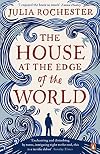
A man falls from a high point into the sea and is lost. I am reminded of the myth of Icarus, the son of Daedalus, who on his way to freedom flew too close to the sun so that its heat melted the wax holding together the feathers of his artificial wings and he fell from the heavens. Pieter Brueghel the Elder's painting on this subject famously shows his fall as unnoticed by ordinary people such as a ploughman, a shepherd and an angler.
But when John Venton falls off a cliff somewhere facing the show more North Atlantic on the southwestern peninsula of England his absence is very definitely noticed by his family -- by his wife Valerie, by his twin children Morwenna and Corwin, by his father Matthew -- and by his friend Bob, who was too drunk at the time to notice what happened. The impact that this disappearance (no body is ever found) has on the evidently dysfunctional family is far-reaching, stretching years into the future; and the time comes when the twins, who were of school-leaving age when their father disappeared, start to question the received wisdom.
Julia Rochester's debut novel is a real corker. The narrator is Morwenna who certainly doesn't suffer fools gladly. She goes to work as a bookbinder in London, while her brother Corwin travels the world to work on projects helping local communities. John's wife remarries John's best friend Bob and moves out of the family home (Thornton: a memory of Brontë's Thornfield Hall, perhaps?) leaving John's father Matthew to manage on his own. Morwenna's eccentric grandfather has been painting a giant map of the area with Thornton at its centre: the six-by-six-foot canvas is based on a circular area with a radius of twelve miles. Imagine something like the Hereford Cathedral Mappa Mundi, complete with "wandering saints and wronged women and poet priests; its contradictory seasons, snowdrops and roses, fruit and blossom, spring cubs and autumn hunters." It is this map that dominates the narrative as much as the outside landscape, against which all the drama takes place and which provides the final clue that precipitates the denouement.
John Venton is likened to Sir Galahad, but like that pure, idealised Arthurian knight he is a bit of an enigma. What really motivates him, and how is it that he could be so careless on that fateful night? Galahad is known as the figure who went in quest of the Holy Grail, but for the Venton siblings their quest -- over seventeen years and more -- is to find out what happened to their father. When Corwin eventually gets 'compassion fatigue' in his career and Morwenna virtually engineers a failed relationship we realise that they and the other participants are really searching for love: whether parent-child, sister-brother or husband-wife we know that the task will be long and arduous and that some will never succeed.
Julia Rochester's characters are so well-drawn that we feel they could be real -- believable humans with gentleness and talents, but also fierceness and foibles. Spiky Morwenna is too often superficial, just as she binds books without any curiosity about their contents; but she is not afraid to speak her mind. Corwin appears to exhibit strength of character by helping the disadvantaged around the work but, when it comes to facing his demons, his courage fails him; yet he worries away at things like a terrier with a rabbit. Matthew, rather like his missing son, retreats into his own inner world as those on the autistic spectrum often do; and yet he has the artistic talent to recreate that world in a masterpiece that is his consuming obsession.
Like the sea and the land which bisect the map that Matthew makes, everyone is composed of near equal parts of strengths and weaknesses; in common with this house at the edge of the world they too face the inscrutable ocean, but are confined -- whether they like it or not -- to the land. As the Robert Frost poem that prefaces the novel has it, "The people along the sand | All turn and look one way. | They turn their back on the land. | They look at the sea all day." Being unable to fathom its depths doesn't stop these people watching, watching, watching.
Like all good stories The House at the Edge of the World has this quality: the ability to get under the skin. The reader may wonder whether, after the watery baptism that opens the book, the main protagonists are ever going to make new lives -- and new loves -- for themselves; for their sakes we may certainly hope so. Ubi caritas? Will they ever find it? show less
But when John Venton falls off a cliff somewhere facing the show more North Atlantic on the southwestern peninsula of England his absence is very definitely noticed by his family -- by his wife Valerie, by his twin children Morwenna and Corwin, by his father Matthew -- and by his friend Bob, who was too drunk at the time to notice what happened. The impact that this disappearance (no body is ever found) has on the evidently dysfunctional family is far-reaching, stretching years into the future; and the time comes when the twins, who were of school-leaving age when their father disappeared, start to question the received wisdom.
Julia Rochester's debut novel is a real corker. The narrator is Morwenna who certainly doesn't suffer fools gladly. She goes to work as a bookbinder in London, while her brother Corwin travels the world to work on projects helping local communities. John's wife remarries John's best friend Bob and moves out of the family home (Thornton: a memory of Brontë's Thornfield Hall, perhaps?) leaving John's father Matthew to manage on his own. Morwenna's eccentric grandfather has been painting a giant map of the area with Thornton at its centre: the six-by-six-foot canvas is based on a circular area with a radius of twelve miles. Imagine something like the Hereford Cathedral Mappa Mundi, complete with "wandering saints and wronged women and poet priests; its contradictory seasons, snowdrops and roses, fruit and blossom, spring cubs and autumn hunters." It is this map that dominates the narrative as much as the outside landscape, against which all the drama takes place and which provides the final clue that precipitates the denouement.
John Venton is likened to Sir Galahad, but like that pure, idealised Arthurian knight he is a bit of an enigma. What really motivates him, and how is it that he could be so careless on that fateful night? Galahad is known as the figure who went in quest of the Holy Grail, but for the Venton siblings their quest -- over seventeen years and more -- is to find out what happened to their father. When Corwin eventually gets 'compassion fatigue' in his career and Morwenna virtually engineers a failed relationship we realise that they and the other participants are really searching for love: whether parent-child, sister-brother or husband-wife we know that the task will be long and arduous and that some will never succeed.
Julia Rochester's characters are so well-drawn that we feel they could be real -- believable humans with gentleness and talents, but also fierceness and foibles. Spiky Morwenna is too often superficial, just as she binds books without any curiosity about their contents; but she is not afraid to speak her mind. Corwin appears to exhibit strength of character by helping the disadvantaged around the work but, when it comes to facing his demons, his courage fails him; yet he worries away at things like a terrier with a rabbit. Matthew, rather like his missing son, retreats into his own inner world as those on the autistic spectrum often do; and yet he has the artistic talent to recreate that world in a masterpiece that is his consuming obsession.
Like the sea and the land which bisect the map that Matthew makes, everyone is composed of near equal parts of strengths and weaknesses; in common with this house at the edge of the world they too face the inscrutable ocean, but are confined -- whether they like it or not -- to the land. As the Robert Frost poem that prefaces the novel has it, "The people along the sand | All turn and look one way. | They turn their back on the land. | They look at the sea all day." Being unable to fathom its depths doesn't stop these people watching, watching, watching.
Like all good stories The House at the Edge of the World has this quality: the ability to get under the skin. The reader may wonder whether, after the watery baptism that opens the book, the main protagonists are ever going to make new lives -- and new loves -- for themselves; for their sakes we may certainly hope so. Ubi caritas? Will they ever find it? show less
Twins Morwenna and Corwin Venton are spending the final summer of their childhood in their family home on the North Devon Coast, eagerly awaiting the autumn when they will leave for University. Their family had been the local landowners although all the land is now gone: only the house remains, where their grandfather Matthew, and parents John and Valerie, live an ill-suited existence. John hates his job as an architect designing houses that he thinks are a blot on the landscape, Valerie show more feels trapped as a country wife with a taciturn and undemonstrative husband, while Matthew has spent the last fifty years painting an incredibly detailed map of the land surrounding the house that encompasses his whole life. And then one night their father doesn't come home from a beery evening playing folk music in the local pub, his equally drunk friend has seen him fall from the cliff path into the sea. As the years go by, Morwenna and Corwin go their separate ways: her to a career of book-binding in London and him as a water engineer in the trouble spots of the world, but the summer of their father's death continues to haunt them.
The book begins with Robert Frost's poem 'Neither Out Far Nor In Deep':
What is noticeable about this book is that even though the Venton's house looks out over the sea, it's the land that is the focus of its inhabitants.
This was an enjoyable book which kept me reading till the end. The sense of place is well drawn, and I appreciated the evocation of the coastal landscape. I think I'd have enjoyed it a little more, though, if the main characters had a few more redeeming qualities. And while Morwenna and Corwin are well drawn as teenagers, they are less believable in their mid-thirties. This is a first novel though, and I'll certainly look out for more by this author. show less
The book begins with Robert Frost's poem 'Neither Out Far Nor In Deep':
The people along the sand
All turn and look one way.
They turn their back on the land.
They look at the sea all day.
What is noticeable about this book is that even though the Venton's house looks out over the sea, it's the land that is the focus of its inhabitants.
This was an enjoyable book which kept me reading till the end. The sense of place is well drawn, and I appreciated the evocation of the coastal landscape. I think I'd have enjoyed it a little more, though, if the main characters had a few more redeeming qualities. And while Morwenna and Corwin are well drawn as teenagers, they are less believable in their mid-thirties. This is a first novel though, and I'll certainly look out for more by this author. show less
Here's another short audiobook with a marvelous accent! Narrated by Avita Jay, Bringing Stan In, by Julia Rochester is about a day unlike any other.
Told from the Devon Coast of England, eight-year olds, Morwenna and Corwin are watching the ships arrive in the harbor. On this particular day, someone dies and it has an affect on the twins.
I believe the setting of the sun and a mackerel run lead them to the death of a community member. One who inspired Morwenna the future of boat building. show more But when he's found dead, her dreams and desires change.
It's sort of a sad tale, but it's not long enough for you to feel the loss. It's a short, short story.
The tale is very descriptive and is narrated beautifully, but to me, pointless. Thankfully, it was written to compliment another story, a novel: The House at the Edge of the World. Maybe that story is set from this one... I guess I'll have to find out!. Until then, I'm on to the next book!
*audiobook from my personal library.
http://tinyurl.com/ho2v443 show less
Told from the Devon Coast of England, eight-year olds, Morwenna and Corwin are watching the ships arrive in the harbor. On this particular day, someone dies and it has an affect on the twins.
I believe the setting of the sun and a mackerel run lead them to the death of a community member. One who inspired Morwenna the future of boat building. show more But when he's found dead, her dreams and desires change.
It's sort of a sad tale, but it's not long enough for you to feel the loss. It's a short, short story.
The tale is very descriptive and is narrated beautifully, but to me, pointless. Thankfully, it was written to compliment another story, a novel: The House at the Edge of the World. Maybe that story is set from this one... I guess I'll have to find out!. Until then, I'm on to the next book!
*audiobook from my personal library.
http://tinyurl.com/ho2v443 show less
Part coming-of-age story, part psychological family drama, there is a dark and twisty mystery at the heart of Rochester's debut novel. For the most part, I quite enjoyed this evocative read, and I was particularly taken with Matthew, the grandfather, and his lifelong mapping project.
There were two issues that didn't quite work for me:
1) the character of Morwenna - who was a bit of a curmudgeonly and blunt teenager - never really progressed or evolved. While I did find her interesting, her show more lack of dimension took away from things a bit for me.
2) that, in writing about twins, Rochester decided it had to go there - and if not fully there, the subject was introduced and explored. I get that there is a mystique to the nature of twinship. Heck, I am completely fascinated by twins myself and, for years as a kid, was sure I had actually been a twin (heh!). While reading The House at the Edge of the World, I created a list of fictional twins: https://www.rifflebooks.com/list/206711 - hit me up if you want me to add any titles to this collection. But what is it that makes writers veer into Flowers in the Attic-ville when writing twins??
But, these 2 points aside, there was much to like in this story, and I do feel this to be a strong debut. I approached this book as part of my reading the Baileys Women's Prize for Fiction longlist nominees project, and this is definitely an interesting contender (winner announced 08 June). I do often wonder how reading a book in the context of an award nomination skews the experience... but I also discover some great books along the way. Rochester's novel was also included on the 3 book shortlist for the UK's Desmond Elliott Prize - a £10,000 award for first-time novelists. The award will be presented on 22 June.
Rochester has an engaging, smart style so I look forward to reading more from her in the future. show less
There were two issues that didn't quite work for me:
1) the character of Morwenna - who was a bit of a curmudgeonly and blunt teenager - never really progressed or evolved. While I did find her interesting, her show more lack of dimension took away from things a bit for me.
2) that, in writing about twins, Rochester decided it had to go there - and if not fully there, the subject was introduced and explored. I get that there is a mystique to the nature of twinship. Heck, I am completely fascinated by twins myself and, for years as a kid, was sure I had actually been a twin (heh!). While reading The House at the Edge of the World, I created a list of fictional twins: https://www.rifflebooks.com/list/206711 - hit me up if you want me to add any titles to this collection. But what is it that makes writers veer into Flowers in the Attic-ville when writing twins??
But, these 2 points aside, there was much to like in this story, and I do feel this to be a strong debut. I approached this book as part of my reading the Baileys Women's Prize for Fiction longlist nominees project, and this is definitely an interesting contender (winner announced 08 June). I do often wonder how reading a book in the context of an award nomination skews the experience... but I also discover some great books along the way. Rochester's novel was also included on the 3 book shortlist for the UK's Desmond Elliott Prize - a £10,000 award for first-time novelists. The award will be presented on 22 June.
Rochester has an engaging, smart style so I look forward to reading more from her in the future. show less
Lists
Awards


You May Also Like
Associated Authors
Statistics
- Works
- 3
- Also by
- 1
- Members
- 128
- Popularity
- #157,244
- Rating
- 3.5
- Reviews
- 8
- ISBNs
- 17
- Languages
- 1