

Jean Markale (1928–2008)
Author of Women of the Celts
About the Author
Poet, philosopher, historian, and storyteller, Jean Markale has spent a lifetime researching pre-Christian and medieval culture and spirituality. He is the author of more than forty books. He is a specialist in Celtic studies at the Sorbonne and lives in the Brittany region of France
Image credit: Le Télégramme
Series
Works by Jean Markale
The Celts: Uncovering the Mythic and Historic Origins of Western Culture (1967) 321 copies, 2 reviews
The Church of Mary Magdalene: The Sacred Feminine and the Treasure of Rennes-le-Chateau (2004) 84 copies, 1 review
The Great Goddess: Reverence of the Divine Feminine from the Paleolithic to the Present (1999) 79 copies, 1 review
Cathedral of the Black Madonna: The Druids and the Mysteries of Chartres (1988) 66 copies, 2 reviews
Le cycle du Graal, Tome 1 : La Naissance du Roi Arthur ; Les Chevaliers de la Table Ronde ; Lancelot du Lac ; La Fée Morgane (1998) 17 copies, 1 review
La epopeya Celta en Irlanda 4 copies
Bretaņas pasakas 3 copies
L'Epopee Celtique d'Irlande 1 copy
Le chêne de la sagesse Un roi nommé Saint-Louis (Collection "Evasion") (French Edition) (1985) 1 copy
Le Cycle Du Graal 3 Vols. / La Naissance Du Roi / Arthur Les Chevaliers De La Table Ronde/ Lancelot Du Lac (1992) 1 copy
La epopeya celta 1 copy
Vercingetorix 1 copy
La ricerca del Graal 1 copy
Tagged
Common Knowledge
- Canonical name
- Markale, Jean
- Legal name
- Bertrand, Jean
- Birthdate
- 1928-05-23
- Date of death
- 2008-11-23
- Gender
- male
- Occupations
- writer
poet
teacher
radio show host - Short biography
- Jean Markale was the pen name of Jean Bertrand, a French writer, poet, radio show host, lecturer, and high school teacher, who lived in Brittany and wrote numerous books on Celtic civilization and Arthurian legend.
- Nationality
- France
- Birthplace
- Paris, Île-de-France, France
- Places of residence
- Brittany, France
- Associated Place (for map)
- France
Members
Reviews
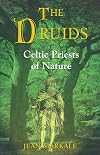
Markale does a wonderful job of developing each chapter into a comprehensive exploration of a given topic, presenting evidence and counter-evidence, weighing sources and coming to intelligent conclusions. I found the essays of Part Four: Druidic Thought particularly appealing to my personal love of theology/philosophy, but the chapters in Part Two on various deities within the Celtic pantheon were also of great interest (though perhaps not as valuable if the reader is not familiar with at show more least some basic Celtic myths and story-cycles).
Two aspects likely to raise objections, especially from Neopagan Druids today: Firstly, as more deeply explored in the final chapters, Markale puts forward a vision of druidic philosophy and belief which is essentially monistic/monotheistic in nature and, though perhaps politically opposed to Christianity at the time of the latter's arrival (or forced entrance) into the Celtic world, does not inherently conflict to modern, more tolerant eyes. Secondly, Markale insists that druidism, being an aspect of a particular class of priests and judges within the ancient Celtic social framework, is inseparated from that framework and so is not a valid spiritual tradition today (the single, four-page chapter devoted to the issue of "Neodruidism" displays this view perfectly).
If the reader can look past these two minor concerns (or, better yet, understand and appreciate the spirit of scholarship and intellectual honesty from which they spring), there is a great deal of valuable information and insight to be found in the pages of this book. show less
Two aspects likely to raise objections, especially from Neopagan Druids today: Firstly, as more deeply explored in the final chapters, Markale puts forward a vision of druidic philosophy and belief which is essentially monistic/monotheistic in nature and, though perhaps politically opposed to Christianity at the time of the latter's arrival (or forced entrance) into the Celtic world, does not inherently conflict to modern, more tolerant eyes. Secondly, Markale insists that druidism, being an aspect of a particular class of priests and judges within the ancient Celtic social framework, is inseparated from that framework and so is not a valid spiritual tradition today (the single, four-page chapter devoted to the issue of "Neodruidism" displays this view perfectly).
If the reader can look past these two minor concerns (or, better yet, understand and appreciate the spirit of scholarship and intellectual honesty from which they spring), there is a great deal of valuable information and insight to be found in the pages of this book. show less
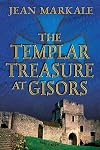
Here is the whole "Holy Blood Holy Grail" controversy looked at from the French point of view. I have to say, this certainly clears up a lot of questions that remained unanswered by Baigent, Leigh and Lincoln. This is actually very well-written and interesting from start to finish. Gisors doesn't really play a very big part in the whole thing, but the Templars are very well represented and analyzed. Nicely done!

The author is a specialist in Celtic mythology and medieval literature. I am not entirely sure what exactly the purpose of this book is or who the intended audience are. I was left mostly baffled.
Part one gives us his own private memories of the place (which should have been cut out to give more room for the following), a brief description of the place and its history, and a few examples of other sites dedicated to the Archangel Michael, with a focus on those he considers related to the show more monument in Normandy.
Part two is a dense study of angels in philosophy and theology which is incomprehensible to readers not versed in terms such as patristics, ontology, neo-platonic etc. He draws heavily on ancient Eastern religions and myths (Babylonian, Iranian, Indian) and the Bible in order to connect nearly everything to Celtic mythology.
Part three looks at dragons in the same culture groups and offers quite a few examples of folk tales and Arthurian tales that tie only loosely into the significance of a momument dedicated to the Archangel.
I think the final argument is that the world is neither white nor black, good or evil, but that both are needed to maintain the universe in balance and the one cannot exist without the other. This could have been said in simpler words. show less
Part one gives us his own private memories of the place (which should have been cut out to give more room for the following), a brief description of the place and its history, and a few examples of other sites dedicated to the Archangel Michael, with a focus on those he considers related to the show more monument in Normandy.
Part two is a dense study of angels in philosophy and theology which is incomprehensible to readers not versed in terms such as patristics, ontology, neo-platonic etc. He draws heavily on ancient Eastern religions and myths (Babylonian, Iranian, Indian) and the Bible in order to connect nearly everything to Celtic mythology.
Part three looks at dragons in the same culture groups and offers quite a few examples of folk tales and Arthurian tales that tie only loosely into the significance of a momument dedicated to the Archangel.
I think the final argument is that the world is neither white nor black, good or evil, but that both are needed to maintain the universe in balance and the one cannot exist without the other. This could have been said in simpler words. show less
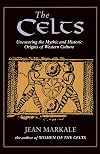
"The Celts" is a Romantic excursion through Celtic and Romano-Celtic history and tragedy and myth, which tries hard to avoid drawing any dividing lines. Accepted history blends into epic exaggeration; heroic parallels are found for figures and events known from Livy, Caesar and the Greek historians; the Celtic Twilight thickens with every page.
Awards


You May Also Like


Associated Authors
Statistics
- Works
- 110
- Members
- 2,557
- Popularity
- #10,042
- Rating
- 3.5
- Reviews
- 33
- ISBNs
- 280
- Languages
- 8
- Favorited
- 3
