
Joe Simon (1913–2011)
Author of Captain America (Penguin Classics Marvel Collection)
Series
Works by Joe Simon
Marvel Masterworks, Volume 043: Golden Age Captain America Volume 1 [#1-4] (2005) 45 copies, 1 review
Marvel Masterworks, Volume 055: Golden Age All-Winners Comics Volume 1 [#1-4] (2005) — Author — 31 copies
Marvel Masterworks, Volume 099: Golden Age Captain America Volume 2 [#5-8] (2008) — Author — 21 copies
Marvel Masterworks, Volume 149: Golden Age Marvel Comics Volume 5 [Marvel Mystery Comics #17-20] (2010) — Author — 18 copies
Marvel Masterworks, Volume 116: Golden Age Marvel Comics Volume 4 [Marvel Mystery Comics #13-16] (2009) — Author — 18 copies
Marvel Masterworks, Volume 166: Golden Age Marvel Comics Volume 6 [Marvel Mystery Comics #21-24] (2011) — Author — 17 copies
Marvel Masterworks, Volume 111: Golden Age Captain America Volume 3 [#9-12] (2009) — Author — 16 copies
Daring Mystery Comics (1940-1942) #1 3 copies
Prez (1973) #2 2 copies
The Twelve #½ 2 copies
Prez 04 2 copies
Daring Mystery Comics (1940-1942) #6 2 copies
1st Issue Special #2: The Green Team 2 copies
Detective Comics (1937) #69 1 copy
Drowning in the sea of love 1 copy
The Power of Joe Simon 1 copy
Prez # 3 1 copy
Red Raven Comics #1 1 copy
Ensicklopedia 1 copy
Boy Commandos No. 13 1 copy
Sick Magazine: the magazine with a KICK! — Editor — 1 copy
Je Suis Captain America 1 copy
Prez # 2 1 copy
Super Adventure Comic No. 69 1 copy
Donald Trump Goes To Mexico (Donald Trump, Books, Mexico, Temptations, President, Art, Deal, Biography) (2016) 1 copy
Brother Power the Geek 1 1 copy
Love Vibrations 1 copy
Associated Works
The Jack Kirby Omnibus, Volume 1: Starring Green Arrow (2011) — Contributor; Illustrator — 44 copies, 2 reviews
The Jack Kirby Omnibus, Volume 2: Starring the Super Powers (2013) — Contributor; Illustrator — 31 copies
Captain America [1979] / Captain America II: Death Too Soon [1979] (1979) — Original comic book — 26 copies
Comics About Cartoonists: Stories About the World's Oddest Profession (2013) — Contributor — 18 copies
DC Finest: Justice Society of America: The Plunder of the Psycho-Pirate (2025) — Illustrator — 8 copies
Tagged
Common Knowledge
- Birthdate
- 1913-10-11
- Date of death
- 2011-12-14
- Gender
- male
- Occupations
- comic book writer
editor - Relationships
- Kirby, Jack, (colleague)
- Nationality
- USA
- Birthplace
- Rochester, New York, USA
- Place of death
- New York, New York, USA
- Burial location
- Long Island National Cemetery, East Farmingdale, New York, USA
- Associated Place (for map)
- New York, USA
Members
Reviews
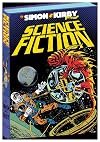
I really enjoyed this. The comics come from a time (40s to 60s) when scientific knowledge was growing rapidly, especially physics and astronomical knowledge, and inspiring unbridled imagination like it hasn't since. At least in popular culture, comics and science fiction seemed to bloom with all sorts of possibilities and few limitations on where we could go in the universe and what we might find there. Simon and Kirby were leading us out there.
The stories are pretty simple, and many smack show more of good and evil in mid-twentieth century tones. No complicated psyches, no inner struggles, just heroic stories done up in primary colors. Alien civilizations, space monsters, offbeat adventures, travel through extra dimensions, . . . It's escapism for sure, with a hefty dose of nostalgia for a time when we thought anything was possible.
The comics include: Solar Patrol, Solar Legion, Daring Disc, Blue Bolt, Win A Prize Comics, Black Cat Mystic, Alarming Tales, Race for the Moon, Alarming Adventures, Blast-Off, Thrill-O-Rama, Unearthly Spectaculars, Jigsaw, and a couple of Kirby and Simon unpublished projects -- Tiger 21 and Jove U.N. Born.
My one mild gripe -- no doubt a matter of personal taste, but the ten issues of Blue Bolt (from 1940-41) were a few too many for me, maybe a bit repetitive in plot and concept. But not a big deal, maybe just a matter of those comics being overshadowed by the wider variety of ideas, plots, and settings of the later comics from the 50s and 60s. show less
The stories are pretty simple, and many smack show more of good and evil in mid-twentieth century tones. No complicated psyches, no inner struggles, just heroic stories done up in primary colors. Alien civilizations, space monsters, offbeat adventures, travel through extra dimensions, . . . It's escapism for sure, with a hefty dose of nostalgia for a time when we thought anything was possible.
The comics include: Solar Patrol, Solar Legion, Daring Disc, Blue Bolt, Win A Prize Comics, Black Cat Mystic, Alarming Tales, Race for the Moon, Alarming Adventures, Blast-Off, Thrill-O-Rama, Unearthly Spectaculars, Jigsaw, and a couple of Kirby and Simon unpublished projects -- Tiger 21 and Jove U.N. Born.
My one mild gripe -- no doubt a matter of personal taste, but the ten issues of Blue Bolt (from 1940-41) were a few too many for me, maybe a bit repetitive in plot and concept. But not a big deal, maybe just a matter of those comics being overshadowed by the wider variety of ideas, plots, and settings of the later comics from the 50s and 60s. show less
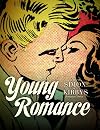
These are hilariously lurid - just a book of cover art alone would be gold. But the plots? Some serious WTF. A member of the Nazi youth gives up her American love because she can't denounce Hitler; a woman throws herself out of a window because she thinks her man is dying in the electric chair; there's the hilariously titled My Cousin From Milwaukee; and Norma, Queen of the Hotdogs.
You just can't make this stuff up.
You just can't make this stuff up.

Joe Simon & Jack Kirby’s Fighting American collects issues 1–7 of the titular character’s Cold War adventures by the creators of Captain America along with previously unpublished material. What began as a red-baiting Cold War story quickly morphed into something parodying the jingoism of the early Cold War. Recalling Captain America’s origin, Simon & Kirby portray Nelson Flagg taking on the mantle of the Fighting American through a combination of chemicals and energy transference, show more though in this iteration the government scientists transfer Flagg to a golem-like body based on his deceased brother, who previously served them. While early stories recall the earnestness of Captain America, Simon & Kirby soon found that the Joe McCarthy-style Commie-busting was at odds with their own sense of American liberty, grounded in the New Deal that shaped their earlier patriotic work as well as subsequent superheroes the two created independent of each other. This volume is great for fans of classic comic books, particularly those interested in the work of Simon & Kirby. It will easily join other collections such as Marvel’s Golden Age Captain America volumes and DC’s collection of Sandman comics by the two. show less

In 1941, DC gave the Sandman a new costume and a new sidekick in an attempt to revive a fading character by making him more like a superhero-- they even ditched Wesley Dodds's girlfriend Dian. It probably would have failed, had not Joe Simon and Jack Kirby taken over the character in 1942, fresh off their success creating Captain America for Marvel. Every story the two of them collaborated on is here. They're goofy, sure, but they're also really quite good-- they've got art by Jack Kirby, show more you know! Kirby and Simon's layouts are dynamic, with stretching borders and crossing the gutter and just all-out explosive imagery. The Sandman no longer uses his gas gun or mask here (alas), but the name is kept appropriate with the use of dreams in the stories. Frequently, characters are motivated by their dreams (or even lack thereof), and all the villains in New York City dream of the Sandman. In fact, when Wesley Dodds is replaced by an impostor, Sandy figures it out because "Dodds" mentions dreaming of the Sandman!
Some are better than others, of course, and as you might imagine from a book featuring twenty-four different stories, it eventually gets repetitive. Some are just dumb, but there are a lot of neat ones, too. I also enjoyed the glimpses of World War II propaganda; the Sandman and Sandy exhort the reader to buy war bonds, but even better is the comic about Hitler, Mussolini, and Hirohito reading The Boy Commandos. The Sandman stories get flat-out terrible at the end, but I think those ones might not actually be by Simon and Kirby-- though I'm basing that on the most fleeting of evidence!
It's just weird to think that these adventures happened to the same guy as Sandman Mystery Theatre. And it's even weirder to think that that version of Wesley Dodds hung out with an obnoxious snot like Sandy. (Okay, he's nowhere near as bad as Green Arrow's kid sidekick Speedy.)
Also included is the first issue of the 1974-76 series about the second Sandman, Garrett Sanford, which reunited Simon and Kirby for the last time ever. It's weird and doesn't quite hang together-- what is General Electric's plan, anyway?-- but the concepts and visuals are as captivating as always. You can see why Roy Thomas brought back this version (and even game him a name, which Simon and Kirby did not), and why Neil Gaiman nicked some of the concepts for his Sandman series.
Sandman Mystery Theatre: « Previous in sequence | Next in sequence » show less
Some are better than others, of course, and as you might imagine from a book featuring twenty-four different stories, it eventually gets repetitive. Some are just dumb, but there are a lot of neat ones, too. I also enjoyed the glimpses of World War II propaganda; the Sandman and Sandy exhort the reader to buy war bonds, but even better is the comic about Hitler, Mussolini, and Hirohito reading The Boy Commandos. The Sandman stories get flat-out terrible at the end, but I think those ones might not actually be by Simon and Kirby-- though I'm basing that on the most fleeting of evidence!
It's just weird to think that these adventures happened to the same guy as Sandman Mystery Theatre. And it's even weirder to think that that version of Wesley Dodds hung out with an obnoxious snot like Sandy. (Okay, he's nowhere near as bad as Green Arrow's kid sidekick Speedy.)
Also included is the first issue of the 1974-76 series about the second Sandman, Garrett Sanford, which reunited Simon and Kirby for the last time ever. It's weird and doesn't quite hang together-- what is General Electric's plan, anyway?-- but the concepts and visuals are as captivating as always. You can see why Roy Thomas brought back this version (and even game him a name, which Simon and Kirby did not), and why Neil Gaiman nicked some of the concepts for his Sandman series.
Sandman Mystery Theatre: « Previous in sequence | Next in sequence » show less
Lists
You May Also Like


Associated Authors
Statistics
- Works
- 87
- Also by
- 30
- Members
- 1,217
- Popularity
- #21,094
- Rating
- 4.0
- Reviews
- 19
- ISBNs
- 84
- Languages
- 2
- Favorited
- 1