
Alwyn W. Turner
Author of Crisis? What Crisis?: Britain in the 1970s
About the Author
Works by Alwyn W. Turner
Associated Works
Girl Gangs, Biker Boys, and Real Cool Cats: Pulp Fiction and Youth Culture, 1950 to 1980 (2016) — Contributor — 46 copies
I Ran With the Gang: The Inside Story of the Bay City Rollers (2018) — Introduction — 11 copies, 3 reviews
Tagged
Common Knowledge
- Birthdate
- 1962
- Gender
- male
- Nationality
- UK
- Birthplace
- West Germany
- Places of residence
- London, England, UK
- Associated Place (for map)
- England, UK
Members
Reviews
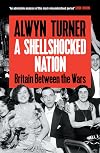
I’m an elderly and rather anxious chap, much given to lying awake at night worrying about what social media and AI are doing to the human race, and quite possibly with good reason. It never hurts, though, to be reminded that there is actually nothing new under the sun, least of all the conviction that the world is going to hell in a technological handcart. In 1913, for instance, The Times, declared that cinema was subjecting children to ‘terrific massacres, horrible catastrophes, show more motor-car smashes, public hangings, lynchings….All who care for the moral well-being and education of the child will set their faces like flint against this new form of excitement’. A little history does sometimes help to put the present in perspective.
A Shellshocked Nation concerns itself with Britain between the wars and covers social history, politics and popular culture. This is a tad overambitious in a text of 317 pages (plus references etc.) and, as a result, major events are hurtled through at lightning speed. The Irish War of Independence, the General Strike of 1926, the Great Depression, the hunger marches of the 1930s and the Munich Agreement, are all summarily dispatched in a matter of a few pages each. This kind of history on fast-forward adds little to the sum of knowledge. I couldn’t help thinking of Woody Allen once saying that he had taken a speed-reading course which enabled him to read War and Peace in twenty minutes: ‘It’s about Russia’.
The book is at its best, and most expansive, when dealing with popular culture. Turner is so entertaining and insightful on how popular culture relates to and illuminates its era that it’s a pity he didn’t skip the politics entirely. Still, there is plenty to be going on with here: the rise of cinema; a revival of interest in spiritualism, the occult and Arthurian legends as religious belief declined; children’s literature of the ‘20s with its evocation of a lost Eden before the slaughter of the First World War; the early years of the BBC; the detective fiction boom; the delayed popularity of war literature after ten years of ‘cultural silence’ on the subject (plenty of war poetry was being published before this, but hardly anyone wanted to read it, the horrors still being too fresh in the collective memory); the return, during the dark days of the ‘30s with dictators abroad and hardship at home, of Victorian melodrama with its reassuring moral certainties, and participatory music hall style entertainment with a strong sense of community spirit; George Formby and Gracie Fields, jazz and dance bands, Butlins holiday camps and Mills and Boon romances.
Turner’s view of British society at this time struck me as a bit rose-tinted. The pervading impression is of a contented and stable land of freedom lovers united by an irreverent sense of humour and a passion for doing funny dances like The Lambeth Walk. Although this rosy portrait contains a germ of truth, certainly in comparison to what was happening elsewhere on the continent, it was also a period of extreme deprivation for millions and a good deal of internal conflict, all of which Turner tends to underplay. He is undoubtedly correct, however, that Britain between the wars was an essentially conservative society both culturally and politically. Exciting avant-garde artistic movements were happening on the European mainland: Dada, Surrealism, Futurism, Constructivism, twelve-tone serialism. Britain didn’t really go in for this sort of thing. It would be facetious and misleading of me to say we had George Formby and the Henry Hall Orchestra instead, but not that facetious or misleading.
Britain’s innate conservatism did mean that fascism and communism never took hold beyond the intelligentsia. The leading candidate for the position of Great Fascist Dictator in Britain was the absurd Sir Oswald Mosley, leader of the British Union of Fascists, also known as the Blackshirts. P. G. Wodehouse parodied him as Roderick Spode, 7th Earl of Sidcup, the leader of the Saviours of Britain, or the Black Shorts (‘there were no shirts left’.). Mosley’s antisemitic thugs were a genuine menace on the streets, but his party only briefly posed an electoral threat. Part of the reason, as Turner suggests, was Sir Oswald himself. There is a full-page photograph of him in the book. He looks, entirely typically, more comic than menacing: a ham actor pretending to be Hitler. show less
A Shellshocked Nation concerns itself with Britain between the wars and covers social history, politics and popular culture. This is a tad overambitious in a text of 317 pages (plus references etc.) and, as a result, major events are hurtled through at lightning speed. The Irish War of Independence, the General Strike of 1926, the Great Depression, the hunger marches of the 1930s and the Munich Agreement, are all summarily dispatched in a matter of a few pages each. This kind of history on fast-forward adds little to the sum of knowledge. I couldn’t help thinking of Woody Allen once saying that he had taken a speed-reading course which enabled him to read War and Peace in twenty minutes: ‘It’s about Russia’.
The book is at its best, and most expansive, when dealing with popular culture. Turner is so entertaining and insightful on how popular culture relates to and illuminates its era that it’s a pity he didn’t skip the politics entirely. Still, there is plenty to be going on with here: the rise of cinema; a revival of interest in spiritualism, the occult and Arthurian legends as religious belief declined; children’s literature of the ‘20s with its evocation of a lost Eden before the slaughter of the First World War; the early years of the BBC; the detective fiction boom; the delayed popularity of war literature after ten years of ‘cultural silence’ on the subject (plenty of war poetry was being published before this, but hardly anyone wanted to read it, the horrors still being too fresh in the collective memory); the return, during the dark days of the ‘30s with dictators abroad and hardship at home, of Victorian melodrama with its reassuring moral certainties, and participatory music hall style entertainment with a strong sense of community spirit; George Formby and Gracie Fields, jazz and dance bands, Butlins holiday camps and Mills and Boon romances.
Turner’s view of British society at this time struck me as a bit rose-tinted. The pervading impression is of a contented and stable land of freedom lovers united by an irreverent sense of humour and a passion for doing funny dances like The Lambeth Walk. Although this rosy portrait contains a germ of truth, certainly in comparison to what was happening elsewhere on the continent, it was also a period of extreme deprivation for millions and a good deal of internal conflict, all of which Turner tends to underplay. He is undoubtedly correct, however, that Britain between the wars was an essentially conservative society both culturally and politically. Exciting avant-garde artistic movements were happening on the European mainland: Dada, Surrealism, Futurism, Constructivism, twelve-tone serialism. Britain didn’t really go in for this sort of thing. It would be facetious and misleading of me to say we had George Formby and the Henry Hall Orchestra instead, but not that facetious or misleading.
Britain’s innate conservatism did mean that fascism and communism never took hold beyond the intelligentsia. The leading candidate for the position of Great Fascist Dictator in Britain was the absurd Sir Oswald Mosley, leader of the British Union of Fascists, also known as the Blackshirts. P. G. Wodehouse parodied him as Roderick Spode, 7th Earl of Sidcup, the leader of the Saviours of Britain, or the Black Shorts (‘there were no shirts left’.). Mosley’s antisemitic thugs were a genuine menace on the streets, but his party only briefly posed an electoral threat. Part of the reason, as Turner suggests, was Sir Oswald himself. There is a full-page photograph of him in the book. He looks, entirely typically, more comic than menacing: a ham actor pretending to be Hitler. show less
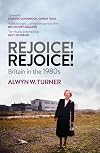
According to a report published in the British Medical Journal the suicide rate in Britain doubled in the month after each of Margaret Thatcher’s election victories. This extraordinary statistic, unknown by me before reading this history of Britain in the 1980s, is a sharp reminder that not everyone was overjoyed by Thatcher’s new model Britain. As Alwyn Turner notes, she stamped herself on the public consciousness more successfully than any other post-war prime minister, while only ever show more securing a third of the popular vote. Her thumping parliamentary majorities were the result of the peculiarities of the British electoral system, a divided opposition and, in the first half of the ‘80s, a Labour Party apparently hellbent on self-destruction. Having lived in Britain at the time I remember it as a decade characterised by dogmatism, extreme social division, mass unemployment, the elevation of greed to a credo, callousness in high office and intolerance.
One of the virtues of Rejoice! Rejoice! is that it provides a nuanced account of a polarised era. In retrospect this most dogmatic of decades was groaning with political ironies, paradoxes and contradictions; all Turner has to do is point them out, which he does. All the political highlights - or perhaps that should be lowlights - are here, but he also focuses on how the events and issues of the day were reflected through popular culture. With the anti-Tory vote split between Labour and the breakaway SDP some of the strongest opposition to Thatcherism was expressed through pop music, comedy and popular fiction. The 1980s saw the rise of alternative comedy - ‘alternative comedian’ was synonymous with ‘anti-Thatcherite’ - and the return of political satire to television after being almost entirely absent since the 1960s. Despite the satire and agitpop, however, Thatcher sailed triumphantly through the decade. Peter Cook’s famous remark about how the political cabaret of the Weimar Republic helped to avert the rise of Hitler inevitably springs to mind.
Turner writes with a pleasingly dry wit (Thatcher ‘addressed the nation not as an equal, but as if it were a child or a slightly confused elderly relative.’) but is ultimately outclassed by the numerous examples of entirely unintentional humour from the period itself. Margaret Thatcher’s very personal take on the parable of the Good Samaritan, for instance: ‘No one would remember the good Samaritan if he’d only had good intentions; he had money as well’. Or Home Office minister Douglas Hurd informing the House of Commons that they could disregard American studies on the effects of nuclear weapons because ‘British houses tend to be somewhat more solid than American houses’. There is also the strange case of Errol Brown, lead singer with Hot Chocolate, performing John Lennon’s utopian anthem “Imagine” at a Conservative Party rally. This is so transcendentally bizarre one can’t help suspecting that Errol must have been taking the piss. show less
One of the virtues of Rejoice! Rejoice! is that it provides a nuanced account of a polarised era. In retrospect this most dogmatic of decades was groaning with political ironies, paradoxes and contradictions; all Turner has to do is point them out, which he does. All the political highlights - or perhaps that should be lowlights - are here, but he also focuses on how the events and issues of the day were reflected through popular culture. With the anti-Tory vote split between Labour and the breakaway SDP some of the strongest opposition to Thatcherism was expressed through pop music, comedy and popular fiction. The 1980s saw the rise of alternative comedy - ‘alternative comedian’ was synonymous with ‘anti-Thatcherite’ - and the return of political satire to television after being almost entirely absent since the 1960s. Despite the satire and agitpop, however, Thatcher sailed triumphantly through the decade. Peter Cook’s famous remark about how the political cabaret of the Weimar Republic helped to avert the rise of Hitler inevitably springs to mind.
Turner writes with a pleasingly dry wit (Thatcher ‘addressed the nation not as an equal, but as if it were a child or a slightly confused elderly relative.’) but is ultimately outclassed by the numerous examples of entirely unintentional humour from the period itself. Margaret Thatcher’s very personal take on the parable of the Good Samaritan, for instance: ‘No one would remember the good Samaritan if he’d only had good intentions; he had money as well’. Or Home Office minister Douglas Hurd informing the House of Commons that they could disregard American studies on the effects of nuclear weapons because ‘British houses tend to be somewhat more solid than American houses’. There is also the strange case of Errol Brown, lead singer with Hot Chocolate, performing John Lennon’s utopian anthem “Imagine” at a Conservative Party rally. This is so transcendentally bizarre one can’t help suspecting that Errol must have been taking the piss. show less
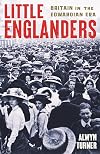
The Edwardian era lasted little more than a decade and, rather confusingly, Edward VII himself died four years before it ended. Alwyn Turner makes a convincing case, nonetheless, that it was a time of considerable change - a busy transitional period between the old world and the new. As in his previous books about late-twentieth century Britain, Turner is keen to show how the events and concerns of the time were reflected in popular culture, so we get a great deal about the music hall, the show more rise of the popular press, cinema, children’s comics, and the popular novelists and playwrights of the day. One of the things that struck me is that the division between ‘literary’ and ‘popular’ fiction had yet to be created (modernism hadn’t quite got going), so you had writers like H. G. Wells and G. K. Chesterton producing novels that were both serious and entertaining, and read by a large audience.
The past may well be a foreign country but, in many respects, Edwardian England seems remarkably like the current model. There was the death of the then longest-reigning monarch in history and her succession by a son who was, as Turner says of Edward, ‘a very different proposition’: a division between those who thought Britain should play a role in the wider world beyond the Empire, particularly in Europe, and the insular little Englanders of the title; widespread concern about immigration; political and social unrest; serious rioting on the streets; panics about the morally deleterious effects of new technology (What the Butler Saw machines were all the rage); the spectacular fall in 1906 of a long-serving and tired Conservative Government beset by splits and divisions. There was even a Labour Party leader called Keir. The parallels with the present pile up remorselessly throughout the book, but Turner allows the reader to make the connections.
He’s particularly good with the biographical vignette which is emblematic of the period - the roguish yet very popular politician Horatio Bottomley, and the strange case of the tragic heiress Violet Charlesworth. This is excellent popular history - wide-ranging, insightful, and fun to read. show less
The past may well be a foreign country but, in many respects, Edwardian England seems remarkably like the current model. There was the death of the then longest-reigning monarch in history and her succession by a son who was, as Turner says of Edward, ‘a very different proposition’: a division between those who thought Britain should play a role in the wider world beyond the Empire, particularly in Europe, and the insular little Englanders of the title; widespread concern about immigration; political and social unrest; serious rioting on the streets; panics about the morally deleterious effects of new technology (What the Butler Saw machines were all the rage); the spectacular fall in 1906 of a long-serving and tired Conservative Government beset by splits and divisions. There was even a Labour Party leader called Keir. The parallels with the present pile up remorselessly throughout the book, but Turner allows the reader to make the connections.
He’s particularly good with the biographical vignette which is emblematic of the period - the roguish yet very popular politician Horatio Bottomley, and the strange case of the tragic heiress Violet Charlesworth. This is excellent popular history - wide-ranging, insightful, and fun to read. show less
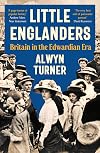
The decade and a bit between the death of Queen Victoria and the start of the First World War occupy a curious place in the British popular imagination.
We see it as a sort of last hurrah for the ‘old world’, a place of fields drawn along Doomsday lines and fading family names on shop awnings as Larkin would have it. When it ended with the lines of men in boaters and blazers waiting patiently to sign up for the war to end all wars like it was a bank holiday lark. After which nothing show more could ever be properly innocent again.
Historical reality and what the public chooses to remember are, of course two entirely different things. When it comes to recalling the, relatively, recent past we are capable of hallucinating like a chatbot that has had its drink spiked at a party.
A case convincingly proven by Alwyn turner in this clever and blessedly concise single volume history of an era that feels on closer examination worryingly familiar in its mix of moral panics and insecurities.
Turner has form in this area; he is the author of three previous histories covering the 1970’s to the 1990’s. His approach is to dig into the popular culture of the time and draw the connections that show how it reflects contemporary political, social and economic concerns. This is infinitely more readable and probably more enlightening too than having to wade through pages of turgid academic prose that is never so impolite as to make anything like a point.
In, for example, Crisis? What Crisis? his exemplary examination of the collapse of the postwar consensus in the seventies he drew on pop music and Saturday night television. Here music hall routines and penny dreadfuls penned by the likes of Edgar Wallace perform the same purpose.
He shows how the Britain in which Edward VII took to the throne was, for all its ostensible imperial might, a country with serious problems bubbling away under its straightlaced surface.
A war against the Boers in South Africa had put a dent in the country’s aura of military invincibility that no amount of noisy jingoism could hide. At home the rise of the Labour Party along with the battles for trades union rights and women’s suffrage were shaking the establishment.
Added to this was a fear that soft living and loosened morals had made Britain weak and unable to counter the threat posed by an increasingly militaristic Germany and an America limbering up to become the economic and cultural powerhouse of the new century. All these tensions were exacerbated by a tabloid press that was seldom shy when it came to stirring up a moral panic.
The similarities between the nervousness of the Edwardians about the future of a nation that tends to try and reverse into the future and those haunting our own age are obvious. Immigration, the influence of attention hungry celebrities; dithering politicians and a host of others are all there to be identified.
Which can make for an amusing parlour game, I for one will forever now link 1910’s chancer Horatio Bottomley with Nigel Farage. They are very much peas from the same bumptious pod separated by a century but doing the same schtick to much the same audience.
The message with this book, and I’d hazard the rest of Turner’s books, is that who we were in the past, is closely linked to who we are now. Popular culture shows that more clearly than any amount of data drawn from official papers and government statistics.
The Edwardians may have done so through a Mutoscope on the pier; our device of choice is a mobile phone on the couch. We, like them, are paying our penny to enjoy the peepshow that shows more than we think of our national character. show less
We see it as a sort of last hurrah for the ‘old world’, a place of fields drawn along Doomsday lines and fading family names on shop awnings as Larkin would have it. When it ended with the lines of men in boaters and blazers waiting patiently to sign up for the war to end all wars like it was a bank holiday lark. After which nothing show more could ever be properly innocent again.
Historical reality and what the public chooses to remember are, of course two entirely different things. When it comes to recalling the, relatively, recent past we are capable of hallucinating like a chatbot that has had its drink spiked at a party.
A case convincingly proven by Alwyn turner in this clever and blessedly concise single volume history of an era that feels on closer examination worryingly familiar in its mix of moral panics and insecurities.
Turner has form in this area; he is the author of three previous histories covering the 1970’s to the 1990’s. His approach is to dig into the popular culture of the time and draw the connections that show how it reflects contemporary political, social and economic concerns. This is infinitely more readable and probably more enlightening too than having to wade through pages of turgid academic prose that is never so impolite as to make anything like a point.
In, for example, Crisis? What Crisis? his exemplary examination of the collapse of the postwar consensus in the seventies he drew on pop music and Saturday night television. Here music hall routines and penny dreadfuls penned by the likes of Edgar Wallace perform the same purpose.
He shows how the Britain in which Edward VII took to the throne was, for all its ostensible imperial might, a country with serious problems bubbling away under its straightlaced surface.
A war against the Boers in South Africa had put a dent in the country’s aura of military invincibility that no amount of noisy jingoism could hide. At home the rise of the Labour Party along with the battles for trades union rights and women’s suffrage were shaking the establishment.
Added to this was a fear that soft living and loosened morals had made Britain weak and unable to counter the threat posed by an increasingly militaristic Germany and an America limbering up to become the economic and cultural powerhouse of the new century. All these tensions were exacerbated by a tabloid press that was seldom shy when it came to stirring up a moral panic.
The similarities between the nervousness of the Edwardians about the future of a nation that tends to try and reverse into the future and those haunting our own age are obvious. Immigration, the influence of attention hungry celebrities; dithering politicians and a host of others are all there to be identified.
Which can make for an amusing parlour game, I for one will forever now link 1910’s chancer Horatio Bottomley with Nigel Farage. They are very much peas from the same bumptious pod separated by a century but doing the same schtick to much the same audience.
The message with this book, and I’d hazard the rest of Turner’s books, is that who we were in the past, is closely linked to who we are now. Popular culture shows that more clearly than any amount of data drawn from official papers and government statistics.
The Edwardians may have done so through a Mutoscope on the pier; our device of choice is a mobile phone on the couch. We, like them, are paying our penny to enjoy the peepshow that shows more than we think of our national character. show less
Awards


You May Also Like


Associated Authors
Statistics
- Works
- 15
- Also by
- 2
- Members
- 427
- Popularity
- #57,178
- Rating
- 4.1
- Reviews
- 12
- ISBNs
- 32