
Rocky Wood (1959–2014)
Author of Stephen King: Uncollected, Unpublished
About the Author
Series
Works by Rocky Wood
Associated Works
Tagged
Common Knowledge
- Birthdate
- 1959-10-19
- Date of death
- 2014-12-01
- Gender
- male
- Nationality
- New Zealand
- Birthplace
- Wellington, New Zealand
- Place of death
- Melbourne, Victoria, Australia
- Associated Place (for map)
- New Zealand
Members
Reviews
Season of the Witch
(Full disclosure: The publisher sent me a free copy of this book for review at my request.)
"Thou shalt not suffer a witch to live." - Exodus 22:18
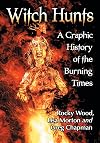
While the term "witch hunts" often conjures up images of the Salem Witch Trials, the truth is that those American colonists persecuted for witchcraft were but a drop in the bucket. From the mid-1300s through the 1700s, tens of thousands of people were imprisoned, tortured, and executed across Europe for the crime of heresy, show more including practicing witchcraft. In Witch Hunts: A Graphic History of the Burning Times, Rocky Wood, Lisa Morton, and Greg Chapman offer a succinct yet chilling account of the witch trials in graphic novel format.
Driven by fear, superstition, greed, and misogyny, religious and "secular" authorities alike found new and inventive ways to interrogate and kill these hapless victims, whose property was routinely confiscated and redistributed among the nobility, offering a powerful motive to accuse the innocent of consorting with the devil. In more extreme cases, this strategy backfired (or rather, progressed to its natural conclusion): entire towns were laid to waste as citizens were murdered en masse and others fled: "Finally, in 1593, the executions in Trier ended only when the city and its people were too impoverished to continue, the population had too much diminished, and food became scarce because farmers had been among those burned at the stakes." (page 86)
Likewise, misogyny was a driving force as well; a majority of those tried and executed for witchcraft were women - including Joan of Arc, who was convicted of heresy for wearing men's clothes. (After the first offense, she was imprisoned for life, as only repeat offenders could receive a death sentence. She resumed dressing as a man after an English Lord tried to rape her, in what was likely a trap devised by her enemies. Yet another piece of history I don't remember hearing about in high school!) The authors recount the life's work of one Henricus Institoris, also known as Kramer, the Dominican priest who co-authored the witch hunting bible Malleus Maleficarum, i.e., "The Hammer of Witches." Kramer ordered that women accused of sorcery - overwhelmingly young and "buxom" - be stripped naked prior to their interrogations, which he frequently performed himself, alone behind closed doors. As the authors so charitably note, "The Inquisitor clearly had a passion for helpless, unclothed victims." Had Karmer been born in different time and place, he might have become another Ted Bundy or Arthur Shawcross. Kramer proved so extreme that he was formally denounced by the Inquisition in 1490.
The illustrations by Greg Chapman are stark and often grotesque - appropriate for the subject matter, in other words. While Witch Hunts: A Graphic History of the Burning Times might prove useful in introducing high school readers to this shameful chapter in human history (one of many), I suspect that parents and teachers might object to the nudity. (The subjects of which are primarily attractive young women. It's difficult at time to tell whether this accurately reflects history - see, e.g. the previous paragraph - or is just in keeping with current cultural norms. Some of the panels are oddly reminiscent of a 90s S&M scene.)
The authors also take care to note that, while the mass hysteria that swept Europe during the height of the witch trials may be long past, women and men are still being condemned to death for witchcraft to this day. Saudi Arabia, for example, still classifies witchcraft as a crime punishable by death; 74% of those charged are women.
http://www.easyvegan.info/2013/12/04/witch-hunts-a-graphic-history-of-the-burnin... show less
(Full disclosure: The publisher sent me a free copy of this book for review at my request.)
"Thou shalt not suffer a witch to live." - Exodus 22:18
While the term "witch hunts" often conjures up images of the Salem Witch Trials, the truth is that those American colonists persecuted for witchcraft were but a drop in the bucket. From the mid-1300s through the 1700s, tens of thousands of people were imprisoned, tortured, and executed across Europe for the crime of heresy, show more including practicing witchcraft. In Witch Hunts: A Graphic History of the Burning Times, Rocky Wood, Lisa Morton, and Greg Chapman offer a succinct yet chilling account of the witch trials in graphic novel format.
Driven by fear, superstition, greed, and misogyny, religious and "secular" authorities alike found new and inventive ways to interrogate and kill these hapless victims, whose property was routinely confiscated and redistributed among the nobility, offering a powerful motive to accuse the innocent of consorting with the devil. In more extreme cases, this strategy backfired (or rather, progressed to its natural conclusion): entire towns were laid to waste as citizens were murdered en masse and others fled: "Finally, in 1593, the executions in Trier ended only when the city and its people were too impoverished to continue, the population had too much diminished, and food became scarce because farmers had been among those burned at the stakes." (page 86)
Likewise, misogyny was a driving force as well; a majority of those tried and executed for witchcraft were women - including Joan of Arc, who was convicted of heresy for wearing men's clothes. (After the first offense, she was imprisoned for life, as only repeat offenders could receive a death sentence. She resumed dressing as a man after an English Lord tried to rape her, in what was likely a trap devised by her enemies. Yet another piece of history I don't remember hearing about in high school!) The authors recount the life's work of one Henricus Institoris, also known as Kramer, the Dominican priest who co-authored the witch hunting bible Malleus Maleficarum, i.e., "The Hammer of Witches." Kramer ordered that women accused of sorcery - overwhelmingly young and "buxom" - be stripped naked prior to their interrogations, which he frequently performed himself, alone behind closed doors. As the authors so charitably note, "The Inquisitor clearly had a passion for helpless, unclothed victims." Had Karmer been born in different time and place, he might have become another Ted Bundy or Arthur Shawcross. Kramer proved so extreme that he was formally denounced by the Inquisition in 1490.
The illustrations by Greg Chapman are stark and often grotesque - appropriate for the subject matter, in other words. While Witch Hunts: A Graphic History of the Burning Times might prove useful in introducing high school readers to this shameful chapter in human history (one of many), I suspect that parents and teachers might object to the nudity. (The subjects of which are primarily attractive young women. It's difficult at time to tell whether this accurately reflects history - see, e.g. the previous paragraph - or is just in keeping with current cultural norms. Some of the panels are oddly reminiscent of a 90s S&M scene.)
The authors also take care to note that, while the mass hysteria that swept Europe during the height of the witch trials may be long past, women and men are still being condemned to death for witchcraft to this day. Saudi Arabia, for example, still classifies witchcraft as a crime punishable by death; 74% of those charged are women.
http://www.easyvegan.info/2013/12/04/witch-hunts-a-graphic-history-of-the-burnin... show less
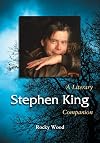
Few authors have achieved Stephen King’s level of fame and popularity. His books are guaranteed best sellers, despite many of them being literal door stoppers, weighing in at 800 or more pages. He has a legion of fans that King affectionately calls his “constant readers.” I freely admit to being one of them. I have read everything King has ever written and am always first in line for his newest book. This new “literary companion” by Rocky Wood seemed like the perfect companion for show more a fan like me.
The slim volume is divided into two parts. The first section is a series of short essays and some essays about King’s literary legacy. The second section, the “literary companion” part, is an encyclopedic list of all characters, settings, and works by King. King is still writing, so this book will fall out of date with the release of his next novel, but it does cover everything through his latest door stopper, Under the Dome.
The introductory material seemed a little thin to me. I think Wood could have done more with this material. The essays read a bit like blog posts and could use some filling out and polishing. There are several lists that, while interesting, probably deserve more justification. For example, a list of King’s top characters is just a roster of character names, without giving the reasons why they are so memorable.
One of the heftiest essays divides King’s works into five “worlds” where those stories are set. I have to quibble with Wood’s distinctions between worlds, though. Any King fan knows that King inserts many links between his stories and often refers to characters or events that took place in other novels. I am fascinated by these cross references, and I love looking for them as I read, like a scavenger hunt.
I believe all of King’s worlds (or settings) are interlinked, with his magnum opus, The Dark Tower series, at the center of these worlds, much as the Dark Tower itself is the nexus of all worlds. If you teased out all the references, you could map the connections (too big a project for me!), which I think would reveal a network crisscrossing among all of King’s books, rather than five distinct, but overlapping worlds. Wood does list many of these cross-references in the literary companion portion of his book, but I think his division of the stories into five worlds is too simplistic to describe the complex universe King has created.
The literary companion portion of this book is much more detailed and interesting than the introductory essays, and it’s clear how much work Wood has put into his research. Every King work, no matter how minor, is summarized, along with fascinating details about the origins of story ideas, publication histories, and locations of rare manuscripts. This book is a boon for the serious King collector trying to suss out the truly rare and valuable in King’s prolific oeuvre. There is even a bibliography of all King’s works with original publication dates, which I don’t think I’ve ever seen gathered into one index before. Wood also notes all films, TV shows, websites, video games, and e-books derived from King’s stories or original material. I don’t think you’d find a more complete index of all things Stephen King.
In addition to the story summaries, each major character and setting has a place in the encyclopedia. (I fail to understand why characters aren’t alphabetized by last name, but that’s a minor quibble.) Wood traces characters through all works in which they appear and provides detailed descriptions of King’s most important settings. He even notes who played a particular character in the TV or film version, if there was one. There is so much fascinating trivia to pore over in these entries. The listings reveal all of the interesting connections between the stories, a reference I’ve been wanting for a while. It was obviously an immense project, and I’m glad Wood undertook it.
This literary companion will be of interest to any serious Stephen King fan or collector. Clearly, Wood is a great fan himself and has made a respectful homage to his favorite author, and mine, in this well-researched work.
I received an advance review copy of this book. Article first published as Book Review: Stephen King: A Literary Companion by Rocky Wood on Blogcritics. I wrote this article and retain the rights to republish it. (2011) show less
The slim volume is divided into two parts. The first section is a series of short essays and some essays about King’s literary legacy. The second section, the “literary companion” part, is an encyclopedic list of all characters, settings, and works by King. King is still writing, so this book will fall out of date with the release of his next novel, but it does cover everything through his latest door stopper, Under the Dome.
The introductory material seemed a little thin to me. I think Wood could have done more with this material. The essays read a bit like blog posts and could use some filling out and polishing. There are several lists that, while interesting, probably deserve more justification. For example, a list of King’s top characters is just a roster of character names, without giving the reasons why they are so memorable.
One of the heftiest essays divides King’s works into five “worlds” where those stories are set. I have to quibble with Wood’s distinctions between worlds, though. Any King fan knows that King inserts many links between his stories and often refers to characters or events that took place in other novels. I am fascinated by these cross references, and I love looking for them as I read, like a scavenger hunt.
I believe all of King’s worlds (or settings) are interlinked, with his magnum opus, The Dark Tower series, at the center of these worlds, much as the Dark Tower itself is the nexus of all worlds. If you teased out all the references, you could map the connections (too big a project for me!), which I think would reveal a network crisscrossing among all of King’s books, rather than five distinct, but overlapping worlds. Wood does list many of these cross-references in the literary companion portion of his book, but I think his division of the stories into five worlds is too simplistic to describe the complex universe King has created.
The literary companion portion of this book is much more detailed and interesting than the introductory essays, and it’s clear how much work Wood has put into his research. Every King work, no matter how minor, is summarized, along with fascinating details about the origins of story ideas, publication histories, and locations of rare manuscripts. This book is a boon for the serious King collector trying to suss out the truly rare and valuable in King’s prolific oeuvre. There is even a bibliography of all King’s works with original publication dates, which I don’t think I’ve ever seen gathered into one index before. Wood also notes all films, TV shows, websites, video games, and e-books derived from King’s stories or original material. I don’t think you’d find a more complete index of all things Stephen King.
In addition to the story summaries, each major character and setting has a place in the encyclopedia. (I fail to understand why characters aren’t alphabetized by last name, but that’s a minor quibble.) Wood traces characters through all works in which they appear and provides detailed descriptions of King’s most important settings. He even notes who played a particular character in the TV or film version, if there was one. There is so much fascinating trivia to pore over in these entries. The listings reveal all of the interesting connections between the stories, a reference I’ve been wanting for a while. It was obviously an immense project, and I’m glad Wood undertook it.
This literary companion will be of interest to any serious Stephen King fan or collector. Clearly, Wood is a great fan himself and has made a respectful homage to his favorite author, and mine, in this well-researched work.
I received an advance review copy of this book. Article first published as Book Review: Stephen King: A Literary Companion by Rocky Wood on Blogcritics. I wrote this article and retain the rights to republish it. (2011) show less
 This review was written for LibraryThing Early Reviewers.
I had a hard time deciding who the audience for this book is. On the one hand it's a great reference book and would make a great addition to a library that wanted to put it on it's shelves. On the other, any hard-core King fan will have other reference books from much smaller publishers that contain many more entries and much more detail. So I suppose, if you're someone who wants a King reference but are unaware of the other titles and publishers I'm referring to, this is the book for you. show more Don't get me wrong though, that isn't a complaint as I do find it a nice addition to my personal King reference collection. show less
This review was written for LibraryThing Early Reviewers.This was a very nice compilation of information regarding Stephen King's work. I have read so much of his work over so many years, it was very nice to have this "refresher" course, if you will, on the characters and places and stories.
There are a great deal of writings that are only available through the Fogler library that a person can see, but has to physically go to the library to do so. That's a bit of a bummer seeing as how I will never get to this library and would absolutely love to show more able to read this material. I am happy that they are up for the viewing, I just wish I was one of the people viewing them.
This is definitely a nice book to have as part of the Stephen King universe. It made me want to revisit stories again! show less
There are a great deal of writings that are only available through the Fogler library that a person can see, but has to physically go to the library to do so. That's a bit of a bummer seeing as how I will never get to this library and would absolutely love to show more able to read this material. I am happy that they are up for the viewing, I just wish I was one of the people viewing them.
This is definitely a nice book to have as part of the Stephen King universe. It made me want to revisit stories again! show less
This review was written for LibraryThing Early Reviewers.Lists
Awards


You May Also Like


Associated Authors
Statistics
- Works
- 8
- Also by
- 3
- Members
- 216
- Popularity
- #103,223
- Rating
- 4.0
- Reviews
- 14
- ISBNs
- 14
