
Tom Purdom (1936–2024)
Author of Empire Star / The Tree Lord of Imeten
About the Author
Image credit: Kyle Cassidy
Works by Tom Purdom
Five against Arlane 8 copies
Asimov's Science Fiction: Vol. 46, No. 11 & 12 [November/December 2022] (2022) — Contributor — 6 copies, 1 review
Asimov's Science Fiction: Vol. 46, No. 1 & 2 [January/February 2022] (2022) — Contributor — 4 copies, 1 review
Canary Land {novelette} 4 copies
Greenplace [short fiction] 3 copies
Fossil games {novelette} 3 copies
Golva's Ascent 3 copies
Day Job 2 copies
Bank Run 2 copies
Warfriends 2 copies
Adventures in Discovery 2 copies
Sepoy Fidelities 2 copies
Sordman the Protector 1 copy
Exit Contract 1 copy
Long-Term Emergencies 1 copy
Vedremo domani 1 copy
Legacies 1 copy
Moonchild 1 copy
So Long As We Both 1 copy
Toys (SS) 1 copy
Romance for Augmented Trio 1 copy
January March 1 copy
Fatherbond 1 copy
Bogdavi's Dream 1 copy
Sheltering 1 copy
Sepoy 1 copy
Grieve For A Man 1 copy
Controlled Experiment 1 copy
Romance In Zero G 1 copy
The Holy Grail [Short Story] 1 copy
The Path of the Transgressor 1 copy
A Proper Place To Live 1 copy
Chamber Story {novelette} 1 copy
Associated Works
The Year's Best Science Fiction: Twenty-Fifth Annual Collection (2008) — Contributor — 511 copies, 3 reviews
The Year's Best Science Fiction: Twenty-Ninth Annual Collection (2012) — Contributor — 275 copies, 5 reviews
Analog Science Fiction/Science Fact: Vol. LXXX, No. 2 (October 1967) (1967) — Contributor — 23 copies
Asimov's Science Fiction: Vol. 41, No. 11 & 12 [November/December 2017] (2017) — Contributor — 22 copies, 3 reviews
Asimov's Science Fiction: Vol. 37, No. 4 & 5 [April/May 2013] (2013) — Contributor — 15 copies, 1 review
The Magazine of Fantasy and Science Fiction November 1964, Vol. 27, No. 5 (1964) — Author — 13 copies
Asimov's Science Fiction: Vol. 39, No. 4 & 5 [April/May 2015] (2015) — Contributor — 12 copies, 1 review
Asimov's Science Fiction: Vol. 38, No. 9 [September 2014] (2014) — Contributor — 10 copies, 1 review
Asimov's Science Fiction: Vol. 24, No. 10 & 11 [October/November 2000] (2000) — Contributor — 10 copies, 1 review
Asimov's Science Fiction: Vol. 42, No. 11 & 12 [November/December 2018] (2018) — Contributor — 8 copies, 1 review
Asimov's Science Fiction: Vol. 41, No. 1 & 2 [January/February 2017] (2017) — Contributor — 7 copies
Asimov's Science Fiction: Vol. 44, No. 7 & 8 [July/August 2020] (2020) — Contributor — 5 copies, 1 review
Tagged
Common Knowledge
- Legal name
- Purdom, Thomas Edward
- Birthdate
- 1936-04-19
- Date of death
- 2024-01-14
- Gender
- male
- Occupations
- writer
music critic - Organizations
- Science Fiction and Fantasy Writers of America
- Cause of death
- cancer
- Nationality
- USA
- Birthplace
- New Haven, Connecticut, USA
- Places of residence
- Philadelphia, Pennsylvania, USA
- Place of death
- Philadelphia, Pennsylvania, USA
- Associated Place (for map)
- Pennsylvania, USA
Members
Discussions
Rally or dance? in Good Show Sir! — bad science fiction and fantasy covers (April 2025)
Reviews
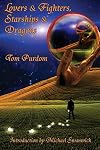
Time was, this book would have been called The Best of Tom Purdom and it would have been published by Ballantine, or perhaps Del Rey, and you might have found it in your locally-owned bookstore in the Science Fiction section, with a cover by Michael Whelan.
But times have changed. You really have to scour the Science Fiction Book Club for anything that isn't a soulless media tie-in, Ballantine Books was swallowed by Random House which was gobbled up by the same elephantine German publishing show more company, Bertelsmann AG, that ingested Doubleday ... and the renamed "Syfy" channel is showing things like Sharknado. Enough said!
Happily, thought, the only so-so news I have about the present volume is that I don't like the cover very much, nor the font used for the title on the front cover and spine. The cover art is sort of Pink Floyd album cover meets New Age. The title font would likewise look quite at home in the 'woo-woo' section of your local Giant Corporate Books. This is a minor issue, though, and I'm not comfortable criticizing art or design because I'm not any good at either thing.
The book is brought to you by a small publisher in Brooklyn, NY. It is professionally produced, and very ably edited (and copy-edited, I'm happy to report). And the contents ...
I've enjoyed Tom Purdom's stories over the past few years as they've appeared in Asimov's Science Fiction Magazine, with which I struggle to keep up. However, this volume gives me a much stronger sense of him as a writer, and a much stronger sense of his -- heretofore unrealized by me -- admirable range. Prior to reading this book I would have characterized him as an enjoyable creator of alien races, but someone you would read and like and quickly move on from, rather than as a writer you would actively seek out for another throat-grab.
This book has changed my mind. In a rare occurrence, the blurbs on the back cover of Lovers & Fighters, Starships & Dragons are true: Tom Purdom is seriously underrated. He was underrated by me, for one.
L&F,S&D includes Asimov's stories from 1992 - 2012, twenty years of fiction. The opener, "Fossil Games," is a stunning take on the old "generation starship" chestnut. I had not read it before, but it makes a great opening salvo. One that I had read before, "Bonding with Morry" was and is a favorite. And you have probably never read a dragon-oriented story quite like "Dragon Drill."
This is great stuff, and I recommend it wholeheartedly to you. Many thanks to Fantastic Books for the copy -- and to LT for the Early Reviewers program. Buy small press, people, it's one way to keep real science fiction, like this, alive.
Or you could wait for the sequel to Sharknado. show less
But times have changed. You really have to scour the Science Fiction Book Club for anything that isn't a soulless media tie-in, Ballantine Books was swallowed by Random House which was gobbled up by the same elephantine German publishing show more company, Bertelsmann AG, that ingested Doubleday ... and the renamed "Syfy" channel is showing things like Sharknado. Enough said!
Happily, thought, the only so-so news I have about the present volume is that I don't like the cover very much, nor the font used for the title on the front cover and spine. The cover art is sort of Pink Floyd album cover meets New Age. The title font would likewise look quite at home in the 'woo-woo' section of your local Giant Corporate Books. This is a minor issue, though, and I'm not comfortable criticizing art or design because I'm not any good at either thing.
The book is brought to you by a small publisher in Brooklyn, NY. It is professionally produced, and very ably edited (and copy-edited, I'm happy to report). And the contents ...
I've enjoyed Tom Purdom's stories over the past few years as they've appeared in Asimov's Science Fiction Magazine, with which I struggle to keep up. However, this volume gives me a much stronger sense of him as a writer, and a much stronger sense of his -- heretofore unrealized by me -- admirable range. Prior to reading this book I would have characterized him as an enjoyable creator of alien races, but someone you would read and like and quickly move on from, rather than as a writer you would actively seek out for another throat-grab.
This book has changed my mind. In a rare occurrence, the blurbs on the back cover of Lovers & Fighters, Starships & Dragons are true: Tom Purdom is seriously underrated. He was underrated by me, for one.
L&F,S&D includes Asimov's stories from 1992 - 2012, twenty years of fiction. The opener, "Fossil Games," is a stunning take on the old "generation starship" chestnut. I had not read it before, but it makes a great opening salvo. One that I had read before, "Bonding with Morry" was and is a favorite. And you have probably never read a dragon-oriented story quite like "Dragon Drill."
This is great stuff, and I recommend it wholeheartedly to you. Many thanks to Fantastic Books for the copy -- and to LT for the Early Reviewers program. Buy small press, people, it's one way to keep real science fiction, like this, alive.
Or you could wait for the sequel to Sharknado. show less
 This review was written for LibraryThing Early Reviewers.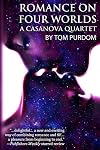
A literary sonata.
The themes: the rapturous duets of lovers, the pursuit of love, and the technological discordances that threaten both.
From the forests of a Mercury habitat to the Kuiper Belt, Joe Baske devotes his life, like his 18th idol Giacomo Casanova, to the pursuit of women. Not merely the physically beautiful, but the competent, the intelligent, the graceful for beauty has many manifestations. The thrill of Joe’s consummation may last only 45 minutes … or years, but a fleeting show more emotion of such power is still a real emotion.
His secret, he tells one of the many men who asks about it, is not the sex he offers. It is the talk, the companionship, his concentration and fascination, treating his lovers as real women with “desires and needs of their own”.
But things are getting harder for Baske. He’s a 1998 product of random genes and a time of “parental whims and biochemical accidents”. But the women he woos across the 21st century are increasingly the result of checkbox genetic selection and personality modification. Can the pursuit of love survive in a world where one can choose to dampen the call of sex? The growing gulf between the ramshackle and slow mind of Baske and the engineered brilliance of the women he pursues? The criminal opportunities of modeling and manipulating personalities? The angry psychosis of men thwarted, by superior rivals, in the ancient, powerful search for love and sex?
When humans become instruments tuned to self-chosen desires, how long can they -- and will they -- sound together in the harmony of romantic love?
Other themes besides the old ones of sex and love sound in the background. Economies where necessities are provided now have more time for struggles for status and the control of others. Not only does Baske have plenty of opportunity to play his beloved Bach, he also practices his other talent, escape and evasion, in the various tactical combat puzzles of each story when his amorous pursuits are threatened. show less
The themes: the rapturous duets of lovers, the pursuit of love, and the technological discordances that threaten both.
From the forests of a Mercury habitat to the Kuiper Belt, Joe Baske devotes his life, like his 18th idol Giacomo Casanova, to the pursuit of women. Not merely the physically beautiful, but the competent, the intelligent, the graceful for beauty has many manifestations. The thrill of Joe’s consummation may last only 45 minutes … or years, but a fleeting show more emotion of such power is still a real emotion.
His secret, he tells one of the many men who asks about it, is not the sex he offers. It is the talk, the companionship, his concentration and fascination, treating his lovers as real women with “desires and needs of their own”.
But things are getting harder for Baske. He’s a 1998 product of random genes and a time of “parental whims and biochemical accidents”. But the women he woos across the 21st century are increasingly the result of checkbox genetic selection and personality modification. Can the pursuit of love survive in a world where one can choose to dampen the call of sex? The growing gulf between the ramshackle and slow mind of Baske and the engineered brilliance of the women he pursues? The criminal opportunities of modeling and manipulating personalities? The angry psychosis of men thwarted, by superior rivals, in the ancient, powerful search for love and sex?
When humans become instruments tuned to self-chosen desires, how long can they -- and will they -- sound together in the harmony of romantic love?
Other themes besides the old ones of sex and love sound in the background. Economies where necessities are provided now have more time for struggles for status and the control of others. Not only does Baske have plenty of opportunity to play his beloved Bach, he also practices his other talent, escape and evasion, in the various tactical combat puzzles of each story when his amorous pursuits are threatened. show less
This review was written for LibraryThing Early Reviewers.It’s a terrible, truthful title.
Purdom’s stories are seldom about just one thing though. Not only do these stories have lovers and fighters, they have other characteristic Purdom concerns too: extended lifespans, dominance struggles among groups, military culture, the evolution of sentience, and music.
“Fossil Games” has a group of humans, their talents and intellect rendered obsolete by succeeding generations, retreating from the solar system in a hollowed-out asteroid. They pass show more their very long lives trying to find a purpose for existence. The fossil games of the title refers to not only the age old struggle for dominance amongst human groups, but the sought for prize: evidence that intelligence evolved on other planets besides Earth.
Politics is at the heart of “Haggle Chips” too. Its interstellar trader wants to sell eye substitutes to a local businesswoman. The leader of a religious cult doesn’t like the woman’s attempt to corner local water resources, so he takes the trader hostage. But the story’s real conflict starts when a woman is psychologically modified by the cult to bond with the trader and deter him from escaping.
“Dragon Drill” is a fantasy piece with a Prussian general dispatched by Frederick the Great to kill an honest-to-goodness dragon which has appeared. It’s the Age of Reason vs. the Age of Legend as well a meditation on the beginnings of modern military culture.
Wars small and large, past or pending or ongoing, shows up a lot in this collection. Purdom describes the tactical considerations of his conflicts in detail. The development of his wargamer eye is covered in this, the most autobiographical story here, “Sheltering” Its hero is a 91 year old man playing computer games in a shelter full of evacuees, all fleeing a war fought with “military microbiology” on the east coast of America. The therapeutic value of wargames is pondered as a small boy takes an interest in the old man’s activities.
“Canary Land” is a moving story of the immigrant experience, but here it’s an American biodesigner, unable to make the big leagues in Shanghai. He winds up on the moon as a poorly paid musician ensnared in industrial espionage.
“Research Project” concerns the meeting of two sentient races. One, against all theory, happens to be “predatory and semi-carnivorous”. That would be us. The aliens would like to give humanity an advanced propulsion system in exchange for exclusive rights to Mars. Like many stories here, it speculates on the evolutionary influences that shape intelligence, but it’s also a look at the unusual nature of many scholars and scientists and their frequent social isolation.
“A Response from EST17” is another take on alien contact. Here, though, the two warring human probes that make contact find aliens very well practiced in dealing with the situation. They must decide whether humans pose enough of a threat to get the Message, a powerful data set that fulfills all utopian dreams and is so disruptive that its past recipients all have lapsed into silence.
Purdom is never a sentimental writer. Hard choices are often the foundations of his conflict. And “Bonding with Morry” is not a sentimental story. Its elderly protagonist may decide to make his service robot more humanlike due to social pressure, but he firmly makes a point about its alleged sentience and humanity at story’s end.
The historical allusion and inspiration for “Sepoy” is right in the title. Its crippled protagonist is approached to work for the alien tucfra who conquered Earth and maybe saved humanity from self-annihilation in 2044. Fearing official retaliation and vigilante action, he doesn’t want to become a collaborator even if they promise to provide him with an expensive and very well-functioning body. But he also doesn’t want to turn in the tucfra agent attempting to recruit him.
“Legacies”, when I first read it years ago, struck me as an implausible story because it showed a military concerned, to what I thought an unlikely extent, with the psychological welfare of its soldiers’ children. Thirteen years and a couple of wars later, it seems more realistic in that regard. And it always was a strong story in its take on the personalities most attracted to the military and the families they form. Purdom draws on his experience as a “Navy brat”.
The transgression of the hero in “The Path of the Transgressor” is to have a wife genetically engineered to be supportive, agreeable, and self-sacrificing as he does animal studies on an alien world. But, when a local, possibly sentient, species suddenly poses a lethal threat, combat breaks out and its hero realizes that there are unexpected implications in having such a wife.
“The Mists of Time” is Purdom’s retort to those who cynically and simplistically view history with an eye to stripping honor from the past. The historical event is a minor skirmish in the British navy’s anti-slavery campaign. The conflict here is between the rich patron of a time traveling expedition, which involves an ancestor of the patron, and the cynical artist there to record events.
There are several other outstanding Purdom works that could have been included in this book. For now, this is a good start in recognizing a writer too long ignored. Every one of these stories, first published in Asimov’s Science Fiction from 1992 to 2012, is worth reading. show less
Purdom’s stories are seldom about just one thing though. Not only do these stories have lovers and fighters, they have other characteristic Purdom concerns too: extended lifespans, dominance struggles among groups, military culture, the evolution of sentience, and music.
“Fossil Games” has a group of humans, their talents and intellect rendered obsolete by succeeding generations, retreating from the solar system in a hollowed-out asteroid. They pass show more their very long lives trying to find a purpose for existence. The fossil games of the title refers to not only the age old struggle for dominance amongst human groups, but the sought for prize: evidence that intelligence evolved on other planets besides Earth.
Politics is at the heart of “Haggle Chips” too. Its interstellar trader wants to sell eye substitutes to a local businesswoman. The leader of a religious cult doesn’t like the woman’s attempt to corner local water resources, so he takes the trader hostage. But the story’s real conflict starts when a woman is psychologically modified by the cult to bond with the trader and deter him from escaping.
“Dragon Drill” is a fantasy piece with a Prussian general dispatched by Frederick the Great to kill an honest-to-goodness dragon which has appeared. It’s the Age of Reason vs. the Age of Legend as well a meditation on the beginnings of modern military culture.
Wars small and large, past or pending or ongoing, shows up a lot in this collection. Purdom describes the tactical considerations of his conflicts in detail. The development of his wargamer eye is covered in this, the most autobiographical story here, “Sheltering” Its hero is a 91 year old man playing computer games in a shelter full of evacuees, all fleeing a war fought with “military microbiology” on the east coast of America. The therapeutic value of wargames is pondered as a small boy takes an interest in the old man’s activities.
“Canary Land” is a moving story of the immigrant experience, but here it’s an American biodesigner, unable to make the big leagues in Shanghai. He winds up on the moon as a poorly paid musician ensnared in industrial espionage.
“Research Project” concerns the meeting of two sentient races. One, against all theory, happens to be “predatory and semi-carnivorous”. That would be us. The aliens would like to give humanity an advanced propulsion system in exchange for exclusive rights to Mars. Like many stories here, it speculates on the evolutionary influences that shape intelligence, but it’s also a look at the unusual nature of many scholars and scientists and their frequent social isolation.
“A Response from EST17” is another take on alien contact. Here, though, the two warring human probes that make contact find aliens very well practiced in dealing with the situation. They must decide whether humans pose enough of a threat to get the Message, a powerful data set that fulfills all utopian dreams and is so disruptive that its past recipients all have lapsed into silence.
Purdom is never a sentimental writer. Hard choices are often the foundations of his conflict. And “Bonding with Morry” is not a sentimental story. Its elderly protagonist may decide to make his service robot more humanlike due to social pressure, but he firmly makes a point about its alleged sentience and humanity at story’s end.
The historical allusion and inspiration for “Sepoy” is right in the title. Its crippled protagonist is approached to work for the alien tucfra who conquered Earth and maybe saved humanity from self-annihilation in 2044. Fearing official retaliation and vigilante action, he doesn’t want to become a collaborator even if they promise to provide him with an expensive and very well-functioning body. But he also doesn’t want to turn in the tucfra agent attempting to recruit him.
“Legacies”, when I first read it years ago, struck me as an implausible story because it showed a military concerned, to what I thought an unlikely extent, with the psychological welfare of its soldiers’ children. Thirteen years and a couple of wars later, it seems more realistic in that regard. And it always was a strong story in its take on the personalities most attracted to the military and the families they form. Purdom draws on his experience as a “Navy brat”.
The transgression of the hero in “The Path of the Transgressor” is to have a wife genetically engineered to be supportive, agreeable, and self-sacrificing as he does animal studies on an alien world. But, when a local, possibly sentient, species suddenly poses a lethal threat, combat breaks out and its hero realizes that there are unexpected implications in having such a wife.
“The Mists of Time” is Purdom’s retort to those who cynically and simplistically view history with an eye to stripping honor from the past. The historical event is a minor skirmish in the British navy’s anti-slavery campaign. The conflict here is between the rich patron of a time traveling expedition, which involves an ancestor of the patron, and the cynical artist there to record events.
There are several other outstanding Purdom works that could have been included in this book. For now, this is a good start in recognizing a writer too long ignored. Every one of these stories, first published in Asimov’s Science Fiction from 1992 to 2012, is worth reading. show less
This review was written for LibraryThing Early Reviewers.
Disclosure: I received this book as part of the LibraryThing Early Reviewers program. Some people think this may bias a reviewer so I am making sure to put this information up front. I don't think it biases my reviews, but I'll let others be the judge of that.
Lovers & Fighters, Starships & Dragons is a collection of Tom Purdom's short fiction that was published between 1994 and 2012. The stories in the volume are quite eclectic, ranging from a story about Prussian soldiers facing off against show more a dragon to a story about a divided humanity making first contact with a divided alien race, to stories about genetic engineering, the alleged humanity of robots, and time travel. The only real unifying theme to the stories is that they were all written by Purdom, and thus are all pretty good.
The volume opens with Fossil Games, a story title that works on two levels, one literal and one metaphorical. In the future, advances in genetic modifications have created severe dichotomies between generations of humans. People born in one generation wind up intellectually so far behind those of the succeeding generations that they simply cannot meaningfully contribute to society. Morgan is one such antique individual who decides to band together with a collection of others of varying degrees of obsolescence and head out of the Solar System to spend their extended lifespans exploring other stars. Through their journey, Morgan applies his energies to manipulating the interpersonal conflicts between the various inhabitants of the converted asteroid they all call home, trying to defuse disagreements between groups with wildly different philosophies concerning the relationship between humans and the rest of the universe. Everything comes to a head when fossil evidence of life is found an a desolate planet and the ship's complement erupt into almost open war about how to deal with the discovery. Morgan tries to use his finely honed political skills to navigate a compromise and winds up making everyone involved annoyed with him. The story is an interesting exploration of the dangers of meddling when others have dug into their own intractable positions, but also ends on a note of equanimity, as only one who knows that they have hundreds of years ahead of them to play with could display.
On the surface, Haggle Chips is about a fairly run-of-the-mill political dispute that the protagonist becomes embroiled in as the result of being kidnapped. While Janip is on his way to deliver high-tech replacement eyes to a wealthy client named Elisette, he is abducted to be used as a bargaining chip by his captors, a collective that opposes the development of a dam financed by Elisette. In order to try to make Janip more sympathetic to his captor's cause (and provide a way to watch Janip more closely), the collective's leader Sivmati induces a young member of the group named Farello to strike up a relationship with him. Although Janip does not explicitly know that Sivmati used technology aimed at manipulating emotions to make Farello more receptive to Janip's advances, both Janip and Elisette assume this to be true. While the story uses the political dispute and Janip's confinement as a vehicle, the story is really about the deeper question of how one relates to an individual who has had their mental state rigged in this manner. Janip makes some escape attempts, and it becomes clear that Farello is attached enough to him that she wants to accompany him in his flight. But given that her affection for Janip is at least partially the result of what can only be called brainwashing, is it fair to allow her to run away from her whole life to be with him? Janip and Elisette engage in some rather facile reasoning to decide that taking advantage of her conflicted nature is ethical, but in the end Janip is at least self-aware enough to wonder if they made the right choice.
Purdom takes a break from stories about genetic enhancement and pharmaceutical manipulation with Dragon Drill, the tale of a confrontation between Frederick the Great's disciplined Prussian soldiers and a dragon. Unwilling to allow the sacrifice of a Hapsburg princess to save his newly conquered province of Silesia, Frederick sends two battalions of infantry, one battalion of grenadiers, squadrons of cavalry, and three artillery pieces to engage the mythical beast. Using the princess as bait, the Prussians engage the creature in a lengthy battle in which modern firepower and military discipline triumphs. As usual for these stories, the outcome of the fight is merely a vehicle for the real point: The now safe Hapsburg princess notes that her family had saved a land they held by inheritance at the cost of a single life once every fifty years, while it cost the Prussians more than a hundred men to retain a province they claimed by force. The Prussians reply that there are no monsters resulting from reason similar to those such as the dragon produced by belief in superstition and myth. But the reader may note that the product of reason (at least in this story) is that men have been turned into the monsters, sacrificing one another, or even killing one another in the name of discipline and enlightenment. Superstition conjures monsters to harry humankind, reason makes humankind behave like monsters.
Canary Land tackles the question of immigration, and human obsolescence as it follows George Sparr, an American genetic engineer who emigrated to the Moon in search of a better life. Unfortunately, the Techno-Mandarin program he had purchased when he made his move provided him with only the barest rudiments of the language, and he found himself working the most menial of jobs playing the viola as live entertainment in restaurants. George is strong-armed into breaking into a research facility ostensibly at the behest of one of the owning company's board of directors who supposedly wants to check to make sure the lead researcher (and fellow board member) isn't lying about their research. The story moves along in a somewhat confusing manner - mostly due to the fact that George doesn't really understand what is going on, as he only has a worm's eye view of the events triggered by his actions. The story flips the usual immigrant narrative, showing the reader a story in which someone from Delaware County is unskilled labor, highlighting his relatively dismal options which include being little more than a relatively well taken care of lab rat. The central question posed boils down to this: How much human potential would be wasted if the difference between being useful and not useful is how effective of a translation program one can afford? If humans are defined by what they can afford, how does one bridge the divide between have and have not? By the end of Canary Land George is able to come to a reasonably happy resolution to his situation, but it isn't what he intended, and it seems clear that it is in large part due to some unexpected patronage. But what, one wonders, will happen to the thousands of other immigrants who aren't quite as lucky? Purdom poses disturbing questions, and offers few answers.
For most first contact stories, the danger posed is that a breakdown of relations will result in war between the two species. But what if war was an effectively unknown concept to the alien species? What would the failure state of a first contact situation look like then? Research Project, a story told from the perspective of nine-year old Jinny as she studies the first contact between humanity and Ifli, focusing specifically on the alien Postri-Den and the human Orlando Mazzeri, both experts in alien psychology, using notes from their writings to set them up as viewpoint characters as well. The Ifli are a herbivorous pacifistic race, and are shocked and appalled by the murderous and predatory ways of humanity, but seem willing to negotiate some sort of agreement with us despite their distaste for human proclivities. The problem is that despite both species doing their best to negotiate a compromise, the assumptions each relies upon turn out to be so different that what seems like a reasonable course of action to one proves unacceptable to the other. Woven into the story is the personal journey of Postri-Den, and just how high the price is that he pays for his affinity for humans. In the end, the failure of negotiations results in the Ifli simply leaving, metaphorically burning the bridge between humanity and their society. The story highlights the fact that even with good intentions, cultural differences can make agreement impossible, but what makes it truly disturbing is how blasé the various characters in its "present-day" are about the fact that humanity had fumbled away its chance to make a beneficial alliance with another race - to the point where some of the adults don't even recognize Postri-Den's name when Jinny brings it up, making his noble sacrifice seem like an almost futile gesture.
Sheltering is an interesting story in that the science fiction element is almost entirely off-stage. Pearson is an old war game enthusiast hiding in a bomb shelter with several other people while the outside world falls apart. To pass the time, Pearson plays wargames on his computer, drawing the attention of a young boy who is sharing the shelter, and the ire of the boy's parents, who think that play-acting at war while there is real war happening is morally repugnant. The story is fairly straightforward and serves mostly as a vehicle for Purdom to muse on how we regard war, and how we let children know what kind of monstrosity there is in the world, although there is some interesting commentary on the development and historical use of wargames as well, including what can be learned from them, and how those who don't absorb those lessons can suffer disastrous consequences when called upon to face the real thing.
Science fiction is rife with stories about the developing humanity of mechanical creations, usually focusing on the unexpected development of sentience in robots. Bonding with Morry follows in this tradition to some extent, as Morry obtains a mechanical personal companion to help him around the house. Morry intentionally chooses an inhuman looking model and names his companion "Clank" so as to ensure that he will continue to regard it as a machine and not a person. At first Morry uses Clank mostly for housecleaning, cooking, and other relatively simple household chores, but as the story progresses and Morry gets older, he becomes more and more dependent upon his mechanical assistant. Eventually Morry succumbs to pressure from machine rights activists, renames Clank to Clark, and updates the robot's body to be more human in appearance. The story seems to be moving along in a fairly conventional manner as Morry ages, becomes infirm, and finally is left with only Clark to care for him on his death bed, but in typical style for Purdom, the story pulls back just at the end and the author reminds the reader that no matter how human looking Clark is, an no matter how caring and thoughtful he seems to be, he is still an amalgamation of engineering and software that had to be put together by human hands. The denouement of the story is an interesting reversal on a well-worn science fiction trope, and a nice tribute to engineers and software programmers.
Culturally we are disposed to despise collaborators. Quisling, traitor, and turncoat, are among the severe epithets uses to describe such individuals. So when Purdom tackles the question of humans collaborating with aliens in Sepoy, the reader starts the story firmly convinced that the protagonist Jason should not betray the New England Confederation to work with the Tucfra Hegemony when it is suggested in the opening paragraphs by their recruiter, a pretty woman named Marcia. After all, despite being disabled, Jason has conveniences that make his life easier and an occupation that he is good at and which he can do from his own home. He is human. He is a free man, not beholden to some alien government. But when William and Jeanette show up from the Department of Internal Security looking to use Jason as a witness against Marcia, the story takes a dark turn. Unfortunately, as the story progresses, it becomes clear that the New England Confederation, and by implication all of the other human governments on Earth, is rotten to the core, and not worthy of Jason's loyalty. It is at this point that the story loses much of its impact, as Purdom has to ramp up the villainy of the two security agents to almost cartoonish levels of evil, and at the same time make the Tucfra paragons of virtue in order to make Jason's final decision seem palatable to the reader. To cap everything off, the story makes clear that Jason doesn't even really have a choice at the end, which makes much of the plot leading up to that point seem like a set of railroad tracks. The real problem with the story is that it presents Jason's moral dilemma as being not really much of a moral dilemma at all, and as a result it is not nearly as interesting as it could have been.
Legacies is a military science fiction story, but it approaches the topic from an unusual angle: What happens to the children who are left behind to pick up the pieces after their parents head off to fight gloriously in battles in the coldness of space. The central character in the story is Medical Captain Dorothy Min, an officer charged with ensuring the emotional well-being of Deni, a child with both parents deployed in a conflict against the breakaway asteroid metropolis known as Akara City. When the news that Deni's mother has been killed in the conflict, Min ramps up her attempts to get the child's remaining parent to consent to a procedure that will allow Deni to come through the crisis with his emotional core intact. Hemmed in by regulations and bureaucratic foot-dragging, Min finds herself caught in the middle between her rules-be-damned civilian medical mentor and her buttoned up former senior NCO father, both of whom are sympathetic to the needs of the child, but who have very different ideas about the proper course of action for Min to take. Through the story, Min struggles with what to do, but in the end she does the only thing she can do, even though it is a tragic and almost entirely unfair outcome. In the end, Purdom reminds his reader that not only is life harsh, but as irrational creatures humans have a tendency to make it worse than it has to be even though no one actually intends to do so.
Many first contact stories are fairly straightforward when it comes to who humanity should speak to: The duly authorized human envoy speaks with the representative of the alien authority and they either overcome the cultural differences and come to some sort of agreement or they don't and conflict ensues. The question A Response from EST17 poses is more complex: Who should humanity speak to, the local authority or the dissident? And which one has humanity's interest in mind? Further complicating the issue is the fact that the story features not one, but two human probes, each of whom contests the other's authority to speak for humanity. The back and forth between the two human probes, their respective contacts with the aliens, and the different factions among the aliens raise a myriad of questions, many of which remain unresolved at the end of the story. Everything revolves around a message the aliens intend to deliver to humanity providing the combined learning of more than two dozen alien civilizations that serve as a gateway to immortality, unlimited energy, and a host of other benefits. But the message is a honeyed trap which some within the alien society want to want humanity to eschew, both to save humanity from the turmoil of assimilating the knowledge, and to possibly shake up what they see as their own moribund society. Like many of Purdom's stories, A Response from EST17 seems predictable at first, but then turns one's expectations completely on their head by the end, offering a delicious reversal and leaving the reader with numerous disquieting questions.
Another story that seems at first to be about one thing and then turns on its heel in the middle is The Path of the Transgressor, which starts off focused on a researcher named Davin who is studying some otter-like alien life forms that live in large colonies on the shore of a lake, but then changes to a struggle for survival when Lizera, Davin's wife, is set upon by pack hunting animals while returning to the couple's shared dwelling. Although they are both armed and armored, and accompanied by genetically engineered guard cats, the pack's numbers prove almost overwhelming, and then the real meat of the story rears its head: The insidious divisiveness of human prejudice. Lizera, it turns out, is a genetically engineered "geisha", designed to serve the needs of others, and mentally conditioned to love Davin and place his needs above her own. Prejudice against people like Lizera is apparently widespread, which is why Davin chose to conduct his research in a remote area, far from anyone else. Now, surrounded by predators, Davin finds that the prejudice against his wife runs deep as he meets obstacle after obstacle in arranging with the colony's administrator for a rescue. The story wends along into the dangerous twilight as the politics swirl about the characters, until eventually Davin and Lizera's predicament is resolved in a somewhat satisfactory manner, but even the modest victory turns out to be tainted when Davin discovers the true nature of his wife: Despite the risks he ran for love, her self-abnegating nature prevents her from appreciating, or even comprehending, his actions. Love with a "geisha", it turns out, is a one-way street to a certain extent.
A time travel story involving a form of time travel that allows for observation but not interaction The Mists of Time recounts the documentation of a historical event by a pair of observers who have wildly differing ideas regarding how to frame what they see. The event being observed is the capture of a Portuguese slave ship by the British HMS Sparrow on slate patrol under the command of John Harrington. One observer is Emory FitzGordon, a descendant of Harrington who is mostly motivated by hero-worship for his esteemed ancestor. Accompanying and technically running the observation expedition is Giva Lombardo, who has a very different view of the historical events, colored by her focus on the monetary reward offered to the British crewmen for delivering liberated slaves to the authorities, a moderate amount of distaste for the British sailors themselves, and sympathy for the perspective of the slaves at issue in the conflict. The story alternates between Harrington's viewpoint and FitzGordon's viewpoint, making the reader feel a fair amount of empathy for their points of view, but as the plot progresses one starts to think that Lombardo has the better arguments. The real thrust of the story is that even when directly viewing a historical event, two people can have radically different interpretations of it, and one has to always have to take into account the viewpoint of the reporter, and even time travel won't solve that problem.
Overall, this volume is an excellent survey of Tom Purdom's fiction over the last two decades. Every story is at least good, and a couple are excellent - most notably A Response from EST17 and Bonding with Morry. But it isn't just the uniformly good quality of the stories in this volume that makes it so good: The stories also cover almost the full gamut of science fiction ideas, touching on so many different facets of the genre that this is almost a single volume primer on modern science fiction. For anyone who is a fan of Tom Purdom, or anyone who is a fan of science fiction in general, this book is an excellent read.
This review has also been posted to my blog Dreaming About Other Worlds. show less
Lovers & Fighters, Starships & Dragons is a collection of Tom Purdom's short fiction that was published between 1994 and 2012. The stories in the volume are quite eclectic, ranging from a story about Prussian soldiers facing off against show more a dragon to a story about a divided humanity making first contact with a divided alien race, to stories about genetic engineering, the alleged humanity of robots, and time travel. The only real unifying theme to the stories is that they were all written by Purdom, and thus are all pretty good.
The volume opens with Fossil Games, a story title that works on two levels, one literal and one metaphorical. In the future, advances in genetic modifications have created severe dichotomies between generations of humans. People born in one generation wind up intellectually so far behind those of the succeeding generations that they simply cannot meaningfully contribute to society. Morgan is one such antique individual who decides to band together with a collection of others of varying degrees of obsolescence and head out of the Solar System to spend their extended lifespans exploring other stars. Through their journey, Morgan applies his energies to manipulating the interpersonal conflicts between the various inhabitants of the converted asteroid they all call home, trying to defuse disagreements between groups with wildly different philosophies concerning the relationship between humans and the rest of the universe. Everything comes to a head when fossil evidence of life is found an a desolate planet and the ship's complement erupt into almost open war about how to deal with the discovery. Morgan tries to use his finely honed political skills to navigate a compromise and winds up making everyone involved annoyed with him. The story is an interesting exploration of the dangers of meddling when others have dug into their own intractable positions, but also ends on a note of equanimity, as only one who knows that they have hundreds of years ahead of them to play with could display.
On the surface, Haggle Chips is about a fairly run-of-the-mill political dispute that the protagonist becomes embroiled in as the result of being kidnapped. While Janip is on his way to deliver high-tech replacement eyes to a wealthy client named Elisette, he is abducted to be used as a bargaining chip by his captors, a collective that opposes the development of a dam financed by Elisette. In order to try to make Janip more sympathetic to his captor's cause (and provide a way to watch Janip more closely), the collective's leader Sivmati induces a young member of the group named Farello to strike up a relationship with him. Although Janip does not explicitly know that Sivmati used technology aimed at manipulating emotions to make Farello more receptive to Janip's advances, both Janip and Elisette assume this to be true. While the story uses the political dispute and Janip's confinement as a vehicle, the story is really about the deeper question of how one relates to an individual who has had their mental state rigged in this manner. Janip makes some escape attempts, and it becomes clear that Farello is attached enough to him that she wants to accompany him in his flight. But given that her affection for Janip is at least partially the result of what can only be called brainwashing, is it fair to allow her to run away from her whole life to be with him? Janip and Elisette engage in some rather facile reasoning to decide that taking advantage of her conflicted nature is ethical, but in the end Janip is at least self-aware enough to wonder if they made the right choice.
Purdom takes a break from stories about genetic enhancement and pharmaceutical manipulation with Dragon Drill, the tale of a confrontation between Frederick the Great's disciplined Prussian soldiers and a dragon. Unwilling to allow the sacrifice of a Hapsburg princess to save his newly conquered province of Silesia, Frederick sends two battalions of infantry, one battalion of grenadiers, squadrons of cavalry, and three artillery pieces to engage the mythical beast. Using the princess as bait, the Prussians engage the creature in a lengthy battle in which modern firepower and military discipline triumphs. As usual for these stories, the outcome of the fight is merely a vehicle for the real point: The now safe Hapsburg princess notes that her family had saved a land they held by inheritance at the cost of a single life once every fifty years, while it cost the Prussians more than a hundred men to retain a province they claimed by force. The Prussians reply that there are no monsters resulting from reason similar to those such as the dragon produced by belief in superstition and myth. But the reader may note that the product of reason (at least in this story) is that men have been turned into the monsters, sacrificing one another, or even killing one another in the name of discipline and enlightenment. Superstition conjures monsters to harry humankind, reason makes humankind behave like monsters.
Canary Land tackles the question of immigration, and human obsolescence as it follows George Sparr, an American genetic engineer who emigrated to the Moon in search of a better life. Unfortunately, the Techno-Mandarin program he had purchased when he made his move provided him with only the barest rudiments of the language, and he found himself working the most menial of jobs playing the viola as live entertainment in restaurants. George is strong-armed into breaking into a research facility ostensibly at the behest of one of the owning company's board of directors who supposedly wants to check to make sure the lead researcher (and fellow board member) isn't lying about their research. The story moves along in a somewhat confusing manner - mostly due to the fact that George doesn't really understand what is going on, as he only has a worm's eye view of the events triggered by his actions. The story flips the usual immigrant narrative, showing the reader a story in which someone from Delaware County is unskilled labor, highlighting his relatively dismal options which include being little more than a relatively well taken care of lab rat. The central question posed boils down to this: How much human potential would be wasted if the difference between being useful and not useful is how effective of a translation program one can afford? If humans are defined by what they can afford, how does one bridge the divide between have and have not? By the end of Canary Land George is able to come to a reasonably happy resolution to his situation, but it isn't what he intended, and it seems clear that it is in large part due to some unexpected patronage. But what, one wonders, will happen to the thousands of other immigrants who aren't quite as lucky? Purdom poses disturbing questions, and offers few answers.
For most first contact stories, the danger posed is that a breakdown of relations will result in war between the two species. But what if war was an effectively unknown concept to the alien species? What would the failure state of a first contact situation look like then? Research Project, a story told from the perspective of nine-year old Jinny as she studies the first contact between humanity and Ifli, focusing specifically on the alien Postri-Den and the human Orlando Mazzeri, both experts in alien psychology, using notes from their writings to set them up as viewpoint characters as well. The Ifli are a herbivorous pacifistic race, and are shocked and appalled by the murderous and predatory ways of humanity, but seem willing to negotiate some sort of agreement with us despite their distaste for human proclivities. The problem is that despite both species doing their best to negotiate a compromise, the assumptions each relies upon turn out to be so different that what seems like a reasonable course of action to one proves unacceptable to the other. Woven into the story is the personal journey of Postri-Den, and just how high the price is that he pays for his affinity for humans. In the end, the failure of negotiations results in the Ifli simply leaving, metaphorically burning the bridge between humanity and their society. The story highlights the fact that even with good intentions, cultural differences can make agreement impossible, but what makes it truly disturbing is how blasé the various characters in its "present-day" are about the fact that humanity had fumbled away its chance to make a beneficial alliance with another race - to the point where some of the adults don't even recognize Postri-Den's name when Jinny brings it up, making his noble sacrifice seem like an almost futile gesture.
Sheltering is an interesting story in that the science fiction element is almost entirely off-stage. Pearson is an old war game enthusiast hiding in a bomb shelter with several other people while the outside world falls apart. To pass the time, Pearson plays wargames on his computer, drawing the attention of a young boy who is sharing the shelter, and the ire of the boy's parents, who think that play-acting at war while there is real war happening is morally repugnant. The story is fairly straightforward and serves mostly as a vehicle for Purdom to muse on how we regard war, and how we let children know what kind of monstrosity there is in the world, although there is some interesting commentary on the development and historical use of wargames as well, including what can be learned from them, and how those who don't absorb those lessons can suffer disastrous consequences when called upon to face the real thing.
Science fiction is rife with stories about the developing humanity of mechanical creations, usually focusing on the unexpected development of sentience in robots. Bonding with Morry follows in this tradition to some extent, as Morry obtains a mechanical personal companion to help him around the house. Morry intentionally chooses an inhuman looking model and names his companion "Clank" so as to ensure that he will continue to regard it as a machine and not a person. At first Morry uses Clank mostly for housecleaning, cooking, and other relatively simple household chores, but as the story progresses and Morry gets older, he becomes more and more dependent upon his mechanical assistant. Eventually Morry succumbs to pressure from machine rights activists, renames Clank to Clark, and updates the robot's body to be more human in appearance. The story seems to be moving along in a fairly conventional manner as Morry ages, becomes infirm, and finally is left with only Clark to care for him on his death bed, but in typical style for Purdom, the story pulls back just at the end and the author reminds the reader that no matter how human looking Clark is, an no matter how caring and thoughtful he seems to be, he is still an amalgamation of engineering and software that had to be put together by human hands. The denouement of the story is an interesting reversal on a well-worn science fiction trope, and a nice tribute to engineers and software programmers.
Culturally we are disposed to despise collaborators. Quisling, traitor, and turncoat, are among the severe epithets uses to describe such individuals. So when Purdom tackles the question of humans collaborating with aliens in Sepoy, the reader starts the story firmly convinced that the protagonist Jason should not betray the New England Confederation to work with the Tucfra Hegemony when it is suggested in the opening paragraphs by their recruiter, a pretty woman named Marcia. After all, despite being disabled, Jason has conveniences that make his life easier and an occupation that he is good at and which he can do from his own home. He is human. He is a free man, not beholden to some alien government. But when William and Jeanette show up from the Department of Internal Security looking to use Jason as a witness against Marcia, the story takes a dark turn. Unfortunately, as the story progresses, it becomes clear that the New England Confederation, and by implication all of the other human governments on Earth, is rotten to the core, and not worthy of Jason's loyalty. It is at this point that the story loses much of its impact, as Purdom has to ramp up the villainy of the two security agents to almost cartoonish levels of evil, and at the same time make the Tucfra paragons of virtue in order to make Jason's final decision seem palatable to the reader. To cap everything off, the story makes clear that Jason doesn't even really have a choice at the end, which makes much of the plot leading up to that point seem like a set of railroad tracks. The real problem with the story is that it presents Jason's moral dilemma as being not really much of a moral dilemma at all, and as a result it is not nearly as interesting as it could have been.
Legacies is a military science fiction story, but it approaches the topic from an unusual angle: What happens to the children who are left behind to pick up the pieces after their parents head off to fight gloriously in battles in the coldness of space. The central character in the story is Medical Captain Dorothy Min, an officer charged with ensuring the emotional well-being of Deni, a child with both parents deployed in a conflict against the breakaway asteroid metropolis known as Akara City. When the news that Deni's mother has been killed in the conflict, Min ramps up her attempts to get the child's remaining parent to consent to a procedure that will allow Deni to come through the crisis with his emotional core intact. Hemmed in by regulations and bureaucratic foot-dragging, Min finds herself caught in the middle between her rules-be-damned civilian medical mentor and her buttoned up former senior NCO father, both of whom are sympathetic to the needs of the child, but who have very different ideas about the proper course of action for Min to take. Through the story, Min struggles with what to do, but in the end she does the only thing she can do, even though it is a tragic and almost entirely unfair outcome. In the end, Purdom reminds his reader that not only is life harsh, but as irrational creatures humans have a tendency to make it worse than it has to be even though no one actually intends to do so.
Many first contact stories are fairly straightforward when it comes to who humanity should speak to: The duly authorized human envoy speaks with the representative of the alien authority and they either overcome the cultural differences and come to some sort of agreement or they don't and conflict ensues. The question A Response from EST17 poses is more complex: Who should humanity speak to, the local authority or the dissident? And which one has humanity's interest in mind? Further complicating the issue is the fact that the story features not one, but two human probes, each of whom contests the other's authority to speak for humanity. The back and forth between the two human probes, their respective contacts with the aliens, and the different factions among the aliens raise a myriad of questions, many of which remain unresolved at the end of the story. Everything revolves around a message the aliens intend to deliver to humanity providing the combined learning of more than two dozen alien civilizations that serve as a gateway to immortality, unlimited energy, and a host of other benefits. But the message is a honeyed trap which some within the alien society want to want humanity to eschew, both to save humanity from the turmoil of assimilating the knowledge, and to possibly shake up what they see as their own moribund society. Like many of Purdom's stories, A Response from EST17 seems predictable at first, but then turns one's expectations completely on their head by the end, offering a delicious reversal and leaving the reader with numerous disquieting questions.
Another story that seems at first to be about one thing and then turns on its heel in the middle is The Path of the Transgressor, which starts off focused on a researcher named Davin who is studying some otter-like alien life forms that live in large colonies on the shore of a lake, but then changes to a struggle for survival when Lizera, Davin's wife, is set upon by pack hunting animals while returning to the couple's shared dwelling. Although they are both armed and armored, and accompanied by genetically engineered guard cats, the pack's numbers prove almost overwhelming, and then the real meat of the story rears its head: The insidious divisiveness of human prejudice. Lizera, it turns out, is a genetically engineered "geisha", designed to serve the needs of others, and mentally conditioned to love Davin and place his needs above her own. Prejudice against people like Lizera is apparently widespread, which is why Davin chose to conduct his research in a remote area, far from anyone else. Now, surrounded by predators, Davin finds that the prejudice against his wife runs deep as he meets obstacle after obstacle in arranging with the colony's administrator for a rescue. The story wends along into the dangerous twilight as the politics swirl about the characters, until eventually Davin and Lizera's predicament is resolved in a somewhat satisfactory manner, but even the modest victory turns out to be tainted when Davin discovers the true nature of his wife: Despite the risks he ran for love, her self-abnegating nature prevents her from appreciating, or even comprehending, his actions. Love with a "geisha", it turns out, is a one-way street to a certain extent.
A time travel story involving a form of time travel that allows for observation but not interaction The Mists of Time recounts the documentation of a historical event by a pair of observers who have wildly differing ideas regarding how to frame what they see. The event being observed is the capture of a Portuguese slave ship by the British HMS Sparrow on slate patrol under the command of John Harrington. One observer is Emory FitzGordon, a descendant of Harrington who is mostly motivated by hero-worship for his esteemed ancestor. Accompanying and technically running the observation expedition is Giva Lombardo, who has a very different view of the historical events, colored by her focus on the monetary reward offered to the British crewmen for delivering liberated slaves to the authorities, a moderate amount of distaste for the British sailors themselves, and sympathy for the perspective of the slaves at issue in the conflict. The story alternates between Harrington's viewpoint and FitzGordon's viewpoint, making the reader feel a fair amount of empathy for their points of view, but as the plot progresses one starts to think that Lombardo has the better arguments. The real thrust of the story is that even when directly viewing a historical event, two people can have radically different interpretations of it, and one has to always have to take into account the viewpoint of the reporter, and even time travel won't solve that problem.
Overall, this volume is an excellent survey of Tom Purdom's fiction over the last two decades. Every story is at least good, and a couple are excellent - most notably A Response from EST17 and Bonding with Morry. But it isn't just the uniformly good quality of the stories in this volume that makes it so good: The stories also cover almost the full gamut of science fiction ideas, touching on so many different facets of the genre that this is almost a single volume primer on modern science fiction. For anyone who is a fan of Tom Purdom, or anyone who is a fan of science fiction in general, this book is an excellent read.
This review has also been posted to my blog Dreaming About Other Worlds. show less
This review was written for LibraryThing Early Reviewers.Lists
Awards


You May Also Like


Associated Authors
Statistics
- Works
- 59
- Also by
- 43
- Members
- 443
- Popularity
- #55,290
- Rating
- 3.6
- Reviews
- 24
- ISBNs
- 9
- Languages
- 1
- Favorited
- 1
