
Mack Reynolds (1917–1983)
Author of Mission to Horatius
About the Author
Disambiguation Notice:
Bio comes from Towers of Utopia
Series
Works by Mack Reynolds
Short Fiction 4 copies
The Business, as Usual [short story] 4 copies
Dark Interlude [short story] 4 copies
Farmer [short story] 3 copies
Prone [short story] 3 copies
The Discord Makers 3 copies
Mercy Flight 3 copies
Optical Illusion [short story] 3 copies
The Cold War Continued 2 copies
The Enemy Within (SS) 2 copies
Fiesta Brava [short story] 2 copies
Short Science Fiction Collection 076 2 copies
Criminal in Utopia {novelette} 2 copies
Romp {short story} 2 copies
Fantalmanacco 2 copies
Halftripper 2 copies
Tourists to Terra 2 copies
Last Warning [short fiction] 2 copies
Centro Radicale 1 copy
Brzemię czarnego człowieka 1 copy
Das Geheimnis der Urmenschen 1 copy
℗L'℗occhio cosmico: romanzo 1 copy
Mercenario (Joe Mauser, #1) 1 copy
Cartoonist [short story] 1 copy
Satellite City 1 copy
Counterfeit Cad 1 copy
He Took It with Him 1 copy
Border Breed Nor Birth 1 copy
Episodio en la Riviera 1 copy
The Devil Finds Work 1 copy
Genus Traitor [novelette] 1 copy
Dog Star 1 copy
Garrigan's Bems 1 copy
Isolationist 1 copy
Pacifist 1 copy
Slow Djinn 1 copy
Your Soul Comes C.O.D. 1 copy
Dead End 1 copy
Speakeasy 1 copy
Beehive (SS) 1 copy
Psi Assassin (SS) 1 copy
Radical Center (Novelette) 1 copy
Survivor (SS) 1 copy
Fad (SS) 1 copy
Devil To Pay 1 copy
Utopian {short story} 1 copy
Short Stories 1 copy
Coup (Novelette) 1 copy
Associated Works
Bruce Coville's Book of Monsters II: More Tales to Give You the Creeps (1996) — Contributor — 127 copies
Time Machines: The Greatest Time Travel Stories Ever Written (1998) — Contributor — 82 copies, 5 reviews
SF: The Year's Greatest Science-Fiction and Fantasy: Second Annual Volume (1958) — Contributor — 75 copies, 1 review
The Mammoth Book of New World Science Fiction: Short Novels of the 1960's (The Mammoth Book Series) (1991) — Author — 68 copies
The Science Fiction Megapack: 25 Classic Science Fiction Stories by Masters (2011) — Author — 65 copies, 3 reviews
Speculations : 17 Stories Written Especially for This Volume By Well-Known Science Fiction Authors, But Their Names are Concealed By a Code and It's Up to You to Figure Out Who… (1982) — Contributor — 53 copies, 1 review
Analog Science Fiction/Science Fact: Vol. XCVII, No. 11 (November 1977) (1977) — Contributor — 34 copies, 1 review
Analog Science Fiction/Science Fact: Vol. XCVII, No. 12 (December 1977) (1977) — Contributor — 28 copies, 1 review
Analog Science Fiction/Science Fact: Vol. XCVII, No. 10 (October 1977) (1977) — Contributor — 27 copies, 1 review
Analog Science Fiction/Science Fact: Vol. LXXXII, No. 5 (January 1969) (1969) — Contributor — 25 copies
Analog Science Fiction/Science Fact: Vol. LXXXIII, No. 3 (May 1969) (1969) — Contributor — 22 copies
Analog Science Fiction/Science Fact: Vol. LXXVIII, No. 4 (December 1966) (1966) — Contributor — 20 copies
The Magazine of Fantasy and Science Fiction December 1980, Vol. 59, No. 6 (1980) — Author — 15 copies
The Magazine of Fantasy and Science Fiction September 1954, Vol. 7, No. 3 (1954) — Contributor — 14 copies
Special Wonder: The Anthony Boucher Memorial Anthology of Fantasy and Science Fiction (1970) — Contributor — 12 copies
Analog Science Fact/Science Fiction: Vol. LXVII, No. 6 (August 1961) (1961) — Contributor — 10 copies
Analog Science Fact/Science Fiction: Vol. LXXIV, No. 4 (December 1964) (1964) — Contributor — 9 copies
The Magazine of Fantasy and Science Fiction July 1956, Vol. 11, No. 1 (1956) — Contributor — 9 copies
The Magazine of Fantasy and Science Fiction January 1963, Vol. 24, No. 1 (1963) — Contributor — 7 copies
The Magazine of Fantasy and Science Fiction January 1955, Vol. 8, No. 1 (1955) — Contributor — 7 copies
Space Science Fiction, Spring 1957 (Vol. 1 ∙ No.1) — Contributor; Contributor — 6 copies
Times 4: Four Science Fiction Tales — Contributor — 4 copies
Imagination, April 1955 (Vol. 6 ∙ No. 4) — Contributor — 3 copies
Analog Science Fact/Science Fiction 1961 July (British Edition) — Contributor — 3 copies
Astounding/Analog Science Fact & Fiction 1960 December (British Edition) (1960) — Contributor — 3 copies
Un passo avanti e due indietro — Contributor — 3 copies
Short Science Fiction Collection 043 — Author — 1 copy
Rogue For Men, March 1959 (Vol. 4, No. 2) — Contributor — 1 copy
Tagged
Common Knowledge
- Legal name
- Reynolds, Dallas McCord
- Other names
- Collins, Clark (pseudonym)
Mallory, Mark (pseudonym)
McCord, Guy (pseudonym)
Reynolds, Maxine (pseudonym)
Rose, Dallas (pseudonym)
Ross, Dallas (pseudonym) - Birthdate
- 1917-11-11
- Date of death
- 1983-01-30
- Gender
- male
- Education
- Army Marine Officers' Cadet School
Transportation Corps Marine Officers School - Occupations
- novelist
journalist - Organizations
- US Marine Corps
Socialist Labor Party (US) - Relationships
- Reynolds, Verne L. (father)
- Short biography
- Due to a life-long interest in socioeconomics, he has specialized in his extrapolations into the future on themes based upon political economy.
In the 1950s, Mr Reynolds began a campaign of seeking out material for his stories all over the world, and since, has lived in or traveled through more than 75 countries in every continent but Antarctica. He once crossed the Sahara to Timbuktu and on the way was captured by the Tuareg (The Forgotten of Allah, and the so-called Apaches of the Sahara).
Another time in the tropical jungles of Mexico he was bitten by a vampire bat and had to be treated for rabies.. He has been in more than half a dozen wars, revolutions, and military revolts - Nationality
- USA
- Birthplace
- Corcoran, California, USA
- Places of residence
- Corcoran, California, USA (birth)
San Luis Potosi, Mexico (death) - Place of death
- San Luis Potosi, Mexico
- Disambiguation notice
- Bio comes from Towers of Utopia
- Associated Place (for map)
- Corcoran, California, USA
Members
Discussions
Just eyeball it in Good Show Sir! — bad science fiction and fantasy covers (February 2025)
Reviews

Mack Reynolds was a prolific science fiction writer of the mid-twentieth century who is being rediscovered by modern futurists and with some reason - his ability to predict the world we live in now half a century ago is quite remarkable.
He is not, however, a great writer. 'The Towers of Utopia' feels like two novellas and a short story jammed together to serve his real purpose which is somewhat didactic - to explore the logic of American capitalism as it moves towards a self-realising show more 'welfare state'.
The story line and characterisations are amusing and the book acts as adequate light entertainment but what we really have here is non-fiction purporting to be fiction. This is intellectual socio-political scifi clothed in popular pulp memes.
This is not to denigrate it because it depends on what you are looking for. If you are looking for great and insightful literature adding to our understanding of the human soul, go read Dostoevsky. You won't get that here.
What you do get (from the vantage point of 1975) is the opportunity to question the America of your day according to its own logic. Reynolds scores some top marks for seeing not only how the system works but where it must logically lead.
This does not mean he gets it entirely right. As usual some of the technology is still a bit ahead of what we are capable of today (although becoming less so by the day) and we do not all live in hundred floor high rises while 'mobile towns' are rather an absurd concept.
The high rise 'demes' that provide the basis of the story represent a 'utopian' solution to mass poverty based on 'negative income tax' (what we would call now universal basic income) administered by managers answerable to good old and corrupting finance capital.
Class differences remain but crime has almost disappeared although at the cost of surveillance of all money transfers and movement outside the home (where the fig leaf of privacy remains sacrosanct unless of course the security forces think otherwise).
The similarities to our contemporary conditions are quite remarkable. Reynolds, who could have had no idea of an actual world centred on digitalisation and soon blockchain, imagines the consequences of such a world with more discipline even than William Gibson was to do later.
Perhaps this managerial capitalism with its coating of constitutional liberty but also with real power vested in organisations not unlike the modern Department of Homeland Security and in elected managers who belong to an avowed Meritocracy is more like China today in some respects.
If so, then the West is becoming more like China just as China is becoming more like the West with the only difference being that the Chinese have a Government that is still ultimately in control of Capital where the West does not - even if outcomes for us are potentially similar.
There is a sly critique of American capitalism's fear of Communism with the presence of a pseudo-socialist Futurist Party capable of overturning the system if not nipped in the bud. Reynolds is, in fact, highly skilled at not letting us into the secret of his own sympathies too easily.
This is cold, clinical, analytical stuff with a somewhat cynical view of human motivation as the 'good guys' (the managers) hold together a system that is far from as utopian as it initially appears and whose trajectory seems to be towards constant waste and eventual collapse.
There is a touch of Asimov and of his determinism with futures predictable by massively clever computers but also a hint that human nature can subvert the most utopian systems through bloody-minded refusal to get with the project or work-arounds to meet unmet desires.
Reynolds explores the workings of the mafia and of prostitution as well as the way the system controls drugs by providing something (shades of Huxley) that pacifies the poorest. Unemployment is, in fact, increasing as NIT grows in scale.
It is the insight into the risks of UBI that makes this book worth reading today. UBI is presented by idealists as the best means of dealing with inequity and poverty but our recent and decent experiment with furlough should cause us pause for thought.
Furlough was vital to get many vulnerable people through an existential crisis and there are arguments for continuing such benefits for those who can never work - perhaps a certain percentage of the population cannot but be near the bread line for many reasons.
Furlough also had one major positive short term effect that suggests that something like UBI might work for short one or two year periods in peoples' lives - it caused many people to re-evaluate their lives and look for new opportunities (the root of some of the labour disruption now happening).
Unfortunately, mass long term UBI looks as if it will have effects like those suggested in Reynolds' book - the creation of a bored and demoralised lumpenproletariat without any incentive to do anything with their lives except to vote in more benefits for themselves.
This is, as Reynolds points out, merely reproducing the conditions of Rome as it declined, with a senatorial class using its agents (the 'managers') to control the population through any means to hand - trank (the drug), surveillance, taking out dissidents, manipulative managerialism.
Ambition becomes defined in terms of becoming one of the managers, moving up the ranks in what amounts to an administrative army of economic legionaries, while the real wealth accumulates in massive amounts elsewhere based on networks that can support super-corporate needs.
Super-corporate profitability and survival (or rather the survival of its shareholders) becomes linked to welfarism but a welfarism that does not encourage responsible autonomy in the individual but just the atomisation of individuals who merely aggregate their desires to create markets.
The high rises, as much as in Ballard's 'High-Rise', brilliantly filmed by Ben Wheatley recently, contain the seeds of their own disintegration as market forces, corporate greed and corporate propensity for 'creative destruction' work their magic. Managers just move on.
Whether this is good or bad (Reynolds is good at not preaching at us, although equally good at creating opportunities for different points of view to do so) is not clear, perhaps it is the only way our savanna-origin species can operate - alphas, betas and gammas together.
His most subversive commentary lies in describing the situation in the first place and then suggesting that any such system (bearing in mind that the Soviet Union was an apparently successful entity at the time) can be overthrown if one subversive can get inbetween the cracks.
There are no answers in this book, possibly because there are no answers anywhere. It is poor literature (if that matters) but I can see why frustrated futurist engineers quite like it. It speaks to their doubts about the system they serve and heroises their class, the managers.
I suspect that, being engineers, they are not really tuned to Reynolds' sub-text which is that managers are part of the problem rather than part of the solution but my reasons for writing that must not be stated for fear of letting loose a spoiler. show less
He is not, however, a great writer. 'The Towers of Utopia' feels like two novellas and a short story jammed together to serve his real purpose which is somewhat didactic - to explore the logic of American capitalism as it moves towards a self-realising show more 'welfare state'.
The story line and characterisations are amusing and the book acts as adequate light entertainment but what we really have here is non-fiction purporting to be fiction. This is intellectual socio-political scifi clothed in popular pulp memes.
This is not to denigrate it because it depends on what you are looking for. If you are looking for great and insightful literature adding to our understanding of the human soul, go read Dostoevsky. You won't get that here.
What you do get (from the vantage point of 1975) is the opportunity to question the America of your day according to its own logic. Reynolds scores some top marks for seeing not only how the system works but where it must logically lead.
This does not mean he gets it entirely right. As usual some of the technology is still a bit ahead of what we are capable of today (although becoming less so by the day) and we do not all live in hundred floor high rises while 'mobile towns' are rather an absurd concept.
The high rise 'demes' that provide the basis of the story represent a 'utopian' solution to mass poverty based on 'negative income tax' (what we would call now universal basic income) administered by managers answerable to good old and corrupting finance capital.
Class differences remain but crime has almost disappeared although at the cost of surveillance of all money transfers and movement outside the home (where the fig leaf of privacy remains sacrosanct unless of course the security forces think otherwise).
The similarities to our contemporary conditions are quite remarkable. Reynolds, who could have had no idea of an actual world centred on digitalisation and soon blockchain, imagines the consequences of such a world with more discipline even than William Gibson was to do later.
Perhaps this managerial capitalism with its coating of constitutional liberty but also with real power vested in organisations not unlike the modern Department of Homeland Security and in elected managers who belong to an avowed Meritocracy is more like China today in some respects.
If so, then the West is becoming more like China just as China is becoming more like the West with the only difference being that the Chinese have a Government that is still ultimately in control of Capital where the West does not - even if outcomes for us are potentially similar.
There is a sly critique of American capitalism's fear of Communism with the presence of a pseudo-socialist Futurist Party capable of overturning the system if not nipped in the bud. Reynolds is, in fact, highly skilled at not letting us into the secret of his own sympathies too easily.
This is cold, clinical, analytical stuff with a somewhat cynical view of human motivation as the 'good guys' (the managers) hold together a system that is far from as utopian as it initially appears and whose trajectory seems to be towards constant waste and eventual collapse.
There is a touch of Asimov and of his determinism with futures predictable by massively clever computers but also a hint that human nature can subvert the most utopian systems through bloody-minded refusal to get with the project or work-arounds to meet unmet desires.
Reynolds explores the workings of the mafia and of prostitution as well as the way the system controls drugs by providing something (shades of Huxley) that pacifies the poorest. Unemployment is, in fact, increasing as NIT grows in scale.
It is the insight into the risks of UBI that makes this book worth reading today. UBI is presented by idealists as the best means of dealing with inequity and poverty but our recent and decent experiment with furlough should cause us pause for thought.
Furlough was vital to get many vulnerable people through an existential crisis and there are arguments for continuing such benefits for those who can never work - perhaps a certain percentage of the population cannot but be near the bread line for many reasons.
Furlough also had one major positive short term effect that suggests that something like UBI might work for short one or two year periods in peoples' lives - it caused many people to re-evaluate their lives and look for new opportunities (the root of some of the labour disruption now happening).
Unfortunately, mass long term UBI looks as if it will have effects like those suggested in Reynolds' book - the creation of a bored and demoralised lumpenproletariat without any incentive to do anything with their lives except to vote in more benefits for themselves.
This is, as Reynolds points out, merely reproducing the conditions of Rome as it declined, with a senatorial class using its agents (the 'managers') to control the population through any means to hand - trank (the drug), surveillance, taking out dissidents, manipulative managerialism.
Ambition becomes defined in terms of becoming one of the managers, moving up the ranks in what amounts to an administrative army of economic legionaries, while the real wealth accumulates in massive amounts elsewhere based on networks that can support super-corporate needs.
Super-corporate profitability and survival (or rather the survival of its shareholders) becomes linked to welfarism but a welfarism that does not encourage responsible autonomy in the individual but just the atomisation of individuals who merely aggregate their desires to create markets.
The high rises, as much as in Ballard's 'High-Rise', brilliantly filmed by Ben Wheatley recently, contain the seeds of their own disintegration as market forces, corporate greed and corporate propensity for 'creative destruction' work their magic. Managers just move on.
Whether this is good or bad (Reynolds is good at not preaching at us, although equally good at creating opportunities for different points of view to do so) is not clear, perhaps it is the only way our savanna-origin species can operate - alphas, betas and gammas together.
His most subversive commentary lies in describing the situation in the first place and then suggesting that any such system (bearing in mind that the Soviet Union was an apparently successful entity at the time) can be overthrown if one subversive can get inbetween the cracks.
There are no answers in this book, possibly because there are no answers anywhere. It is poor literature (if that matters) but I can see why frustrated futurist engineers quite like it. It speaks to their doubts about the system they serve and heroises their class, the managers.
I suspect that, being engineers, they are not really tuned to Reynolds' sub-text which is that managers are part of the problem rather than part of the solution but my reasons for writing that must not be stated for fear of letting loose a spoiler. show less
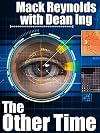
The other time would be August 1519 because that’s when our hero Don Fielding suddenly finds himself. On vacation in Mexico, he left his Land Rover with just the contents of his pockets: some money, a compass, a Swiss Army knife, some cigarettes and matches. He also carries a .22 pistol and ammo for it.
He’s surprised to come across a village where the natives seem untouched by modernity. Their clothes are very traditional. They don’t even speak Spanish. That’s ok, though, because he show more speaks the Nahautl language because he’s a professor of ethnology at the University of Texas in Austin and specializes in studying the past and present of the Tenochan culture – what we commonly call the Aztecs.
The locals judge Fielding a magician and give him some provisions before sending him on his way to get help or find his car. In the second chapter, he comes across what at first seems an elaborate movie set. Then he realizes the startling truth: he really has encountered the Cortes expedition in process of conquering Mexico.
Fortunately, Fielding’s first name is taken, when he introduces himself, as a title. He tries to pass himself off as merely a scholar from the rich and, to the Spanish, unknown lands to the north. But he says too much, reveals a knowledge of the Aztecs political structure. And the always greedy Cortes is keenly interested in learning about more lands to loot.
Fortunately, Fielding keeps his knowledge of Nahautl to himself among the Spanish. But then he meets another figure from history: Malinche aka Dona Marina. She’s a controversial figure to this day in Mexico, a heroine or race traitor depending on your perspective. With her knowledge of the Aztecs and serving as an interpreter, Fielding recognizes her as the most useful of all Cortes’ tools in conquering the Aztecs. But she’s also a beautiful woman whom Cortes has taken as his mistress. The attraction between her and Fielding is immediate, but it will be relationship throughout the book that will vary between sexual attraction and hostility.
The other historical figure (there are probably more I didn’t recognize) is Bernal Diaz del Castillo, the historian who, years later in our timeline, produced the only “honest” account of Cortes’ conquest.
Fielding finds himself a “guest” among the Spanish, but they eventually try to kill him. He flees to Tenochtitlan, capital of the Aztecs. He finds sanctuary there, but Cortes, as Fielding knows he will, shows up and demands Montezuma turn him over to the Spanish. Fortunately, by this time, Fielding has gotten himself adopted into a warrior clan and declared Montezuma’s nephew.
There are some specific allusions to other time travel stories: H. G. Wells’ The Time Machine, Mark Twain’s A Connecticut Yankee in King Arthur’s Court and the movie Berkeley Square. (There are frequent film references in Reynolds’ works. Fielding is described as looking like Gary Cooper.) A work that isn’t specifically mentioned is Ray Bradbury’s “A Sound of Thunder”, but Fielding does wonder about the historical consequences of killing a mosquito or rabbit or fathering a child in this past.
The one time travel story that isn’t mentioned, the one this mix of alternate history and time travel most reminded me of, is L. Sprague de Camp’s Lest Darkness Falls. Both have weak rationalizations. Time travel via lightening bolt for de Camp and a reference to a famous Fortean timeslip, English schoolteachers finding themselves in the Palace of Versailles’ past for Reynolds. But the heroes of both novels try to save a threatened civilization through a combination of political and technological innovation.
The mix of those two things differs in those novels, though. Fielding is no engineer. Sure, he knows what gunpowder is made of. But what’s the exact recipe? Where’s he going to get the ingredients? He does suggest some low-tech innovations. He gives the Aztecs wheelbarrows, suggests improvements to their pitiful bows and arrows, that they put big versions of the wheels from their toys on carts to be pulled by men, and introduces the Macedonian phalanx to the Aztecs.
Throughout most of the book, Fielding is just intent on his own survival. Cortes’ conquest proceeds as he expects from history no matter his presence. He’ll go down with the Aztecs, so he throws his lot in with the locals.
But this is a Reynolds book, so Fielding turns to political tools: espionage, propaganda, well-timed sabotage, political reforms, and provocation. And then things unknown to history start happening.
This book does a good job with Fielding’s character and others. His horror at seeing a sight he only knew from history — the Spanish melting down gold Aztec artifacts and burning Aztec manuscripts is well-depicted. So is this world as a whole including the physical environ of Tenochtitlan. And, yes, the horrors of Aztec human sacrifice are covered. Their abolishment may be the only good thing, Fielding ruefully thinks, to come from Cortes’ conquest. From what I know of Cortes’ expedition, the book gets the military details right. I trust the depiction of Aztec governance is correct. It’s not the hierarchical structure the Spanish think but a council of which Montezuma is the head. Montezuma himself is depicted as weak and vacillating, stuck, despite Fielding’s admonitions and “prophecies”, into trying to appease the Spanish “gods”.
The novel’s ending is a bit rushed and frantic – not unusual for Reynolds. But it’s quite clear that the history has been bent into a new shape. I was very surprised how much I enjoyed this one. show less
He’s surprised to come across a village where the natives seem untouched by modernity. Their clothes are very traditional. They don’t even speak Spanish. That’s ok, though, because he show more speaks the Nahautl language because he’s a professor of ethnology at the University of Texas in Austin and specializes in studying the past and present of the Tenochan culture – what we commonly call the Aztecs.
The locals judge Fielding a magician and give him some provisions before sending him on his way to get help or find his car. In the second chapter, he comes across what at first seems an elaborate movie set. Then he realizes the startling truth: he really has encountered the Cortes expedition in process of conquering Mexico.
Fortunately, Fielding’s first name is taken, when he introduces himself, as a title. He tries to pass himself off as merely a scholar from the rich and, to the Spanish, unknown lands to the north. But he says too much, reveals a knowledge of the Aztecs political structure. And the always greedy Cortes is keenly interested in learning about more lands to loot.
Fortunately, Fielding keeps his knowledge of Nahautl to himself among the Spanish. But then he meets another figure from history: Malinche aka Dona Marina. She’s a controversial figure to this day in Mexico, a heroine or race traitor depending on your perspective. With her knowledge of the Aztecs and serving as an interpreter, Fielding recognizes her as the most useful of all Cortes’ tools in conquering the Aztecs. But she’s also a beautiful woman whom Cortes has taken as his mistress. The attraction between her and Fielding is immediate, but it will be relationship throughout the book that will vary between sexual attraction and hostility.
The other historical figure (there are probably more I didn’t recognize) is Bernal Diaz del Castillo, the historian who, years later in our timeline, produced the only “honest” account of Cortes’ conquest.
Fielding finds himself a “guest” among the Spanish, but they eventually try to kill him. He flees to Tenochtitlan, capital of the Aztecs. He finds sanctuary there, but Cortes, as Fielding knows he will, shows up and demands Montezuma turn him over to the Spanish. Fortunately, by this time, Fielding has gotten himself adopted into a warrior clan and declared Montezuma’s nephew.
There are some specific allusions to other time travel stories: H. G. Wells’ The Time Machine, Mark Twain’s A Connecticut Yankee in King Arthur’s Court and the movie Berkeley Square. (There are frequent film references in Reynolds’ works. Fielding is described as looking like Gary Cooper.) A work that isn’t specifically mentioned is Ray Bradbury’s “A Sound of Thunder”, but Fielding does wonder about the historical consequences of killing a mosquito or rabbit or fathering a child in this past.
The one time travel story that isn’t mentioned, the one this mix of alternate history and time travel most reminded me of, is L. Sprague de Camp’s Lest Darkness Falls. Both have weak rationalizations. Time travel via lightening bolt for de Camp and a reference to a famous Fortean timeslip, English schoolteachers finding themselves in the Palace of Versailles’ past for Reynolds. But the heroes of both novels try to save a threatened civilization through a combination of political and technological innovation.
The mix of those two things differs in those novels, though. Fielding is no engineer. Sure, he knows what gunpowder is made of. But what’s the exact recipe? Where’s he going to get the ingredients? He does suggest some low-tech innovations. He gives the Aztecs wheelbarrows, suggests improvements to their pitiful bows and arrows, that they put big versions of the wheels from their toys on carts to be pulled by men, and introduces the Macedonian phalanx to the Aztecs.
Throughout most of the book, Fielding is just intent on his own survival. Cortes’ conquest proceeds as he expects from history no matter his presence. He’ll go down with the Aztecs, so he throws his lot in with the locals.
But this is a Reynolds book, so Fielding turns to political tools: espionage, propaganda, well-timed sabotage, political reforms, and provocation. And then things unknown to history start happening.
This book does a good job with Fielding’s character and others. His horror at seeing a sight he only knew from history — the Spanish melting down gold Aztec artifacts and burning Aztec manuscripts is well-depicted. So is this world as a whole including the physical environ of Tenochtitlan. And, yes, the horrors of Aztec human sacrifice are covered. Their abolishment may be the only good thing, Fielding ruefully thinks, to come from Cortes’ conquest. From what I know of Cortes’ expedition, the book gets the military details right. I trust the depiction of Aztec governance is correct. It’s not the hierarchical structure the Spanish think but a council of which Montezuma is the head. Montezuma himself is depicted as weak and vacillating, stuck, despite Fielding’s admonitions and “prophecies”, into trying to appease the Spanish “gods”.
The novel’s ending is a bit rushed and frantic – not unusual for Reynolds. But it’s quite clear that the history has been bent into a new shape. I was very surprised how much I enjoyed this one. show less

There’s not much going on in the mountain town of San Raphael de Aldama in Mexico. That’s what journalist Alex Germain hears, a lot, when he arrives by bus. That’s what Lilith Eden, who looks strikingly like the famous bust of Queen Nefertiti, tells him at the bust stop. It’s just a colony for elderly foreigners. That’s what Ursula Zavala tells him. And doesn’t Ursula look good? She doesn’t seem to have aged at all since Alex met her in Vienna twenty years ago when he covered a show more conference on gerontology.
And, speaking of gerontology, who does Alex meet in the dining room of Ursula’s Calle Hospicio Number 15? Why it’s Dr. Werner Gottlieb who spoke at that conference. Didn’t think he’d still be around. Interesting dog, Buda, he has. Seems pretty smart.
Yeah, it is kind of a dull place. What kind of hotel has a copy of the Journal of the American Gerontology Society lying around? Jack Fast, the piano player, seems fond of really old tunes. But, then, so are the patrons. Still, the elderly Beaumont couple from Texas tell Alex, you wouldn’t think it would be impossible to rent or buy a place in such a town.
Of course, the reader suspects Alex of hidden motives, and he’d be right. And, right in Chapter One, Reynolds starts giving us “Interludes” where unidentified people in town (though it’s not really hard to guess who they are) indicate they have secret agendas. Things get more complicated for Alex when a mysterious woman enters his darkened room and has sex with him. And, the next morning, Ursula, whom Alex also had a fling with all those years ago, suggests they take a car trip out of town for old times’ sake.
Then Dr. Gottlieb ends up murdered.
This was a surprising and enjoyable work from Reynolds. Yes, politics show up at the end, but a lot of it is a detailed look at lines of actual research in extending human life – some of which still go on. Reynolds throws in various epigraphs at the heads of chapters on how to extend life and arguing how likely or desirable that is. Along the same line, we get lots of explicit allusions to works from Aldous Huxley, H. Rider Haggard, and Robert A. Heinlein that deal with the theme of immorality.
This book reminded me of a longer, more morose, and grander take on the theme: Poul Anderson’s The Boat of a Million Years. Both feature immortals and the practical and emotional problems they face living through the centuries though Reynolds actually uses some historical characters which allows him to work in various mythological and historical references to immortality and how to achieve it. The immortals here, like Anderson’s, really have no idea why they are what they are though several theories are proposed
It's a well-paced thriller though, of course, Reynolds’ characters do a lot of talking and arguing. He mends the science, history, and myth together well. And, even with its short length of 254 pages, some of the characters, especially Lilith, are drawn well.
Reynolds’ novels sometimes end abruptly with future developments implied. That’s not really the case here because the central political struggle is unresolved at the end, but certain characters find emotional satisfaction from events.
I did, I think, detect a slight amount of Dean Ing in how the violent conclusion is written show less
And, speaking of gerontology, who does Alex meet in the dining room of Ursula’s Calle Hospicio Number 15? Why it’s Dr. Werner Gottlieb who spoke at that conference. Didn’t think he’d still be around. Interesting dog, Buda, he has. Seems pretty smart.
Yeah, it is kind of a dull place. What kind of hotel has a copy of the Journal of the American Gerontology Society lying around? Jack Fast, the piano player, seems fond of really old tunes. But, then, so are the patrons. Still, the elderly Beaumont couple from Texas tell Alex, you wouldn’t think it would be impossible to rent or buy a place in such a town.
Of course, the reader suspects Alex of hidden motives, and he’d be right. And, right in Chapter One, Reynolds starts giving us “Interludes” where unidentified people in town (though it’s not really hard to guess who they are) indicate they have secret agendas. Things get more complicated for Alex when a mysterious woman enters his darkened room and has sex with him. And, the next morning, Ursula, whom Alex also had a fling with all those years ago, suggests they take a car trip out of town for old times’ sake.
Then Dr. Gottlieb ends up murdered.
This was a surprising and enjoyable work from Reynolds. Yes, politics show up at the end, but a lot of it is a detailed look at lines of actual research in extending human life – some of which still go on. Reynolds throws in various epigraphs at the heads of chapters on how to extend life and arguing how likely or desirable that is. Along the same line, we get lots of explicit allusions to works from Aldous Huxley, H. Rider Haggard, and Robert A. Heinlein that deal with the theme of immorality.
This book reminded me of a longer, more morose, and grander take on the theme: Poul Anderson’s The Boat of a Million Years. Both feature immortals and the practical and emotional problems they face living through the centuries though Reynolds actually uses some historical characters which allows him to work in various mythological and historical references to immortality and how to achieve it. The immortals here, like Anderson’s, really have no idea why they are what they are though several theories are proposed
It's a well-paced thriller though, of course, Reynolds’ characters do a lot of talking and arguing. He mends the science, history, and myth together well. And, even with its short length of 254 pages, some of the characters, especially Lilith, are drawn well.
Reynolds’ novels sometimes end abruptly with future developments implied. That’s not really the case here because the central political struggle is unresolved at the end, but certain characters find emotional satisfaction from events.
I did, I think, detect a slight amount of Dean Ing in how the violent conclusion is written show less

This review also appears on my blog.
I've just written about James Blish's Star Trek, the first Trek book ever published, but that book contained only adaptations of television episodes. The first original Trek story published--and, indeed, the only such book published during the initial airing of Star Trek--is Mack Reynolds's Mission to Horatius, published in 1968.
The Enterprise has been out on patrol for a long time, and just when they were heading for a much needed break, they are ordered show more to a distant star system--Horatius--from which a distress call has originated.
Horatius has three colonized planets: Neolithia, Mythra, and Bavarya. Neolithia was colonized by people who wanted a less technologically dependent way of life, and its inhabitants have only very primitive technology--not even iron. Mythra was colonized by people fleeing religious persecution, and is ruled by a small class of religious elites. Bavarya, the most recently settled, was colonized by political dissidents, and its leader is a militaristic man called Nummer Ein. The Enterprise is not welcomed by the inhabitants of any of the three planets, but they have a duty to determine who called for help, and render aid if they can.
Meanwhile, the Enterprise has troubles of its own. It has been far too long since the crew has been planetside, and Dr. McCoy fears an outbreak of space cafard, a deadly psychological condition caused by the extreme ennui of protracted space travel. If the crew of the Enterprise don't get leave soon, they may tear themselves apart from the strain.
Mission to Horatius is a quick, easy read. With its A plot of the Enterprise investigating a distress call, its B plot of McCoy's concerns about space cafard, and a good dose of comedy, it reads very like an episode of the show. Which is not to say that it's the most well-written possible book, of course. Kirk is rather cavalier in his response to the situation in which he finds himself, and his actions are not what one would expect of an ambassador of the Federation (as Kirk calls himself). He repeatedly ignores the wishes of the governments of the planets they're visiting, despite himself noting that he must not do that. He even says, "We shall see what our Bavaryan bullyboys have to offer," when it is Kirk himself who is acting the bully.
While not flawless, Mission to Horatius is a suitably enjoyable read for young audiences, for which it was intended. show less
I've just written about James Blish's Star Trek, the first Trek book ever published, but that book contained only adaptations of television episodes. The first original Trek story published--and, indeed, the only such book published during the initial airing of Star Trek--is Mack Reynolds's Mission to Horatius, published in 1968.
The Enterprise has been out on patrol for a long time, and just when they were heading for a much needed break, they are ordered show more to a distant star system--Horatius--from which a distress call has originated.
Horatius has three colonized planets: Neolithia, Mythra, and Bavarya. Neolithia was colonized by people who wanted a less technologically dependent way of life, and its inhabitants have only very primitive technology--not even iron. Mythra was colonized by people fleeing religious persecution, and is ruled by a small class of religious elites. Bavarya, the most recently settled, was colonized by political dissidents, and its leader is a militaristic man called Nummer Ein. The Enterprise is not welcomed by the inhabitants of any of the three planets, but they have a duty to determine who called for help, and render aid if they can.
Meanwhile, the Enterprise has troubles of its own. It has been far too long since the crew has been planetside, and Dr. McCoy fears an outbreak of space cafard, a deadly psychological condition caused by the extreme ennui of protracted space travel. If the crew of the Enterprise don't get leave soon, they may tear themselves apart from the strain.
Mission to Horatius is a quick, easy read. With its A plot of the Enterprise investigating a distress call, its B plot of McCoy's concerns about space cafard, and a good dose of comedy, it reads very like an episode of the show. Which is not to say that it's the most well-written possible book, of course. Kirk is rather cavalier in his response to the situation in which he finds himself, and his actions are not what one would expect of an ambassador of the Federation (as Kirk calls himself). He repeatedly ignores the wishes of the governments of the planets they're visiting, despite himself noting that he must not do that. He even says, "We shall see what our Bavaryan bullyboys have to offer," when it is Kirk himself who is acting the bully.
While not flawless, Mission to Horatius is a suitably enjoyable read for young audiences, for which it was intended. show less
Lists
Awards


You May Also Like


Associated Authors
Statistics
- Works
- 194
- Also by
- 110
- Members
- 4,575
- Popularity
- #5,496
- Rating
- 3.5
- Reviews
- 67
- ISBNs
- 271
- Languages
- 5
- Favorited
- 9