

H. Beam Piper (1904–1964)
Author of Little Fuzzy
About the Author
Series
Works by H. Beam Piper
Time Crimes: The Paratime Collection (Five Paratime Novels in One Volume) (2008) 28 copies, 1 review
Little Fuzzy, Space Viking and Other Terro-Human Future History Stories from H. Beam Piper (Twelve Terro-Human Future History Novels in One Volume) (2008) 22 copies, 2 reviews
Analog Science Fiction/Science Fact: Vol. LXXVI, No. 3 (November 1965) (1965) — Contributor — 17 copies
The Terro-Human Future History Omnibus 14 copies
The Best of H. Beam Piper: 33 Novels and Short Stories (Unexpurgated Edition) (Halcyon Classics) (2010) 9 copies
The Federation Series by H. Beam Piper (Unexpurgated Edition) (Halcyon Classics) (2010) 5 copies, 1 review
Terro-Human Future History (Complete SF Omnibus): Uller Uprising, Four-Day Planet, The Cosmic Computer, Space Viking, The Return, Little Fuzzy… (2022) 4 copies, 1 review
Down Styphon! [short story] 4 copies
Short Fiction 3 copies
Gunpowder God [short story] 3 copies
Short Science Fiction Collection 053 2 copies
Short Science Fiction Collection 059 2 copies
SF Anthology 2 copies
Short Stories of H. Beam Piper 2 copies
Magazine Version 1 copy
The 4-D Doodler / 2BR02B / Quiet, Please / Crossroads of Destiny — Author — 1 copy
Second Genesis 1 copy
Cmentarz marzeń 1 copy
Afera w świątyni 1 copy
Kalvin: The Genesis 1 copy
HI Isegreti del paratempo 1 copy
Terro-Human 1 copy
Paratime Omnibus 1 copy
Nowa rasa ludzka 1 copy
Anthology 1 copy
Crossroads of Destiny 1 copy
Associated Works
Isaac Asimov's Wonderful Worlds of Science Fiction, Volume 6: Neanderthals (1987) — Contributor — 72 copies, 1 review
Roads of Destiny: And Other Tales of Alternative Histories and Parallel Realms: 43 (British Library Tales of the Weird) (2023) — Contributor — 33 copies
The Wild Years 1946-1955 (Amazing Science Fiction Anthology Series) (1987) — Contributor — 27 copies
Analog Science Fact/Science Fiction: Vol. LXX, No. 3 (November 1962) (1962) — Contributor — 14 copies
Analog Science Fact/Science Fiction: Vol. LXX, No. 6 (February 1963) (1963) — Contributor — 14 copies
Analog Science Fact/Science Fiction: Vol. LXX, No. 4 (December 1962) (1962) — Contributor — 12 copies
Analog Science Fact/Science Fiction: Vol. LXVIII, No. 5 (January 1962) (1962) — Contributor — 11 copies
The Petrified planet: The long view, Uller uprising, Daughters of earth — Contributor — 5 copies, 1 review
Tagged
Common Knowledge
- Canonical name
- Piper, H. Beam
- Legal name
- Piper, Henry Beam
- Other names
- Piper, Horace Beam
- Birthdate
- 1904-03-23
- Date of death
- 1964-11-06
- Gender
- male
- Occupations
- laborer
night watchman
science fiction author - Organizations
- Pennsylvania Railroad
- Cause of death
- suicide
- Nationality
- USA
- Birthplace
- Altoona, Pennsylvania, USA
- Places of residence
- Williamsport, Pennsylvania, USA
- Place of death
- Williamsport, Pennsylvania, USA
- Associated Place (for map)
- Pennsylvania, USA
Members
Discussions
More proof... in Good Show Sir! — bad science fiction and fantasy covers (November 2025)
Armed Preppies vs Timid Furries in Good Show Sir! — bad science fiction and fantasy covers (July 2025)
Reviews

Me gusta. The characters are strong and individual, the story is fascinating, and the lengths they have to go to to get things working are amazing. Conn's dilemma is really nasty - he can tell the truth and basically kill the men he respects, or he can lie to everyone. The lies are actually worth it - and then they turn out not to be lies! Very rich. I also read the short story that was the seed for this - Graveyard of Dreams in Federation - and even given the larger space to tell the story, show more Cosmic Computer is better. Not a hope for the future - or not only - but something built right now.
Oddly enough, Jerry Pournelle in the foreword of Federation talks about how there's a gap between this and Space Viking, and no one knows what happened in there. The last couple chapters tell that story pretty clearly to my eye - there's never a suggestion that they could escape the collapse, just that they could make it less than terrible. Though I suppose the fact that there's no mention of Poictesme in Space Viking is a little odd - if they went down gently they should have been able to come back reasonably easily. I don't know. As usual, Piper tells a great story with broad implications, and the more you think about it the more there is to think about. Piper is wonderful.
And BTW, there are two lines of the poem in the book - there's considerably more of it in the short story. show less
Oddly enough, Jerry Pournelle in the foreword of Federation talks about how there's a gap between this and Space Viking, and no one knows what happened in there. The last couple chapters tell that story pretty clearly to my eye - there's never a suggestion that they could escape the collapse, just that they could make it less than terrible. Though I suppose the fact that there's no mention of Poictesme in Space Viking is a little odd - if they went down gently they should have been able to come back reasonably easily. I don't know. As usual, Piper tells a great story with broad implications, and the more you think about it the more there is to think about. Piper is wonderful.
And BTW, there are two lines of the poem in the book - there's considerably more of it in the short story. show less
Silly, old-time fun.
There's no point in pretending the science is anything other than dated, the sexism isn't appalling, and the "scientists" are at all credible. These yahoos would be tossed out of a real university when they leaped to their first unsupported conclusion with the focus and intensity of an impala pursued by lions.
But the "girl" scientists get proper credit and support from the male bosses, which makes a nice change from the reality we live in.
And that's a wrap on 2019's reviews.
There's no point in pretending the science is anything other than dated, the sexism isn't appalling, and the "scientists" are at all credible. These yahoos would be tossed out of a real university when they leaped to their first unsupported conclusion with the focus and intensity of an impala pursued by lions.
But the "girl" scientists get proper credit and support from the male bosses, which makes a nice change from the reality we live in.
And that's a wrap on 2019's reviews.
Another allegedly classic sf novel, which was nominated for the Hugo in 1963. Dick’s The Man in the High Castle won that year, and was easily the best of the shortlisted novels. Little Fuzzy, on the other hand, is slight, not in the least bit plausible, and opens from a position of such comprehensive US hegemony its story is pretty much unrecoverable.
The title refers to the indigenous race on Zarathustra, waist-high cute-looking furry creatures with an average intelligence comparable to show more that of small children. Humans have been on the world for several decades before the first “Fuzzy” appears, and the corporation which owns the planet quickly realises that a native race invalidates their ownership of the world and all its resources. So they play dirty in an effort to prove the Fuzzies either non-existent or not intelligent. A situation which comes to a head when a company bigwig stamps on a Fuzzy, killing it, and a company bodyguard is shot and killed in self-defence.
Like a lot of American sf of the period, this is resolved by people coming together, some homespun legal wizardry, a general distrust of the government (and governing corporation), and a handful of native backwoods cunning from several of the cast. While the local governor is corrupt, the local Navy base is packed to the gills with upright honest officers and personnel. The corrupt mayor is a cliché, but so too is the valorisation of military probity - at least in 1962, before the Vietnam War. There are entire Hollywood movies from the 1930s through to the 1950s which use any one of those tropes on which to hang a plot. And each one is as hokey as the next.
If anything, Little Fuzzy multiplies the hokiness. It’s a novel with far more mouthpiece characters than it needs or the reader deserves. The Fuzzies may be intelligent enough to determine their own destiny, but the humans on their side seem to treat them chiefly as precocious pets. There are many arguments to be made about the European invasion of continental North America, but this novel doesn’t even come within spitting distance of them. It’s the colonisers defending the colonised against the colonisers’ own kind, for reasons that are best not examined too deeply. show less
The title refers to the indigenous race on Zarathustra, waist-high cute-looking furry creatures with an average intelligence comparable to show more that of small children. Humans have been on the world for several decades before the first “Fuzzy” appears, and the corporation which owns the planet quickly realises that a native race invalidates their ownership of the world and all its resources. So they play dirty in an effort to prove the Fuzzies either non-existent or not intelligent. A situation which comes to a head when a company bigwig stamps on a Fuzzy, killing it, and a company bodyguard is shot and killed in self-defence.
Like a lot of American sf of the period, this is resolved by people coming together, some homespun legal wizardry, a general distrust of the government (and governing corporation), and a handful of native backwoods cunning from several of the cast. While the local governor is corrupt, the local Navy base is packed to the gills with upright honest officers and personnel. The corrupt mayor is a cliché, but so too is the valorisation of military probity - at least in 1962, before the Vietnam War. There are entire Hollywood movies from the 1930s through to the 1950s which use any one of those tropes on which to hang a plot. And each one is as hokey as the next.
If anything, Little Fuzzy multiplies the hokiness. It’s a novel with far more mouthpiece characters than it needs or the reader deserves. The Fuzzies may be intelligent enough to determine their own destiny, but the humans on their side seem to treat them chiefly as precocious pets. There are many arguments to be made about the European invasion of continental North America, but this novel doesn’t even come within spitting distance of them. It’s the colonisers defending the colonised against the colonisers’ own kind, for reasons that are best not examined too deeply. show less
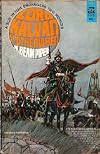
Rating: 4.9* of five
The Book Report: It has been said since there were people to say it that you have to leave home to find yourself. It was never more truly said than with Corporal Calvin Morrison, Pennsylvania State Police. He had to leave Earth as he knew it in order to feel at home at last.
Calvin, you see, ran afoul of a glitch in an alien (though still Earthly) technology, was swept into a temporal conveyor, and despite being thrust into a unique environment, still managed to defend show more himself against a fellow cop's energy weapon (versus Calvin's .38 revolver), and escape from the unknown but self-evident threat of that weird place.
But where in the world was he? It looks like the same spot he just left, only...not.
He comes to discover that he's traveled laterally in timespace, he's in the same geography as the Pennsylvania he left, but the people in this place aren't like him in culture or language. They're early-Renaissance level of technology, polytheistic Aryans from Asia. And their kingdom, Hostigos, is about to be swatted like a mosquito by the Big Baddies: the priests of the House of Styphon, the Gunpowder God. Thus does Calvin morph into Kalvan, the war leader, the bringer of miracles, the architect of a complete shift in this world's future history.
Now remember that alien-but-Earthly technology? Those Earthlings are from a different time-stream from thee and me, and from the Hostigos (called “Aryan-Transpacific” which specifies the direction of the ancient migration) time-stream. They developed high technology long before we did, and consequently used up the resources of their own Earth before we have. The Paratime Secret, which is the existence of aliens who can't be told from the natives, is policed by the Paratime Police, now headed by Verkan Vall, whose observation of Kalvan was supposed to be an elimination until some bright academic realized Kalvan was a rare case of a man out of time who was IN his new element, more so than he was in his native time-stream.
And so is born the Kalvan Subsector, a set of adjacent time-streams that define a new direction in history. It's a priceless chance to see how one exceptional individual can change the course of the world.
My Review: I bought my first copy of this book, published in 1965, from The Book Stall on Burnet Road in Austin, Texas, in 1970. It was a dime, and my mama blew a fuse. She had given me the dime to buy two National Geographics, and was furious I chose mind-rot over edification. As a result of this tantrum on her part, I treasured that little book until it finally and definitively disintegrated in 2006.
I loved the parallel universes in the book. I eagerly looked into strangers' faces, hoping one of them would be a Paracop and whisk me away from the life I didn't much like into a romantic, exciting life hopping the time-streams. (Not long after this, I encountered The Warlord of the Air by Michael Moorcock, and my fate was sealed...I was a chrononaut/Paracop Without Portfolio, and still am.)
I loved every pulpy, overheated sentence of the book. I said things like “yesterday at the latest” and “Dralm dammit” so often that Mama finally blew a fuse and took the book away. I didn't know then, though I strongly suspected it, that Piper was a crappy writer with a gift for the cliché. But hell, who gives the ass of a rat when you're swept away into a world different from and better than your own?
I feel the same way today. It's just that, at mumblety-two, I know it's not good writing. But I still don't care, if the story can sweep my considerable intellectual and physical avoirdupois off my aching, elderly feet. show less
The Book Report: It has been said since there were people to say it that you have to leave home to find yourself. It was never more truly said than with Corporal Calvin Morrison, Pennsylvania State Police. He had to leave Earth as he knew it in order to feel at home at last.
Calvin, you see, ran afoul of a glitch in an alien (though still Earthly) technology, was swept into a temporal conveyor, and despite being thrust into a unique environment, still managed to defend show more himself against a fellow cop's energy weapon (versus Calvin's .38 revolver), and escape from the unknown but self-evident threat of that weird place.
But where in the world was he? It looks like the same spot he just left, only...not.
He comes to discover that he's traveled laterally in timespace, he's in the same geography as the Pennsylvania he left, but the people in this place aren't like him in culture or language. They're early-Renaissance level of technology, polytheistic Aryans from Asia. And their kingdom, Hostigos, is about to be swatted like a mosquito by the Big Baddies: the priests of the House of Styphon, the Gunpowder God. Thus does Calvin morph into Kalvan, the war leader, the bringer of miracles, the architect of a complete shift in this world's future history.
Now remember that alien-but-Earthly technology? Those Earthlings are from a different time-stream from thee and me, and from the Hostigos (called “Aryan-Transpacific” which specifies the direction of the ancient migration) time-stream. They developed high technology long before we did, and consequently used up the resources of their own Earth before we have. The Paratime Secret, which is the existence of aliens who can't be told from the natives, is policed by the Paratime Police, now headed by Verkan Vall, whose observation of Kalvan was supposed to be an elimination until some bright academic realized Kalvan was a rare case of a man out of time who was IN his new element, more so than he was in his native time-stream.
And so is born the Kalvan Subsector, a set of adjacent time-streams that define a new direction in history. It's a priceless chance to see how one exceptional individual can change the course of the world.
My Review: I bought my first copy of this book, published in 1965, from The Book Stall on Burnet Road in Austin, Texas, in 1970. It was a dime, and my mama blew a fuse. She had given me the dime to buy two National Geographics, and was furious I chose mind-rot over edification. As a result of this tantrum on her part, I treasured that little book until it finally and definitively disintegrated in 2006.
I loved the parallel universes in the book. I eagerly looked into strangers' faces, hoping one of them would be a Paracop and whisk me away from the life I didn't much like into a romantic, exciting life hopping the time-streams. (Not long after this, I encountered The Warlord of the Air by Michael Moorcock, and my fate was sealed...I was a chrononaut/Paracop Without Portfolio, and still am.)
I loved every pulpy, overheated sentence of the book. I said things like “yesterday at the latest” and “Dralm dammit” so often that Mama finally blew a fuse and took the book away. I didn't know then, though I strongly suspected it, that Piper was a crappy writer with a gift for the cliché. But hell, who gives the ass of a rat when you're swept away into a world different from and better than your own?
I feel the same way today. It's just that, at mumblety-two, I know it's not good writing. But I still don't care, if the story can sweep my considerable intellectual and physical avoirdupois off my aching, elderly feet. show less
Lists
Awards


You May Also Like


Associated Authors
Statistics
- Works
- 117
- Also by
- 56
- Members
- 9,410
- Popularity
- #2,554
- Rating
- 3.8
- Reviews
- 205
- ISBNs
- 615
- Languages
- 9
- Favorited
- 34
