
Alan Dean Foster
Author of Star Wars: From the Adventures of Luke Skywalker
About the Author
Bestselling science fiction writer Alan Dean Foster was born in New York City in 1946, but raised mainly in California. He received a B.A. in Political Science from UCLA in 1968, and a M.F.A. in 1969. Foster enjoys traveling because it gives him opportunities to meet new people and explore new show more places and cultures. This interest is carried over to his writing, but with a twist: the new places encountered in his books are likely to be on another planet, and the people may belong to an alien race. Foster began his career as an author when a letter he sent to Arkham Collection was purchased by the editor and published in the magazine in 1968. His first novel, The Tar-Aiym Krang, introduced the Humanx Commonwealth, a galactic alliance between humans and an insectlike race called Thranx. Several other novels, including the Icerigger trilogy, are also set in the world of the Commonwealth. The Tar-Aiym Krang also marked the first appearance of Flinx, a young man with paranormal abilities, who reappears in other books, including Orphan Star, For Love of Mother-Not, and Flinx in Flux. Foster has also written The Damned series and the Spellsinger series, which includes The Hour of the Gate, The Moment of the Magician, The Paths of the Perambulator, and Son of Spellsinger, among others. Other books include novelizations of science fiction movies and television shows such as Star Trek, The Black Hole, Starman, Star Wars, and the Alien movies. Splinter of the Mind's Eye, a bestselling novel based on the Star Wars movies, received the Galaxy Award in 1979. The book Cyber Way won the Southwest Book Award for Fiction in 1990. His novel Our Lady of the Machine won him the UPC Award (Spain) in 1993. He also won the Ignotus Award (Spain) in 1994 and the Stannik Award (Russia) in 2000. He is the recipient of the Faust, the IAMTW Lifetime achievement award. Alan Dean Foster's Star Wars: The Force Awakens, was a 2015 New York Times bestseller. (Bowker Author Biography) show less
Series
Works by Alan Dean Foster
The Damned Trilogy: A Call to Arms, The False Mirror, and The Spoils of War (2017) 66 copies, 1 review
Flinx of the Commonwealth (For Love of Mother-not, the Tar-aiym Krang and Orphan Star) (1982) 45 copies, 2 reviews
Journeys Of The Catechist: Carnivores Of Light And Darkness; Into The Thinking Kingdoms; A Triumph Of Souls (2000) 38 copies
The Taste of Different Dimensions: 15 Fantasy Tales from a Master Storyteller (2019) 14 copies, 1 review
Unterwegs in die Welt von morgen: Das Ding aus einer anderen Welt / Die Irrfahrten des Mr. Green (1990) — Author — 9 copies
Sanctuary [short fiction] 6 copies
Surfeit 5 copies
Trilogia galattica di Flinx — Author — 5 copies
Dream Done Green [short story] 5 copies
The Metrognome [short story] 4 copies
Snake Eyes [short story] 3 copies
The Emoman [short story] 3 copies
The Last Akialoa 2 copies
Free Elections 2 copies
We Three Kings 2 copies
Lethal Perspective [Short Story] 2 copies
Ghost Wind 2 copies
Batrachian 2 copies
"Alien: Covenant 2" 2 copies
Pein bek Longpela Telimpon 2 copies
The Director Should've Been Shot 2 copies
The Little Bits That Count 2 copies
Undying Iron 2 copies
Serenade 2 copies
Sideshow 2 copies
The Boy Who Was a Sea 2 copies
Time Trap [short fiction] 1 copy
By Alan Dean Foster Transformers The Veiled Threat (The Transformers) [Mass Market Paperback] 1 copy
Aliens scontro finale 1 copy
Phylogenesisi 1 copy
فضائِي 1 copy
Jihad [short fiction] 1 copy
Mid-Death 1 copy
Homanx Eins 1 copy
A Flinx in Flux 1 copy
Redundancy 1 copy
Por amor da não-mãe 1 copy
The Crier In Emptiness 1 copy
Yaratik-Covenant 1 copy
Frank Frazetta Fantasy Illustrated #2 — Contributor — 1 copy
A Jedik alkonya 1 copy
Cat-alysator 1 copy
Alien: Covenant 1 copy
Nem lagrimas de cristal 1 copy
U70-39 Musica aliena 1 copy
Abismo Negro 1 copy
Voima herää 1 copy
O homem das estrelas 1 copy
Chauna 1 copy
Mudd's Passion 1 copy
Diesel Dream 1 copy
Consigned 1 copy
Fitting Time 1 copy
Laying Veneer 1 copy
The Steel Princess 1 copy
Mr. Death Goes To Washington 1 copy
Lay Your Head On My Pilose 1 copy
Clash of the Titans / Star Trek: Log One / Slipt / Krull / Maori (5 Complete, Unabridged Books) 1 copy
Seasoning 1 copy
The Dark Light Girl 1 copy
Ah, Yehz 1 copy
Food Fight 1 copy
Wolfstroker 1 copy
The Question 1 copy
Mid-Death [novella] 1 copy
Gift Of A Useless Man 1 copy
Thunder Mother 1 copy
Suzy Q 1 copy
The Kindness Of Strangers 1 copy
Overcast 1 copy
Unnatural 1 copy
Pardon Our Conquest 1 copy
Humanx Commonwealth Series : Voyage to the City of the Dead; Flinx in Flux; the Howling Stones 1 copy
The Kiss 1 copy
Perception [Short Story] 1 copy
Cold Fire 1 copy
The Chair 1 copy
Mother Thunder 1 copy
Pipe Dream 1 copy
Thrust 1 copy
The Man Who Knew Too Much 1 copy
Procrastinator 1 copy
Mission to Moulakin 1 copy
The Inheritance 1 copy
Robur 2. 1 copy
Jackalope [short story] 1 copy
Collectible 1 copy
Flinx 1 copy
Norg Gleeble Gop 1 copy
Pleistosport 1 copy
Ledo planeta 1 copy
The Thunderer 1 copy
Unamusing 1 copy
Running 1 copy
Grøn 1 copy
Spellsinger Series 8 Volumes 1 copy
Associated Works
Firebirds Rising: An Original Anthology of Science Fiction and Fantasy (2006) — Contributor — 706 copies, 12 reviews
The Mad Scientist's Guide to World Domination: Original Short Fiction for the Modern Evil Genius (2013) — Contributor — 433 copies, 22 reviews
Alfred Hitchcock Presents: Stories to Be Read with the Door Locked (1975) — Contributor — 188 copies, 4 reviews
Loosed upon the World: The Saga Anthology of Climate Fiction (2015) — Contributor — 130 copies, 4 reviews
Isaac Asimov's Wonderful Worlds of Science Fiction, Volume 2: The Science Fictional Olympics (1984) — Contributor — 97 copies, 1 review
What the #@&% Is That?: The Saga Anthology of the Monstrous and the Macabre (2016) — Contributor — 94 copies, 1 review
Best Science Fiction Stories of the Year Fourth Annual Collection (1975) — Contributor — 84 copies, 3 reviews
Speculations : 17 Stories Written Especially for This Volume By Well-Known Science Fiction Authors, But Their Names are Concealed By a Code and It's Up to You to Figure Out Who… (1982) — Contributor — 53 copies, 1 review
High Seas Cthulhu: Swashbuckling Adventure Meets the Mythos (2007) — Contributor — 47 copies, 2 reviews
Walt Disney's Animated Features and Silly Symphonies (1978) — Introduction; Introduction; Introduction — 29 copies
Analog Science Fiction/Science Fact: Vol. LXXXVII, No. 4 (June 1971) (1971) — Contributor — 27 copies
Short Things: Tales Inspired by "Who Goes There?" by John W. Campbell, Jr. (2020) 22 copies, 1 review
Kong Unbound: The Cultural Impact, Pop Mythos, and Scientific Plausibility of a Cinematic Legend (2005) — Contributor — 21 copies
The Magazine of Fantasy and Science Fiction November/December 2012 Vol. 123, Nos. 5 & 6 (2012) — Author — 18 copies
The Magazine of Fantasy and Science Fiction June 1976, Vol. 50, No. 6 (1976) — Contributor — 16 copies
The Magazine of Fantasy and Science Fiction November/December 2010, Vol. 119, No. 5 & 6 (2010) — Author — 13 copies, 1 review
More Dixie Ghosts: More Haunting, Spine-Chilling Stories from the American South (1994) — Contributor — 12 copies
The Magazine of Fantasy and Science Fiction April 1989, Vol. 76, No. 4 (1989) — Contributor — 11 copies
Worlds of If Science Fiction 162, September/October 1972 (Vol. 21, No. 7) (1972) — Author — 10 copies
Unterwegs in die Welt von morgen (109): Der Elfenbeinturm - Die denkenden Wälder. (1988) — some editions — 1 copy
Tagged
Common Knowledge
- Legal name
- Foster, Alan Dean
- Other names
- Lawson, James (pen name)
- Birthdate
- 1946-11-18
- Gender
- male
- Education
- University of California, Los Angeles (B.A.) (political science) (1968)
University of California, Los Angeles (M.F.A.) (1969) - Occupations
- fantasy writer
science fiction writer
copywriter
lecturer in literature, screenwriting and film history
ghostwriter - Organizations
- Science Fiction and Fantasy Writers of America
Author's Guild of America
Writer's Guild of America
University of California, Los Angeles
Los Angeles City College - Awards and honors
- Ignotus Award (1994)
Strannik Award (2000)
Aelita Award (2006)
Scribe Award (Grandmaster, Faust Award, 2008) - Relationships
- Oxley, JoAnn (wife)
- Short biography
- Alan Dean Foster (born November 18, 1946) is an American writer of fantasy and science fiction, a prolific creator of and contributor to book series as well as the author of more than 20 single novels. He is especially prolific in his novelizations of film scripts.
- Nationality
- USA
- Birthplace
- New York, New York, USA
- Places of residence
- Prescott, Arizona, USA
New York, New York, USA
Los Angeles, California, USA - Associated Place (for map)
- USA
Members
Discussions
The Hike of Yikes in Good Show Sir! — bad science fiction and fantasy covers (October 2025)
SciFi Last living human adopted by alien race in Name that Book (December 2024)
SF story, NOT a book in Name that Book (April 2023)
80s Sci-Fi / Horror / Road Trip about Time Lines disintegrating, traveling in a Motor Home in Name that Book (December 2013)
Sci-fi: Universe as simulation. Native American elements? in Name that Book (March 2013)
SciFi Extreme surfing on other planets in Name that Book (October 2012)
(M66'12) Star Trek: Log Nine, Alan Dean Foster in World Reading Circle (September 2012)
SF a rich man who fakes a hostile alien invasion in Name that Book (September 2011)
Reviews

Quozl, by Alan Dean Foster, is a deceptively simple story of first human/alien contact. It takes place as aliens, the Quozl, looking for a new homeworld, run out of fuel in their spaceship and decide they must settle on Earth, even though the natives appear dangerous and uncivilized, what with their constant warring. The Quozl, on the other hand, in a rejection of their own aggressive tendencies, have developed over many generations a peaceful culture that places great value upon exceptional show more politeness and courtesy with each other.
Introducing and following a pair of youths, a warm and fuzzy alien and an innocent human child, the story at first exudes a sunny and bright point of view that my cynical adult mind interpreted as, "Oh, this is going to be just another 'lived happily ever after' story." Additionally, the story's timeline did exhibit some jarring discontinuities. It occasionally jumped ahead anywhere from several days to several years without warning, from one paragraph to the next. Each time this left me disappointed because the storyline, now interrupted, seemed to have been developing and the characters were just getting interesting
What kept me reading, however, was not the plot but the memories of my own adolescence. I (and I suspect, most others) had faced similar desires for freedom and independence and the resultant conflicts with the wishes of authorities, public and familial. I wanted to see how the story's characters resolved them, particularly on the alien's side! As I kept reading, I was surprised to find simple conflicts morphing into meditations on trust and betrayal, sexual mores, and explorations of the capability of entertainment (possibly including this novel) to address serious matters. It was a redeeming discovery, one that made reading the book worthwhile.
I received a free copy of this book from the publisher in exchange for an honest review. show less
Introducing and following a pair of youths, a warm and fuzzy alien and an innocent human child, the story at first exudes a sunny and bright point of view that my cynical adult mind interpreted as, "Oh, this is going to be just another 'lived happily ever after' story." Additionally, the story's timeline did exhibit some jarring discontinuities. It occasionally jumped ahead anywhere from several days to several years without warning, from one paragraph to the next. Each time this left me disappointed because the storyline, now interrupted, seemed to have been developing and the characters were just getting interesting
What kept me reading, however, was not the plot but the memories of my own adolescence. I (and I suspect, most others) had faced similar desires for freedom and independence and the resultant conflicts with the wishes of authorities, public and familial. I wanted to see how the story's characters resolved them, particularly on the alien's side! As I kept reading, I was surprised to find simple conflicts morphing into meditations on trust and betrayal, sexual mores, and explorations of the capability of entertainment (possibly including this novel) to address serious matters. It was a redeeming discovery, one that made reading the book worthwhile.
I received a free copy of this book from the publisher in exchange for an honest review. show less
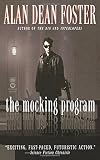
It’s a rainy night in the Montezuma Strip and Inspector Angel Cardenas and his partner Fredoso Hyaki are looking at a carcass picked over by organleggers. The ID says he’s George Anderson. His DNA says he’s Wayne Brummel from Harlingen, Texas. A call to his address is answered by Susan Anderson – not his wife, but she’ll show up the next morning at the morgue to identify what’s left of him.
Except she doesn’t. So Angel and Hyaki go to visit her. And almost get killed in an show more elaborately booby-trapped house, a house that Anderson and her twelve-year daughter Katla have fled.
Angel finds out Susan used to be married and Brummel was an employee of her husband. Said husband was Cleator Mockerin, a big time mobster that several countries have never been able to convict of anything though the want to. Susan and Brummel stole money from Mockerin and fled to live under assumed identities. Now Mockerin evidently has several hired guns looking for Susan – and especially Katla who appears to be a very bright girl who assisted her father in his business.
The trail will lead from the alleys and sex clubs of Montezuma Strip to Costa Rica to Mockerin’s underwater lair.
It was nice to see Foster bringing back, at least in brief references, his girlfriend Hypatia Spango and his former seeing eye dog Charliebo, now translated to cyberspace, who were introduced with Angel’s first appearance in “Sanctuary”.
Foster opens up his world more in this novel not only in settings but in scientific and technological developments like the wugs, a self-replicating AI that evolved from underground utility maintenance robots, and a group of uplifted primates at a Costa Rican preserve.
Foster also has an interesting idea with the “soche”. In a world where education in the standard subjects is done at home via the internet, the soche has group instruction in
“male-female relationships, dating, the institution of marriage, sex, how to open and manage a bank account, how to perform simple household repairs, deal with credit, purchase a residence, handle lawyers, consult with doctors, plan a vacation, shop for goods and services, buy and cook food”
Cardenas shows considerable leniency with some criminals or does them small, illegal favors with the idea their gratitude will supply information he needs. That includes a strange “religion” of ascetic hackers who help him locate the Andersons. Cardenas is clearly affectionate towards kids and is willing to steer youngsters away from a life of crime. However, he realizes that there is no way he should have children of his own since his talents as an Intuit would provide a very stifling atmosphere to a child.
Foster does some interesting things with the MacGuffin of the Mocking Program that Katla is said to be working on, an effort to subvert the encryption used in commercial transactions as well as where Mockerin is hiding out, and where Mockerin is hiding out.
It’s not a superb mystery or novel, but it’s plenty entertaining as a mystery and trip through an interesting world. show less
Except she doesn’t. So Angel and Hyaki go to visit her. And almost get killed in an show more elaborately booby-trapped house, a house that Anderson and her twelve-year daughter Katla have fled.
Angel finds out Susan used to be married and Brummel was an employee of her husband. Said husband was Cleator Mockerin, a big time mobster that several countries have never been able to convict of anything though the want to. Susan and Brummel stole money from Mockerin and fled to live under assumed identities. Now Mockerin evidently has several hired guns looking for Susan – and especially Katla who appears to be a very bright girl who assisted her father in his business.
The trail will lead from the alleys and sex clubs of Montezuma Strip to Costa Rica to Mockerin’s underwater lair.
It was nice to see Foster bringing back, at least in brief references, his girlfriend Hypatia Spango and his former seeing eye dog Charliebo, now translated to cyberspace, who were introduced with Angel’s first appearance in “Sanctuary”.
Foster opens up his world more in this novel not only in settings but in scientific and technological developments like the wugs, a self-replicating AI that evolved from underground utility maintenance robots, and a group of uplifted primates at a Costa Rican preserve.
Foster also has an interesting idea with the “soche”. In a world where education in the standard subjects is done at home via the internet, the soche has group instruction in
“male-female relationships, dating, the institution of marriage, sex, how to open and manage a bank account, how to perform simple household repairs, deal with credit, purchase a residence, handle lawyers, consult with doctors, plan a vacation, shop for goods and services, buy and cook food”
Cardenas shows considerable leniency with some criminals or does them small, illegal favors with the idea their gratitude will supply information he needs. That includes a strange “religion” of ascetic hackers who help him locate the Andersons. Cardenas is clearly affectionate towards kids and is willing to steer youngsters away from a life of crime. However, he realizes that there is no way he should have children of his own since his talents as an Intuit would provide a very stifling atmosphere to a child.
Foster does some interesting things with the MacGuffin of the Mocking Program that Katla is said to be working on, an effort to subvert the encryption used in commercial transactions as well as where Mockerin is hiding out, and where Mockerin is hiding out.
It’s not a superb mystery or novel, but it’s plenty entertaining as a mystery and trip through an interesting world. show less

The second of three EarlyReviewer books I caught up on over Christmas, The Human Blend is a science fiction novel about the near future, a world where environmental collapse means that Savannah, Georgia, has to be lifted up above the new sea level, but more importantly, artificial body manipulation ("Melds") are becoming increasingly common. One of the main characters is the thief Whispr, a Meld whose body has been rendered artificially thin because he is overcompensating for a show more generations-long pattern of obesity in his own family. The other protagonist is Dr. Ingrid Seastrom, a "Natural" who works on Melds. The plot of the novel concerns something that Whispr steals that proves too hot for him to handle-- and brings him right into the company of the straight-laced Seastrom.
The best part of the book is definitely the ideas about Melding. While Foster's post-environmental world feels very "been done" to me, the possibilities of the new and different Melds were always interesting and unusual. We have people who Meld themselves to be more attractive or fix health problems, to give themselves long legs, to look like Marilyn Monroe, to be old men with the bodies of small children, or (my personal favorite) to look like a crocodile. There are a lot of passing comments that indicate how Melds have reshaped society and allusions to the ways people think now. I was always fascinated by this, and Foster's world-building was very strong.
The book is more middling in terms of character. Though many of the incidental characters encountered by the protagonists along the way are quite fascinating, Whispr and Seastrom themselves are fairly uninvolving. Whispr is the stronger of the two, a wiley-but-not-entirely-wise street thief who knows barely enough to stay out of trouble. But he's almost entirely defined in terms of this, and moments where he reveals his humanity (such as his desire to see real animals) jar instead of adding depth. Seastrom, on the other hand, never convinces: she's the most beautiful woman around and the most brilliant, of course, but her motivations for sticking with Whispr never ring true. She's supposed to be there because of her scientific curiosity about what Whispr has discovered, but I doubt that scientists are as generically single-minded as The Human Blend tries to convince us, and Seastrom doesn't really seem like the type to jeopardize her life to learn about a neat new metal. And without a realistic motivation, she kinds falls apart as a character. Which is a shame, as I can easily see some ways to make her motives a bit clearer and more recognizable.
Where the book completely falls down is in terms of plot. It's a thin book, and I don't know why, as it barely gets started when it cuts off. Nearly literally cuts off-- nothing about the ending feels like an ending. The obvious question is why does this have to be a trilogy and not one book? It might be forgivable if a lot had happened in these 225 pages, but it hasn't. Mainly Whispr (and later Seastrom) move from place to place as they are pursued by (nasty) bad guys, just barely staying out of trouble, but never actually learning anything useful. The first time it happens, it's tense... the fifth time, less so. A less linear and more eventful plot would have gone way to make this a more enjoyable read; as it is, Foster fails to live up to the potential of the cool world he's created here, which is substantially more interesting than the story he tells in it. show less
The best part of the book is definitely the ideas about Melding. While Foster's post-environmental world feels very "been done" to me, the possibilities of the new and different Melds were always interesting and unusual. We have people who Meld themselves to be more attractive or fix health problems, to give themselves long legs, to look like Marilyn Monroe, to be old men with the bodies of small children, or (my personal favorite) to look like a crocodile. There are a lot of passing comments that indicate how Melds have reshaped society and allusions to the ways people think now. I was always fascinated by this, and Foster's world-building was very strong.
The book is more middling in terms of character. Though many of the incidental characters encountered by the protagonists along the way are quite fascinating, Whispr and Seastrom themselves are fairly uninvolving. Whispr is the stronger of the two, a wiley-but-not-entirely-wise street thief who knows barely enough to stay out of trouble. But he's almost entirely defined in terms of this, and moments where he reveals his humanity (such as his desire to see real animals) jar instead of adding depth. Seastrom, on the other hand, never convinces: she's the most beautiful woman around and the most brilliant, of course, but her motivations for sticking with Whispr never ring true. She's supposed to be there because of her scientific curiosity about what Whispr has discovered, but I doubt that scientists are as generically single-minded as The Human Blend tries to convince us, and Seastrom doesn't really seem like the type to jeopardize her life to learn about a neat new metal. And without a realistic motivation, she kinds falls apart as a character. Which is a shame, as I can easily see some ways to make her motives a bit clearer and more recognizable.
Where the book completely falls down is in terms of plot. It's a thin book, and I don't know why, as it barely gets started when it cuts off. Nearly literally cuts off-- nothing about the ending feels like an ending. The obvious question is why does this have to be a trilogy and not one book? It might be forgivable if a lot had happened in these 225 pages, but it hasn't. Mainly Whispr (and later Seastrom) move from place to place as they are pursued by (nasty) bad guys, just barely staying out of trouble, but never actually learning anything useful. The first time it happens, it's tense... the fifth time, less so. A less linear and more eventful plot would have gone way to make this a more enjoyable read; as it is, Foster fails to live up to the potential of the cool world he's created here, which is substantially more interesting than the story he tells in it. show less
 This review was written for LibraryThing Early Reviewers.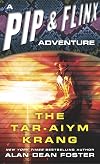
I'll give Foster this: the Space Foreigner in his book, Maxim Malaika, is an intelligent and knowledgeable character without whom the plot would have been infeasible. The expedition to retrieve the titular unpronounceable artifact would literally never have gotten off the ground. However, Malaika, smart as he is, is too dense to have noticed that a woman in his employ for six years is madly in love with him, enough so to eventually get in a really ineffective physical fight with another show more woman over him. And, like every other Fictional Foreigner, he is fluent in English but inexplicably given to dropping random native-language phrases -- heavy on the Swahili, light on the Russian, in this case -- into conversation. He also gets the unbelievably clichéd description: "Shockingly white teeth gleamed in the dusky face...." (Foster 48) Why shockingly? The man is insanely wealthy; does Foster think maybe he can't afford space toothpaste? And in what other part of the human body does Foster think teeth are ordinarily found gleaming? (Late in the book, he also gets this: "Malaika's eyebrows did flip-flops." O RLY?)
Malaika is also mercenary; possessed of terrible table manners (early in the book, he wipes his face on his ridiculously expensive sleeve); and given to casual sex with the whitest wimmins possible. Not only that, but his dialogue continually roars and booms in the lowest vocal register possible, like amplified James Earl Jones, in case we forgot from any of the early description that he's the Space Black Guy.
Women and the physical appearances thereof are also problematic. We have a classic crone archetype early in the book, but she's a prop to the protagonist, and he's already outgrown her care by the time the book starts. There's a Black-Widow archetype: rich, ruthless, gigolo-hiring, awful to her family, and one plastic surgery away from being Lady Cassandra from latter-day Doctor Who. (Indeed, when Malaika rings her up on the videophone thingy to taunt her about having foiled her cunning plan, he also disses her face, to her face.) Malaika's blonde is a Lynx; the protagonist defends (and defines) the Lynx to the pilot (and the reader) as not a prostitute per se, but something like the Firefly universe's Companions -- beautiful and charming women who have no interest in settling down, and who thus prefer to have serial relationships with fascinating, usually wealthy, men. (If you hadn't guessed it, there are no gays in this book, unless you really, really want to slash the Bran Tse-Mallory/Truzenzuzex pairing. I don't, because the latter is a sentient bug.)
However, Sissiph the Lynx is no Inara Serra. She is, rather, a spoiled brat who enjoys the fancy pretties Malaika buys her more than she enjoys Malaika (whom she, of course, calls "Maxy"); at the first sign of true difficulty, she turns all Anna Nicole Smith, and vows to ditch Malaika for an elderly googolplexionaire who will die soon and leave her to enjoy a "long, wealthy widowhood" (Foster 146). Also, it nearly goes without saying that she's dumber than a bag of hair extensions, including not knowing the difference between a reptile and a worm.
These objections aside -- and it takes me a fair bit of effort to push them there -- the book has two major faults remaining. One is common to hard SF: it revels in dense paragraphs that delightedly explain exactly how the author has figured every bit of l33t technology could work, especially with regard to spaceship battle, but not without the universe's history and sociology into the bargain -- shades of Heinlein there too, not just in the Women Problem and Stereotyped Space Foreigners Problem.
The other fault is the protagonist. Flinx is a Gary Stu of the highest order, being an empath with a Magic Pet and Tragic Past, and not only is he a Stu, he's the Wesley Crusher. He's just a kid, we're told repeatedly, but of course his presence and his alone is what makes the climax of the book possible, when not even the elder statesmen who showed up searching for the MacGuffin can bring about the necessary event. And when the book is over, he's got even greater Powers of Stu, as if the amazing archaeological relic the group found had only that as its entire point.
If I lay the snark on heavily here, it is because I liked this book a lot as a tween girl, identifying with the protagonist without having the conceptual framework necessary to figure out whether this novel could have worked with a girl of Flinx's age as the Mary Sue, or why all the named female characters were, in order of appearance, (a) old and ugly; (b) blonde, mercenary, petty, and dumb; (c) lovestruck, petty, and sneaky; (d) old, mean, vain, sex-obsessed, and the villain; and (e) sneaky, vengeful, and thoroughly pwned by the villain. It's like Disney fairytales in space, if you're casting female roles. Even the wealthy male characters haven't just possessed things; they've done things, seen things, gone places.
And that -- that's what isn't fair. Kindly, O writers, do not raise the hopes of the tween, only to lay the smackdown on the adult re-reader. show less
Malaika is also mercenary; possessed of terrible table manners (early in the book, he wipes his face on his ridiculously expensive sleeve); and given to casual sex with the whitest wimmins possible. Not only that, but his dialogue continually roars and booms in the lowest vocal register possible, like amplified James Earl Jones, in case we forgot from any of the early description that he's the Space Black Guy.
Women and the physical appearances thereof are also problematic. We have a classic crone archetype early in the book, but she's a prop to the protagonist, and he's already outgrown her care by the time the book starts. There's a Black-Widow archetype: rich, ruthless, gigolo-hiring, awful to her family, and one plastic surgery away from being Lady Cassandra from latter-day Doctor Who. (Indeed, when Malaika rings her up on the videophone thingy to taunt her about having foiled her cunning plan, he also disses her face, to her face.) Malaika's blonde is a Lynx; the protagonist defends (and defines) the Lynx to the pilot (and the reader) as not a prostitute per se, but something like the Firefly universe's Companions -- beautiful and charming women who have no interest in settling down, and who thus prefer to have serial relationships with fascinating, usually wealthy, men. (If you hadn't guessed it, there are no gays in this book, unless you really, really want to slash the Bran Tse-Mallory/Truzenzuzex pairing. I don't, because the latter is a sentient bug.)
However, Sissiph the Lynx is no Inara Serra. She is, rather, a spoiled brat who enjoys the fancy pretties Malaika buys her more than she enjoys Malaika (whom she, of course, calls "Maxy"); at the first sign of true difficulty, she turns all Anna Nicole Smith, and vows to ditch Malaika for an elderly googolplexionaire who will die soon and leave her to enjoy a "long, wealthy widowhood" (Foster 146). Also, it nearly goes without saying that she's dumber than a bag of hair extensions, including not knowing the difference between a reptile and a worm.
These objections aside -- and it takes me a fair bit of effort to push them there -- the book has two major faults remaining. One is common to hard SF: it revels in dense paragraphs that delightedly explain exactly how the author has figured every bit of l33t technology could work, especially with regard to spaceship battle, but not without the universe's history and sociology into the bargain -- shades of Heinlein there too, not just in the Women Problem and Stereotyped Space Foreigners Problem.
The other fault is the protagonist. Flinx is a Gary Stu of the highest order, being an empath with a Magic Pet and Tragic Past, and not only is he a Stu, he's the Wesley Crusher. He's just a kid, we're told repeatedly, but of course his presence and his alone is what makes the climax of the book possible, when not even the elder statesmen who showed up searching for the MacGuffin can bring about the necessary event. And when the book is over, he's got even greater Powers of Stu, as if the amazing archaeological relic the group found had only that as its entire point.
If I lay the snark on heavily here, it is because I liked this book a lot as a tween girl, identifying with the protagonist without having the conceptual framework necessary to figure out whether this novel could have worked with a girl of Flinx's age as the Mary Sue, or why all the named female characters were, in order of appearance, (a) old and ugly; (b) blonde, mercenary, petty, and dumb; (c) lovestruck, petty, and sneaky; (d) old, mean, vain, sex-obsessed, and the villain; and (e) sneaky, vengeful, and thoroughly pwned by the villain. It's like Disney fairytales in space, if you're casting female roles. Even the wealthy male characters haven't just possessed things; they've done things, seen things, gone places.
And that -- that's what isn't fair. Kindly, O writers, do not raise the hopes of the tween, only to lay the smackdown on the adult re-reader. show less
Lists
music to my eyes (8)
Favorite Series (1)
Guilty Pleasures (1)
Read in 2014 (1)
1970s (1)
Awards


You May Also Like


Associated Authors
Statistics
- Works
- 362
- Also by
- 114
- Members
- 73,955
- Popularity
- #172
- Rating
- 3.5
- Reviews
- 882
- ISBNs
- 1,375
- Languages
- 21
- Favorited
- 89


