
Poul Anderson (1926–2001)
Author of Tau Zero
About the Author
Poul Anderson, November 25, 1926 - July 31, 2001 Poul Anderson was born on November 25, 1926 in Bristol, Pennsylvania to parents Anton and Astrid. After his father's death, Poul's mother took them first to Denmark and then to Maryland and Minnesota. He earned his degree in Physics from the show more University of Minnesota, but chose instead to write stories for science fiction magazines, such as "Astounding." Anderson is considered a "hard science fiction" writer, meaning that his books have a basis in scientific fact. To attain this high level of scientific realism, Anderson spent many hours researching his topics with scientists and professors. He liked to write about individual liberty and free will, which was a well known theme in many of his books. He also liked to incorporate his love of Norse mythology into his stories, sometimes causing his modern day characters to find themselves in fantastical worlds, such as in "Three Hearts and Three Lions," published in 1961. Anderson has written over a hundred books, his last novel, "Genesis" won the John W. Campbell Award, one of the three major science fiction awards. He is a former president of the Science Fiction and Fantasy Writers of America and won three Nebula awards and nine Hugo Awards. In 1997, Anderson was named a Grandmaster by the Science Fiction and Fantasy Writers of America and was also inducted into the Science Fiction Fantasy Hall of Fame. Poul Anderson died on July 31, 2001 at the age of 74. (Bowker Author Biography) show less
Disambiguation Notice:
Winston P. Sanders is a pseudonym for Poul Anderson and all works currently listed under that name belong to Anderson. Do not separate unless a new author by that name shows up.
Series
Works by Poul Anderson
The Queen of Air and Darkness: The Collected Short Works of Poul Anderson (volume 2) (2009) 68 copies
Three in Time: Classic Novels of Time Travel (White Wolf Rediscovery Trio, Vol. 1) (1997) — Contributor; Contributor — 53 copies, 2 reviews
We Claim These Stars! / The Planet Killers (Ace Double D-407) (1959) — Author — 44 copies, 2 reviews
Sucker Bait/Un-Man/to the Storming Gulf (Bart Science Fiction Tirplet, No 1) (1988) — Author — 21 copies
Unterwegs in die Welt von morgen: Feind aus dem Weltraum Mutant 59: Der Plastikfresser (2 Romane) (1989) 15 copies
The Martian Crown Jewels 11 copies
Genesis {novella} 9 copies
In Memoriam 8 copies
Tomorrow's Children 8 copies
The Shrine For Lost Children 8 copies
Gibraltar Falls [Manse Everard ] 8 copies
The Big Rain 6 copies
Operation Afreet 6 copies
The Sky People 6 copies
My Object All Sublime [short story] 6 copies
Sam Hall 5 copies
Dead Phone 5 copies
Crónicas do Fim do Mundo 5 copies
Sargasso Of Lost Starships 5 copies
Infinity One 5 copies
Il futuro della Terra 5 copies
Chevalier de l'Empire terrien : Enseigne Flandry ; Chevalier de spectres et d'ombres (2008) 4 copies
The Metal Smile 4 copies
Vulcan's Forge [short story] 4 copies
Journeys End 4 copies
Star of the Sea 4 copies
The Lady of the Winds 4 copies
Captive of the Centaurianess 4 copies
The Star Beast 4 copies
Genius [short fiction] 4 copies
Fairy Gold 4 copies
The Virgin Of Valkarion 4 copies
Earthman Beware! 4 copies
Among Thieves 3 copies
Plato's Cave 3 copies
Terrestri alla prova 3 copies
Windmill 3 copies
Les Abîmes angoissants de Poul Anderson - Six récits de fantastique et de science-fiction choisis par Richard D. Nolane (1982) 3 copies
Peek! I See You! {short story} 3 copies
Beware, Earthman! and others 3 copies
Eve Times Four 3 copies
Murphy's Hall 3 copies
World of the Mad 3 copies
A Feast For The Gods 3 copies
Trespass! 2 copies
The Life Of Your Time 2 copies
El crepúsculo del mundo 2 copies
Pact 2 copies
Fantastic Stories Presents the Poul Anderson Super Pack: With linked Table of Contents (2016) 2 copies
The Merman's Children [short story] 2 copies
Catalysis 2 copies
Dansatoarea din Atlantida 2 copies
Rokuro {short story} 2 copies
King of Ys Volume 2 2 copies
Mirkheim by Poul Anderson Vintage 1977 HCDJ 1st BCE with Book Club Notes [Hardcover] Poul Anderson 2 copies
Trilogia dei mercanti spaziali 2 copies
Faith 2 copies
Night Piece {short story} 2 copies
Quest 2 copies
A Philosophical Dialogue 2 copies
Laiko patrulis 2 copies
Death And The Knight 2 copies
The Peat Bog {short story} 2 copies
Mustn't Touch 2 copies
Woodcraft {short story} 2 copies
The Immortal Game 2 copies
Scarecrow {short story} 2 copies
A Midsummer Tempest [short story] 2 copies
SF Verhalen 6 2 copies
Two in Time 2 copies
The Pirate {short story} 2 copies
Barnacle Bull 2 copies
La galassia di Asimov 2 copies
To Outlive Eternity [short story] 2 copies
Millemondi primavera 1997 2 copies
The Ways Of Love 2 copies
Gypsy 2 copies
The Voortrekkers 2 copies
Life Cycle 2 copies
The Pugilist (2020 VISION) 2 copies
The Serpent In Eden 2 copies
Sister Planet 2 copies
Ghetto 2 copies
Iron [novella] 2 copies
Language 2 copies
Elliptic Orbit 1 copy
The Burning Sky 1 copy
Złamany miecz 1 copy
Destino la muerte 1 copy
Ziua Reîntoarcerii Lor 1 copy
Destino: La Muerte 1 copy
The Wing Alak Stories 1 copy
A Logical Conclusion 1 copy
L'ULTIMA FRONTIERA 1 copy
Flandry’s Legacy 1 copy
Barsoom vol. 32 1 copy
Wherever you are / Winston P. Sanders, in: Astounding science fiction : vol. lxiii no. 2, April 1959 (1959) 1 copy
Sam Hall and Other Stories 1 copy
And Eternity 1 copy
Anthology 1 copy
The Old Phoenix Tavern 1 copy
Planet Stories 1 copy
Tau Zero. Korytarze Czasu 1 copy
Winners 1 copy
Pele 1 copy
Elementary Mistake (SS) 1 copy
Tyranny 1 copy
The Long Return 1 copy
Fire Time 1 copy
Essas Estrelas São Nossas 1 copy
Robot Warriors 1 copy
Falsa vitória 1 copy
Nessun mondo per loro 1 copy
lo stormo e la flotta 1 copy
órbita ilimitada 1 copy
Barsoom vol. 28 1 copy
Joelle 1 copy
Az atlantiszi táncosnõ 1 copy
Analog Science Fact/Science Fiction 1961 April (British Edition) — Contributor — 1 copy
Homo Aquaticus 1 copy
Horse Trader 1 copy
Deathwomb 1 copy
The Bog Sword 1 copy
Pride 1 copy
Unnatural Enemy 1 copy
A Historical Reflection 1 copy
Butch {short work} 1 copy
Science Fiction 1965-1970 1 copy
Wolfram {short story} 1 copy
The Visitor [short story] 1 copy
Dünyamızı Kim Yoketti 1 copy
The Kitten 1 copy
Origin {short story} 1 copy
The Last Monster 1 copy
Backwardness 1 copy
The Martyr 1 copy
Enough Rope [short story] 1 copy
A Fair Exchange 1 copy
Free Time 1 copy
Passing the Love of Women 1 copy
SF Stories 1 copy
manseed 1 copy
The Corkscrew of Space 1 copy
Introduction Day Of Burning 1 copy
Time Heals {short story} 1 copy
Weariness Of War 1 copy
Laiko labirintai 1 copy
Ciencia Ficción 6 1 copy
Introduction Lodestar 1 copy
Entity 1 copy
Harvest From the Fire 1 copy
Quixote and the Windmill 1 copy
Espião Interestrelar 1 copy
Falsa Vitória I 1 copy
Virgin Planet [short story] 1 copy
Holmgang 1 copy
The Troublemakers 1 copy
Prophecy 1 copy
Os herdeiros da Terra 1 copy
No Truce With Kings 1 copy
Wildcat 1 copy
His Enduring Masterpiece 1 copy
House Rule 1 copy
Tales of Space and Time 1 copy
The Magic Sword 1 copy
The Ancient Gods (Part One) 1 copy
The Inevitable Weapon (SS) 1 copy
Satan's Word - Part One 1 copy
Interlude III — Author — 1 copy
Interlude VI — Author — 1 copy
Interlude IV — Author — 1 copy
Interlude V — Author — 1 copy
Tiempo por venir 1 copy
Associated Works
The Science Fiction Hall of Fame, Volume Two A: The Greatest Science Fiction Novellas of All Time (1973) — Contributor — 992 copies, 12 reviews
The Best Alternate History Stories of the 20th Century (2001) — Contributor — 617 copies, 10 reviews
The Year's Best Science Fiction: Thirteenth Annual Collection (1996) — Contributor — 454 copies, 4 reviews
The Norton Book of Science Fiction: North American Science Fiction, 1960-1990 (1993) — Contributor — 347 copies, 6 reviews
Devils & Demons: A Treasury of Fiendish Tales Old & New (1991) — Contributor — 290 copies, 2 reviews
Isaac Asimov's Magical Worlds of Fantasy, Volume 12: Faeries (1991) — Contributor — 216 copies, 4 reviews
What Might Have Been, Volumes 1 & 2: Alternate Empires, Alternate Heroes (1990) — Contributor — 185 copies, 2 reviews
Isaac Asimov's Magical Worlds of Fantasy, Volume 2: Witches (1984) — Contributor — 155 copies, 1 review
The Year's Best Science Fiction: First Annual Collection (1984) — Contributor — 148 copies, 1 review
Isaac Asimov's Magical Worlds of Fantasy, Volume 3: Cosmic Knights (1954) — Contributor — 146 copies, 3 reviews
The Science Fiction Hall of Fame, Volume Four: Nebula Winners 1970-1974 (1986) — Contributor — 133 copies, 1 review
Isaac Asimov's Wonderful Worlds of Science Fiction, Volume 3: Supermen (1984) — Contributor — 129 copies, 1 review
Analog Anthology #1: Fifty Years of the Best Science Fiction From Analog (1980) — Contributor — 118 copies, 1 review
Science Fiction Showcase: Eleven Extraordinary Stories by Eleven Masters of Science-Fiction and Fantasy (1959) — Contributor — 111 copies, 3 reviews
Best Science Fiction Stories of the Year Fifth Annual Collection (1976) — Contributor — 107 copies, 1 review
Isaac Asimov Presents : The Golden Years of Science Fiction, 5th Series (1985) — Contributor — 103 copies
Science Fiction Today and Tomorrow: A Discursive Symposium (1974) — Contributor — 101 copies, 2 reviews
The Essential Hal Clement Volume 1: Trio for Slide Rule & Typewriter (1999) — Introduction — 93 copies
Best Science Fiction Stories of the Year First Annual Collection (1972) — Contributor — 88 copies, 2 reviews
The Best from Fantasy and Science Fiction: A Special 25th Anniversary Anthology (1974) — Contributor — 84 copies, 2 reviews
Worlds of Maybe : Seven Stories of Science Fiction (1970) — Contributor, some editions — 82 copies, 1 review
Mammoth Book of Short Fantasy Novels (Mammoth) (1986) — Contributor, some editions — 80 copies, 1 review
Bug-Eyed Monsters: 13 Stories of Dripping, Creeping, Gurgling, Purling, Trilling, Oozing, Seeping, Gushing Deadly Monsters (1980) — Contributor — 79 copies, 2 reviews
The Infinite Arena: Seven Science Fiction Stories About Sports (1977) — Contributor — 73 copies, 1 review
Isaac Asimov's Wonderful Worlds of Science Fiction, Volume 6: Neanderthals (1987) — Contributor — 73 copies, 1 review
Lovers & Other Monsters: A Collection of Amorous Tales of Fantasy, Old and New (1993) — Contributor — 64 copies, 1 review
A Century of Science Fiction 1950-1959 : The Greatest Stories of the Decade (1996) — Contributor — 63 copies, 2 reviews
Thieves' World® Volume One: Thieves' World, Tales from the Vulgar Unicorn, and Shadows of Sanctuary (2020) — Contributor — 52 copies, 4 reviews
One Lamp: Alternate History Stories from The Magazine of Fantasy & Science Fiction (2003) — Contributor — 49 copies
The Best Science Fiction Stories and Novels: Ninth Series (2024) — Contributor — 42 copies, 1 review
All but Impossible! An Anthology of Locked Room and Impossible Crime Stories by Members of the Mystery Writers of America (1981) — Contributor — 30 copies
Analog Science Fiction/Science Fact: Vol. XCV, No. 12 (December 1975) (1975) — Contributor — 24 copies
Analog Science Fiction/Science Fact: Vol. XC, No. 6 (February 1973) (1973) — Contributor — 23 copies
Analog Science Fiction/Science Fact: Vol. LXXXI, No. 1 (March 1968) (1968) — Contributor — 22 copies
The Best of Astounding: Classic Short Novels from the Golden Age of Science Fiction (1992) — Introduction; Contributor — 22 copies
Analog Science Fiction/Science Fact: Vol. LXXXVIII, No. 5 (January 1972) (1971) — Contributor — 21 copies
Le livre d'or de la Science-Fiction : Le manoir des roses (1978) — Contributor — 21 copies, 1 review
Analog Science Fiction/Science Fact: Vol. LXXXIX, No. 2 (April 1972) (1972) — Contributor — 19 copies, 1 review
Analog Science Fiction/Science Fact: Vol. LXXXI, No. 6 (August 1968) (1968) — Contributor — 18 copies
Analog Science Fiction/Science Fact: Vol. LXXXI, No. 3 (May 1968) (1968) — Contributor, some editions — 17 copies
Analog Science Fiction/Science Fact: Vol. LXXXII, No. 3 (November 1968) (1968) — Contributor, some editions — 16 copies
Fremde aus dem All. Lübbes Auswahlband. Science Fiction-Geschichten. (1982) — Contributor, some editions — 15 copies
The Magazine of Fantasy and Science Fiction June 1963, Vol. 24, No. 6 (1963) — Contributor — 15 copies
Science fiction verhalen [1969] — Contributor, some editions; Contributor, some editions — 14 copies, 1 review
Analog Science Fact/Science Fiction: Vol. LXXIII, No. 2 (April 1964) (1964) — Contributor — 13 copies
Special Wonder: The Anthony Boucher Memorial Anthology of Fantasy and Science Fiction (1970) — Contributor — 12 copies
Analog Science Fact/Science Fiction: Vol. LXXIII, No. 5 (July 1964) (1964) — Contributor — 11 copies
Science Fiction Omnibus: The Best Science Fiction Stories: 1949, 1950 (1952) — Contributor — 11 copies
Astounding Stories: The 60th Anniversary Collection, Volume 3 (1990) — Contributor; Introduction — 11 copies
Titan, Teil 21: Klassische Science Fiction- Erzählungen (1976) — Contributor, some editions — 10 copies
The Magazine of Fantasy and Science Fiction January 1957, Vol. 12, No. 1 (1957) — Contributor — 9 copies, 1 review
The Magazine of Fantasy and Science Fiction April 1957, Vol. 12, No. 4 (1957) — Contributor — 9 copies, 1 review
The Magazine of Fantasy and Science Fiction August 1959, Vol. 17, No. 2 (1959) — Contributor; Contributor — 9 copies, 1 review
The Magazine of Fantasy and Science Fiction January 1960, Vol. 18, No. 1 (1960) — Contributor — 9 copies
Analog Science Fact/Science Fiction: Vol. LXVI, No. 4 (December 1960) (1960) — Contributor — 9 copies
Cosmos Science Fiction and Fantasy Magazine Vol. 1 No. 1: September 1953 (1953) — Contributor — 7 copies
Worlds of If Science Fiction 175, November/December 1974 (Vol. 22, No. 8) (1974) — Author — 6 copies
Crimes and Misfortunes: The Anthony Boucher Memorial Anthology of Mysteries — Contributor — 5 copies
The Magazine of Fantasy and Science Fiction June 1956, Vol. 10, No. 6 (1956) — Contributor — 5 copies
I Premi Hugo 1976-1983 — Contributor — 4 copies
Cratere e caverna — Contributor — 3 copies
Analog Science Fact/Science Fiction 1961 July (British Edition) — Contributor — 3 copies
Future Combined with Science Fiction Stories May 1951 — Contributor — 3 copies
Fantastrenna — Contributor — 3 copies
Fantasy Fiction Magazine, June 1953 (Vol. 1, No. 2) — Contributor — 2 copies
After the Apocalypse: 9 Visions of the Future from Sci-Fi Writers of the 1950s (2013) — Contributor — 2 copies
Science Fiction Stories 1953 — Contributor — 2 copies
The Saint Detective Magazine, July 1957, vol. 3, no. 9 (British Edition) (1957) — Contributor — 1 copy
Kalki : Studies in James Branch Cabell — Contributor, some editions — 1 copy
C'è sempre una guerra — Contributor — 1 copy
Tagged
Common Knowledge
- Legal name
- Anderson, Poul William
- Other names
- Sanders, Winston P.
Craig, A. A.
Karageorge, Michael
Sir Bela of Eastmarch (SCA) - Birthdate
- 1926-11-25
- Date of death
- 2001-07-31
- Gender
- male
- Education
- University of Minnesota
- Occupations
- science fiction writer
- Organizations
- Science Fiction and Fantasy Writers of America (SFWA ∙ past President)
Society for Creative Anachronism (co-founder)
Swordsmen and Sorcerers' Guild of America (SAGA) - Awards and honors
- SFWA Grand Master (1997)
Gandalf Award (Grand Master, 1978)
World Science Fiction Convention (Guest of Honor)
SF Hall Of Fame (Living Inductee, 2000)
E.E. Smith Memorial Award for Imaginative Fiction (1982)
Prometheus Award (Lifetime Achievement, 2001) - Agent
- Lotts Agency, The
- Relationships
- Anderson, Karen (spouse)
Bear, Greg (son-in-law) - Short biography
- Poul Anderson est né en 1926. Il a fait des études de physique avant de devenir un des plus prolifiques auteurs américains de S-F.
- Cause of death
- cancer (prostate)
- Nationality
- USA
- Birthplace
- Bristol, Pennsylvania, USA
- Places of residence
- Texas, USA
San Francisco, California, USA
Denmark - Place of death
- Orinda, California, USA
- Disambiguation notice
- Winston P. Sanders is a pseudonym for Poul Anderson and all works currently listed under that name belong to Anderson. Do not separate unless a new author by that name shows up.
- Associated Place (for map)
- USA
Members
Discussions
El Fabulosa the Laser Master in Good Show Sir! — bad science fiction and fantasy covers (March 22)
Found: Poul Anderson SyFy: Human captain and alien bird-like co-pilot in Name that Book (October 2021)
Ensign Flandry series by Poul Anderson in Science Fiction Fans (December 2013)
older SF, earth moves into a cosmic space which reduces human intelligence in Name that Book (September 2013)
Chat about... The High Crusade by Poul Anderson in The SF&F Book Chat (July 2012)
Sci-fi book with forbidden circles in Name that Book (March 2007)
Reviews
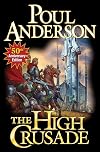
This novel takes a common sci-fi premise – an alien race’s first contact with Earth – and adds an unusual twist: what if this contact took place in the year 1345? In the small English village of Ansby, Sir Roger de Tourneville and his vassals are about to join King Edward III on crusade when a giant alien ship suddenly lands among them. Despite being terrified at the appearance of what they believe to be demons, Sir Roger and his men fight the aliens and manage to gain control of the show more ship. Then, due to one alien’s cunning, the spaceship returns to its home planet – with Sir Roger and his Englishmen aboard!
This was my first experience with Poul Anderson, but it certainly won’t be my last! The description of this book just tickled me; how could I resist a book about aliens who land on Earth during the Middle Ages? I was expecting it to read almost like a parody and be extremely funny, but this novel actually has a lot of depth to it. I was surprised by how much I ended up caring for the characters, like Sir Roger, his chronicler Brother Parvus, and his wife Lady Catherine. I also think the book is well plotted, and the ending was a surprise in a very good way! I really, really enjoyed this book and will definitely be seeking out Anderson’s other work. show less
This was my first experience with Poul Anderson, but it certainly won’t be my last! The description of this book just tickled me; how could I resist a book about aliens who land on Earth during the Middle Ages? I was expecting it to read almost like a parody and be extremely funny, but this novel actually has a lot of depth to it. I was surprised by how much I ended up caring for the characters, like Sir Roger, his chronicler Brother Parvus, and his wife Lady Catherine. I also think the book is well plotted, and the ending was a surprise in a very good way! I really, really enjoyed this book and will definitely be seeking out Anderson’s other work. show less

Another disappointment ... hack work that starts out as something with real promise and then plods into a variant of Heinlein's Rocket Ship Galileo only more puerile if that were possible. It was apparently knocked out in 1961 though this edition has a 1981 copyright attached.
There are two distinct halves that makes it look like a mash-up between two novellas - one with considerable potential and the second not worth reading and which we can summarise as standard rocket to Mars adventure and show more a Cold War battle with evil post-apocalyptic Soviet-like rivals. Yawn!
This is a shame because the initial core idea is interesting and the writing is often evocative of landscape and character. Anderson postulates that the genetic damage to humanity of a nuclear war is far greater to all earthly life than had been envisaged. Mutation becomes normal.
There was a point when I thought I would not be able to put the book down as this idea is developed not only as a story of post-apocalyptic survival but of how a remaining system of governance (a benign military temporary dictatorship) might deal with the problem both practically and ethically.
There appears at one point to be an opportunity for a 'Herrenvolk' to emerge. This is enables a brief and even courageous moral discussion of this option which would still have been touchy only fifteen years after the defeat of the national socialist regime. It is rejected as impractical and wrong.
This could have led to a precursor of Marvel's X-Men series which first appeared in 1963 or, much later, of Darwin's Radio (1999) and Darwin's Children (2002) by Greg Bear but Anderson bottles it. He abandons development for some quick thrills.
The mutant young people might find themselves briefly in a version of the Xavier Institute but their transition is to a simplistic story about building a new world for mutated humanity on Mars. It is crass and poorly thought out. Credible (for 1961) hard genetic science collapses into the incredible.
This is a shame. I can only recommend that you read up to the decision to go to Mars about half way through the book and then just stop unless you like wasting your life as I do on 'completism'. You may get something out of the first half that you will definitely lose in the second.
For Poul Anderson completists this story might have the virtue of being another working out of his frequent obsession with the best forms of governance for human conquest of space. There is a rather touching and well written postscript that 'justifies' his preferred progressive strategy.
His view of earth-based humanity is nevertheless depressingly negative with the attitudes that led to apocalypse leading to the same type of conflict post-apocalypse. One suspects a negative view of the human ability not to resort to violence is in-built somewhere in the American psyche.
The irony of it is that this pessimism is matched to another American trait - a complete inability not to see any other system of human thought as something that can be compromised with to common ends. The 'Siberians' are regarded as simply wrong and so free to be killed.
The 'optimism' in the postscript is essentially based on humanity ceasing to be human as we understand it and to have 'mutated' into something 'better', adapted to new weird environments much as we were supposed to have been mutated from apes. show less
There are two distinct halves that makes it look like a mash-up between two novellas - one with considerable potential and the second not worth reading and which we can summarise as standard rocket to Mars adventure and show more a Cold War battle with evil post-apocalyptic Soviet-like rivals. Yawn!
This is a shame because the initial core idea is interesting and the writing is often evocative of landscape and character. Anderson postulates that the genetic damage to humanity of a nuclear war is far greater to all earthly life than had been envisaged. Mutation becomes normal.
There was a point when I thought I would not be able to put the book down as this idea is developed not only as a story of post-apocalyptic survival but of how a remaining system of governance (a benign military temporary dictatorship) might deal with the problem both practically and ethically.
There appears at one point to be an opportunity for a 'Herrenvolk' to emerge. This is enables a brief and even courageous moral discussion of this option which would still have been touchy only fifteen years after the defeat of the national socialist regime. It is rejected as impractical and wrong.
This could have led to a precursor of Marvel's X-Men series which first appeared in 1963 or, much later, of Darwin's Radio (1999) and Darwin's Children (2002) by Greg Bear but Anderson bottles it. He abandons development for some quick thrills.
The mutant young people might find themselves briefly in a version of the Xavier Institute but their transition is to a simplistic story about building a new world for mutated humanity on Mars. It is crass and poorly thought out. Credible (for 1961) hard genetic science collapses into the incredible.
This is a shame. I can only recommend that you read up to the decision to go to Mars about half way through the book and then just stop unless you like wasting your life as I do on 'completism'. You may get something out of the first half that you will definitely lose in the second.
For Poul Anderson completists this story might have the virtue of being another working out of his frequent obsession with the best forms of governance for human conquest of space. There is a rather touching and well written postscript that 'justifies' his preferred progressive strategy.
His view of earth-based humanity is nevertheless depressingly negative with the attitudes that led to apocalypse leading to the same type of conflict post-apocalypse. One suspects a negative view of the human ability not to resort to violence is in-built somewhere in the American psyche.
The irony of it is that this pessimism is matched to another American trait - a complete inability not to see any other system of human thought as something that can be compromised with to common ends. The 'Siberians' are regarded as simply wrong and so free to be killed.
The 'optimism' in the postscript is essentially based on humanity ceasing to be human as we understand it and to have 'mutated' into something 'better', adapted to new weird environments much as we were supposed to have been mutated from apes. show less
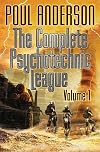
The 'Psychotechnic League' sequence is didactic science fiction that is very much of its time (1950s). It has not lasted well and is, frankly, rather boring and simplistic, a reflection of a relatively young man's naive political and adventuresome fantasies.
It seems that Anderson's attempt to create an entire future history based on a rather creepy idea of Nietzschean supermen operating somewhat Schmittian techniques of manipulation and subversion under the banner of the United Nations show more collapsed later under his own disillusionment with the UN.
He stopped writing these stories in 1968, not uncoincidentally with the era of the Vietnam War which he supported. The United Nations, once the vehicle for the unification of humanity (in his view) in its expansion to the stars, now looked flaccid and weak.
The conspiracy of ruthless liberal elites which Anderson wanted was not on the cards in the 1960s although some would argue that it has very much returned with a vengeance in the decades since then and is now playing its last card with weapons supply to Kiev.
This volume only collects the first four stories, not chronologically in terms of writing but in terms of telling the tale of the psychotechnic universe. In this order, the book only gets up to the point where Earth has to crush an alternative world view that emerges on Venus.
The one point when I thought I might go on to read the rest of the series came with Anderson's evocative and 'realistic' (we now know Venus is uninhabitable for humans) evocation of a sturdy collectivist regime and ideology and its logic in relation to its planet.
Unfortunately even this last story (which originally appeared in Astounding in 1954) collapses half way through into another dull one man and his girl fighting for the future in a tiresome battle and a last minute rescue - things have not moved on very far from Flash Gordon.
I shall not be bothering with the rest of the sequence not because Anderson cannot write well when an idea is up to scratch but because the good writing is placed at the service of such political hogwash and conventional story telling that life is too short to hope he does better later.
Perhaps the most interesting aspect of the case is ideological. Anderson was on the right and backed the Vietnam War. Here we have the ruthless elite mind-set of the sort of men who could undertake saturation bombing to save villagers by destroying the village.
From that perspective, though actually very bad literature, the stories capture something of the psychopathy of American liberalism at its most expansive. Anderson's vision is supra-national and universal but entirely along expected American ideological lines.
At one point, he seems to predict the rise of national populism as (in his view) an evil based on the central evil of the book - nationalism and war derived from human contestation rather than unification under a manipulative guardian class capable of ruthless action to define the future.
Well, one man's evil is another man's good. I found, reading these tales, a welling up of awareness of what I would think of as evil emerging in the attempt to fight what was merely bad. The future, it would seem, is to be built primarily on lies and murder.
The future, of course, is to be a future of liberal democratic values and 'freedom'. The few can be sacrificed for the sake of the many, expressed most brutally in 'The Big Rain' (the story based on Venus) where our hero knowingly sacrifices his comrades in the greater cause.
This ideology of sacrifice for values is clearly, in later stories, to be spread throughout the solar system and galaxy. Personally, I find it as thoroughly obnoxious as I do its current day iteration which is sacrificing millions of Ukrainians on the altar of liberal expansion.
Yet it is good to see books like this still available. The mentality of Bomber Harris and Curtis LeMay, of Robert McNamara in his Vietnam days, of a self-referential intellectual-professional guardian elite who will die to the last worker for an idea, has to be understood in order for it to be defeated.
I think I would have been quite happy to have seen the villains, unpleasant though they are, wipe the floor with the Psychotechnic League by the time I had finished all four stories, not because they were right but because the League is so very very wrong. show less
It seems that Anderson's attempt to create an entire future history based on a rather creepy idea of Nietzschean supermen operating somewhat Schmittian techniques of manipulation and subversion under the banner of the United Nations show more collapsed later under his own disillusionment with the UN.
He stopped writing these stories in 1968, not uncoincidentally with the era of the Vietnam War which he supported. The United Nations, once the vehicle for the unification of humanity (in his view) in its expansion to the stars, now looked flaccid and weak.
The conspiracy of ruthless liberal elites which Anderson wanted was not on the cards in the 1960s although some would argue that it has very much returned with a vengeance in the decades since then and is now playing its last card with weapons supply to Kiev.
This volume only collects the first four stories, not chronologically in terms of writing but in terms of telling the tale of the psychotechnic universe. In this order, the book only gets up to the point where Earth has to crush an alternative world view that emerges on Venus.
The one point when I thought I might go on to read the rest of the series came with Anderson's evocative and 'realistic' (we now know Venus is uninhabitable for humans) evocation of a sturdy collectivist regime and ideology and its logic in relation to its planet.
Unfortunately even this last story (which originally appeared in Astounding in 1954) collapses half way through into another dull one man and his girl fighting for the future in a tiresome battle and a last minute rescue - things have not moved on very far from Flash Gordon.
I shall not be bothering with the rest of the sequence not because Anderson cannot write well when an idea is up to scratch but because the good writing is placed at the service of such political hogwash and conventional story telling that life is too short to hope he does better later.
Perhaps the most interesting aspect of the case is ideological. Anderson was on the right and backed the Vietnam War. Here we have the ruthless elite mind-set of the sort of men who could undertake saturation bombing to save villagers by destroying the village.
From that perspective, though actually very bad literature, the stories capture something of the psychopathy of American liberalism at its most expansive. Anderson's vision is supra-national and universal but entirely along expected American ideological lines.
At one point, he seems to predict the rise of national populism as (in his view) an evil based on the central evil of the book - nationalism and war derived from human contestation rather than unification under a manipulative guardian class capable of ruthless action to define the future.
Well, one man's evil is another man's good. I found, reading these tales, a welling up of awareness of what I would think of as evil emerging in the attempt to fight what was merely bad. The future, it would seem, is to be built primarily on lies and murder.
The future, of course, is to be a future of liberal democratic values and 'freedom'. The few can be sacrificed for the sake of the many, expressed most brutally in 'The Big Rain' (the story based on Venus) where our hero knowingly sacrifices his comrades in the greater cause.
This ideology of sacrifice for values is clearly, in later stories, to be spread throughout the solar system and galaxy. Personally, I find it as thoroughly obnoxious as I do its current day iteration which is sacrificing millions of Ukrainians on the altar of liberal expansion.
Yet it is good to see books like this still available. The mentality of Bomber Harris and Curtis LeMay, of Robert McNamara in his Vietnam days, of a self-referential intellectual-professional guardian elite who will die to the last worker for an idea, has to be understood in order for it to be defeated.
I think I would have been quite happy to have seen the villains, unpleasant though they are, wipe the floor with the Psychotechnic League by the time I had finished all four stories, not because they were right but because the League is so very very wrong. show less

The Terran Empire is "old and fat," and in terminal decline. Nonetheless, despite its many problems, its fall would be worse - heralding a dark age, the "long night." One of the few who would attempt the Sisyphean task of forestalling the Empire's demise is Dominic Flandry - Ensign Flandry serves as a sort of prequel, establishing some of the foundational events and relationships which would forge him into the "Agent of Terra" in future novels.
Without betraying too much of the plot, the bulk show more of the story takes place on a planet on the border between the Terran Empire and the Merseians, a peer-power which is in something of a cold war with Terra. The planet is divided between two sentient species - the land-dwelling-sea-sailing Tigeries, a cat-people which are supported by the Terrans, and Seatrolls, and aquatic species supported by the Merseians. The two Iron-age species are at intermittent war over coastal resources, and are used as proxies as the two space-faring empires vie for control of the planet without resorting to open warfare.
While the story is principally one of adventure, what I appreciate about Anderson is that he does not shy away, or hand-wave the human cost . . . or should I say sentient cost? When powers play the Great Game, people get hurt, and those who get hurt the most are the pawns, the proxies who fight it out while the Great Powers largely avoid bloodshed of their own. By not ignoring this aspect, the actions in the story have serious stakes and consequences, which are not always acknowledged in Adventure Science-Fiction. The way Anderson delves into the cultures of the various species blends a mix of humanity and otherness, giving them depth and a sympathetic perspective - the Merseians even have a few viewpoint chapters which help flesh out their attitudes and reveal how they approach situations in a different manner from that of humanity.
There's a review on this page which states "Space opera that's showing its age." - and I could not feel more differently. Given the attitudes and actions we see on the world stage today, in some ways it feels more relevant than ever. show less
Without betraying too much of the plot, the bulk show more of the story takes place on a planet on the border between the Terran Empire and the Merseians, a peer-power which is in something of a cold war with Terra. The planet is divided between two sentient species - the land-dwelling-sea-sailing Tigeries, a cat-people which are supported by the Terrans, and Seatrolls, and aquatic species supported by the Merseians. The two Iron-age species are at intermittent war over coastal resources, and are used as proxies as the two space-faring empires vie for control of the planet without resorting to open warfare.
While the story is principally one of adventure, what I appreciate about Anderson is that he does not shy away, or hand-wave the human cost . . . or should I say sentient cost? When powers play the Great Game, people get hurt, and those who get hurt the most are the pawns, the proxies who fight it out while the Great Powers largely avoid bloodshed of their own. By not ignoring this aspect, the actions in the story have serious stakes and consequences, which are not always acknowledged in Adventure Science-Fiction. The way Anderson delves into the cultures of the various species blends a mix of humanity and otherness, giving them depth and a sympathetic perspective - the Merseians even have a few viewpoint chapters which help flesh out their attitudes and reveal how they approach situations in a different manner from that of humanity.
There's a review on this page which states "Space opera that's showing its age." - and I could not feel more differently. Given the attitudes and actions we see on the world stage today, in some ways it feels more relevant than ever. show less
Lists
Winter Books (1)
SF Masterworks (1)
Nebula Award (1)
Awards


You May Also Like


Associated Authors
Statistics
- Works
- 693
- Also by
- 441
- Members
- 53,538
- Popularity
- #282
- Rating
- 3.5
- Reviews
- 796
- ISBNs
- 1,302
- Languages
- 20
- Favorited
- 75


