
Gerry Davis (1930–1991)
Author of Doctor Who and the Cybermen
Works by Gerry Davis
Doctor Who: The Scripts, Tom Baker 1974/5 (2001) — Author "Revenge of the Cybermen" — 64 copies, 1 review
Associated Works
Doctor Who: Cybermen (1988) — "Introduction: How the Cybermen Were Created" and "Genesis of the Cybermen" — 87 copies
The DWB Interview File: The Best of the First 100 Issues No.1 (1993) — "Return of the Cybermen" — 20 copies
Doctor Who: The Monsters Collection: Five Complete Classic Novelisations — Contributor — 1 copy
Tagged
Common Knowledge
- Birthdate
- 1930-02-23
- Date of death
- 1991-08-31
- Gender
- male
- Nationality
- UK
- Birthplace
- London, England, UK
- Place of death
- Venice, California, USA
- Associated Place (for map)
- UK
Members
Reviews

Gerry Davis’s Doctor Who and the Tenth Planet adapts Kit Pedler’s serial featuring the first appearance of the Cybermen and the First Doctor’s regeneration. The story begins with the Doctor, Ben, and Polly arriving at an Antarctic radar base on Earth in the year 2000 (the original episode took place in December 1986, but the novel takes place in 2000 [pg. 20]). There, they find that the base is experiencing difficulty reaching a rocket in orbit due to a power drain. As the drain show more continues, a new planet appears in the sky: Mondas. The planet is the twin to Earth, previously pushed out of its orbit and only now passing into proximity. Mondas has used up its energy and begins to drain the Earth while its inhabitants, the Cybermen, seize control of the Antarctic base. They were once creatures of flesh-and-blood, but they exchanged their organic parts for metal and plastic, losing their capability for emotion. The Doctor, weakening and appearing to age, must help Ben, Polly, and the base staff to out-think the Cybermen and save the Earth.
Like all the Target novelizations, Davis takes advantage of the novel format to add detail not possible in the original televised serial. For example, he mentions color, which would not have been apparent to viewers as the original episode was in black-and-white. He successfully captures the body-horror element of the Mondasian Cybermen, building on their inhuman elements while using the the book format to make them more violent than television guidelines would have allowed in 1966. Most significantly, Davis alters the Doctor’s regeneration. In the episode as televised, the Doctor enters the TARDIS before Ben and Polly, only just having the energy to let them in before he collapses to the floor where he regenerates in front of them. Davis writes the Doctor entering first, but Ben and Polly can open the TARDIS on their own and find the Doctor resting on a couch, already transformed. Despite those changes, the novel will delight fans and offers one of the most complete versions of the story since some of the original film remains lost. show less
Like all the Target novelizations, Davis takes advantage of the novel format to add detail not possible in the original televised serial. For example, he mentions color, which would not have been apparent to viewers as the original episode was in black-and-white. He successfully captures the body-horror element of the Mondasian Cybermen, building on their inhuman elements while using the the book format to make them more violent than television guidelines would have allowed in 1966. Most significantly, Davis alters the Doctor’s regeneration. In the episode as televised, the Doctor enters the TARDIS before Ben and Polly, only just having the energy to let them in before he collapses to the floor where he regenerates in front of them. Davis writes the Doctor entering first, but Ben and Polly can open the TARDIS on their own and find the Doctor resting on a couch, already transformed. Despite those changes, the novel will delight fans and offers one of the most complete versions of the story since some of the original film remains lost. show less

When I first read this in the early '80s, I was a cynical undergrad with a taste for the absurd; "Mutant 59" struck me then as over-the-top and darkly funny. Nearly forty years later, I'm a bit more weathered and the world a more pandemic-scarred place. This book is still overwrought in places, leaning into territory often associated with Terry Gilliam films and morbid laughs are unavoidable where I think pathos was the aim, but this reading was more a grim experience than my first. The show more cautionary core of the story, though, is stronger now than in 1971, since lab researchers are actively trying to generate plastic-reducing bacteria and plastics are even more integral globally.
The pacing, characters, and slice-of-life vignettes all clearly demonstrate Pedler & Davis' experiences creating and writing for TV, particularly "Doctor Who" and "Doomwatch" (this book is an expansion of the first episode of the latter); the problem here is that this reads way too much like a TV story treatment than a true novel: it's difficult to develop a sense of Reader Comfort along the way. The minor plot with the jewel heist, for instance, is truly unnecessary and pedestrian. Also, the book is indeed dated, with the casual smoking, gender stereotypes, cheap gay jokes, and "Mad Men" corporate meetings, but the thick, cliched _arch-Britishness_ of it all is so.....well, it's exactly what Douglas Adams lampooned with the Vogons and Arthur Dent.
All this being said, this short, dark, fascinating, and weirdly funny novel would (in the right hands) make a brilliantly entertaining movie. As it stands, it's still a decent summer read, especially if you like "Quatermass and the Pit" or mucking about in a Tardis. show less
The pacing, characters, and slice-of-life vignettes all clearly demonstrate Pedler & Davis' experiences creating and writing for TV, particularly "Doctor Who" and "Doomwatch" (this book is an expansion of the first episode of the latter); the problem here is that this reads way too much like a TV story treatment than a true novel: it's difficult to develop a sense of Reader Comfort along the way. The minor plot with the jewel heist, for instance, is truly unnecessary and pedestrian. Also, the book is indeed dated, with the casual smoking, gender stereotypes, cheap gay jokes, and "Mad Men" corporate meetings, but the thick, cliched _arch-Britishness_ of it all is so.....well, it's exactly what Douglas Adams lampooned with the Vogons and Arthur Dent.
All this being said, this short, dark, fascinating, and weirdly funny novel would (in the right hands) make a brilliantly entertaining movie. As it stands, it's still a decent summer read, especially if you like "Quatermass and the Pit" or mucking about in a Tardis. show less
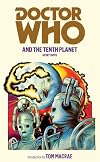
The welcome reappearance of the chilling Mondasian Cybermen in last weekend's Doctor Who episode led me to reread this novelisation of their first appearance in William Hartnell's final story in October 1966. It's a good novelisation, though not one of the best; ironically, Gerry Davis, who co-wrote the screenplay, here downplays the Cybermen's distinctive features in favour of the flatter-voiced and more typically robotic style that would have been more familiar to readers and viewers from show more the recent TV story Revenge of the Cybermen, which was on TV in 1975, the year before this book was first published. The same events happen in the same order for the most part, though the Doctor's growing weakness leading up to his regeneration at the end of the story is given a bit more emphasis. Now all we need is for the lost final episode of the story to turn up so we can see the whole thing (though I thought its animation on the DVD was well handled). show less

This was the first novelisation to feature the first Doctor after Target brought back the books in the 1970s. Doctor Who books are a different thing now; while each of the first three novels essentially stood on its own, now it's a range. These things are being pumped out (approximately) every other month in early 1976, and soon it will be one every month. Now there's a sense of completism to it all, I think. We had the first first Doctor story (sort of anyway), so the gap that needs to be show more plugged is we don't have the last first Doctor story. How do we get from William Hartnell to Tom Baker? This is a necessary part of that chain. (Though the first second Doctor story wouldn't come along for more than fifteen years!)
To me, the book was qualitatively different from the previous three I've read so far. When it came to The Daleks (1964), The Zarbi (1965), The Crusaders (1966), it seemed to me they'd all been designed to work as a book first and foremost. Especially The Daleks and The Crusaders, you could pick them up and know nothing of the television program and be satisfied, I think; The Zarbi not as much, but as I discussed, Bill Strutton is definitely trying to operate in the same space as The Daleks.
But for the first time, The Tenth Planet is clearly not a novel but a novelisation. It is designed to plug a gap in your viewing of the television programme. That is to say, I don't think there's really that much going on here. We get the scripts on the page, but no sense of character, no sense of atmosphere. The Doctor and his companions almost feel lost in this, observers to the arrival of Mondas at Earth. I know there are constraints here from the story as produced, but it feels like the Doctor is barely even in this book.
This is a doubly momentous event in Doctor Who history—the first Cyberman story, the first (what would eventually be called) regeneration story—but nothing about it as rendered by Gerry Davis feels momentous. Basically a bunch of people hang about in a space center talking about stuff. I could see how this material would come to life on screen with some good acting and direction (it has been a long time since I watched The Tenth Planet, so I don't really remember if it gets that or not), but it never comes alive on the page. I found this a plod in a way that was not true of the three previous books.
It has its fun bits like any novelisation. The afterword points out a nice emphasis on the Doctor's hands that foreshadow what will happen to him. We get a different potted history of the Cybermen than has become accepted (they originated on Telos and moved to Mondas here, which to be honest makes a kind of nonsensical story even less plausible). The date of the story is moved from 1986 to 2000, and the origin of Ben and Polly is moved from 1966 to about 1974. In modern novelisations, I feel like an author's added details are often about smoothing out consistency issues; I kind of like that Gerry Davis just went around causing more problems! show less
To me, the book was qualitatively different from the previous three I've read so far. When it came to The Daleks (1964), The Zarbi (1965), The Crusaders (1966), it seemed to me they'd all been designed to work as a book first and foremost. Especially The Daleks and The Crusaders, you could pick them up and know nothing of the television program and be satisfied, I think; The Zarbi not as much, but as I discussed, Bill Strutton is definitely trying to operate in the same space as The Daleks.
But for the first time, The Tenth Planet is clearly not a novel but a novelisation. It is designed to plug a gap in your viewing of the television programme. That is to say, I don't think there's really that much going on here. We get the scripts on the page, but no sense of character, no sense of atmosphere. The Doctor and his companions almost feel lost in this, observers to the arrival of Mondas at Earth. I know there are constraints here from the story as produced, but it feels like the Doctor is barely even in this book.
This is a doubly momentous event in Doctor Who history—the first Cyberman story, the first (what would eventually be called) regeneration story—but nothing about it as rendered by Gerry Davis feels momentous. Basically a bunch of people hang about in a space center talking about stuff. I could see how this material would come to life on screen with some good acting and direction (it has been a long time since I watched The Tenth Planet, so I don't really remember if it gets that or not), but it never comes alive on the page. I found this a plod in a way that was not true of the three previous books.
It has its fun bits like any novelisation. The afterword points out a nice emphasis on the Doctor's hands that foreshadow what will happen to him. We get a different potted history of the Cybermen than has become accepted (they originated on Telos and moved to Mondas here, which to be honest makes a kind of nonsensical story even less plausible). The date of the story is moved from 1986 to 2000, and the origin of Ben and Polly is moved from 1966 to about 1974. In modern novelisations, I feel like an author's added details are often about smoothing out consistency issues; I kind of like that Gerry Davis just went around causing more problems! show less
Lists
You May Also Like


Associated Authors
Statistics
- Works
- 28
- Also by
- 6
- Members
- 2,256
- Popularity
- #11,366
- Rating
- 3.2
- Reviews
- 34
- ISBNs
- 70
- Languages
- 4