
J. P. Trent
Author of Here There Be Dragons
About the Author
Disambiguation Notice:
J.P. Trent is an alias used by John Peel (1) when writing in the historical novels genre.
Image credit: via Goodreads
Works by J. P. Trent
Ready for Blastoff (Jack Anderson Presents... the Young Astronauts No. 2) (1990) — Ghostwriter — 31 copies
Where in the U.S.A. Is Carmen Sandiego? Part II (You Are the Dectective Series) (1994) 13 copies, 1 review
Technical File: Star Trek Devices 2 copies
SPOCK (STAR TREK) 1 copy
Doctor Who — An Adventure in Space & Time: The Romans (1981) — Artwork and Writer "Character Profiles" — 1 copy
River of death (Doctor Who) 1 copy
Freedom's Fire 1 copy
Associated Works
In●Vision: Genesis of the Daleks (1988) — Co-Contributor "The Dalek Project" and Interviewer "Tel Tale" — 2 copies
Doctor Who — An Adventure in Space & Time: An Unearthly Child (1980) — Writer "Story Review, Exiles in Space" — 1 copy
Doctor Who — An Adventure in Space & Time: The Crusade (1981) — Artwork and Writer "Character Profiles" — 1 copy
Doctor Who — An Adventure in Space & Time: The Time Warrior (1987) — Contributor "Story Review" — 1 copy
Doctor Who — An Adventure in Space & Time: The Sensorites (1981) — Artwork and Writer "Story Review: '...Playing This Game of Nerves'" and "The Sensorites" — 1 copy
Doctor Who — An Adventure in Space & Time: The Space Museum (1981) — Co-Writer "Character Profiles" — 1 copy
Doctor Who — An Adventure in Space & Time: The Tribe of Gum (1980) — Writer "Story Review, 'The Dawn of Time'" — 1 copy
Doctor Who — An Adventure in Space & Time: Planet of the Giants (1981) — Writer "Character Proflies" — 1 copy
Doctor Who — An Adventure in Space & Time: Season 1 Special Release (1981) — Writer "Double Vision: A Personal Overview" — 1 copy
Doctor Who — An Adventure in Space & Time: The Reign of Terror (1981) — Writer "Death, Always Death" — 1 copy
Doctor Who — An Adventure in Space & Time: The Aztecs (1980) — Writer "Story Review: 'How Shall a Man Know His Gods'" and "Tlotoxl" — 1 copy
Doctor Who — An Adventure in Space & Time: The Keys of Marinus (1980) — Writer "Story Review: The Conscience Machine" — 1 copy
Doctor Who — An Adventure in Space & Time: Marco Polo (1980) — Writer "Story Review: 'All Things Are Possible'" and "Tegana: Character Profile" — 1 copy
Doctor Who — An Adventure in Space & Time: The Daleks (1980) — Writer "Story Review: 'What Must They be Like?'" — 1 copy
Doctor Who — An Adventure in Space & Time: Beyond the Sun (1980) — Writer "Story Review: Fight for Survival" — 1 copy
Doctor Who — An Adventure in Space & Time: The Dalek Invasion of Earth (1981) — Writer "Character Profiles" — 1 copy
Tagged
Common Knowledge
Members
Discussions
YA Fantasy - 3 teens from different worlds discover magic in Name that Book (October 2020)
Reviews
http://nwhyte.livejournal.com/1506859.html
Susan's departure from the Tardis at the end of The Dalek Invasion of Earth was the first departure of a comopanion, and in some ways the least satisfactorily resolved of all; what sort of life does she face, presumably one of the Doctor's own race, but living with humans for the rest of her life? (When she pops up again in The Five Doctors we are told nothing of what she has been up to in the meantime.) The 1994 radio play Whatever Happened to Susan show more Foreman? had her wandering back to the twentieth century and becoming European Commissioner for Education, but it is not a serious attempt to contribute to canon. Big Finish tried a bit harder with Marc Platt's An Earthly Child at the end of last year, which brought Paul McGann's Eighth Doctor back to Earth decades after Susan's departure, and guest-starred McGann's son Jake playing Susan's son Alex, but I wasn't completely convinced.
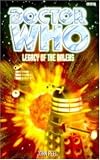
By contrast, I loved John Peel's Legacy of the Daleks. Peel is a bit of a guilty pleasure for me - I rate his novelisations of the black and white era Dalek stories very highly, and appreciate his attempts to wrest continuity and character from material which is not always promising. Here, he has Susan trying to manage her relationship with the aging David, putting on make-up to appear nearer his age when they are together in public, in a post-Dalek England which has become a patchwork of feudal fiefdoms. Throw into the mix not only the visiting Eighth Doctor, but also the Delgado!Master attempting to Take Over The Universe by reviving the Daleks and stealing their tech, and the book ends up pushing many of my fanboy buttons, ending with hope for Susan and a prologue to one of my favourite TV stories. Best Eighth Doctor Adventure I've read for a while. show less
Susan's departure from the Tardis at the end of The Dalek Invasion of Earth was the first departure of a comopanion, and in some ways the least satisfactorily resolved of all; what sort of life does she face, presumably one of the Doctor's own race, but living with humans for the rest of her life? (When she pops up again in The Five Doctors we are told nothing of what she has been up to in the meantime.) The 1994 radio play Whatever Happened to Susan show more Foreman? had her wandering back to the twentieth century and becoming European Commissioner for Education, but it is not a serious attempt to contribute to canon. Big Finish tried a bit harder with Marc Platt's An Earthly Child at the end of last year, which brought Paul McGann's Eighth Doctor back to Earth decades after Susan's departure, and guest-starred McGann's son Jake playing Susan's son Alex, but I wasn't completely convinced.
By contrast, I loved John Peel's Legacy of the Daleks. Peel is a bit of a guilty pleasure for me - I rate his novelisations of the black and white era Dalek stories very highly, and appreciate his attempts to wrest continuity and character from material which is not always promising. Here, he has Susan trying to manage her relationship with the aging David, putting on make-up to appear nearer his age when they are together in public, in a post-Dalek England which has become a patchwork of feudal fiefdoms. Throw into the mix not only the visiting Eighth Doctor, but also the Delgado!Master attempting to Take Over The Universe by reviving the Daleks and stealing their tech, and the book ends up pushing many of my fanboy buttons, ending with hope for Susan and a prologue to one of my favourite TV stories. Best Eighth Doctor Adventure I've read for a while. show less
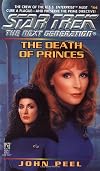
I love that the women are featured, and deservedly so. I love the intertwined themes, made clear at the end in case you were just reading for adventure. I like that the characters are themselves at their best, not just roles and def. not doing anything 'out of character.' (Data needs 12 hours for a task, and then gets no results. Barclay gets to be a brilliant engineer.)
This one would be really fun to discuss in a book club. Excellent examinations of the 'why' of the Prime Directive, and of show more the advantages of joining the Federation, and the possible disadvantages of joining certain other kinds of empires or leagues.
This is a hard spoiler: if you're thinking of reading this, do not click through until done. I'd particularly love to discussthe suicide of the prince J'Kara. Was it honorable, as Worf says, and will lead to a succession untainted by ruling family corruptions? Or was it selfish, as Troi says, did he do it because of 'guilt and shame' and he should have been brave enough to lead his people into their new future?
Was Maria Wallace possibly right?If the people against Chal weren't so awful, would it have been right to save his life? Or is it simply true that Chal's people just weren't ready to join the Federation? show less
This one would be really fun to discuss in a book club. Excellent examinations of the 'why' of the Prime Directive, and of show more the advantages of joining the Federation, and the possible disadvantages of joining certain other kinds of empires or leagues.
This is a hard spoiler: if you're thinking of reading this, do not click through until done. I'd particularly love to discuss
Was Maria Wallace possibly right?
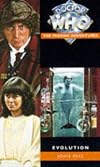
This story was weird and kind of creepy, but a quick read. Some real body horror with the notion of experimentation on humans, and a distressing storyline involving a girl named Lucy. The story is leavened a bit by introducing real-life historical figures Arthur Conan Doyle (teaming up with the Fourth Doctor to investigate the case and perhaps gaining some cheeky inspiration for The Hound of the Baskervilles) and Rudyard Kipling (as a teenager, hitting on at-least-a-decade-older Sarah show more Jane...talk about “never meet your heroes”, yikes). And Sarah Jane is rad, getting into the thick of the action and firing off quips as easily as the Doctor does.
As a follow-up to this book, I think I’ll re-read The Hound of the Baskervilles and pick up Kipling’s speculative fiction. show less
As a follow-up to this book, I think I’ll re-read The Hound of the Baskervilles and pick up Kipling’s speculative fiction. show less
http://nhw.livejournal.com/1027063.html
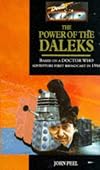
John Peel continues his run of excellent Who books with this, the. first story of Patrick Troughton's incarnation of Doctor Who. It is a favourite of mine anyway - I cannot understand why fannish opinion generally prefers the later Evil of the Daleks - but Peel, equipped with David Whitaker's original scripts (retrieved, apparently, from his ex-wife's attic) and benefiting from some editorial decision to give him 250 rather than 125 pages to tell the show more story, has done an excellent job.
On reflection, it's also because this is a relatively unusual Dalek story, presenting them not as a rival galactic empire to us humans but as in some way a dark reflection of our own desires about ourselves. The only other televised story that comes close to doing that is Robert Shearman's Ninth Doctor story.
Anyway, Peel turns a good TV story (as far as we can judge, since it is one of the lost ones) into a good novel. show less
John Peel continues his run of excellent Who books with this, the. first story of Patrick Troughton's incarnation of Doctor Who. It is a favourite of mine anyway - I cannot understand why fannish opinion generally prefers the later Evil of the Daleks - but Peel, equipped with David Whitaker's original scripts (retrieved, apparently, from his ex-wife's attic) and benefiting from some editorial decision to give him 250 rather than 125 pages to tell the show more story, has done an excellent job.
On reflection, it's also because this is a relatively unusual Dalek story, presenting them not as a rival galactic empire to us humans but as in some way a dark reflection of our own desires about ourselves. The only other televised story that comes close to doing that is Robert Shearman's Ninth Doctor story.
Anyway, Peel turns a good TV story (as far as we can judge, since it is one of the lost ones) into a good novel. show less
Lists
Awards


You May Also Like


Associated Authors
Statistics
- Works
- 201
- Also by
- 24
- Members
- 7,175
- Popularity
- #3,418
- Rating
- 3.5
- Reviews
- 78
- ISBNs
- 265
- Languages
- 3