
Chris Wooding
Author of Retribution Falls
About the Author
Image credit: Chris Wooding
Series
Works by Chris Wooding
A Maldição De Alaizabel Cray 2 copies
Viharni tat 1 copy
Broken Sky The Citadel 1 copy
Broken Sky Communion 1 copy
Broken Sky the twilight sky 1 copy
Associated Works
The Restless Dead: Ten Original Stories of the Supernatural (2009) — Contributor — 213 copies, 13 reviews
Tagged
Common Knowledge
- Birthdate
- 1977-02-28
- Gender
- male
- Education
- University of Sheffield (BA|English Literature)
- Occupations
- author
- Nationality
- UK
- Birthplace
- Leicester, Leicestershire, England, UK
- Places of residence
- London, England, UK
- Map Location
- England, UK
Members
Discussions
Found: YA book with Jack the Ripper-like killer with carriage in Name that Book (December 2025)
Found: YA Fantasy About (Pre?)Teens in Alternate Dimension in Name that Book (December 2024)
Found: Help with a fantasy book title! in Name that Book (March 2023)
Reviews
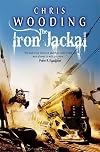
One can’t help but delight in the antics of Captain Frey of the airship The Kitty Jay. A swashbuckling rapscallion, he has an ego unsurpassed by his wit or his morals. Lately, however, he has found that his normally self-centered ethics are undergoing an uncomfortable transformation as he discovers he cares about his crew of misfits. The crew’s been together on The Kitty for awhile now, and they are finally feeling flush with success after their most recent exploits (The Black Lung show more Captain). The crew includes Crake, the “highly educated and eloquent” daemonist and his metal golem, Bess; Pinn, more muscle than brain, but determined to be an inventor; Harkins, a stellar flier with a severe anxiety disorder; Silo, a former slave with a mysterious past; Malvery, a doctor with a drinking problem; Jez, “who was half-daemon, and who was dead by most people’s standards”; and Slag, the irascible cat.
“Crake was less than impressed. He’d been expecting someone fiercely intense, a wild-eyed savage of some kind. Instead he’d found a giant bearded raisin.“
Characterization is exceptional, though undoubtedly many readers will recognize crew members as character archetypes from other sources. I couldn’t help but imagine Frey as Captain Jack Sparrow in Pirates of the Caribbean as I read, but many reviewers cite Captain Mal Reynolds in Firefly as well. It’s a compliment to Wooding, really, that he can weave a such glorious tale of adventure that it calls to mind other stories and characters we love. While the narrative largely follows Frey, it also spends time with each member of the crew. As they each undergo their own personal crisis, there’s opportunity for emotional development outside of Frey’s more egotistical perspective. Wooding nicely captures the feel of a band of misfits choosing to trust each other even as they make contingency plans:""Crake thought [Pinn] an odious, immoral dimwit with the intelligence of a cough drop, but he was crew, so that was that."
One of the challenges with characterization is how to have them handle conflict without endangering sympathy for the character. Wooding gauges the line nicely, creating Frey as a Jack Sparrow-like weasel whose morals usually come through in the end. When his crew questions him about the latest heist, Frey finds himself flailing as he tries to justify the plan:
“‘Aren’t we the bad guys?’ Pinn asked suddenly.
They all stared at him. He shrugged. ‘Well, I mean, we’re robbing them, right?’
‘We’re never the bad guys!’ said Frey, horrified at the suggestion. He was surprised the moral objection had come from Pinn rather than Crake. Pinn didn’t have any morals, so he probably just wanted the attention.
[…]
‘Plus,’ he raised a finger, ‘those on that train are gonna be armed guards. They’re paid to get shot. If people like us didn’t try to rob trains, they’d be out of a job.’
‘We’re providing employment opportunities now?’ Crake asked, deadpan.
‘Exactly!’ said Frey. ‘Greasing the wheels of foreign capital, and that.’
‘Cap’n,’ said Crake. ‘I do believe you know as much about economics as Pinn does about hygiene.’
Malvery mopped his pate, which had reddened and begun to peel. ‘Look, as long as we stop short of killing women and children, and we ain’t shooting adorable little puppy dogs in the face, I’m in.’”
Plotting is fun, with a typical heist scenario leading to one complication after another. Much like a movie, Iron Jackal opens with a shootout and foot chase, Frey outdoing his normal cowardly efforts as he chases Ashua, a former street urchin with valuable intel. Once Ashua is on board, the heist proceeds, only to lead to unfortunate consequences, unsurprisingly caused by Frey. The crew rallies round him even as each faces doubts and set off after the MacGuffin. But what an entertaining journey along the way! A variety of setting and political situations keeps the action from feeling repetitive. The end engagement is a unexpected, complex situation that points to the direction for the next book –but is not a cliff-hanger for this one.
Tone and voice are wonderfully balanced, able to maintain a degree of suspense and uncertainty while cracking jokes along the way. Witty dialogue is tempered by emotional turmoil, which places it a step or two above many action-focused stories. Frey and Ashua have a Beatrice and Benedick repartee (Much Ado About Nothing), while Crake frequently makes word jokes that only Ashua (and hopefully, the reader) understands:
“‘Why do I need a dictionary?’ Frey complained.
‘No reason,’ said Ashua. ‘Now let’s get down there and mortify some guards.’
Frey was caught in one of those moments when he didn’t know what somebody meant and couldn’t decide whether to pretend he did or not.
Pinn groaned, as if explaining things to Frey was extraordinarily tiresome. ‘Mordant means dead, don’t it? So mortify means kill, obviously. They even sound the same. Right?’ He looked at Ashua, who nodded encouragingly.
‘Oh,’ said Frey. “Oh! Let’s mortify some guards. I’m with you now. Didn’t hear you right the first time, that’s all.’
Crake and Ashua exchanged a glance, though it was hard to tell its meaning behind their goggles. Malvery tutted to himself. Frey had the distinct impression that a joke was being had at his expense, but couldn’t for the life of him figure out what it was.’”
Extremely readable, it’s one of those books that swaggers into your afternoon, says, “don’t mind if I do,” kicking off boots and placing feet on coffee table. For the right mood, priceless. show less
“Crake was less than impressed. He’d been expecting someone fiercely intense, a wild-eyed savage of some kind. Instead he’d found a giant bearded raisin.“
Characterization is exceptional, though undoubtedly many readers will recognize crew members as character archetypes from other sources. I couldn’t help but imagine Frey as Captain Jack Sparrow in Pirates of the Caribbean as I read, but many reviewers cite Captain Mal Reynolds in Firefly as well. It’s a compliment to Wooding, really, that he can weave a such glorious tale of adventure that it calls to mind other stories and characters we love. While the narrative largely follows Frey, it also spends time with each member of the crew. As they each undergo their own personal crisis, there’s opportunity for emotional development outside of Frey’s more egotistical perspective. Wooding nicely captures the feel of a band of misfits choosing to trust each other even as they make contingency plans:""Crake thought [Pinn] an odious, immoral dimwit with the intelligence of a cough drop, but he was crew, so that was that."
One of the challenges with characterization is how to have them handle conflict without endangering sympathy for the character. Wooding gauges the line nicely, creating Frey as a Jack Sparrow-like weasel whose morals usually come through in the end. When his crew questions him about the latest heist, Frey finds himself flailing as he tries to justify the plan:
“‘Aren’t we the bad guys?’ Pinn asked suddenly.
They all stared at him. He shrugged. ‘Well, I mean, we’re robbing them, right?’
‘We’re never the bad guys!’ said Frey, horrified at the suggestion. He was surprised the moral objection had come from Pinn rather than Crake. Pinn didn’t have any morals, so he probably just wanted the attention.
[…]
‘Plus,’ he raised a finger, ‘those on that train are gonna be armed guards. They’re paid to get shot. If people like us didn’t try to rob trains, they’d be out of a job.’
‘We’re providing employment opportunities now?’ Crake asked, deadpan.
‘Exactly!’ said Frey. ‘Greasing the wheels of foreign capital, and that.’
‘Cap’n,’ said Crake. ‘I do believe you know as much about economics as Pinn does about hygiene.’
Malvery mopped his pate, which had reddened and begun to peel. ‘Look, as long as we stop short of killing women and children, and we ain’t shooting adorable little puppy dogs in the face, I’m in.’”
Plotting is fun, with a typical heist scenario leading to one complication after another. Much like a movie, Iron Jackal opens with a shootout and foot chase, Frey outdoing his normal cowardly efforts as he chases Ashua, a former street urchin with valuable intel. Once Ashua is on board, the heist proceeds, only to lead to unfortunate consequences, unsurprisingly caused by Frey. The crew rallies round him even as each faces doubts and set off after the MacGuffin. But what an entertaining journey along the way! A variety of setting and political situations keeps the action from feeling repetitive. The end engagement is a unexpected, complex situation that points to the direction for the next book –but is not a cliff-hanger for this one.
Tone and voice are wonderfully balanced, able to maintain a degree of suspense and uncertainty while cracking jokes along the way. Witty dialogue is tempered by emotional turmoil, which places it a step or two above many action-focused stories. Frey and Ashua have a Beatrice and Benedick repartee (Much Ado About Nothing), while Crake frequently makes word jokes that only Ashua (and hopefully, the reader) understands:
“‘Why do I need a dictionary?’ Frey complained.
‘No reason,’ said Ashua. ‘Now let’s get down there and mortify some guards.’
Frey was caught in one of those moments when he didn’t know what somebody meant and couldn’t decide whether to pretend he did or not.
Pinn groaned, as if explaining things to Frey was extraordinarily tiresome. ‘Mordant means dead, don’t it? So mortify means kill, obviously. They even sound the same. Right?’ He looked at Ashua, who nodded encouragingly.
‘Oh,’ said Frey. “Oh! Let’s mortify some guards. I’m with you now. Didn’t hear you right the first time, that’s all.’
Crake and Ashua exchanged a glance, though it was hard to tell its meaning behind their goggles. Malvery tutted to himself. Frey had the distinct impression that a joke was being had at his expense, but couldn’t for the life of him figure out what it was.’”
Extremely readable, it’s one of those books that swaggers into your afternoon, says, “don’t mind if I do,” kicking off boots and placing feet on coffee table. For the right mood, priceless. show less
Review courtesy of Dark Faerie Tales
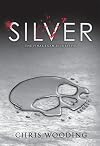
Quick & Dirty: Silver is hands-down one of the best science-fiction horror stories I’ve read in a long time. Wooding is an evil genius at combining heart-pounding action with creepy imagery to make this apocalyptic story one I won’t soon forget.
Opening Sentence: Darkness. Crushing pressure on his neck. The sour tang of another boy’s sweat. The rough fabric of a blazer rasping against his face.
The Review:
Fair or not, a book’s synopsis always creates show more an expectation and I admit I’ve 1-clicked many a story solely on an appealing blurb. It’s always a gamble, especially with new-to-me authors, and ends more often than not with my Kindle getting the stink eye for a story that doesn’t deliver what the synopsis promised.
Then there are stories like Silver, where the synopsis doesn’t do justice to the phenomenal writing and intensely creepy story hidden between the covers.
Located in the remote English countryside, Mortingham Boarding Academy stands more like a prison than a place of learning. Bordered by tall walls and sealed off from the outside world by a closely monitored gate, no one enters or leaves its sprawling grounds without permission. There’s little to distract its students, which range in age from the very young to eighteen, and severe punishments for those who dare deviate from their tightly controlled routines.
So it’s a pretty big deal for the students remaining on campus when silver beetles the size of mice show up right before the weekend. But this excitement turns to fear when the strange bugs suddenly attack two students. Within hours, the two students have become violently ill and covered with a quickly spreading rash of silver tendrils. It doesn’t take long for the infected to mutate into creatures seemingly more machine than animal, overpowering and attacking the remaining teachers and students who were unfortunate enough to remain on campus over the weekend.
Trapped on the isolated campus with no hope of escape, Adam, Caitlyn, Erika, Mark and Paul are among the small number of survivors who make it to the relative safety of the Science Building. Fighting for their lives with only each other to rely on, the five students discover the horrifying truth behind the infection and know the sane, ordered world they grew up in is gone forever. While some are better prepared for the new chaotic nightmare the world has become, all will have to adapt if they want to survive.
Every good horror writer needs to be able to tap into a reader’s darkest fear. Well let me give Mr. Wooding a slow clap because Silver. Freaked. Me. Out. My rational mind wants to say that nothing in this story could ever happen in real life. But the imaginative part of my mind that wakes me up at 2 because I heard a noise under my bed? Not so much.
Thanks to Wooding’s descriptive writing style, I didn’t just read the book. I smelled the smoke drifting across Mortingham Boarding Academy’s campus. My heart pounded along with Paul’s when he ran across campus. I felt the overwhelming anger at those responsible for the infection. In fact, there wasn’t a chapter where my body didn’t feel like I’d just run a marathon from all the adrenaline pumping being thrown around.
Then there’s Adam, Paul, Mark, Caitlyn and Erika. What Wooding did with five characters is what a lot of writers can’t even do with one: create a vibrant and individual voice that makes a connection with the reader. No person is all good or all bad, so how am I supposed to relate to a character written that way? It’s clear that Adam’s personality was a result of growing up in a very different background than the others. I understood Paul’s need to lash out even if it was a jerk move. And who hasn’t experienced some level of jealous like Caitlyn?
The best part of this book, though, is the slow piecing discovery of what exactly the infection is. Chapter by chapter, Wooding reveals information about the way in which the infection mutated the creatures until I had so many theories going through my mind that I was going crazy. I honestly never would’ve guessed the truth and I’ve kept my review purposefully vague because I don’t want to ruin the mystery for anyone else.
There isn’t much I didn’t enjoy about Silver and fans of Stephen King and Michael Crichton will love it as much as I do. It’s the perfect example of why I wanted to review books – to find great new authors and genres I might not otherwise read.
Notable Scene:
His blood slowed to a crawl. For the first time, he got a really good look at the creature he’d seen from his window.
In shape, it resembled a border collie, one of the sheep-herding dogs that farmers used for their flocks in the pastures up the valley. But Paul had never seen a border collie that big, and never one so horrifyingly strange. Most of its body was covered in a silver mesh, hundreds of wiry tendrils that spread unevenly across its skin like some alien form of circuitry. Its hind legs had cables instead of tendons. In some places, there were irregular plates of silvery metal that seemed fused into the flesh beneath.
And yet there was muscle and bone there, too, patches where the silver mesh hadn’t spread, where scrappy tufts of black and white fur were still visible.
Paul might have thought this was some kind of robot, impossible though that was. But now that he really saw it, he knew it wasn’t. This was both flesh and metal, animal and machine.
FTC Advisory: Scholastic Press provided me with a copy of Silver. No goody bags, sponsorships, “material connections,” or bribes were exchanged for my review. show less
Quick & Dirty: Silver is hands-down one of the best science-fiction horror stories I’ve read in a long time. Wooding is an evil genius at combining heart-pounding action with creepy imagery to make this apocalyptic story one I won’t soon forget.
Opening Sentence: Darkness. Crushing pressure on his neck. The sour tang of another boy’s sweat. The rough fabric of a blazer rasping against his face.
The Review:
Fair or not, a book’s synopsis always creates show more an expectation and I admit I’ve 1-clicked many a story solely on an appealing blurb. It’s always a gamble, especially with new-to-me authors, and ends more often than not with my Kindle getting the stink eye for a story that doesn’t deliver what the synopsis promised.
Then there are stories like Silver, where the synopsis doesn’t do justice to the phenomenal writing and intensely creepy story hidden between the covers.
Located in the remote English countryside, Mortingham Boarding Academy stands more like a prison than a place of learning. Bordered by tall walls and sealed off from the outside world by a closely monitored gate, no one enters or leaves its sprawling grounds without permission. There’s little to distract its students, which range in age from the very young to eighteen, and severe punishments for those who dare deviate from their tightly controlled routines.
So it’s a pretty big deal for the students remaining on campus when silver beetles the size of mice show up right before the weekend. But this excitement turns to fear when the strange bugs suddenly attack two students. Within hours, the two students have become violently ill and covered with a quickly spreading rash of silver tendrils. It doesn’t take long for the infected to mutate into creatures seemingly more machine than animal, overpowering and attacking the remaining teachers and students who were unfortunate enough to remain on campus over the weekend.
Trapped on the isolated campus with no hope of escape, Adam, Caitlyn, Erika, Mark and Paul are among the small number of survivors who make it to the relative safety of the Science Building. Fighting for their lives with only each other to rely on, the five students discover the horrifying truth behind the infection and know the sane, ordered world they grew up in is gone forever. While some are better prepared for the new chaotic nightmare the world has become, all will have to adapt if they want to survive.
Every good horror writer needs to be able to tap into a reader’s darkest fear. Well let me give Mr. Wooding a slow clap because Silver. Freaked. Me. Out. My rational mind wants to say that nothing in this story could ever happen in real life. But the imaginative part of my mind that wakes me up at 2 because I heard a noise under my bed? Not so much.
Thanks to Wooding’s descriptive writing style, I didn’t just read the book. I smelled the smoke drifting across Mortingham Boarding Academy’s campus. My heart pounded along with Paul’s when he ran across campus. I felt the overwhelming anger at those responsible for the infection. In fact, there wasn’t a chapter where my body didn’t feel like I’d just run a marathon from all the adrenaline pumping being thrown around.
Then there’s Adam, Paul, Mark, Caitlyn and Erika. What Wooding did with five characters is what a lot of writers can’t even do with one: create a vibrant and individual voice that makes a connection with the reader. No person is all good or all bad, so how am I supposed to relate to a character written that way? It’s clear that Adam’s personality was a result of growing up in a very different background than the others. I understood Paul’s need to lash out even if it was a jerk move. And who hasn’t experienced some level of jealous like Caitlyn?
The best part of this book, though, is the slow piecing discovery of what exactly the infection is. Chapter by chapter, Wooding reveals information about the way in which the infection mutated the creatures until I had so many theories going through my mind that I was going crazy. I honestly never would’ve guessed the truth and I’ve kept my review purposefully vague because I don’t want to ruin the mystery for anyone else.
There isn’t much I didn’t enjoy about Silver and fans of Stephen King and Michael Crichton will love it as much as I do. It’s the perfect example of why I wanted to review books – to find great new authors and genres I might not otherwise read.
Notable Scene:
His blood slowed to a crawl. For the first time, he got a really good look at the creature he’d seen from his window.
In shape, it resembled a border collie, one of the sheep-herding dogs that farmers used for their flocks in the pastures up the valley. But Paul had never seen a border collie that big, and never one so horrifyingly strange. Most of its body was covered in a silver mesh, hundreds of wiry tendrils that spread unevenly across its skin like some alien form of circuitry. Its hind legs had cables instead of tendons. In some places, there were irregular plates of silvery metal that seemed fused into the flesh beneath.
And yet there was muscle and bone there, too, patches where the silver mesh hadn’t spread, where scrappy tufts of black and white fur were still visible.
Paul might have thought this was some kind of robot, impossible though that was. But now that he really saw it, he knew it wasn’t. This was both flesh and metal, animal and machine.
FTC Advisory: Scholastic Press provided me with a copy of Silver. No goody bags, sponsorships, “material connections,” or bribes were exchanged for my review. show less
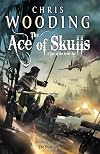
A marvellously satisfying conclusion to the series, wherein all of the big world elements the author had put into play previously in the series come crashing together for an epic finale. Everyone gets satisfying final developments to their arcs - and this being this ragtag crew we're talking about, they vary from the slightly silly to the utterly unorthodox - and somehow, despite all the reasons why it shouldn't be the case, things roughly work out. It's so satisfying it manages to balance show more out my ongoing uncertainty about the resolution of a certain supporting character - that being Trinica Dracken giving up everything she has forged for herself to hop on the back of Frey's motorcycle and ride off happily into the sunset. It's given just enough suggestion that she's holding back something for her that I'm willing to go with it, but I do wish the author had made Frey meet her halfway. show less
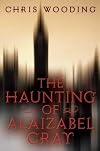
I was browsing the YA section of my local library and I stumbled across this book. Or maybe I should say that it called out to me. The blurry cathedral on the cover just promised to be dark and mysterious. I'm a sucker for dark, broody, creepy, gothic (etc) type stories, and this delivered just that.
I haven't read anything by Chris Wooding before, in fact, I'd never even heard of him until I picked up this book. As soon as I'm done writing this review, I'm going to be adding his other books show more to my TBR. I only hope that they live up to the expectations I have from this book.
The story takes place in an alternate version of Victorian London, a bleak and foreboding place where night is treacherous and unpredictable, wych-kin roam and wreak havoc and serial killers pick their victims off with shocking ease.
We first meet Thaniel Fox, son of England's most reknown wych-hunter, on the hunt for a Cradle-Jack which has been plucking babies from their cribs for a tasty little midnight snack. Thaniel is independent, courageous, smart, resourceful and compassionate - all the things that an English gentleman should be. Add to that that he is simply bad-ass, and you have the making of one sexy hero. His fight with Curien Blake was... well, it was exciting to read. I'll just put it that way. There's just something about a man with a big knife that knows how to use it that gets my blood flowing. :)
Anyway, so we meet Thaniel, and soon meet with a mysterious girl that is in obvious need of help. He brings her back to the house that he shares with Cathaline Bennett, another wych-hunter and Thaniel's tutor, if you will. The three of them discover that there is an ancient wych possessing Alaizabel, and embark on a journey to find out why, and how to get the wych out of her. From there, everything starts to go downhill, and the shocks just keep coming.
I loved all of the characters in the story. They all felt real, and acted according to how real people would act. The romance bits between Thaniel and Alaizabel were a little rushed, but I can overlook that when I consider that he saved her and therefore felt responsible for her, and she was saved and was grateful. Both of those things can easily run a bit deeper, especially among teens who have both been alone for a large amount of their lives. To suddenly meet someone that plays such a role in your life, I would imagine that's a kind of big change.
I also really loved the London that Wooding created here, complete with it's own Jack the Ripper-esque killer, Stitch-face. It was dark and creepy and definitely not the place one would want to take a casual midnight stroll. I loved all of the little mini-stories that he incorporated into the bigger London-story. It gave me an idea not only of what the city as a whole was facing, but who the people facing it actually were, and what kind of people a city this dark and menacing breeds. It's unforgiving, and that's represented in the characters depicted. I thought that it was a nice touch to add those little personalizations, even if they were only a page or two long.
Wooding's imagination is awesome when it comes to the creatures that he brings to life here. I've read a goodish amount of horror in my life, but there were things in this book that gave me goosebumps, and that's not an exaggeration. The thing on the ceiling of Alaizabel's bedroom is seared into my memory as if I saw it myself, which is pretty commendable, as it was only very roughly described. I think that's a testament to a good author, to be able to subtly show us each what we fear without describing it into the light of perfect knowledge. Once we know what the heck we're dealing with, it's not nearly as scary as when we have no idea what's chasing us.
I also loved the blending of mechanical inventions and superstition here. Airships on one hand, and cultish Rites and ceremonies and charms on the other. Wooding perfectly brought these two very disparate things together in this book, and made it believable and plausible. I really loved it, and look forward to more from him. :) show less
I haven't read anything by Chris Wooding before, in fact, I'd never even heard of him until I picked up this book. As soon as I'm done writing this review, I'm going to be adding his other books show more to my TBR. I only hope that they live up to the expectations I have from this book.
The story takes place in an alternate version of Victorian London, a bleak and foreboding place where night is treacherous and unpredictable, wych-kin roam and wreak havoc and serial killers pick their victims off with shocking ease.
We first meet Thaniel Fox, son of England's most reknown wych-hunter, on the hunt for a Cradle-Jack which has been plucking babies from their cribs for a tasty little midnight snack. Thaniel is independent, courageous, smart, resourceful and compassionate - all the things that an English gentleman should be. Add to that that he is simply bad-ass, and you have the making of one sexy hero. His fight with Curien Blake was... well, it was exciting to read. I'll just put it that way. There's just something about a man with a big knife that knows how to use it that gets my blood flowing. :)
Anyway, so we meet Thaniel, and soon meet with a mysterious girl that is in obvious need of help. He brings her back to the house that he shares with Cathaline Bennett, another wych-hunter and Thaniel's tutor, if you will. The three of them discover that there is an ancient wych possessing Alaizabel, and embark on a journey to find out why, and how to get the wych out of her. From there, everything starts to go downhill, and the shocks just keep coming.
I loved all of the characters in the story. They all felt real, and acted according to how real people would act. The romance bits between Thaniel and Alaizabel were a little rushed, but I can overlook that when I consider that he saved her and therefore felt responsible for her, and she was saved and was grateful. Both of those things can easily run a bit deeper, especially among teens who have both been alone for a large amount of their lives. To suddenly meet someone that plays such a role in your life, I would imagine that's a kind of big change.
I also really loved the London that Wooding created here, complete with it's own Jack the Ripper-esque killer, Stitch-face. It was dark and creepy and definitely not the place one would want to take a casual midnight stroll. I loved all of the little mini-stories that he incorporated into the bigger London-story. It gave me an idea not only of what the city as a whole was facing, but who the people facing it actually were, and what kind of people a city this dark and menacing breeds. It's unforgiving, and that's represented in the characters depicted. I thought that it was a nice touch to add those little personalizations, even if they were only a page or two long.
Wooding's imagination is awesome when it comes to the creatures that he brings to life here. I've read a goodish amount of horror in my life, but there were things in this book that gave me goosebumps, and that's not an exaggeration. The thing on the ceiling of Alaizabel's bedroom is seared into my memory as if I saw it myself, which is pretty commendable, as it was only very roughly described. I think that's a testament to a good author, to be able to subtly show us each what we fear without describing it into the light of perfect knowledge. Once we know what the heck we're dealing with, it's not nearly as scary as when we have no idea what's chasing us.
I also loved the blending of mechanical inventions and superstition here. Airships on one hand, and cultish Rites and ceremonies and charms on the other. Wooding perfectly brought these two very disparate things together in this book, and made it believable and plausible. I really loved it, and look forward to more from him. :) show less
Lists
Awards


You May Also Like


Associated Authors
Statistics
- Works
- 46
- Also by
- 1
- Members
- 8,016
- Popularity
- #3,020
- Rating
- 3.9
- Reviews
- 292
- ISBNs
- 296
- Languages
- 13
- Favorited
- 21
