
Marcus Sedgwick (1968–2022)
Author of Midwinterblood
About the Author
Marcus Sedgwick was born in East Kent, England. He is primarily a young adult author. His books include She Is Not Invisible, White Crow, Revolver, and The Ghosts of Heaven. He won the 2014 Michael L. Printz Award for Midwinterblood. His first adult novel, A Love Like Blood, was published in 2014. show more (Bowker Author Biography) show less
Series
Works by Marcus Sedgwick
Silazak u mrak 1 copy
Associated Works
Doctor Who: 12 Doctors, 12 Stories (2014) — Contributor; Narrator, some editions — 331 copies, 9 reviews
The Restless Dead: Ten Original Stories of the Supernatural (2009) — Contributor — 214 copies, 13 reviews
The Great War: Stories Inspired by Items from the First World War (2015) — Contributor — 119 copies, 18 reviews
The Arthur Ransome Society : transcripts from the literary weekends (1993) — Contributor, some editions — 1 copy
Tagged
Common Knowledge
- Birthdate
- 1968-04-08
- Date of death
- 2022-11-15
- Gender
- male
- Occupations
- author
illustrator
musician
writer-in-residence - Organizations
- Arvon Foundation (tutor)
- Agent
- RCW
- Relationships
- Sedgwick, Julian (brother)
- Nationality
- UK
- Birthplace
- Kent, England, UK
- Places of residence
- France
Cambridgeshire, England, UK - Map Location
- England, UK
Members
Reviews
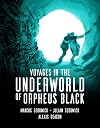
In VOYAGES IN THE UNDERWORLD OF ORPHEUS BLACK, a conscientious objector named Harry loses his brother, Ellis, during a bombing raid in London in December 1944. Despite being injured, Harry returns to the site where Ellis was apparently killed, determined to rescue Ellis — or at least retrieve his body. Along the way, Harry meets several helpers who guide and help him on his perilous quest.
This is a complex, layered book that will reward contemplation and re-reading. The main text — show more Harry's narrative — discusses Harry's immediate task (rescuing Ellis) and carries running references to Harry's longer-term task of writing a book, "Warriors of the Machine," which forms a critique of both the mechanization of World War Two and the industrial future of war. A secondary text — Orpheus's tale — comments on Harry and the other characters, playing with and re-examining the myth of Orpheus and Eurydice. These two texts entwine at times, although Harry does not understand why there are gaps in his consciousness or why his actions seem to be directed by an external agent.
The artistic project of this book could be easily missed by readers expecting a graphic novel. While the illustrations are integral to the telling of the story, representing Harry's sketches and plans for his book, they also form their own allegorical third text. The book is best enjoyed slowly, in sips rather than gulps, and teen readers may need someone to discuss its complexity with others.
VOYAGES IN THE UNDERWORLD OF ORPHEUS BLACK is a lush, powerful commentary that uses the example of World War Two to create a discussion about violence, mechanized warfare, and what humans owe to one another. Definitely worth your time and attention. show less
This is a complex, layered book that will reward contemplation and re-reading. The main text — show more Harry's narrative — discusses Harry's immediate task (rescuing Ellis) and carries running references to Harry's longer-term task of writing a book, "Warriors of the Machine," which forms a critique of both the mechanization of World War Two and the industrial future of war. A secondary text — Orpheus's tale — comments on Harry and the other characters, playing with and re-examining the myth of Orpheus and Eurydice. These two texts entwine at times, although Harry does not understand why there are gaps in his consciousness or why his actions seem to be directed by an external agent.
The artistic project of this book could be easily missed by readers expecting a graphic novel. While the illustrations are integral to the telling of the story, representing Harry's sketches and plans for his book, they also form their own allegorical third text. The book is best enjoyed slowly, in sips rather than gulps, and teen readers may need someone to discuss its complexity with others.
VOYAGES IN THE UNDERWORLD OF ORPHEUS BLACK is a lush, powerful commentary that uses the example of World War Two to create a discussion about violence, mechanized warfare, and what humans owe to one another. Definitely worth your time and attention. show less
 This review was written for LibraryThing Early Reviewers.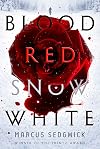
Marcus Sedgwick can draft one hell of a sentence. His gorgeous prose is the kind that makes you want to pause after each sentence just to savor his words, and this is something I do not normally find myself wanting to do. He can make even the most brutal of situations sound almost beautiful. Case in point, the first section of Blood Red Snow White is the story of the Russian Revolution told as a fairy tale – all the way up to the Peoples’ uprising and the imprisonment of Czar Nicholas show more and his family. His use of allegory lessens the impact of the brutal, cold-blooded shootings done on both sides while ensuring readers understand the two sides and the political machinations flowing around them.
After his fairy tale, Mr. Sedgwick gets to the heart of the story, following the young author Arthur Ransome as he tries to perform his job and eke out some semblance of happiness in the violent and chaotic world that is revolutionary Russia. His job as a member of the British press affords him unique access to the leaders of the Revolution and is how he meets his romantic interest. As a young writer, Ransome does not necessarily get to write from the heart for his job but rather report what he thinks his writers want to hear. Given this, it is easy to see how both sides end up thinking that he is on their side. Therein lies the crux of the conflict as he fights to prove himself a loyal British citizen without endangering his life or the life of his Russian girlfriend.
The truly fascinating part of all of this is that Arthur Ransome was a very real historical figure who did all of these things. There is an afterword in the novel that spells out how Mr. Sedgwick became interested in writing about him after learning that his file was recently declassified by the British. Upon learning this information, what once seemed like an entertaining and educational glimpse into the early spy games of what would eventually become the Cold War now seems like a fascinating story of a man who’s life was truly stranger than fiction.
This is the second novel of Mr. Sedgwick’s that I have read, and I remain thoroughly impressed by his writing style and skill. His stories are deceptively simple but underneath are a wealth of complex layers and relationships that brings heightened tension and greater depth to his story and his characters. The historical elements of Blood Red Snow White are chilling in their matter-of-factness while never losing some of that fairy tale whimsy established in the first section of the novel. Overall, it is a highly engaging, entertaining, and beautiful story of one man entangled in a web set in the midst of chaos and his efforts to free himself. show less
After his fairy tale, Mr. Sedgwick gets to the heart of the story, following the young author Arthur Ransome as he tries to perform his job and eke out some semblance of happiness in the violent and chaotic world that is revolutionary Russia. His job as a member of the British press affords him unique access to the leaders of the Revolution and is how he meets his romantic interest. As a young writer, Ransome does not necessarily get to write from the heart for his job but rather report what he thinks his writers want to hear. Given this, it is easy to see how both sides end up thinking that he is on their side. Therein lies the crux of the conflict as he fights to prove himself a loyal British citizen without endangering his life or the life of his Russian girlfriend.
The truly fascinating part of all of this is that Arthur Ransome was a very real historical figure who did all of these things. There is an afterword in the novel that spells out how Mr. Sedgwick became interested in writing about him after learning that his file was recently declassified by the British. Upon learning this information, what once seemed like an entertaining and educational glimpse into the early spy games of what would eventually become the Cold War now seems like a fascinating story of a man who’s life was truly stranger than fiction.
This is the second novel of Mr. Sedgwick’s that I have read, and I remain thoroughly impressed by his writing style and skill. His stories are deceptively simple but underneath are a wealth of complex layers and relationships that brings heightened tension and greater depth to his story and his characters. The historical elements of Blood Red Snow White are chilling in their matter-of-factness while never losing some of that fairy tale whimsy established in the first section of the novel. Overall, it is a highly engaging, entertaining, and beautiful story of one man entangled in a web set in the midst of chaos and his efforts to free himself. show less

I love a good mystery. Especially a beautifully-written, well-plotted mystery like SHE IS NOT INVISIBLE by Marcus Sedgwick. Told from the point of view of a visually impaired teen, this is the story of a missing father, a family in trouble, and a daughter who has to have faith that she can fix things.
Laureth Peak is the daughter of a famed, but struggling novelist. Her dad is known for flights of fancy, but this last trip has left her mother in a tizzy, and Laureth wondering if she knows as show more much about her dad as she thought she did. When, while helping her dad with his fan mail, she discovers a letter from an American who has recovered her father's notebook, Laureth knows something's wrong. For one thing, the notebook was found in New York. Which is not where her father is supposed to be. For another, her father hasn't been returning her phone calls, which is unlike him.
So she buys herself and her much younger brother airline tickets to the states and leaves while her mother is out of town visiting family. Soon she's in a brand new American city, with only her bizarre little brother as a guide, trying to find her father, clue by clue, all while trying not to let her under-age-ness -- or her inability to see -- get in her way.
This is a beautiful story of family, of friendship, of trust and adventure. I love the way Sedgwick showed the world through the eyes of a blind girl. The way it was easy to forget sometimes, that she was different. The way she both took care of her brother, and the way the little boy took care of her. Her bravery, her mistakes, and her story are brilliant. And I cannot fathom a world in which this book does not get an Edgar nod. Because around every corner, even when you think you've figured something out, Marcus Sedgwick takes you for a ride. show less
Laureth Peak is the daughter of a famed, but struggling novelist. Her dad is known for flights of fancy, but this last trip has left her mother in a tizzy, and Laureth wondering if she knows as show more much about her dad as she thought she did. When, while helping her dad with his fan mail, she discovers a letter from an American who has recovered her father's notebook, Laureth knows something's wrong. For one thing, the notebook was found in New York. Which is not where her father is supposed to be. For another, her father hasn't been returning her phone calls, which is unlike him.
So she buys herself and her much younger brother airline tickets to the states and leaves while her mother is out of town visiting family. Soon she's in a brand new American city, with only her bizarre little brother as a guide, trying to find her father, clue by clue, all while trying not to let her under-age-ness -- or her inability to see -- get in her way.
This is a beautiful story of family, of friendship, of trust and adventure. I love the way Sedgwick showed the world through the eyes of a blind girl. The way it was easy to forget sometimes, that she was different. The way she both took care of her brother, and the way the little boy took care of her. Her bravery, her mistakes, and her story are brilliant. And I cannot fathom a world in which this book does not get an Edgar nod. Because around every corner, even when you think you've figured something out, Marcus Sedgwick takes you for a ride. show less
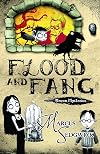
Flood and Fang was one of the first books on my kindle to-read list. In a nutshell, Raven (the castle’s resident raven) spots a number of potentially nasty things going on in Otherhand Castle, and tries to draw them to the attention of the weird and wonderful characters who inhabit it.
The ink-washed design of the cover is reflected in the illustrations and motifs by Pete Williamson that punctuate the text. It is visually appealing – a chapter book broken up into small chunks, encouraging show more readers to go on, as if the narrative wasn’t encouraging enough! I started reading the raven’s story and thought there was a lot of complicated information about the castle and its inhabitants. I wondered at the vocabulary in use (extensive) but realised the pace and the delivery would encourage readers to learn new words and not lose the story. I very soon lost my author-head, and continued in reader-mode, rollicking through a delightful story of gothic daftness, mystery and adventure. The little boxed paragraphs at the start of each chapter seemed to be a quirky extract from a history of the castle, but by halfway I’d realised these were useful clues for the reader, if not an integral part of the plot.
Sedgwick reminds me to use the sort of names that kids love. I wondered how many might look up Spatchcock to find out that it isn’t just a made-up funny word, but an old-fashioned way of cooking game birds – but then I looked it up myself and found it was also “to insert (a phrase, sentence, story, etc) esp. incongruously” both of which suit the owner of the name admirably! I love Valevine’s fear of the use of the Glottal Stop, which, being a mystery to the raven, becomes his catch-all phrase for anything scary!
It’s a story that would be suitable to read aloud to eight years and up, but would engage older children reading to themselves, and probably become one of those well-thumbed books, even on an eReader. In fact, I expect I’ll read it again, it’s such fun. This is the second Marcus Sedgwick book I’ve read, this time for a younger audience, and I loved it just as much. I’m now a confirmed fan. show less
The ink-washed design of the cover is reflected in the illustrations and motifs by Pete Williamson that punctuate the text. It is visually appealing – a chapter book broken up into small chunks, encouraging show more readers to go on, as if the narrative wasn’t encouraging enough! I started reading the raven’s story and thought there was a lot of complicated information about the castle and its inhabitants. I wondered at the vocabulary in use (extensive) but realised the pace and the delivery would encourage readers to learn new words and not lose the story. I very soon lost my author-head, and continued in reader-mode, rollicking through a delightful story of gothic daftness, mystery and adventure. The little boxed paragraphs at the start of each chapter seemed to be a quirky extract from a history of the castle, but by halfway I’d realised these were useful clues for the reader, if not an integral part of the plot.
Sedgwick reminds me to use the sort of names that kids love. I wondered how many might look up Spatchcock to find out that it isn’t just a made-up funny word, but an old-fashioned way of cooking game birds – but then I looked it up myself and found it was also “to insert (a phrase, sentence, story, etc) esp. incongruously” both of which suit the owner of the name admirably! I love Valevine’s fear of the use of the Glottal Stop, which, being a mystery to the raven, becomes his catch-all phrase for anything scary!
It’s a story that would be suitable to read aloud to eight years and up, but would engage older children reading to themselves, and probably become one of those well-thumbed books, even on an eReader. In fact, I expect I’ll read it again, it’s such fun. This is the second Marcus Sedgwick book I’ve read, this time for a younger audience, and I loved it just as much. I’m now a confirmed fan. show less
Lists
Awards


You May Also Like


Associated Authors
Statistics
- Works
- 58
- Also by
- 10
- Members
- 7,589
- Popularity
- #3,215
- Rating
- 4.1
- Reviews
- 371
- ISBNs
- 409
- Languages
- 18
- Favorited
- 12
