
Kate Thompson (1) (1956–)
Author of The New Policeman
For other authors named Kate Thompson, see the disambiguation page.
About the Author
Image credit: via Goodreads
Series
Works by Kate Thompson
Switchers Tape 1 copy
Associated Works
Tagged
Common Knowledge
- Legal name
- Thompson, Katherine Anna
- Birthdate
- 1956-11-10
- Gender
- female
- Occupations
- writer
- Relationships
- Thompson, E. P. (father)
Thompson, Dorothy (mother) - Nationality
- UK
- Birthplace
- Halifax, Yorkshire, England, UK
- Places of residence
- Halifax, Yorkshire, England, UK
Inagh, County Clare, Ireland - Associated Place (for map)
- UK
Members
Reviews

J.J. Liddy, a young musician and dancer living in the small Irish village of Kinvara, finds that time is becoming scarcer and scarcer in this immensely entertaining work of children's fantasy. When his mother, who is also a musician, asks for more time for her birthday, J.J. sets out to find it, discovering that quite a bit of his world's time has been slipping into the fairy realm of Tír na nÓg, doing damage to both places. As J.J. travels into Tír na nÓg in search of lost time, meeting show more many unforgettable characters along the way, the new policeman in Kinvara, Garda Larry O’Dwyer, also seeks after something, although he can't quite recall what it is...
As someone who loves both Irish mythology and Irish 'trad' (traditional folk music), I found Kate Thompson's The New Policeman absolutely marvelous, enjoying it from beginning to end. Journey stories of this sort, in which children encounter the figures of fairy and folklore, are well established in the world of Irish children's literature - Patricia Lynch's 1934 The Turf Cutter's Donkey and Pat O'Shea's 1985 The Hounds of the Morrigan are two notable examples - but Thompson manages to do something a little bit different with her tale, in which both human and fairy-folk are on the move. The incorporation of music - I counted at least twenty-three different named tunes and songs, while reading - was also lovely, and made me wish for an accompanying CD! Recommended to anyone who enjoys myth-tinged fantasy fiction, or who has a weakness for Irish music. show less
As someone who loves both Irish mythology and Irish 'trad' (traditional folk music), I found Kate Thompson's The New Policeman absolutely marvelous, enjoying it from beginning to end. Journey stories of this sort, in which children encounter the figures of fairy and folklore, are well established in the world of Irish children's literature - Patricia Lynch's 1934 The Turf Cutter's Donkey and Pat O'Shea's 1985 The Hounds of the Morrigan are two notable examples - but Thompson manages to do something a little bit different with her tale, in which both human and fairy-folk are on the move. The incorporation of music - I counted at least twenty-three different named tunes and songs, while reading - was also lovely, and made me wish for an accompanying CD! Recommended to anyone who enjoys myth-tinged fantasy fiction, or who has a weakness for Irish music. show less
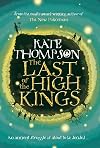
Last of the High Kings is sequel of sorts to Kate Thompson’s first novel, The New Policeman. While Kings does reintroduce us to the Liddy family, it can also be read as a stand-alone tale, and is a very quick read at that.
This is the tale of JJ Liddy and his family, and their beautiful home in Kinvara, Ireland. JJ is not the most reliable of men, perhaps because of a journey he made in his youth, to Tir na n’Og, the land of eternal youth. JJ returned from that land to become a musician, show more marry Aisling and build a life with their four children, Hazel, Jenny, Donal and Aidan. All of their children are special in their own way, but Jenny is particularly unique. She never wears shoes, often forgets to go to school, and spends much of time up on the mountainside, having conversations with a ghost and a goat, the latter of whom turns out to be a puca. Both the ghost and the puca have their own stories, which come together in the most surprising and frightening of ways, leaving not only the Liddy’s but the whole of humankind in danger. It is left up to Jenny to decide the fate of all involved, with the help of Aengus Og of the Tuatha De Danann, and to discover where her true destiny lies.
The best word I have seen describing Last of the High Kings, and I can’t remember where I saw it (!), is whimsical. This book is full of whimsy! And whimsy of the subtlest and gentlest kind. There’s that word gentle again, I seem to be either using it a lot recently, or reading a lot of gentle books… My point being, Last of the High Kings is a nice book, in the truest sense of the word. In all honesty, I thought this would be a silly, fun read, and don’t get me wrong, it was fun, but I was pleasantly surprised by the book’s intelligence, warmth and humour. I became very fond of the Liddy family, especially Jenny’s somewhat forgetful and wonderfully capricious father JJ, and her calm, gentle (there’s that word again), musically inclined brother, Donal.
I highly recommend this as a wonderful read for child and adult alike and particularly enjoyable for anyone with an interest in Irish history, folklore and faerie. show less
This is the tale of JJ Liddy and his family, and their beautiful home in Kinvara, Ireland. JJ is not the most reliable of men, perhaps because of a journey he made in his youth, to Tir na n’Og, the land of eternal youth. JJ returned from that land to become a musician, show more marry Aisling and build a life with their four children, Hazel, Jenny, Donal and Aidan. All of their children are special in their own way, but Jenny is particularly unique. She never wears shoes, often forgets to go to school, and spends much of time up on the mountainside, having conversations with a ghost and a goat, the latter of whom turns out to be a puca. Both the ghost and the puca have their own stories, which come together in the most surprising and frightening of ways, leaving not only the Liddy’s but the whole of humankind in danger. It is left up to Jenny to decide the fate of all involved, with the help of Aengus Og of the Tuatha De Danann, and to discover where her true destiny lies.
The best word I have seen describing Last of the High Kings, and I can’t remember where I saw it (!), is whimsical. This book is full of whimsy! And whimsy of the subtlest and gentlest kind. There’s that word gentle again, I seem to be either using it a lot recently, or reading a lot of gentle books… My point being, Last of the High Kings is a nice book, in the truest sense of the word. In all honesty, I thought this would be a silly, fun read, and don’t get me wrong, it was fun, but I was pleasantly surprised by the book’s intelligence, warmth and humour. I became very fond of the Liddy family, especially Jenny’s somewhat forgetful and wonderfully capricious father JJ, and her calm, gentle (there’s that word again), musically inclined brother, Donal.
I highly recommend this as a wonderful read for child and adult alike and particularly enjoyable for anyone with an interest in Irish history, folklore and faerie. show less
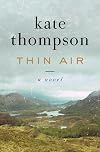
A wonder of a novel. 19 year-old Martine goes missing from her family home in western Ireland and the effect on her family is chronicled through the eyes of each member. Every character is fully drawn and unforgettable. The descriptions are never mawkish or sentimental but true and raw. And the sense of place is real. Truly a great novel
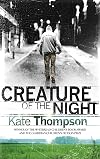
This wasn't what I expected - this story is much more complicated than the spooky-isolated-house-in-the-countryside story I thought it would be. Instead, it's the story of a kid with a messed up life, who is clinging to the mess for all he's worth. While he wavers between choosing the better life he's being offered or running away and stealing cars to crash, his little brother is up in the middle of the night having conversations with a creepy, secret visitor. It's a murder mystery and a show more family drama combined in a very strange way. show less
Lists
Awards


You May Also Like


Associated Authors
Statistics
- Works
- 24
- Also by
- 2
- Members
- 2,636
- Popularity
- #9,745
- Rating
- 3.7
- Reviews
- 87
- ISBNs
- 410
- Languages
- 12
- Favorited
- 2