
Frances Hardinge
Author of The Lie Tree
About the Author
Frances Hardinge was born in 1973 in the United Kingdom. Her first novel, Fly By Night, won the Bradford Boase Award in 2006. Her other books include Verdigris Deep / Well Witched, Twilight Robbery, and A Face Like Glass. Cuckoo Song won the Robert Holdstock Award for Best Novel at the British show more Fantasy Awards in 2015 and The Lie Tree won the 2015 Costa Book of the Year award. (Bowker Author Biography) show less
Series
Works by Frances Hardinge
Halfway House 3 copies
Traitors' Nest 3 copies
Dolor's Legs 2 copies
Associated Works
The Year's Best Fantasy & Horror 2007: 20th Annual Collection (2007) — Contributor — 222 copies, 3 reviews
The Best Science Fiction and Fantasy of the Year, Volume 1 (2007) — Contributor — 217 copies, 6 reviews
Mystery & Mayhem: Twelve Deliciously Intriguing Mysteries (2016) — Contributor — 68 copies, 2 reviews
Stories of Hope and Wonder: In Support of the UK's Healthcare Workers (2020) — Contributor — 11 copies, 1 review
Subterranean Magazine Winter 2014 — Contributor — 6 copies
Tagged
Common Knowledge
- Birthdate
- 1973-02-23
- Gender
- female
- Education
- Somerville College, Oxford
- Occupations
- author
- Nationality
- UK
- Birthplace
- Brighton, East Sussex, England, UK
- Places of residence
- Oxford, Oxfordshire, England, UK
- Associated Place (for map)
- England, UK
Members
Discussions
Found: I think it had Conspiracy in it's name in Name that Book (December 2022)
Children’s fantasy novel where the people have gems inlaid in their teeth and must smile in Name that Book (May 2020)
Reviews

I’d heard good things about Hardinge’s fiction for several years, but I’d never bothered checking them out because, well… fantasy… YA… Not my usual, or preferred, choice of reading. But The Lie Tree popped up for 99p on Kindle, and I thought it worth seeing what all the fuss was about.
And I’m glad I did.
Faith’s father, a reverend, is a celebrated palaeontologist in the 1860s, but he’s been accused of faking the fossils he’s discovered, so he and his family flee to the show more invented Channel Island of Vane to join a dig there. But all is not as it seems. The invitation was a ruse because the reverend is in possession of something that others want.
On the one hand, the title of the novel is a hint to the central element of its plot, which is not revealed until at least halfway in; on the other, it’s hard to describe the plot without spoilers. The spoiler-free version would go: Faith defends her father, uncovers a conspiracy against him, then tries to solve his murder and so learns his secret, the reason why he was invited to Vane, and uses it to take revenge on his killers.
However, a major part of the novel - although it doesn’t really kick in until around a third of the way in - is that Faith is clever, but because she is a girl it means nothing. She wants to be a scientist but her gender bars her from it. This is a novel about women as property, about chattel slavery of half of the human race, and about the means and methods open to women of the time to arrange a future for themselves and then safeguard it. Faith is a teen, and knows her much younger, and not very bright, brother, whom she loves nonetheless, is accounted more valuable than her. Even though she has the intelligence, the aptitude and the interest to follow in her father’s interests.
And it’s this element of the novel which lifts it above others of its ilk. Faith thought her father valued her because of her intelligence, but he was just using her - much as he used others to further his aims. Faith meets a woman - two, in fact, but one more so than that other- who have found a way to be intellectual without overturning Victorian society - I am for some reason reminded of JG Farrell’s The Siege of Krishnapur, an excellent novel - but it doesn’t end well. And now I’m reminded of Jeanette Ng’s Under the Pendulum Sun, which presents as a fantasy set in Victorian times but is actually a brilliant commentary on Victorian fiction by women, missionary colonialism and women’s rights.
The Lie Tree is really good, and I should definitely read more by Hardinge. show less
And I’m glad I did.
Faith’s father, a reverend, is a celebrated palaeontologist in the 1860s, but he’s been accused of faking the fossils he’s discovered, so he and his family flee to the show more invented Channel Island of Vane to join a dig there. But all is not as it seems. The invitation was a ruse because the reverend is in possession of something that others want.
On the one hand, the title of the novel is a hint to the central element of its plot, which is not revealed until at least halfway in; on the other, it’s hard to describe the plot without spoilers. The spoiler-free version would go: Faith defends her father, uncovers a conspiracy against him, then tries to solve his murder and so learns his secret, the reason why he was invited to Vane, and uses it to take revenge on his killers.
However, a major part of the novel - although it doesn’t really kick in until around a third of the way in - is that Faith is clever, but because she is a girl it means nothing. She wants to be a scientist but her gender bars her from it. This is a novel about women as property, about chattel slavery of half of the human race, and about the means and methods open to women of the time to arrange a future for themselves and then safeguard it. Faith is a teen, and knows her much younger, and not very bright, brother, whom she loves nonetheless, is accounted more valuable than her. Even though she has the intelligence, the aptitude and the interest to follow in her father’s interests.
And it’s this element of the novel which lifts it above others of its ilk. Faith thought her father valued her because of her intelligence, but he was just using her - much as he used others to further his aims. Faith meets a woman - two, in fact, but one more so than that other- who have found a way to be intellectual without overturning Victorian society - I am for some reason reminded of JG Farrell’s The Siege of Krishnapur, an excellent novel - but it doesn’t end well. And now I’m reminded of Jeanette Ng’s Under the Pendulum Sun, which presents as a fantasy set in Victorian times but is actually a brilliant commentary on Victorian fiction by women, missionary colonialism and women’s rights.
The Lie Tree is really good, and I should definitely read more by Hardinge. show less

Mosca Mye grows up far from anywhere with her father, a bookish but emotionally remote man. After his death it falls up to her aunt and uncle to look after her, but Mosca runs away one night and frees an incarcerated con man with a way with words on the way. Thrown together by circumstance, they decide to travel together, accompanied by Mosca's companion, the fierce goose Saracen. But as it usually goes in these kinds of stories, that's not at all how events unfold, and Mosca becomes a show more central figure in a story of mayhem and murder, intrigue and conflict.
Frances Hardinge's debut novel is wildly imaginative with surprisingly mature themes at its heart, if a little ambitious for the supposed target readership (age 9+). Frances Hardinge's love of words shines from the page, obvious in her fizzing prose and sparkling plot. Her characters are drawn with affection and she even makes the villains relatable. The wryly humorous narration masks a darker heart at the centre of the novel, one that is just as relevant today as it was more than ten years ago when this book was written. You could do a lot worse than giving this book to your child, which may just inspire a lifelong love of reading, and chances are you will enjoy it too. I certainly want to find out how Mosca's adventures with her goose continue, in the sequel Twilight Robbery. show less
Frances Hardinge's debut novel is wildly imaginative with surprisingly mature themes at its heart, if a little ambitious for the supposed target readership (age 9+). Frances Hardinge's love of words shines from the page, obvious in her fizzing prose and sparkling plot. Her characters are drawn with affection and she even makes the villains relatable. The wryly humorous narration masks a darker heart at the centre of the novel, one that is just as relevant today as it was more than ten years ago when this book was written. You could do a lot worse than giving this book to your child, which may just inspire a lifelong love of reading, and chances are you will enjoy it too. I certainly want to find out how Mosca's adventures with her goose continue, in the sequel Twilight Robbery. show less

The first Frances Hardinge book I read was Verdigris Deep and I'll never forget that sense of creepy-sliminess that the characters had to work their way through. Fly By Night didn't grab me the same way, but A Skinful of Shadows came back to the creepiness: the shadows are ghosts, the "skin" our heroine Makepeace who's inherited the ability to be possessed by them from a family that doesn't much care whether she wants to be or not.
Hardinge's prose remains not only transparently functional, show more but also beautiful and at times heartbreaking: early on I whimpered at the truth of "If someone throws aside their pride and begs with all their heart, and if they do so in vain, then they are never quite the same person afterwards."
But though Makepeace may change in some respects she doesn't change in others, and her perpetual compassion for the vulnerable (especially animals) combines with the strength of will she's forced to develop, to get her and her motley assortment of companions through the next several hundred pages surprisingly intact. show less
Hardinge's prose remains not only transparently functional, show more but also beautiful and at times heartbreaking: early on I whimpered at the truth of "If someone throws aside their pride and begs with all their heart, and if they do so in vain, then they are never quite the same person afterwards."
But though Makepeace may change in some respects she doesn't change in others, and her perpetual compassion for the vulnerable (especially animals) combines with the strength of will she's forced to develop, to get her and her motley assortment of companions through the next several hundred pages surprisingly intact. show less
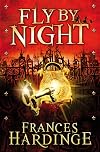
I was taken by this book, from the very first scene, in which our heroine is introduced as a small baby, tightly swaddled and hung from a hook in the study where her father is writing a great work of history. The setting is an ingenious fractured reflection of England in about 1700, with the memory of civil war and religious persecution still raw and troublesome; but the scenery is also strongly reminiscent of Pratchett's Ankh-Morpork, with lots of mud, shady inns, disreputable footpads, and show more scheming patricians and guildmasters. This book is not for the reluctant reader: it is for the reader who likes long words, even if they don't quite know what they mean. The vocabulary is riotously rich, the descriptions vivid and baroque, the plot entertainingly serpentine. MB 30-ix-2020 show less
Lists
StoryTel 2024 (1)
READ in 2024 (1)
Gaslamp Fantasy (1)
al.vick-series (1)
Teen Horror (1)
Wish List (1)
Best Young Adult (3)
Female Author (3)
Five star books (1)
Awards


You May Also Like


Associated Authors
Statistics
- Works
- 24
- Also by
- 12
- Members
- 8,480
- Popularity
- #2,839
- Rating
- 4.0
- Reviews
- 351
- ISBNs
- 278
- Languages
- 14
- Favorited
- 27