
Chris Riddell
Author of Beyond the Deepwoods
About the Author
Chris Riddell was born on April 13, 1962. He is a British illustrator and occasional writer of children's books and a political cartoonist for The Observer. He has won two Kate Greenaway Medals, the British librarians' annual award for the best-illustrated children's book, and two of his works were show more commended runners-up. Books that he wrote or illustrated have won three Nestlé Smarties Book Prizes and have been silver or bronze runners-up four times. He was shortlisted for the 2015 Kate Greenaway Medal for his title Goth Girl: And the Ghost of a Mouse. He was named the ninth Waterstones Children's Laureate in 2015. Riddell was presented with a Children¿s Laureate medal and a £15,000 (A$30,014) bursary cheque at a ceremony in London, where he announced plans to promote visual literacy during his two-year term. (Bowker Author Biography) show less
Series
Works by Chris Riddell
The Twig Trilogy: Includes Beyond the Deepwoods, Stormchaser & Midnight Over Sanctaphrax (2003) 57 copies
The Sleep of Reason 6 copies
Timorous Beasts 2 copies
The sleep of reason vol. II 2 copies
Hats of Norfolk 2 copies
Dear Dad, Dear Daughter 1 copy
Il mio piccolo libro delle grandi libertà: la Dichiarazione universale dei diritti umani spiegata attraverso i disegni (2018) 1 copy
Ottolina I Zuta Macka 1 copy
The Hats of Norfolk 1 copy
Witchworld 1 copy
Morning Drawings 1 copy
Associated Works
The Hitchhiker's Guide to the Galaxy (1979) — Illustrator, some editions — 43,767 copies, 798 reviews
Neverwhere: The Author's Preferred Text (1996) — Illustrator, some editions — 5,273 copies, 102 reviews
Art Matters: Because Your Imagination Can Change the World (2018) — Illustrator — 869 copies, 41 reviews
Neil Gaiman/Chris Riddell 3-Book Box Set: Coraline; The Graveyard Book; Fortunately, the Milk (2015) — Illustrator — 265 copies, 4 reviews
The Pied Piper of Hamelin: Russell Brand's Trickster Tales (2014) — Illustrator — 105 copies, 4 reviews
Many Different Kinds of Love: A Story of Life, Death and the NHS (2021) — Illustrator, some editions — 50 copies, 1 review
Flights of Fancy: Creative Inspiration from Ten Award-Winning Authors and Illustrators (2019) — Contributor — 35 copies, 10 reviews
Don't Panic, I'm Islamic: Words and Pictures on How to Stop Worrying and Learn to Love the Alien Next Door (2017) — Contributor — 18 copies
Illustration Magazine, Autumn 2004 Issue 1. A Beggarstaff's Coming To Town (2004) — Contributor — 2 copies
Tagged
Common Knowledge
- Canonical name
- Riddell, Chris
- Birthdate
- 1962-04-13
- Gender
- male
- Education
- Archbishop Tenison's Grammar School, Kennington
Brighton Polytechnic - Occupations
- illustrator
cartoonist - Awards and honors
- Children's Laureate (2015-2017)
Philippa Pearce memorial lecture (2017|The age of the beautiful book) - Relationships
- Briggs, Raymond (personal tutor|1981-1984)
Burroughes, Joanne (wife)
Riddell, Rick (brother) - Short biography
- Political/editorial cartoonist for "Independent," London, England.
- Nationality
- UK
- Birthplace
- Cape Town, South Africa
- Places of residence
- Cape Town, South Africa
Brighton, Sussex, England, UK - Associated Place (for map)
- UK
Members
Reviews

When the boy-emperor of Absurdia awakens to the sounds of sky fish nibbling on umbrella trees, he falls out of bed, and into the arms of his Wardrobe Monster. Unfortunately, although his woolly hat, crumply coat, and jingle-jangle socks are soon located, the emperor's snuggly scarf is nowhere to be found! So begins this delightfully bizarre adventure, in which the young emperor ranges over the aptly named land of Absurdia, questing after his scarf, and barely escaping from the clutches of a show more mother dragon. Exhausted after a busy day, the emperor goes to sleep, awakening... but that's another story!
A delightfully imaginative romp through a dreamlike landscape, The Emperor of Absurdia is the kind of surreal adventure that will appeal to young Seuss lovers. Chris Riddell - who contributed his fabulous illustrations to Paul Stewart's fantasy series, The Edge Chronicles - is at his creepy best here. Expressive, bizarre, and somehow just right, his artwork manages to be simultaneously endearing and disturbing. This is one picture-book that young fans of the bizarre - or of Riddell - will not want to miss! show less
A delightfully imaginative romp through a dreamlike landscape, The Emperor of Absurdia is the kind of surreal adventure that will appeal to young Seuss lovers. Chris Riddell - who contributed his fabulous illustrations to Paul Stewart's fantasy series, The Edge Chronicles - is at his creepy best here. Expressive, bizarre, and somehow just right, his artwork manages to be simultaneously endearing and disturbing. This is one picture-book that young fans of the bizarre - or of Riddell - will not want to miss! show less

Long review but worth it:
Top 5 favorite book series!
Growing up, I 'accidentally' got into this series because the bookstore was out of The Spiderwick Chronicles books, and it was a recent release and claimed to be just as promising.
It's rare to find other people who knew of these books and even rarer for those who had read them growing up- everyone was more laser-focused on the more popular Harry Potter titles and the like.
It never fails- every time I read one of these books, they cast a show more spell over me. It is way more challenging to put it down. It's easy to read and written just seriously enough that it radiates more intelligence and passion in a single chapter than most books would dream of having in a library.
Full of high fantasy logic & lifestyle, it will even have you reaching for a dictionary infrequently because it does have some vocabulary and diction that can expand your personal lexicon. The writing style is likeable and the plot/course of events always manages some kind of hook. The Edge Chronicles is its own thing, but if you want to compare and find some way to describe it to outside readers- it has heavy Alice in Wonderland vibes mixed with Lord of the Rings with maybe a distant flair of the Dark Crystal.
Perfect for any fantasy fan, but there is some graphic scenes in there containing creature violence and battle scenes that describe the wounds in detail. Younger audiences can enjoy this but probably best to be mature and not too squeamish (even then, these descriptions aren't so common and aren't insanely detailed in description but are definitely present). That said, this is further evidence that older adults can enjoy this book with little trouble. Don't be that person that shelters their kid from a fantastic series just because a little blood is present- that's stupid.
This is important to note about the series as a whole. I actually did not know this until recently- but the series has a chronological order and has 'trilogies' within the series regarding a certain character. Each saga focuses on a different character per inner trilogy, and documents that character's story/journey as a central focus. (Think of these as 'sub series', similar to how Terry Pratchett structured his novels )
THE QUINT SAGA
#4 The Curse of the Gloamglozer
#8 The Winter Knights
#5 Clash of the Sky Galleons
THE TWIG SAGA
#1 Beyond the Deepwoods
#2 Stormchaser
#3 Midnight over Sanctaphrax
THE ROOK SAGA
#5 The Last of the Sky Pirates
#6 Vox
#7 Freeglader
THE NATE SAGA
#10 The Immortals (2009)
(This series isn't of the main core books but is rather takes place after the events of the main series)
THE CADE SAGA
The Nameless One (2014)
Doombringer (2015)
The Descenders (2019)
However! Please don't let this seemingly cattywampus reading order throw you off. The publisher and author both agree and publically go on record to say that the order in which they were written and published works fine. Each book is stand-alone and does a superb job of keeping the reader up to speed, no matter where you start. Reading them in normal chronological order does just a good a job as any and in some cases, works the best.
Me? I started book #1 and chose to go in publisher chronological order- it's what works best for me. (That is- the Twig saga was my starting point, and then carried on chronologically 4, 5, 6, etc as expected traditionally)
The reason this series has this sort of structured order is because when The Twig saga was first written in the 90s, it was intended to be a single novel- but the author had so much fun writing it, that he just kept going with it.
The history of these books is pretty intriguing:
http://www.edgechronicles.co.uk/edge-chronicles-book-order/
This book series would be and could be used for an epic D&D campaign. In fact, I encourage it. I wish there was a published, canon version that could come packaged and ready to play. Packed to the gills with original high-fantasy creatures (a few examples: Rotsuckers, Banderbears, Venomous hover-worms, Prowlgrins, Caterbirds etc) and a diversity of races just as original (Slaughterers, Shrykes, Termagant Trogs, Hammerhead goblins etc.) it really stands out and is a cut above the rest with imagination. This is the only series you will find with these unique named creatures- no other series contains them. Each novel is satisfying and provides its own justice, cliffhangers, and rich development. Sometimes, you feel as though you are a historian of this fantasy rather than a casual reader. It's definitely a series that takes commitment if you want to see it entirely through- so it's great for people that want to pick a series and stick with it and have plenty of reading material. It's also excellent for people who maybe tired of the usual fantasy trope with dragons and wizards. It will impress with its character development and break from the more common fantastical creatures.
I started the series shortly after it was published, and I haven't finished the series yet (I'm on book #6) but I have enjoyed this amazing and memorable series over my 25+ years of growing with it. This is an underappreciated series as a whole, and it bothers me only slightly so many people sleep on this series.
Verdict: READ IT! show less
Top 5 favorite book series!
Growing up, I 'accidentally' got into this series because the bookstore was out of The Spiderwick Chronicles books, and it was a recent release and claimed to be just as promising.
It's rare to find other people who knew of these books and even rarer for those who had read them growing up- everyone was more laser-focused on the more popular Harry Potter titles and the like.
It never fails- every time I read one of these books, they cast a show more spell over me. It is way more challenging to put it down. It's easy to read and written just seriously enough that it radiates more intelligence and passion in a single chapter than most books would dream of having in a library.
Full of high fantasy logic & lifestyle, it will even have you reaching for a dictionary infrequently because it does have some vocabulary and diction that can expand your personal lexicon. The writing style is likeable and the plot/course of events always manages some kind of hook. The Edge Chronicles is its own thing, but if you want to compare and find some way to describe it to outside readers- it has heavy Alice in Wonderland vibes mixed with Lord of the Rings with maybe a distant flair of the Dark Crystal.
Perfect for any fantasy fan, but there is some graphic scenes in there containing creature violence and battle scenes that describe the wounds in detail. Younger audiences can enjoy this but probably best to be mature and not too squeamish (even then, these descriptions aren't so common and aren't insanely detailed in description but are definitely present). That said, this is further evidence that older adults can enjoy this book with little trouble. Don't be that person that shelters their kid from a fantastic series just because a little blood is present- that's stupid.
This is important to note about the series as a whole. I actually did not know this until recently- but the series has a chronological order and has 'trilogies' within the series regarding a certain character. Each saga focuses on a different character per inner trilogy, and documents that character's story/journey as a central focus. (Think of these as 'sub series', similar to how Terry Pratchett structured his novels )
THE QUINT SAGA
#4 The Curse of the Gloamglozer
#8 The Winter Knights
#5 Clash of the Sky Galleons
THE TWIG SAGA
#1 Beyond the Deepwoods
#2 Stormchaser
#3 Midnight over Sanctaphrax
THE ROOK SAGA
#5 The Last of the Sky Pirates
#6 Vox
#7 Freeglader
THE NATE SAGA
#10 The Immortals (2009)
(This series isn't of the main core books but is rather takes place after the events of the main series)
THE CADE SAGA
The Nameless One (2014)
Doombringer (2015)
The Descenders (2019)
However! Please don't let this seemingly cattywampus reading order throw you off. The publisher and author both agree and publically go on record to say that the order in which they were written and published works fine. Each book is stand-alone and does a superb job of keeping the reader up to speed, no matter where you start. Reading them in normal chronological order does just a good a job as any and in some cases, works the best.
Me? I started book #1 and chose to go in publisher chronological order- it's what works best for me. (That is- the Twig saga was my starting point, and then carried on chronologically 4, 5, 6, etc as expected traditionally)
The reason this series has this sort of structured order is because when The Twig saga was first written in the 90s, it was intended to be a single novel- but the author had so much fun writing it, that he just kept going with it.
The history of these books is pretty intriguing:
http://www.edgechronicles.co.uk/edge-chronicles-book-order/
This book series would be and could be used for an epic D&D campaign. In fact, I encourage it. I wish there was a published, canon version that could come packaged and ready to play. Packed to the gills with original high-fantasy creatures (a few examples: Rotsuckers, Banderbears, Venomous hover-worms, Prowlgrins, Caterbirds etc) and a diversity of races just as original (Slaughterers, Shrykes, Termagant Trogs, Hammerhead goblins etc.) it really stands out and is a cut above the rest with imagination. This is the only series you will find with these unique named creatures- no other series contains them. Each novel is satisfying and provides its own justice, cliffhangers, and rich development. Sometimes, you feel as though you are a historian of this fantasy rather than a casual reader. It's definitely a series that takes commitment if you want to see it entirely through- so it's great for people that want to pick a series and stick with it and have plenty of reading material. It's also excellent for people who maybe tired of the usual fantasy trope with dragons and wizards. It will impress with its character development and break from the more common fantastical creatures.
I started the series shortly after it was published, and I haven't finished the series yet (I'm on book #6) but I have enjoyed this amazing and memorable series over my 25+ years of growing with it. This is an underappreciated series as a whole, and it bothers me only slightly so many people sleep on this series.
Verdict: READ IT! show less

Political cartoonist and children's book author and illustrator Chris Riddell takes aim at the literary canon in this hilarious little collection of classic spoofs, pairing his charmingly spiky illustrations with imaginative variations on some well-known titles. From the titular The Da Vinci Cod to the amusing To Grill a Mockingbird - not to mention such contenders as Bloke House, The Satanic Nurses (haha!) and The Apes of Wrath - no work of fiction, be it popular or classic, is safe from show more this artist's quizzical eye. Pairing an illustration and title on each page, The Da Vinci Cod and Other Illustrations to Unwritten Book doesn't take long to peruse, but the book-lover with a sense of humor will probably find herself returning to particularly humorous examples. My own favorite was undoubtedly The Prisoner of Brenda. show less
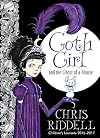
Goth Girl may not be the most innovative story (relying on a myriad of literary tropes and Riddell’s illustrative talent to drive an expected plot), but that doesn’t stop it from being a charming little book. Ada Goth is tasked with solving a mystery by a ghostly mouse named Ishmael, forcing her to sneak around her family’s gigantic Victorian mansion and make alliances with the help to foil the dastardly plans of the gamekeeper. The book could have gotten quite gristly if Riddell had show more pressed on why the gamekeeper wanted to have an actual hunt with guns rather than with butterfly nets, but since this is a book for children he keeps it relatively light. In true Victorian gothic fashion, though, there is a certain darkness underlying the relatively ridiculous events which I am sure will please readers of the genre show less
Lists
Poetry (1)
Awards


You May Also Like


Associated Authors
Statistics
- Works
- 87
- Also by
- 74
- Members
- 6,954
- Popularity
- #3,517
- Rating
- 4.1
- Reviews
- 131
- ISBNs
- 471
- Languages
- 24
- Favorited
- 4