
Geraldine McCaughrean
Author of Peter Pan in Scarlet
About the Author
Geraldine McCaughrean was born in Enfield, England on June 6, 1951. She was educated at Christ Church College, Canterbury. She has written more than 160 books and plays for children and adults. Her writing career includes the retelling of such classics as One Thousand and One Arabian Nights, The show more Canterbury Tales, and The Bronze Cauldron: Myths and Legends of the World, which is a collection of stories from all over the world. She has received numerous awards including three Whitbread Children's Book Awards for A Little Lower Than the Angels, Gold Dust, and Not the End of the World. She also received the Guardian Prize and Carnegie Medal for A Pack of Lies, the Beefeater Children's Novel Award for Gold Dawn, the Michael L. Printz Award for The White Darkness, and the 2018 Carnegie Medal for children's and YA books for her middle-grade novel Where the World Ends. (Bowker Author Biography) show less
Image credit: Channel 4 Learning
Series
Works by Geraldine McCaughrean
Athena and the Olive Tree / Who is the Fairest One of All? / The Woman No One Believed (2000) 27 copies
Las aventuras de Ulises 1 copy
Which One is You 1 copy
Á hjara veraldar 1 copy
O lago dos cisnes 1 copy
UN MUCCHIO DI BUGIE 1 copy
Hermes enreda els déus / Els dos amors d'Apol·lo / Alciona i Cèix (Mitos) (Catalan Edition) (2002) 1 copy
nativity story (The) 1 copy
Ancient Myths Collection 1 copy
Associated Works
Dare to be Different - A Cebration Of Freedom In association With Amnesty International (1999) — Contributor — 13 copies
Maitokulho ja kolme muuta hyvänyöntarinaa — Author — 1 copy
Tagged
Common Knowledge
- Other names
- Jones, Geraldine (birth)
- Birthdate
- 1951-06-06
- Gender
- female
- Occupations
- children's book author
- Awards and honors
- Royal Society of Literature ( [2010])
Carnegie Medal - Relationships
- Jones, Neil [1] (brother)
- Short biography
- Geraldine McCaughrean has written more than 125 books, been published in twenty-five countries, and won a dozen major awards, including the prestigious Carnegie Medal. She lives in Berkshire, England with her husband John, daughter Ailsa, and Daisy the dog. [from Casting the Gods Adrift (2002)]
- Nationality
- UK
- Birthplace
- North London, England, UK
- Places of residence
- Berkshire, England, UK
- Associated Place (for map)
- England, UK
Members
Reviews
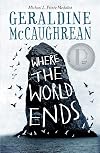
This tale of a small group of boys and men stranded on a remote island off Scotland's coast in the 1700s, is much more than an adventure story. The party of fowlers has been left on the island, as they have been every year, to harvest birds and feathers for use on the larger island where their small community resides, living meager lives of subsistence. When the boat to ferry them home fails to arrive, the superstitious party begins to think that the world may have ended in a catastrophic or show more celestial event, and they have somehow been forgotten. Geraldine McCaughrean brings life to the birds (the island's only inhabitants) and the party's grueling work of survival, and also to the mental struggles each person faces according to his own personality and beliefs. Some similarities can be drawn to both the cruelty and devolution of [Lord of the Flies] and the more uplifting [Frederick] by Leo Lionni. Where The World Ends offers a bit of both. The hunting group are are simple, quiet, and practical folk—no strangers to harsh and cooperative work. McCaughrean's descriptive passages imbue their thoughts and surroundings with an emotional liveliness that fully immerses the reader. She is a master storyteller. Based on a true story. show less
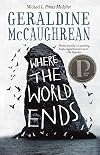
Ok so maybe a global pandemic wasn’t the best time to read a book called Where the World Ends – or was it. Surprisingly, this pandemic-adjacent survival story set 300 years ago on a rocky island off Scotland, is actually comforting. It’s a reminder of the power of stories to remember the past, to sustain us through tough times, and to help us imagine a future.
“He looked inside his skull and found it full to the brim with imaginings that might just sustain him through the bad time show more ahead.” (68) show less
“He looked inside his skull and found it full to the brim with imaginings that might just sustain him through the bad time show more ahead.” (68) show less
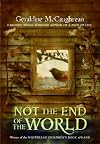
What was it really like when the heavens opened and the world drowned? Everyone knows the story of the Flood: The man called on by God to build an ark. The animals that came on board two by two. The rain that fell for forty days and forty nights. But what about the rest of the story? What about Noah's wife and daughters-in-law? And what if there was a daughter as well? How would it feel to head into the unknown, with only each other and all those animals? What would it be like to turn away show more friends and neighbors struggling in the water? Could all of it really be part of God's Plan -- the hunger and pain and fear? show less
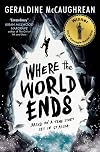
The tiny island archipelago of St. Kilda, Scotland, is remote and harsh. In the 1700s, a small community lives on Hirta, and each year, they send a small party of men and boys to Warrior Stac to capture birds and gather eggs and feathers. The boat that drops the party off is supposed to return for them in two weeks - but it doesn't. Theories abound, and one small boy has a vision of the others being taken up during Judgment Day. Fearing they are left entirely alone in the world, the boys and show more men struggle against despair. One man sets himself up as minister; one boy bullies the others; one boy turns out to be a girl. Many find their unique strengths (Keeper of Stories, Keeper of Music, Keeper of Faces), and there are as many heroic actions as cowardly ones. Eventually - nine months later - a rescue ship arrives, with the sad (but not otherworldly) news that smallpox has devastated the population of Hirta in their absence.
The narrator is revealed at the end, but the story belongs most to Quilliam, a steady boy who is called King Gannet, and calms the others by telling stories. He in turn takes comfort from the memory of Murdina Galloway, the niece of one of the men on Hirta, who visited from the mainland before the fowling trip.
See also: The Book of Boy by Catherine Gilbert Murdock; Hatchet by Gary Paulsen
Quotes
When life is harsh, everyday-ordinary is to be cherished. Excitements come from bad things... (22)
And a thing not talked about barely exists, doesn't it? (39)
"What cannot be altered must be endured." (Col Cane, 40)
Every day someone else came face-to-face with the same thing. That moment, when fretting turned to knowing for certain: they were all alone. No one was coming. (69)
Like an oyster that swallows sharp grit then shuts its lips tight, Farriss rarely put his feelings into words. (85)
...Quill saw the boys close their eyes and check inside their eyelids for memories of friends and family; he knew that was what they were doing, because he had just done it himself. Remembered pictures are like water: the harder you try to hold on to them, the more surely they run away. He did not know what to say...it is unbearable to lose the memory of a face. (123)
"Sevenfold blessings to our friends, and the strong rope in time of need!" (toast, 180)
Something, if not the world, had ended. (280)
"We have a saying here: After the world ends, only music and love will survive." (Quill to Murdina, 307)
From the Afterword:
The truth is that a party of eight (not nine) boys and three men went over to Stac an Armin, also known as Warrior Stac, from Hirta and were marooned there for nine months.
They all lived - almost impossible to believe, but they did.Only the extraordinarily harsh everyday lives they were already living can ave equipped them to survive the ordeal. show less
The narrator is revealed at the end, but the story belongs most to Quilliam, a steady boy who is called King Gannet, and calms the others by telling stories. He in turn takes comfort from the memory of Murdina Galloway, the niece of one of the men on Hirta, who visited from the mainland before the fowling trip.
See also: The Book of Boy by Catherine Gilbert Murdock; Hatchet by Gary Paulsen
Quotes
When life is harsh, everyday-ordinary is to be cherished. Excitements come from bad things... (22)
And a thing not talked about barely exists, doesn't it? (39)
"What cannot be altered must be endured." (Col Cane, 40)
Every day someone else came face-to-face with the same thing. That moment, when fretting turned to knowing for certain: they were all alone. No one was coming. (69)
Like an oyster that swallows sharp grit then shuts its lips tight, Farriss rarely put his feelings into words. (85)
...Quill saw the boys close their eyes and check inside their eyelids for memories of friends and family; he knew that was what they were doing, because he had just done it himself. Remembered pictures are like water: the harder you try to hold on to them, the more surely they run away. He did not know what to say...it is unbearable to lose the memory of a face. (123)
"Sevenfold blessings to our friends, and the strong rope in time of need!" (toast, 180)
Something, if not the world, had ended. (280)
"We have a saying here: After the world ends, only music and love will survive." (Quill to Murdina, 307)
From the Afterword:
The truth is that a party of eight (not nine) boys and three men went over to Stac an Armin, also known as Warrior Stac, from Hirta and were marooned there for nine months.
They all lived - almost impossible to believe, but they did.Only the extraordinarily harsh everyday lives they were already living can ave equipped them to survive the ordeal. show less
Lists
Awards


You May Also Like


Associated Authors
Statistics
- Works
- 208
- Also by
- 10
- Members
- 12,468
- Popularity
- #1,878
- Rating
- 3.7
- Reviews
- 298
- ISBNs
- 889
- Languages
- 18
- Favorited
- 5