
Padraic Colum (1881–1972)
Author of The Children's Homer: The Adventures of Odysseus and the Tale of Troy
About the Author
Born in a Longford workhouse where his father was first teacher and then master, Padraic Colum grew into an important figure in the Irish literary renaissance before immigrating to the United States. Invited by the Fay brothers to join the National Theatre Society, he married the teacher and writer show more Mary Maguire, with whom he undertook several joint projects. The Colums immigrated to the United States in 1914. Colum kept up a varied production of verse, plays, fiction, criticism, and children's literature, together with active lecturing. His most extended teaching appointment was at Columbia University, where he and his wife offered a joint course in comparative literature. Colum felt that his Roman Catholic and peasant roots gave him a closer tie to the Irish folk than did the Protestant, Anglo-Irish background of many writers of the Irish renaissance. His poetry usually deals with common people and rural landscapes in a forthright manner. Colum was resolutely Irish, and his work for the most part avoids didacticism or sentimental nationalism in favor of straightforward presentation. (Bowker Author Biography) show less
Image credit:
Courtesy of the NYPL Digital Gallery
(image use requires permission from the New York Public Library)
Courtesy of the NYPL Digital Gallery
(image use requires permission from the New York Public Library)
Works by Padraic Colum
The Children's Homer: The Adventures of Odysseus and the Tale of Troy (1918) 2,590 copies, 10 reviews
A Treasury of Irish Folklore: The Stories, Traditions, Legends, Humor, Wisdom, Ballads and Songs of the Irish People (1954) 330 copies, 3 reviews
The Island of the Mighty: Being the Hero Stories of Celtic British Retold from the Mabinogion (1924) 98 copies
Greek Mythology for Children: The Golden Fleece, The Adventures of Odysseus and Tales of Troy (1983) 4 copies
Arthur Griffith 3 copies
Stories of Magic and Adventure [The Arabian Nights / The Children of Odin / The Children's Homer / The Golden Fleece / The Island of the Mighty] (2019) 3 copies
My Irish Year 3 copies
The Yeats We Knew 2 copies
The Story of Lowry Maen 2 copies
Ourselves Alone!: The Story of Arthur Griffith and the Origin of the Irish Free State (1959) 2 copies
The Wall of China 1 copy
Roots of Gold 1 copy
Le fils du Roi d'Irlande 1 copy
The Gods, Goddesses, and Mythical Beasts Collection: The Golden Fleece; The Children of Odin; The Children's Homer (2017) 1 copy, 1 review
Old Pastures 1 copy
The Newbery Collection 1 copy
Hina, the Woman in the Moon 1 copy
Associated Works
The Complete Fairy Tales of the Brothers Grimm (1812) — Introduction, some editions — 17,546 copies, 137 reviews
A Portrait of the Artist as a Young Man and Dubliners (2004) — Introduction, some editions — 1,382 copies, 8 reviews
New Songs: A Lyric Selection — Contributor — 5 copies
The Kiltartan Books comprising the Kiltartan poetry history and wonder books by Lady Gregory (1971) — Foreword — 4 copies
Pastimes of James Joyce — Afterword — 2 copies
The Poems of Jonathan Swift — some editions — 2 copies
Tagged
Common Knowledge
- Canonical name
- Colum, Padraic
- Legal name
- Columb, Patrick (birth)
- Birthdate
- 1881-12-08
- Date of death
- 1972-01-11
- Gender
- male
- Education
- University College Dublin
- Occupations
- poet
novelist
dramatist
biographer
children's book author
folklorist - Organizations
- Columbia University
City College of New York
Gaelic League - Awards and honors
- Fellowship of the Academy of American Poets (1952)
Regina Medal (1961)
American Academy of Arts and Letters (Literature ∙ 1948)
Gregory Medal (1953) - Relationships
- Colum, Mary (wife)
Butler, Hubert (friend) - Nationality
- Ireland
- Birthplace
- Columbkille, Longford, County Longford, Ireland
- Places of residence
- Longford, County Longford, Ireland
Enfield, Connecticut, USA
New York, New York, USA
Dublin, County Dublin, Ireland - Place of death
- Enfield, Connecticut, USA
- Burial location
- St. Fintan's Cemetery, Sutton, Dublin, County Dublin, Ireland
- Associated Place (for map)
- Ireland
Members
Reviews
project gutenberg
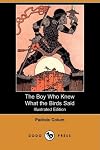
Oh, I'm loving it already. I love the style of the illustrations... not sure if they're art nouveau exactly but they remind me of some of that. I love that the boy has to *learn* how to speak the language of the birds, not just eat a magic fruit or whatever. I love Colum's lilt in the narration, and how he uses a different 'voice' in dialogue... for example the grouse are clearly clucking and chuckling the way fowl like that do. I would love to read this aloud to a show more child....
Done. A fair bit of sword-work, but also cleverness. Nothing too disturbing for modern sensibilities. And very enjoyable for those of us who appreciate classic stories. I will read more by Colum. show less
Oh, I'm loving it already. I love the style of the illustrations... not sure if they're art nouveau exactly but they remind me of some of that. I love that the boy has to *learn* how to speak the language of the birds, not just eat a magic fruit or whatever. I love Colum's lilt in the narration, and how he uses a different 'voice' in dialogue... for example the grouse are clearly clucking and chuckling the way fowl like that do. I would love to read this aloud to a show more child....
Done. A fair bit of sword-work, but also cleverness. Nothing too disturbing for modern sensibilities. And very enjoyable for those of us who appreciate classic stories. I will read more by Colum. show less

Chosen as the sole Newbery Honor Book in 1926 - the medal winner that year was Arthur Bowie Chrisman's Shen of The Sea: Chinese Stories for Children - The Voyagers is the second of Irish author Padraic Colum's three books to be so honored (the first being 1922's The Golden Fleece and the Heroes Who Lived Before Achilles, the third 1934's The Big Tree of Bunlahy: Stories of My Own Countryside). It collects a variety of historical and quasi-historical legends concerning European exploration in show more the Atlantic, beginning with the The Legend of Atlantis (as related in Plato's Critias and Timaeus), and continuing through the naming of the American continents for explorer Amerigo Vespucci.
In between are the Irish legends of The Voyage of Maelduin, an 8th century tale concerning a fantastic voyage out into the western ocean made by Maelduin and his companions, and The Voyage of Saint Brendan, whose quest for God's "Fair Land" to the West was a popular medieval tale. Also included are some Norse selections concerning The Children of Eric the Red (Leif the Lucky, Thorwald, Thorstein, Gudrid the Fair), the story of Christopher Columbus' first voyage to the West Indies, of Ponce de Leon's quest for the Fountain of Youth, and of the English "discovery" of Virginia, as told by Captain Barlowe, Captain John Smith, and Ralph Hamar. Colum includes his source material, at the rear.
I enjoyed the earlier mythological and legendary tales that Colum presented in The Voyagers, although I did find myself wishing that he had also included the Welsh legend concerning the voyage of Prince Madoc to the Americas, in the twelfth century. The later tales, concerning the European "discovery" of the Americas, were the sort of white-washed history one would expect from a book published in this era. Columbus comes across as a benevolent father figure, who would never dream of molesting the hapless (and helpless) natives. Colum may have used Columbus' (edited) journals as a source, but he seems to have forgotten to quote the bit where the "Great Admiral" mentions how the natives would make natural servants (read: slaves).
Of course, as already stated, this sort of thing comes as no surprise, given the date of publication, but it does make The Voyagers less palatable to the contemporary reader, perhaps explaining why, although other Colum tales have been reprinted, this one remains out of print. I did enjoy parts of the narrative (hence the two stars, rather than one), and thought Wilfred Jones' color and black and white plates were very attractive, but this is still one I would recommend primarily to the Newbery completist, or to the dedicated Padraic Colum fan. show less
In between are the Irish legends of The Voyage of Maelduin, an 8th century tale concerning a fantastic voyage out into the western ocean made by Maelduin and his companions, and The Voyage of Saint Brendan, whose quest for God's "Fair Land" to the West was a popular medieval tale. Also included are some Norse selections concerning The Children of Eric the Red (Leif the Lucky, Thorwald, Thorstein, Gudrid the Fair), the story of Christopher Columbus' first voyage to the West Indies, of Ponce de Leon's quest for the Fountain of Youth, and of the English "discovery" of Virginia, as told by Captain Barlowe, Captain John Smith, and Ralph Hamar. Colum includes his source material, at the rear.
I enjoyed the earlier mythological and legendary tales that Colum presented in The Voyagers, although I did find myself wishing that he had also included the Welsh legend concerning the voyage of Prince Madoc to the Americas, in the twelfth century. The later tales, concerning the European "discovery" of the Americas, were the sort of white-washed history one would expect from a book published in this era. Columbus comes across as a benevolent father figure, who would never dream of molesting the hapless (and helpless) natives. Colum may have used Columbus' (edited) journals as a source, but he seems to have forgotten to quote the bit where the "Great Admiral" mentions how the natives would make natural servants (read: slaves).
Of course, as already stated, this sort of thing comes as no surprise, given the date of publication, but it does make The Voyagers less palatable to the contemporary reader, perhaps explaining why, although other Colum tales have been reprinted, this one remains out of print. I did enjoy parts of the narrative (hence the two stars, rather than one), and thought Wilfred Jones' color and black and white plates were very attractive, but this is still one I would recommend primarily to the Newbery completist, or to the dedicated Padraic Colum fan. show less

One of five titles to be selected as a Newbery Honor Book in 1922, the year that the award was instituted, Padraic Colum's The Golden Fleece and the Heroes Who Lived Before Achilles reads like a children's version of Hesiod's Theogony. The tale of Jason and the Argonauts, who set out on a quest to Colchis - a kingdom located in the northern Black Sea area, in what is now the Republic of Georgia - hoping to obtain the fabled Golden Fleece and bring it back to Greece, the book also features show more numerous storytelling interludes in which Orpheus relates to the other heroes various tales concerning the creation of the world and the adventures of the Olympian gods and goddesses.
Here the young reader will encounter the odd story of the early races of men - the golden, silver, and bronze - who came before our own. Here too is the tale of Prometheus and his theft of fire, and of Deucalion and his extraordinary boat. Pandora, Hades and Persephone, the hero Perseus - all appear in Orpheus' tales, which are embedded in Colum's larger narrative about the Argonauts, their quest, and their adventures afterward.
I enjoyed this book, which made me feel quite nostalgic for the wonderful course in classical mythology I took while in college, and am now longing to see Ray Harryhousen's film, Jason and the Argonauts, again. That said, I can certainly understand why someone would hesitate to recommend this to young readers, as I don't think it makes a very good introduction to the subject. It does not have the uninterrupted sequential narrative that contemporary children might expect, and assumes a basic knowledge of Greek mythology. As an intermediate step however, between such classic children's book as D'Aulaires' Book of Greek Myths and actual classical texts like Hesiod's Theogony and the Homeric Hymns, this would be ideal, I think. show less
Here the young reader will encounter the odd story of the early races of men - the golden, silver, and bronze - who came before our own. Here too is the tale of Prometheus and his theft of fire, and of Deucalion and his extraordinary boat. Pandora, Hades and Persephone, the hero Perseus - all appear in Orpheus' tales, which are embedded in Colum's larger narrative about the Argonauts, their quest, and their adventures afterward.
I enjoyed this book, which made me feel quite nostalgic for the wonderful course in classical mythology I took while in college, and am now longing to see Ray Harryhousen's film, Jason and the Argonauts, again. That said, I can certainly understand why someone would hesitate to recommend this to young readers, as I don't think it makes a very good introduction to the subject. It does not have the uninterrupted sequential narrative that contemporary children might expect, and assumes a basic knowledge of Greek mythology. As an intermediate step however, between such classic children's book as D'Aulaires' Book of Greek Myths and actual classical texts like Hesiod's Theogony and the Homeric Hymns, this would be ideal, I think. show less
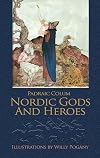
Years and years ago my mother found a copy of this being sold from a high school library and bought it for me. I never got around to reading it, though. I loved mythology, but my high school mythology teacher had recently ruined the subject for me so I wasn't really interested in touching it. Years have gone by, though, and I decided to give it another whirl. I think Padraic Colum did a good job retelling the various myths from the Eddas and sequencing them in a rational order so that their show more telling made sense. It continues to strike me how the ancient Norsemen had a completely different conception of beginning-middle-end from our own. For example, the whole tale of the Volsungs is a mess by modern standards (with the first half consisting of a mythological hero who fights a dragon and the second half involving the deceased hero's widow plotting revenge on Attila the Hun - where the hell is narrative consistency in that?). But Colum presents the tales in such a way that it actually makes sense, even though it requires some narrative license to pull it off.
4/5 stars show less
4/5 stars show less
Lists
Awards


You May Also Like


Associated Authors
Statistics
- Works
- 86
- Also by
- 38
- Members
- 7,501
- Popularity
- #3,264
- Rating
- 3.9
- Reviews
- 60
- ISBNs
- 371
- Languages
- 6
- Favorited
- 5

