
Anne Parrish (1888–1957)
Author of Floating Island
About the Author
Image credit: Collecting Delaware Books
Works by Anne Parrish
Golden wedding 5 copies
A clouded star 4 copies
Mr. Despondency's Daughter 4 copies
Loads of love 3 copies
Sea level 3 copies
Pray for a Tomorrow 3 copies
Semi-attached 2 copies
The lucky one 2 copies
A pocketful of poses 1 copy
Knee-High to a Grasshopper 1 copy
Associated Works
Tagged
Common Knowledge
- Birthdate
- 1888-11-12
- Date of death
- 1957-09-05
- Gender
- female
- Education
- Philadelphia School of Design for Women
- Occupations
- novelist
children's book author - Relationships
- Corliss, Charles Albert (husband 1)
Titzell, Josiah (husband 2)
Parrish, Dillwyn (brother) - Nationality
- USA
- Birthplace
- Colorado Springs, Colorado, USA
- Places of residence
- Colorado Springs, Colorado, USA (birth)
Claymont, Delaware, USA
Philadelphia, Pennsylvania, USA
Redding, Connecticut, USA
Tesuque, New Mexico, USA (1937-38) - Place of death
- Danbury, Connecticut, USA
- Associated Place (for map)
- USA
Members
Reviews

Chosen as one of eight Newbery Honor books in 1931 - the second of Anne Parrish's titles to be so distinguished, following upon The Dream Coach, a Newbery Honor book in 1925 - Floating Island is the story of a family of dolls who are shipwrecked on a deserted island. Purchased, together with their house, the Doll family - Mr. and Mrs. Doll, William and Annabel Doll, Baby Doll, Dinah the Cook, and Finny, Lobby, Chicky and Pudding (the four seemingly sentient side-dishes provided in the Dolls' show more home) - are meant as a gift for a young girl named Elizabeth, and are shipped to her home in the tropics, only to see themselves stranded on a tropical paradise when the ship on which they are traveling goes down. Profusely illustrated (ostensibly by Mr. Doll), with amusing little captions, and replete with authorial footnotes giving informational asides not immediately pertinent to the Dolls' adventures, the book follows the various members of the family as they struggle to cope with their new environment, and to find one another. The majority of the tale, in fact, is devoted to their search for one another, through the jungles and across the beaches of Floating Island.
Like The Dream Coach, I found myself distinctly underwhelmed by this selection, and at a little bit of a loss to see those qualities in it that merited a nod from the Newbery committee. The tone was just a little too cutesy for me, with that kind of self-conscious wonderment that some earlier authors of children's fare seemed to feel was obligatory, and while the premise was interesting - sentient dolls! being lost on a tropical island! - the story never seemed to go anywhere, and certainly wasn't enough to distract me from my discomfort at certain socially anachronistic passages. To wit: the racist portrayal of Dinah, and her relationship with the rest of the Dolls, which I felt was made all the creepier by the fact that these were dolls. I was grateful that Parrish didn't have Dinah speaking in the stereotypically broken English usually reserved for black characters in vintage children's fiction, but dismayed at the fact that she apparently longs to be white (she wears Mrs. Doll's wig for a time, confessing sadly to Mr. Doll, after the fact, that it only made her feel "blacker," revealing that the point of wearing it was to feel less black), and has some kind of innate connection to the monkeys, and to island life. The assumption that Dinah would feel more at home on a south seas island, because she is black, implies an entire world view that is problematic: all non-European peoples are essentially the same (so what if Dinah's ancestors came from Africa, NOT from this island? It's all the same thing, isn't it?); all non-European people are closer to "nature" (Dinah's instinctive "memory" of how to do things, on the island), and therefore a little less civilized, a little more likely to slide back into barbarity (Dinah's desire to say on the island).
To be clear, Parrish does not suggest these things, but they certainly came to mind, when reading some of her passages, and made me uncomfortable enough that I could not enjoy the other aspects of the story, or the (admittedly) charming artwork. As a consequence, I wouldn't recommend this to contemporary young readers (the original target audience), although I think that older readers with an interest in doll fiction, or Newbery completists like myself, will find much here to interest them. show less
Like The Dream Coach, I found myself distinctly underwhelmed by this selection, and at a little bit of a loss to see those qualities in it that merited a nod from the Newbery committee. The tone was just a little too cutesy for me, with that kind of self-conscious wonderment that some earlier authors of children's fare seemed to feel was obligatory, and while the premise was interesting - sentient dolls! being lost on a tropical island! - the story never seemed to go anywhere, and certainly wasn't enough to distract me from my discomfort at certain socially anachronistic passages. To wit: the racist portrayal of Dinah, and her relationship with the rest of the Dolls, which I felt was made all the creepier by the fact that these were dolls. I was grateful that Parrish didn't have Dinah speaking in the stereotypically broken English usually reserved for black characters in vintage children's fiction, but dismayed at the fact that she apparently longs to be white (she wears Mrs. Doll's wig for a time, confessing sadly to Mr. Doll, after the fact, that it only made her feel "blacker," revealing that the point of wearing it was to feel less black), and has some kind of innate connection to the monkeys, and to island life. The assumption that Dinah would feel more at home on a south seas island, because she is black, implies an entire world view that is problematic: all non-European peoples are essentially the same (so what if Dinah's ancestors came from Africa, NOT from this island? It's all the same thing, isn't it?); all non-European people are closer to "nature" (Dinah's instinctive "memory" of how to do things, on the island), and therefore a little less civilized, a little more likely to slide back into barbarity (Dinah's desire to say on the island).
To be clear, Parrish does not suggest these things, but they certainly came to mind, when reading some of her passages, and made me uncomfortable enough that I could not enjoy the other aspects of the story, or the (admittedly) charming artwork. As a consequence, I wouldn't recommend this to contemporary young readers (the original target audience), although I think that older readers with an interest in doll fiction, or Newbery completists like myself, will find much here to interest them. show less
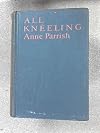
From the opening chapter Christabel Caine is petted and spoiled, worshipped by adoring parents and doting aunts. Only her uncle John sees through the veneer of beauty to the self-centered narcissist that is the true Christabel. But Christabel is clever, and creates for herself a most beautiful web from which no mere man can escape. Charming conquest after conquest, Christabel takes what she wants, regardless of the hurt feelings of the women she leaves in her wake.
The movie 'Born to Be Bad' show more starring Joan Fontaine as Christabel Caine was loosely based on this novel. It's a wonderful portrait of a woman who beguiles and deceives her way through life in order to get what she wants. show less
The movie 'Born to Be Bad' show more starring Joan Fontaine as Christabel Caine was loosely based on this novel. It's a wonderful portrait of a woman who beguiles and deceives her way through life in order to get what she wants. show less

Published in 1924, brother and sister Anne and Dillwyn Parrish's The Dream Coach was one of two Newbery Honor Books selected in 1925 - the other being Anne Carroll Moore's Nicholas: A Manhattan Christmas Story - and follows the eponymous Dream Coach as it visits four children in different parts of the world. Although written almost a quarter-of-a-century into the twentieth century, it hearkens back to the Victorian fairy-tale fare of the nineteenth, both in its vision of the innocent child, show more and in its exotic portrait of the east.
It opens with the brief poem, The Dream Coach, originally contained in the authors' 1923 book, Knee-High To A Grasshopper: "If you have been unhappy all the day, / Wait patiently until the night: / When in the sky the gentle stars are bright / The Dream Coach comes to carry you away." Four original fairy-tales follow, each featuring a child's experiences with the Dream Coach.
The first of these is The Seven White Dreams of the King's Daughter, in which little Princess Angelica Mary Delphine Violet Candida Pamelia Petronella Victoire Veronica Monica Anastasia Yvonne (and so on) experiences a singularly unhappy birthday, hemmed in by the excessive formalities of court life, and goes to bed crying. When an angel witnesses her unhappiness, he and his fellows send her seven white dreams, and the princess becomes: a daisy in a field, a little white cloud in the blue sky, a little white lamb skipping through a field of lilies of the valley, a white butterfly floating in the breeze, a small white egg in a soft nest, and a snowflake dancing. All experiences involving freedom in the wide world - everything she is denied is her waking life.
The second tale is Goran's Dream, which follows the adventures of a little Norwegian boy, living with his grandmother over the waters of a deep fjord. When grandmother must go to the village to buy their winter supplies, six-year-old Goran is left on his own, entrusted with the care of the animals. Worried that the snow, which starts shortly after she leaves, will prevent his grandmother from returning, Goran distracts himself by building a snowman. Later, lulled by the warmth inside his little house, he falls asleep, dreaming that his animals - Nanna the goat, Gustava the hen, Mejau the cat - as well as the house geraniums and the old grandfather clock, can all speak, and that the snowman and the Queen of Clubs (from a colorful playing card he once found) have come alive. After a surreal party that resembles a scene from Alice in Wonderland, Goran awakens to find that he had fallen asleep in his chair.
The third selection - which has some strong thematic similarities to Hans Christian Andersen's The Nightingale - is A Bird Cage With Tassels of Purple and Pearls (Three Dreams of a Little Chinese Emperor), in which the Dream Coach, rather than relieving sadness, or distracting from worry, must educate and correct. In this tale, the young emperor has imprisoned a little songbird, who, in sorrow at its captivity, will not sing. In a series of dreams, the emperor experiences life in a cage, surrounded by massive birds many times his size, as well as the hardship of looking for food in a barren winter landscape, and the terror of fleeing from a predator. Now able to empathize with his captive, the little emperor grows kinder, and when summer comes, he releases the bird.
The fourth and final story is "King" Philippe's Dream, in which a young French boy, visiting his grandparents, and meeting his far-traveling Uncle Pablôt for the first time, falls asleep towards the end of his stay, dreaming that all his kin are transformed into different natural forces. Grandmother, who refers to the rising river as her son, becomes Grandmother Rain, while Uncle Pablôt becomes Uncle Wind. Grandfather is changed to Grandfather Snow, while little cousin Avril becomes Spring herself. Still sleeping and dreaming, Phillipe is returned to his parents...
The tales contained in The Dream Coach were mildly entertaining, but I found myself wondering, as I read through them, what extraordinary quality the Newbery Committee discovered in them, that made them worthy of special recognition.. Mild, sweet (sometimes too sweet), a little bit exotic (the "Chinese" selection), they are better in the summary, than in the reading. Then again, I'm generally not a great fan of Victorian fairy-fare. The black and white illustrations, both full and partial page, were probably the most appealing aspect of this book, which is apparently the first of three Newbery Honors for Anne Parrish! I'll have to see if I like Floating Island or The Story of Appleby Capple any better. show less
It opens with the brief poem, The Dream Coach, originally contained in the authors' 1923 book, Knee-High To A Grasshopper: "If you have been unhappy all the day, / Wait patiently until the night: / When in the sky the gentle stars are bright / The Dream Coach comes to carry you away." Four original fairy-tales follow, each featuring a child's experiences with the Dream Coach.
The first of these is The Seven White Dreams of the King's Daughter, in which little Princess Angelica Mary Delphine Violet Candida Pamelia Petronella Victoire Veronica Monica Anastasia Yvonne (and so on) experiences a singularly unhappy birthday, hemmed in by the excessive formalities of court life, and goes to bed crying. When an angel witnesses her unhappiness, he and his fellows send her seven white dreams, and the princess becomes: a daisy in a field, a little white cloud in the blue sky, a little white lamb skipping through a field of lilies of the valley, a white butterfly floating in the breeze, a small white egg in a soft nest, and a snowflake dancing. All experiences involving freedom in the wide world - everything she is denied is her waking life.
The second tale is Goran's Dream, which follows the adventures of a little Norwegian boy, living with his grandmother over the waters of a deep fjord. When grandmother must go to the village to buy their winter supplies, six-year-old Goran is left on his own, entrusted with the care of the animals. Worried that the snow, which starts shortly after she leaves, will prevent his grandmother from returning, Goran distracts himself by building a snowman. Later, lulled by the warmth inside his little house, he falls asleep, dreaming that his animals - Nanna the goat, Gustava the hen, Mejau the cat - as well as the house geraniums and the old grandfather clock, can all speak, and that the snowman and the Queen of Clubs (from a colorful playing card he once found) have come alive. After a surreal party that resembles a scene from Alice in Wonderland, Goran awakens to find that he had fallen asleep in his chair.
The third selection - which has some strong thematic similarities to Hans Christian Andersen's The Nightingale - is A Bird Cage With Tassels of Purple and Pearls (Three Dreams of a Little Chinese Emperor), in which the Dream Coach, rather than relieving sadness, or distracting from worry, must educate and correct. In this tale, the young emperor has imprisoned a little songbird, who, in sorrow at its captivity, will not sing. In a series of dreams, the emperor experiences life in a cage, surrounded by massive birds many times his size, as well as the hardship of looking for food in a barren winter landscape, and the terror of fleeing from a predator. Now able to empathize with his captive, the little emperor grows kinder, and when summer comes, he releases the bird.
The fourth and final story is "King" Philippe's Dream, in which a young French boy, visiting his grandparents, and meeting his far-traveling Uncle Pablôt for the first time, falls asleep towards the end of his stay, dreaming that all his kin are transformed into different natural forces. Grandmother, who refers to the rising river as her son, becomes Grandmother Rain, while Uncle Pablôt becomes Uncle Wind. Grandfather is changed to Grandfather Snow, while little cousin Avril becomes Spring herself. Still sleeping and dreaming, Phillipe is returned to his parents...
The tales contained in The Dream Coach were mildly entertaining, but I found myself wondering, as I read through them, what extraordinary quality the Newbery Committee discovered in them, that made them worthy of special recognition.. Mild, sweet (sometimes too sweet), a little bit exotic (the "Chinese" selection), they are better in the summary, than in the reading. Then again, I'm generally not a great fan of Victorian fairy-fare. The black and white illustrations, both full and partial page, were probably the most appealing aspect of this book, which is apparently the first of three Newbery Honors for Anne Parrish! I'll have to see if I like Floating Island or The Story of Appleby Capple any better. show less

I thoroughly enjoyed The Floating Island though I do have to count it as one of the strangest books I have ever read. It's basically a retelling of Swiss Family Robinson but from the point of view of a ship wrecked doll house family. Anne Parrish included also did the illustrations for the book (though she credits most of them to Mr. Doll). My son is enthralled with these illustrations, especially the one of the owl. I'm thinking of scanning the owl illustration and printing it out for his wall.
Lists
Newbery Adjacent (1)
1924 Project (1)
Awards


You May Also Like


Associated Authors
Statistics
- Works
- 22
- Also by
- 1
- Members
- 211
- Popularity
- #105,255
- Rating
- 3.3
- Reviews
- 8
- ISBNs
- 8