
James Stephens (1) (1880–1950)
Author of Irish Fairy Tales
For other authors named James Stephens, see the disambiguation page.
About the Author
Image credit: Poems and Poetry
Works by James Stephens
Songs from the clay 8 copies
A Poetry Recital 6 copies
Strict joy: Poems 4 copies
Green Branches 3 copies
The Insurection of Ireland 2 copies
Poetry Recital 2 copies
Strict Joy: Poems 2 copies
Five New Poems 2 copies
Stephens James 2 copies
Optimist 1 copy
James Stephens: A selection 1 copy
La pentola dell' oro 1 copy
Three Lovers Who Lost 1 copy
Little Things 1 copy
SINGING WIND 1 copy
Associated Works
Literature: An Introduction to Fiction, Poetry, and Drama (1995) — Contributor, some editions — 1,011 copies, 7 reviews
From Isles of Dream: Visionary Stories and Poems of the Celtic Renaissance (1993) — Contributor — 41 copies
The Uncertain Element: An Anthology of Fantastic Conceptions — Contributor — 1 copy
The Dial, Vol LXXVI No 4, April 1924 — Contributor, some editions — 1 copy
Tagged
Common Knowledge
- Canonical name
- Stephens, James
- Birthdate
- 1880-02-09
- Date of death
- 1950-12-26
- Gender
- male
- Occupations
- novelist
poet - Nationality
- Ireland
- Birthplace
- Dublin, County Dublin, Ireland
- Places of residence
- Dublin, County Dublin, Ireland
- Associated Place (for map)
- Dublin, County Dublin, Ireland
Members
Reviews

We've managed in the space of three volumes to run the available gamut of titles for books of tales of Irish fairies and come full circle, as it were. These aren't even the sort of fairy tales I was looking for, being mostly about Finn and the Fianna, but actually, there's a good deal of fairy stuff in here, so I think it was worthwhile from that point of view.
So it opens with the story of a man here since the first people came to Ireland after the flood and follows on down through mythical show more settlements and invasions, with the man transforming into a beast at each juncture and enjoying a long exuberant life as king of that species, until finally he becomes king of the salmon, gets caught by a fisherman of the King of Ulster, is eaten by the queen and born to her as a son. There's a lovely giddy logic to it.
Next comes the Boyhood of Fionn, a justly praised literary masterpiece, gorgeously lyrical, and I began to question why this wasn't part of a work with the stature of something like The Once And Future King. It's a work for grown-ups, maybe, more so at least than The Sword In The Stone, but it has flashes of rare wit here and there and is extremely readable. The Irish, however, have a complicated relationship with our mythical heroes. Like leprechauns they're to be pitied for the way in which they have become embarrassing cliches and caricatures, and of course the inevitable association of a glorious warriors past doesn't help, but neither does the humiliation of hundreds of years of defeat and foreign rule. There's that speech in Trainspotting about what is there to be proud of in being Scottish. Most Irish people internalised that lesson long ago.
Nonetheless, there is something here that surely transcends national ambivalence, something that surely should be part of the canon of fantasy literature. Except this is not a novel, despite containing the start to a great novel within it. Once Fionn becomes leader, his nature changes, the stories become episodic, Fionn is sidelined or barely present, and often powerless and even humiliated. The final story doesn't mention him at all, and one assumes it isn't a Fionn story until a line at the end which is the sort of cheat no 20th century audience would put up with for a moment.
No doubt someone has written a novel about Fionn - I remember Rosemary Sutcliffe's book fondly - but it's an awful pity James Stephens didn't because it would have been definitive and influential. Though it should be noted that there appear to be issues with women that are hard to parse. Most of the major female roles are negative, and it's hard to say whether it's because of the source material or the author, or even at times the author poking fun at the misogyny of the source material, though by the end he seems to embrace it fully. On the other hand, the relationship between Fionn and Goll mor mac Morna is an amazing one, uniquely Irish I would have thought.
A rich book, product of the great Anglo Irish Celtic Revival, it's just a pity he decided to let the fragmentary nature of the ancient oral tradition dictate the form, leaving us with yet another book of tales, rather than a brilliant novel. show less
So it opens with the story of a man here since the first people came to Ireland after the flood and follows on down through mythical show more settlements and invasions, with the man transforming into a beast at each juncture and enjoying a long exuberant life as king of that species, until finally he becomes king of the salmon, gets caught by a fisherman of the King of Ulster, is eaten by the queen and born to her as a son. There's a lovely giddy logic to it.
Next comes the Boyhood of Fionn, a justly praised literary masterpiece, gorgeously lyrical, and I began to question why this wasn't part of a work with the stature of something like The Once And Future King. It's a work for grown-ups, maybe, more so at least than The Sword In The Stone, but it has flashes of rare wit here and there and is extremely readable. The Irish, however, have a complicated relationship with our mythical heroes. Like leprechauns they're to be pitied for the way in which they have become embarrassing cliches and caricatures, and of course the inevitable association of a glorious warriors past doesn't help, but neither does the humiliation of hundreds of years of defeat and foreign rule. There's that speech in Trainspotting about what is there to be proud of in being Scottish. Most Irish people internalised that lesson long ago.
Nonetheless, there is something here that surely transcends national ambivalence, something that surely should be part of the canon of fantasy literature. Except this is not a novel, despite containing the start to a great novel within it. Once Fionn becomes leader, his nature changes, the stories become episodic, Fionn is sidelined or barely present, and often powerless and even humiliated. The final story doesn't mention him at all, and one assumes it isn't a Fionn story until a line at the end which is the sort of cheat no 20th century audience would put up with for a moment.
No doubt someone has written a novel about Fionn - I remember Rosemary Sutcliffe's book fondly - but it's an awful pity James Stephens didn't because it would have been definitive and influential. Though it should be noted that there appear to be issues with women that are hard to parse. Most of the major female roles are negative, and it's hard to say whether it's because of the source material or the author, or even at times the author poking fun at the misogyny of the source material, though by the end he seems to embrace it fully. On the other hand, the relationship between Fionn and Goll mor mac Morna is an amazing one, uniquely Irish I would have thought.
A rich book, product of the great Anglo Irish Celtic Revival, it's just a pity he decided to let the fragmentary nature of the ancient oral tradition dictate the form, leaving us with yet another book of tales, rather than a brilliant novel. show less
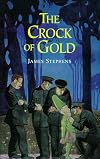
Philosophical story featuring leprechauns, policemen and the Great God Pan. Funny, occasionally depressing and very thoughtful. The leprechaun story elements seem a little confused and some of the descriptive or philosophical passages can be a bit long. However i REALLY enjoyed this one and tore through it very quickly.

Quite a book! a gallimaufry of Blakean cosmography, Celtic Twilight theosophy, satirical use of mythology a la James Branch Cabell, and... I don't know what all. It's not what I'd call well-plotted, and sometimes the 'philosophical' disquisitions can get tangled or drag on... but it all works. It's funny, poignant, good natured... not to sound like a hack movie reviewer, it's 'delightful'. Makes me want to read more of this author.
James Stephens, an Irish poet and novelist was reared in the slums of Dublin. He writes about the claustrophobia of the city, the small rooms the crowds and the loneliness but also of the liberation of the open streets. This is a story that is almost fairy tale like in quality. Mrs. Makebelieve (the charwoman and Mary’s mother) has to work as a Charwoman but she embraces her freedom and strongly believes that her “ship will sail in” and she will be rich someday. Mary is her only show more daughter and she is very protective. There is some very good things about this mother daughter relationship. She holds on to her daughter and maybe keeps her young but she also prepares her for her future marriage. Mary is nearing 16 or turns 16 during the story and she is just becoming aware of her body changing into a woman’s and she is also becoming aware of men. Stephen’s picture of Dublin (often described as a man’s town) is presented to the reader as both domestic and urban. This city comes alive in Mary’s eyes as she wanders through the city during the day while her mother is working. The author is known for his retelling of Irish myths and fairy tales. This felt like a retelling of Cinderella who worked like a charwoman for her stepmother only Mrs Makebelieve is quite proud and will be no one’s slave. A couple of quotes from the story that I liked and describes Dublin and the second one demonstrates the lyrical quality of the author’s words;
“She wanted to walk in the solitude which can only be found in crowded places.”
“Young girls dance by, each a giggle incarnate.” show less
“She wanted to walk in the solitude which can only be found in crowded places.”
“Young girls dance by, each a giggle incarnate.” show less
Lists
Irish writers (1)
Awards


You May Also Like


Associated Authors
Statistics
- Works
- 60
- Also by
- 39
- Members
- 2,203
- Popularity
- #11,646
- Rating
- 3.8
- Reviews
- 37
- ISBNs
- 329
- Languages
- 8
- Favorited
- 6
