
Tim Pat Coogan
Author of The IRA
About the Author
Tim Pat Coogan is one of the best-known journalists and historians in Ireland. Author, broadcaster and former editor of the Irish Press, he has written several books
Image credit: http://boylearts.com/2011/2011/05/tim-pat-coogan/
Works by Tim Pat Coogan
The Twelve Apostles: Michael Collins, the Squad and Ireland's Fight for Freedom (2016) 73 copies, 1 review
1916: One Hundred Years of Irish Independence: From the Easter Rising to the Present (2016) 47 copies
The I.R.A., Rev. ed. 1 copy
Tagged
Common Knowledge
- Canonical name
- Coogan, Tim Pat
- Legal name
- Coogan, Timothy Patrick
- Birthdate
- 1935-04-22
- Gender
- male
- Education
- Belvedere College, Dún Laoghaire
- Occupations
- journalist
- Organizations
- The Irish Press
- Nationality
- Ireland
- Birthplace
- Monkstown, County Dublin, Ireland
- Places of residence
- Dublin, Ireland
- Associated Place (for map)
- Ireland
Members
Reviews
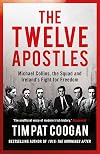
As an American, I'll admit to knowing only the broadest strokes of Irish history. What I do know is that Ireland served as the testbed for British imperialism, with the locals suffering from genocidal policies including wars of extermination, absentee-landlord plantations, enslavement and forced emigration, and artificially induced famine. Ireland also served as the testbed for post-colonial wars of liberation, with a gloriously failed rising in 1916 (Ireland loves its glorious martyrs), and show more then a guerrilla war against the British, finally followed by an even more brutal civil war between those who accepted a peace treaty that left Ireland part of the British dominions, and those who held out for a fully independent republic.
It's a big story, and this book follows one small, but important part of it. Michael Collins, the essential man of Irish liberation, knew that no force Ireland could muster could stand against the weight of British arms. This was to be a political war, and the decisive weapon would be targeted assassinations. The Twelve Apostles, also called The Squad, were the instrument of that policy. A dozen men, lightly armed with pistols, who carried out a series of brazen daylight executions. According to this book, The Twelve Apostles sowed carefully targeted terror, taking down key British intelligence officers, Royal Irish Constables, and links in the network of sources and stoolies that have could landed the whole Irish revolutionary leadership in prison.
Of course, violence begets more violence. Michael Collins was himself killed in an ambush during the following Irish Civil War. Many of Twelve Apostles had troubled postwar careers, finding themselves on the wrong sides of politics, simply aimless, or worst, running their own secret police torture shops.
Coogan does an excellent job depicting the life of a violent revolutionary, though this book assumes a fair bit of background on Michael Collins and the Irish revolution. Doing a little research on the author, it seems he's fairly analogous to Stephen Ambrose, a popular writer somewhat disdained by 'real historians' for light sourcing and partisanship rather than properly rigorous objectivity; Coogan greatly prefers Michael Collins over Éamon de Valera, who is depicted as the adversary of Irish public life. But the one great and irreplaceable advantage Coogan has is that he actually interviewed surviving Apostles in the 60s and 70s. This is a great look at the intimacy and brutality of political warfare. show less
It's a big story, and this book follows one small, but important part of it. Michael Collins, the essential man of Irish liberation, knew that no force Ireland could muster could stand against the weight of British arms. This was to be a political war, and the decisive weapon would be targeted assassinations. The Twelve Apostles, also called The Squad, were the instrument of that policy. A dozen men, lightly armed with pistols, who carried out a series of brazen daylight executions. According to this book, The Twelve Apostles sowed carefully targeted terror, taking down key British intelligence officers, Royal Irish Constables, and links in the network of sources and stoolies that have could landed the whole Irish revolutionary leadership in prison.
Of course, violence begets more violence. Michael Collins was himself killed in an ambush during the following Irish Civil War. Many of Twelve Apostles had troubled postwar careers, finding themselves on the wrong sides of politics, simply aimless, or worst, running their own secret police torture shops.
Coogan does an excellent job depicting the life of a violent revolutionary, though this book assumes a fair bit of background on Michael Collins and the Irish revolution. Doing a little research on the author, it seems he's fairly analogous to Stephen Ambrose, a popular writer somewhat disdained by 'real historians' for light sourcing and partisanship rather than properly rigorous objectivity; Coogan greatly prefers Michael Collins over Éamon de Valera, who is depicted as the adversary of Irish public life. But the one great and irreplaceable advantage Coogan has is that he actually interviewed surviving Apostles in the 60s and 70s. This is a great look at the intimacy and brutality of political warfare. show less
The Famine Plot is a history of extreme suffering. From 1845 to about 1852 Ireland lost a large amount of its population to famine and the policies of the British government.
Tim Pat Coogan contends that food exports from Ireland – at the height of the famine, and for profit – resulted in a much larger loss of life. Combined with the British government’s policy of indifference to the tragedy in Ireland, millions emigrated or died. Coogan makes the argument that this was an act of show more genocide. It is documented that the British viewed the depopulation of Ireland as a positive turn of events – no matter how it came about. Ireland was seen as a source of food for Britain. And they wanted beef, not potatoes. He shows how the Brits purposely dragged their heels in providing assistance because they saw “the opportunity presented by the Famine to clear a surplus population off un-economically worked land.”
Coogan doesn’t shy from documenting the horror of the deaths caused by famine and sickness, or from talking about the British “laissez-faire” policies that exacerbated the misery. The damage lasted long after the famine was over. As a result of depopulation, the West of Ireland suffered from ‘The diseases of bachelordom, loneliness, and alcoholism.”
It’s not possible to read this history without getting angry and also drawing comparisons with current efforts to limit social programs. Although he says “it would be impossible to properly chronicle the frenzy and despair that impelled the Irish out of Ireland during the Famine years,” Coogan has done just that. His faith in Ireland remains strong. As he concludes, “A land that could survive the Famine can survive almost anything.” show less
Tim Pat Coogan contends that food exports from Ireland – at the height of the famine, and for profit – resulted in a much larger loss of life. Combined with the British government’s policy of indifference to the tragedy in Ireland, millions emigrated or died. Coogan makes the argument that this was an act of show more genocide. It is documented that the British viewed the depopulation of Ireland as a positive turn of events – no matter how it came about. Ireland was seen as a source of food for Britain. And they wanted beef, not potatoes. He shows how the Brits purposely dragged their heels in providing assistance because they saw “the opportunity presented by the Famine to clear a surplus population off un-economically worked land.”
Coogan doesn’t shy from documenting the horror of the deaths caused by famine and sickness, or from talking about the British “laissez-faire” policies that exacerbated the misery. The damage lasted long after the famine was over. As a result of depopulation, the West of Ireland suffered from ‘The diseases of bachelordom, loneliness, and alcoholism.”
It’s not possible to read this history without getting angry and also drawing comparisons with current efforts to limit social programs. Although he says “it would be impossible to properly chronicle the frenzy and despair that impelled the Irish out of Ireland during the Famine years,” Coogan has done just that. His faith in Ireland remains strong. As he concludes, “A land that could survive the Famine can survive almost anything.” show less
I went into this book believing that England's sins in the Great Famine were more of omission than commission, and left being pushed a bit closer to commission, though the author is still judging 19th century behaviour by 20th century standards. There is a pretty good case as to the real villain of the British response, a rather oily Sir Humphrey Appleby type, though some of the Irish landlords that were in the British cabinet do come in for a drubbing. Coogan also goes after "colonial show more cringe" type analyses of the Famine, i.e., ones that downplay the British actions. Certainly recommended, if a bit polemical. (Addendum: in discussing this with a family member well up on the history, he pointed out that at the same time as the Great Famine in Ireland, there were other famines in Wales, England and Scotland, which tends to undercut Coogan's thesis.) show less
The dedication of this book may be the most revealing sentence of all: "To doctors Tim Fulcher and Dave Keegan and to by daughters... and granddaughters... without whose combined efforts this book would not have happened."
Tim Pat Coogan is a popular and a powerful historian; his biography of Michael Collins completely changed my understanding of the Irish fight for independence. But he is now 77 years old, and this is an old man's book. Not so much in the writing, although there are a few show more places where he seems to wander. Where it shows is in the anger -- the petty ranting and the willingness to vilify the "other guys."
Let's face it: The Irish Potato Famine was a humanitarian tragedy, and the British government's response was utterly inadequate and foolish. On this point there can be no disagreement -- and there really isn't any need to repeat the point. The question is, Why?
Coogan's answer boils down to a belief that a few British officials -- notably Charles Trevelyan -- were vile, and many of the rest were stupid. Coogan is right that these officials often stood in the way of doing what could have been done. Does that make them evil?
What they were was people steeped in the tradition of privilege. They believed in a certain sort of divine order -- an order handed down by their ancestors since at least the Norman Conquest. Does this mean it was right? Of course not. There are deep logical flaws in those assumptions. But most political attitudes have deep logical flaws; I'm tempted to say that people who think enough about politics to "debug" their attitudes come to realize as a result that they cannot do enough good to justify the bruising politics brings. Even Trevelyan was not evil in the ordinary sense -- merely pig-headed. Coogan's failure to recognize that distinction makes this a difficult book for me. And his railing against Thomas Malthus -- as if Malthus had done anything other than point out a mathematical fact -- shows pig-headedness of another sort.
There are also a few minor errors. On page 67, for instance, we are told that one person in 115 is 1.2% of the population. One person in 115 is 0.9% of the population. Obvious errors like this always make me wonder what un-obvious errors have slipped through.
This is not to say that it is without value. Coogan's "discovery" of Trevelyan as an evil genius seems likely to stand up, at least in part; had Trevelyan acted differently, the famine might have been less drastic. But to call the whole British response a "plot" is about like calling the Black Death a conspiracy -- it was a dreadful thing, and it shows why we need a better system of governance than one where the people who shout loudest get to govern. But the Famine was the result of a dreadful blindness, not a planned genocide.
Which might even be a worse thing. show less
Tim Pat Coogan is a popular and a powerful historian; his biography of Michael Collins completely changed my understanding of the Irish fight for independence. But he is now 77 years old, and this is an old man's book. Not so much in the writing, although there are a few show more places where he seems to wander. Where it shows is in the anger -- the petty ranting and the willingness to vilify the "other guys."
Let's face it: The Irish Potato Famine was a humanitarian tragedy, and the British government's response was utterly inadequate and foolish. On this point there can be no disagreement -- and there really isn't any need to repeat the point. The question is, Why?
Coogan's answer boils down to a belief that a few British officials -- notably Charles Trevelyan -- were vile, and many of the rest were stupid. Coogan is right that these officials often stood in the way of doing what could have been done. Does that make them evil?
What they were was people steeped in the tradition of privilege. They believed in a certain sort of divine order -- an order handed down by their ancestors since at least the Norman Conquest. Does this mean it was right? Of course not. There are deep logical flaws in those assumptions. But most political attitudes have deep logical flaws; I'm tempted to say that people who think enough about politics to "debug" their attitudes come to realize as a result that they cannot do enough good to justify the bruising politics brings. Even Trevelyan was not evil in the ordinary sense -- merely pig-headed. Coogan's failure to recognize that distinction makes this a difficult book for me. And his railing against Thomas Malthus -- as if Malthus had done anything other than point out a mathematical fact -- shows pig-headedness of another sort.
There are also a few minor errors. On page 67, for instance, we are told that one person in 115 is 1.2% of the population. One person in 115 is 0.9% of the population. Obvious errors like this always make me wonder what un-obvious errors have slipped through.
This is not to say that it is without value. Coogan's "discovery" of Trevelyan as an evil genius seems likely to stand up, at least in part; had Trevelyan acted differently, the famine might have been less drastic. But to call the whole British response a "plot" is about like calling the Black Death a conspiracy -- it was a dreadful thing, and it shows why we need a better system of governance than one where the people who shout loudest get to govern. But the Famine was the result of a dreadful blindness, not a planned genocide.
Which might even be a worse thing. show less
 This review was written for LibraryThing Early Reviewers.
Lists
Awards

You May Also Like


Statistics
- Works
- 24
- Members
- 3,160
- Popularity
- #8,084
- Rating
- 3.8
- Reviews
- 29
- ISBNs
- 90
- Languages
- 1
- Favorited
- 3
