

Diarmaid Ferriter
Author of The Transformation of Ireland
About the Author
Diarmaid Ferriter is Professor of Modern Irish History at University College, Dublin. He has written numerous books on Irish history, including The Transformation of Ireland (Overlook), Occasions of Sin: Sex and Society in Modern Ireland, and Ambiguous Republic: Ireland in the 1970s.
Image credit: http://www.ucd.ie/scholarcast/scholarcast14.html
Works by Diarmaid Ferriter
Associated Works
Tagged
Common Knowledge
- Canonical name
- Ferriter, Diarmaid
- Birthdate
- C.1972
- Gender
- male
- Education
- St. Benildus College, Kilmacud, Dublin
University College Dublin - Occupations
- professor
broadcaster - Organizations
- University College Dublin
RTE - Short biography
- Diarmaid Ferriter is Professor of Modern Irish History at the UCD School of History & Archives at University College, Dublin. He also broadcasts the What If radio programme on RTE. He formerly lectured at St. Patrick's College, Drumcondra and at Dublin City University.
- Nationality
- Ireland
- Birthplace
- Dublin, Ireland
- Associated Place (for map)
- Dublin, Ireland
Members
Reviews
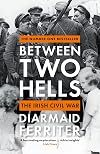
This is probably as much, if not more so, a book about the aftermath of the Civil War and its legacy. The treatment of the conflict itself is fairly cursory, and I'm not sure that I came away with a deeper understanding of it than what I half-remembered from my Leaving Cert many moons ago. Diarmaid Ferriter makes good use of the military pensions archives as a source for social history and the role of memory in public perceptions of the war. What these archives reveal about the deeply show more embedded sexism in the Ireland of the early 20th century is at times shocking but it's not surprising.
However, I found myself wishing for a book with a stronger structure, and one which perhaps contextualised the war more. Ireland's civil war was, as these things go, perhaps a "small war"—relatively brief, with a relatively small body count. This makes it unusual in comparison to other civil wars in early 20th century Europe, and Ferriter in fact argues that how its fallout was dealt with (or carefully ignored) in Ireland actually contributed to the country's comparative political stability. This seems a counterintuitive argument in so many ways, and I would have liked to see Ferriter dig into it more than he did, and into the lingering post-war notion of the Free State forces as ensuring not just an unfinished but a counter revolution. show less
However, I found myself wishing for a book with a stronger structure, and one which perhaps contextualised the war more. Ireland's civil war was, as these things go, perhaps a "small war"—relatively brief, with a relatively small body count. This makes it unusual in comparison to other civil wars in early 20th century Europe, and Ferriter in fact argues that how its fallout was dealt with (or carefully ignored) in Ireland actually contributed to the country's comparative political stability. This seems a counterintuitive argument in so many ways, and I would have liked to see Ferriter dig into it more than he did, and into the lingering post-war notion of the Free State forces as ensuring not just an unfinished but a counter revolution. show less
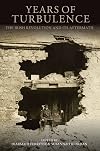
Festschrift and therefore not cohesive. But there is good study in it. Women's suffrage, sport, Casement's Irish brigade, the Irish Parliamentary Party, Pearse hagiography, the IRA GHQ, violence against women, informers, IRA pensions , Civil War in Galway, Bulmer Hobson, Seán Lemass. Every chapter has new and interesting material.
Misnamed. Only the first half of the book is about the Civil War, and it is a bit cursory: it may cover the main incidents, but it does not enter into areas of controversy. The second half covers pensions in great detail, the Army Mutiny and the professionalisation of the Army, the coming to power of Fianna Fáil, and the Civil War and other bases of the divide between Fianna Fáil and Fine Gael down to the present. And this is very interesting.
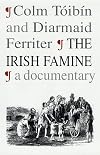
English and Irish Doccuments from the period pointing out that the fault was in both houses and that it's more a question of how people managed to survive than die that we should be asking, though it could be an embarassing one to answer!
Awards


You May Also Like


Associated Authors
Statistics
- Works
- 17
- Also by
- 1
- Members
- 860
- Popularity
- #29,750
- Rating
- 3.5
- Reviews
- 6
- ISBNs
- 48
- Languages
- 1