
Robert Kee (1919–2013)
Author of Ireland: A History
About the Author
Series
Works by Robert Kee
The Laurel and the Ivy: The Story of Charles Stewart Parnell and Irish Nationalism (1993) 79 copies, 1 review
Trial and Error: The Maguires, the Guildford Pub Bombings and British Justice (1986) 38 copies, 1 review
Associated Works
Tagged
Common Knowledge
- Birthdate
- 1919-10-05
- Date of death
- 2013-01-11
- Gender
- male
- Education
- Stowe School
University of Oxford (Magdalen College) - Occupations
- bomber pilot
historian
journalist
broadcaster
documentary filmmaker - Organizations
- Royal Air Force
Picture Post
British Broadcasting Corporation
The Observer
The Sunday Times
The Spectator (show all 7)
ITV - Awards and honors
- Commander of the Order of the British Empire (1998)
BAFTA Richard Dimbleby Award (1976) - Relationships
- Taylor, A. J. P. (friend)
- Nationality
- UK
- Birthplace
- Kolkata, India
- Places of residence
- London, England, UK
Oxford, Oxfordshire, England, UK
Algeria
India
Stowe, Buckinghamshire, England, UK - Map Location
- UK
Members
Reviews

Until his thirteen episode History of Ireland started its broadcast run on BBC2 in 1980 I had only known Robert Kee as a British journalist who sometimes appeared on the news reporting on some incident or news item. When his documentary on Irish history started he became someone I have admired to this very day. If I were someone who used the term I would say he is one of my heroes.
Robert Kee was the first British journalist I came across who reported facts about the troubles in Northern show more Ireland without bias. He told it as it was. He didn’t push one side of a story over another. In The Most Distressful Country: Volume One of The Green Flag, he has taken the same approach to reporting the history of Ireland. I know it’s unbiased as the facts he presents, well supported with detailed references to relevant documentation, would equally upset any Irish Republican or Loyalist extremist.
This volume covers the period from 1170 to the 1860s. The earlier parts of the book present information intended to answer the question of who are the Irish while the rest of the book addresses the issue of how the political concept of Irish nationhood came about.
Robert Kee has done a masterful job in showing the contradictions in Irish history, highlighting the stupidity and confusion surrounding many of the famous events that took place, and demonstrating the tragedy of the poorest people in the country, the peasants, who worked on the land and who were treated as little more than slaves or chattel by most of the landowners.
Kee has also been skilful in showing how the comfortable middle-class, while responsible for generating all the political hype for insurrection in the name of Irish home rule, was totally out of touch with the peasants who constituted the majority of the population and who were the people the nationalist politicians were depending on to make their political dreams a reality.
Irish history of the time is set in context with events such as the French Revolution(s) and the American War of Independence. This book also spells out the horrors of the potato famine and the blind eye turned by the English parliament on the occasion of Irelands darkest hour.
In 1994 I had the great pleasure of attending the launch of Robert Kee’s book on Charles Stewart Parnell, “The Laurel and the Ivy”, and I was delighted to have had the opportunity of informing Mr Kee of how highly I regard his work and to thank him for the wonderful service I believe he has done for Ireland and the Irish people.
In case you have not worked it out by now, I think this book is wonderful and would strongly recommend it to anyone wishing to gain a good introduction to Irish history. show less
Robert Kee was the first British journalist I came across who reported facts about the troubles in Northern show more Ireland without bias. He told it as it was. He didn’t push one side of a story over another. In The Most Distressful Country: Volume One of The Green Flag, he has taken the same approach to reporting the history of Ireland. I know it’s unbiased as the facts he presents, well supported with detailed references to relevant documentation, would equally upset any Irish Republican or Loyalist extremist.
This volume covers the period from 1170 to the 1860s. The earlier parts of the book present information intended to answer the question of who are the Irish while the rest of the book addresses the issue of how the political concept of Irish nationhood came about.
Robert Kee has done a masterful job in showing the contradictions in Irish history, highlighting the stupidity and confusion surrounding many of the famous events that took place, and demonstrating the tragedy of the poorest people in the country, the peasants, who worked on the land and who were treated as little more than slaves or chattel by most of the landowners.
Kee has also been skilful in showing how the comfortable middle-class, while responsible for generating all the political hype for insurrection in the name of Irish home rule, was totally out of touch with the peasants who constituted the majority of the population and who were the people the nationalist politicians were depending on to make their political dreams a reality.
Irish history of the time is set in context with events such as the French Revolution(s) and the American War of Independence. This book also spells out the horrors of the potato famine and the blind eye turned by the English parliament on the occasion of Irelands darkest hour.
In 1994 I had the great pleasure of attending the launch of Robert Kee’s book on Charles Stewart Parnell, “The Laurel and the Ivy”, and I was delighted to have had the opportunity of informing Mr Kee of how highly I regard his work and to thank him for the wonderful service I believe he has done for Ireland and the Irish people.
In case you have not worked it out by now, I think this book is wonderful and would strongly recommend it to anyone wishing to gain a good introduction to Irish history. show less

2865 The Laurel and the Ivy: The Story of Charles Stewart Parnell and Irish Nationalism, by Robert Kee (read 1 May 1996) This book is a masterpiece. I read it because I was so enthralled by Kee's The Green Flag, which won my Best Book of the Year award for 1972. In 1974 my Book of the Year was Jules Abels ' The Parnell Tragedy, mainly because I was new to the Parnell story and I found it of such overwhelming interest. (In this book's bibliography Kee dismisses Abels' book as "now of only show more secondary interest.") Kee is tougher on Parnell than was Abels, and I found myself very much put off by Parnell's adultery and rejoiced that he was rejected by Ireland after the divorce trial. This book is exceptionally well-written and I gloried in its non-American language. Politics seems so much more subtle in the British Isles. show less
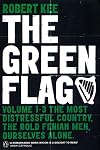
1202. The Green Flag The Turbulent History of the Irish National Movement, by Robert Kee (14 Dec 1972) This I found to be one of the best historical accounts ever read. It tells of the Irish struggle against England from the late 1700s till 1925. I was amazed at how much I did not know: the Easter rebellion of 1916, for instance, was a military failure even tho its after-effects led to freedom for the 26 counties, I found it all fascinating, particularly the parliamentary struggles of show more O'Connell, Parnell, and Redmond. The awful struggles of 1919 to 1923 were all dim to me, but this book made them live. This was an excellent book, introducing me to much that was new and I enthused in the reading. When at the end of the year I reviewed the 59 books (30 fiction, 29 non-fiction) I read in 1972 this book was chosen as "Best Book Read in 1972"! show less
For anyone who wants to truly understand Irish history,this book is a must read. The late Robert Kee's brilliant book is an absolute masterpiece of historical narrative. I doubt if there is a better one volume history on this subject (although it has previously been published as three volumes, it was originally one volume and this edition restores it to one volume).
Lists
You May Also Like


Associated Authors
Statistics
- Works
- 25
- Also by
- 4
- Members
- 1,323
- Popularity
- #19,430
- Rating
- 3.9
- Reviews
- 9
- ISBNs
- 53
- Languages
- 2
- Favorited
- 3