
Elizabeth Laird
Author of Kiss the Dust
About the Author
Series
Works by Elizabeth Laird
Where's Toto?/Donde esta Toto?: Spanish/English Edition (Let's Read! Series) (Spanish Edition) (2009) 15 copies, 1 review
Eddy and the Movie Star: Elementary Level (Heinemann ELT guided readers: Elementary level) (1999) 9 copies
Anna and the Fighter/The House on the Hill: Beginner Level (Heinemann Guided Readers) (1992) 4 copies
Das rosa Gespenst aus Lamont 1 copy
ባይተዋሩ ልዑል 1 copy
Big Green Star 1 copy
ANITA´S BIG DAY Level 1 1 copy
Un fratello da nascondere 1 copy
සරණ පතා මහපාරට 1 copy
Secrets of the Fearies 1 copy
Storm (Mystery) - Elementary 1 copy
Associated Works
Tagged
Common Knowledge
- Birthdate
- 1943-10-21
- Gender
- female
- Education
- University of Bristol
Institute of Education London
University of Edinburgh (Applied Linguistics) - Occupations
- teacher
author
violinist
folktale collector - Short biography
- Ms. Laird was born in New Zealand and has taught English in Malaysia, Ethiopia, and India. She and her husband, a specialist in Middle Eastern affairs, now live in England with their two children. [from Kiss the Dust (1991)]
- Nationality
- New Zealand (birth)
- Birthplace
- New Zealand
- Places of residence
- New Zealand
Purley, Surrey, England, UK
Seremban, Malaysia
Addis Ababa, Ethiopia
India
Baghdad, Iraq (show all 10)
Beirut, Lebanon
Vienna, Austria
Richmond, Surrey, England, UK
Edinburgh, Scotland, UK
Members
Discussions
1990s Children's/YA Book boy left in France - cave in Name that Book (May 2011)
Reviews

I thoroughly enjoyed these Persian folk tales. As with all folk tales, it seems, there are certain elements: cruel rich people, young people trying to find their own path, magical helpers like fairies, and wicked spells cast creating beasts and then broken by selfless true love.
But all with a Persian sensibility. Like the a chickpea who was sent on an errand by his father to get the long owed penny payment from the Shah. Along the route, the little chickpea was able to absorb a river, a show more leopard, a wolf, and a jackal--all which came to his rescue when the Shah wanted to punish him for asking for the penny that was due to his father.
My favorite was the first story in the collection, "Miss Cockroach and Mister Mouse," being perhaps the one with a message and sensibility that I have not encountered before. A silly, but beautiful and uniquely adorned Miss Cockroach is sent out by her father to find herself a suitable a husband. Each possible suitor she encounters would love to have her for her beauty, but warn her that if she is unable to do specific wifely chores, he will treat her ill for failing. She declines each offer of marriage (smart cockroach). Then, she meets Mister Mouse, who will love her, adore her, and care for her without any quid pro quo. He just wants to love her and be with her. She is happy and silly with Mister Mouse. But due to a mishap, during her rescue and subsequent making of soup for her, Mister Mouse falls in the soup and drowns. Miss Cockroach never again adorns herself so beautifully and goes back to her father where she is the humdrum, dutiful daughter.
To me, that was the level of a Shakespearian tragedy!
On a personal note, I am sad. I have been reading Iranian stories (I have more to read) because I made an Iranian online friend, an intelligent, quirky, young person with an immense appetite for life. A cultural and generational exchange, if you will. The person has gone missing from my inbox for a couple of months now. I worry but do understand these things happen. Indeed, I recall being remiss in my international penpal correspondences in my own youth and hope it is no more than that, that life has naturally become very full and sweet.
I will continue to read my Iranian books, feel connected to a dear Iranian friend (and Nanaie too), through the ether, heart to heart.
“You are not just the drop in the ocean. You are the mighty ocean in the drop.”
— Rumi show less
But all with a Persian sensibility. Like the a chickpea who was sent on an errand by his father to get the long owed penny payment from the Shah. Along the route, the little chickpea was able to absorb a river, a show more leopard, a wolf, and a jackal--all which came to his rescue when the Shah wanted to punish him for asking for the penny that was due to his father.
My favorite was the first story in the collection, "Miss Cockroach and Mister Mouse," being perhaps the one with a message and sensibility that I have not encountered before. A silly, but beautiful and uniquely adorned Miss Cockroach is sent out by her father to find herself a suitable a husband. Each possible suitor she encounters would love to have her for her beauty, but warn her that if she is unable to do specific wifely chores, he will treat her ill for failing. She declines each offer of marriage (smart cockroach). Then, she meets Mister Mouse, who will love her, adore her, and care for her without any quid pro quo. He just wants to love her and be with her. She is happy and silly with Mister Mouse. But due to a mishap, during her rescue and subsequent making of soup for her, Mister Mouse falls in the soup and drowns. Miss Cockroach never again adorns herself so beautifully and goes back to her father where she is the humdrum, dutiful daughter.
To me, that was the level of a Shakespearian tragedy!
On a personal note, I am sad. I have been reading Iranian stories (I have more to read) because I made an Iranian online friend, an intelligent, quirky, young person with an immense appetite for life. A cultural and generational exchange, if you will. The person has gone missing from my inbox for a couple of months now. I worry but do understand these things happen. Indeed, I recall being remiss in my international penpal correspondences in my own youth and hope it is no more than that, that life has naturally become very full and sweet.
I will continue to read my Iranian books, feel connected to a dear Iranian friend (and Nanaie too), through the ether, heart to heart.
“You are not just the drop in the ocean. You are the mighty ocean in the drop.”
— Rumi show less

In 1976, on an eerily deserted section in Beirut, bright oranges roll down the middle of the street, only very recently abandoned.
In the Preface, Scottish author Elizabeth Laird recounts that vision as being the personal nagging memory that inspired this tense and inspiring middle grade fictional account of a Muslim girl and her family in the early part of the Lebanese Civil War (1975-1990).
Ayesha, her two younger brothers, and their grandmother have fled their home where Ayesha's mother who show more had remained to finish packing, was killed. With hundreds of other refugees, they now live in an abandoned, once exclusive apartment with falling chandeliers, no glass in the windows, large bullet holes in the walls gaping to the street. A small corner of it is now where they live, grateful to simply survive.
When the grandmother's medicine runs out and she becomes very ill, 10 year old Ayesha knows what she must do, alone. With great courage she must find the doctor who prescribed the medicine. In order to do that she will have to traverse Beirut's infamous "Green Line," navigating through and beyond multiple risky militia checkpoints, leaving the Muslim-held part of the city into the now opposing Christian part.
If somehow successful getting medicine, she will then have to traverse all the same dangers back again.
From what I know having lived in Lebanon, leaving after only the first 6 months of the war--like everyone, we erroneously thought we'd be returning shortly--from following the news closely for years, and from a few accounts from Lebanese friends, it is with terrible accuracy this story depicts the real conditions for the 1.5 million Beirut inhabitants at that time. They had been the bustling, vibrant residents of the city that was called "the Paris of the Middle East." For the right middle grader, reading this book with a guiding adult, could launch important, difficult discussions about refugees and the extreme ravages of war.
The story ends on a hopeful note, a very short account that Ayesha and her family are reunited with her father and escape Beirut to safety. Although certainly there were many families who did just that, it should leave a sensitive reader to wonder about all those other refugee families that remained, not having even a hope of that option.
On the whole Laird offers a true life perspective, an age appropriate introduction to the vitally important and tragic experiences of non-combatants during war. show less
In the Preface, Scottish author Elizabeth Laird recounts that vision as being the personal nagging memory that inspired this tense and inspiring middle grade fictional account of a Muslim girl and her family in the early part of the Lebanese Civil War (1975-1990).
Ayesha, her two younger brothers, and their grandmother have fled their home where Ayesha's mother who show more had remained to finish packing, was killed. With hundreds of other refugees, they now live in an abandoned, once exclusive apartment with falling chandeliers, no glass in the windows, large bullet holes in the walls gaping to the street. A small corner of it is now where they live, grateful to simply survive.
When the grandmother's medicine runs out and she becomes very ill, 10 year old Ayesha knows what she must do, alone. With great courage she must find the doctor who prescribed the medicine. In order to do that she will have to traverse Beirut's infamous "Green Line," navigating through and beyond multiple risky militia checkpoints, leaving the Muslim-held part of the city into the now opposing Christian part.
If somehow successful getting medicine, she will then have to traverse all the same dangers back again.
From what I know having lived in Lebanon, leaving after only the first 6 months of the war--like everyone, we erroneously thought we'd be returning shortly--from following the news closely for years, and from a few accounts from Lebanese friends, it is with terrible accuracy this story depicts the real conditions for the 1.5 million Beirut inhabitants at that time. They had been the bustling, vibrant residents of the city that was called "the Paris of the Middle East." For the right middle grader, reading this book with a guiding adult, could launch important, difficult discussions about refugees and the extreme ravages of war.
The story ends on a hopeful note, a very short account that Ayesha and her family are reunited with her father and escape Beirut to safety. Although certainly there were many families who did just that, it should leave a sensitive reader to wonder about all those other refugee families that remained, not having even a hope of that option.
On the whole Laird offers a true life perspective, an age appropriate introduction to the vitally important and tragic experiences of non-combatants during war. show less
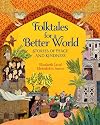
In a Nutshell: An excellent collection of positive folktales.
The author states in the foreword that folktales are the ancient wonders of the world. Many of us have grown up reading folktales from various cultures. These stories contain an old-world feel that delivers value and satisfaction beyond time. No wonder then that they are published even today. Here’s one more gem of a folktale anthology available to modern young readers.
As the title indicates, this collection contains show more “folktales for a better world.” The seven stories in this book are all chosen based on their ideology of promoting peace and kindness and humaneness. It is somewhat ironic if you keep in mind that the tales have been chosen from a few of the most troubled countries of the world - Ethiopia, Sudan, Palestine, Yemen, Afghanistan, and Syria.
We all know that folktales are sometimes quite dark, and sometimes outdated in terms of their inherent misogyny. What I liked most about this collection is that none of the seven stories promoted a patriarchal domination or a weak-woman-needs-man-to-rescue-her mindset. In fact, there were two stories where the woman saves the day. Such a pleasure to see well-chosen folktales that carry an essence of the past but also adhere to the values of the present to ensure a progressive future!
What adds the icing to the cake is the illustrations. They match the folktales in look, charm and appeal.
The official target age for this collection is 5-8 year olds, but a couple of the stories might work better for the older kinds in that range. The vocabulary level is quite easy though.
Overall, I loved all the seven tales in this little collection, and wish it had contained a few more.
Recommended to anyone who enjoys old-fashioned folktales that are relevant even in the modern world.
4.5 stars.
My thanks to Interlink Publishing Group Inc and Edelweiss for the DRC of “Folktales for a Better World: Stories of Peace and Kindness”. This review is voluntary and contains my honest opinion about the book.
———————————————
Connect with me through:
My Blog | The StoryGraph | Facebook | Twitter show less
The author states in the foreword that folktales are the ancient wonders of the world. Many of us have grown up reading folktales from various cultures. These stories contain an old-world feel that delivers value and satisfaction beyond time. No wonder then that they are published even today. Here’s one more gem of a folktale anthology available to modern young readers.
As the title indicates, this collection contains show more “folktales for a better world.” The seven stories in this book are all chosen based on their ideology of promoting peace and kindness and humaneness. It is somewhat ironic if you keep in mind that the tales have been chosen from a few of the most troubled countries of the world - Ethiopia, Sudan, Palestine, Yemen, Afghanistan, and Syria.
We all know that folktales are sometimes quite dark, and sometimes outdated in terms of their inherent misogyny. What I liked most about this collection is that none of the seven stories promoted a patriarchal domination or a weak-woman-needs-man-to-rescue-her mindset. In fact, there were two stories where the woman saves the day. Such a pleasure to see well-chosen folktales that carry an essence of the past but also adhere to the values of the present to ensure a progressive future!
What adds the icing to the cake is the illustrations. They match the folktales in look, charm and appeal.
The official target age for this collection is 5-8 year olds, but a couple of the stories might work better for the older kinds in that range. The vocabulary level is quite easy though.
Overall, I loved all the seven tales in this little collection, and wish it had contained a few more.
Recommended to anyone who enjoys old-fashioned folktales that are relevant even in the modern world.
4.5 stars.
My thanks to Interlink Publishing Group Inc and Edelweiss for the DRC of “Folktales for a Better World: Stories of Peace and Kindness”. This review is voluntary and contains my honest opinion about the book.
———————————————
Connect with me through:
My Blog | The StoryGraph | Facebook | Twitter show less
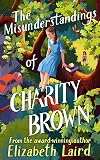
In the years after WWII, Charity Brown catches polio and spends months in the hospital; soon after she comes home, her religious family learns they have been left a manor house. Her dad gets the idea to run it as a refuge for the weary, and they move in; Charity's older siblings, Ted, Faith, and Hope, come and go. Charity makes friends with a neighbor girl her age, Rachel Stern, whose immediate family escaped from the Nazis in Germany, though many family members left behind were killed. show more Charity struggles to reconcile all the rules of her religion with the larger world, and learns there are more gray areas than black and white: she meets a kind German, and a racist missionary, and she sees her parents soften, allowing her sister Faith to marry outside their church, and allowing Charity to go to the opera with Rachel's family. A quiet, introspective coming-of-age story set in the UK (Charity's dad is Scottish, her mother is from New Zealand).
Quotes
"I learned...that you cannot tell a good person by the label they bear. I have known saints who have never stepped inside a church, but in whom the love of God is warm, and so-called Christians who welcomed the Nazis." (Mr. Fischer, 112)
It just shows, I told myself, that you never know what's going on in other people's lives. (177)
....shouldn't we always be truthful? Only, if we are, and it makes other people feel bad, isn't that wrong too?
It was the kind of mental tangle I hated. (186)
"You know what," I said to Rachel, "I've just understood one of life's eternal truths. Everyone, absolutely everyone in the whole world, is embarrassed by their parents." (327) show less
Quotes
"I learned...that you cannot tell a good person by the label they bear. I have known saints who have never stepped inside a church, but in whom the love of God is warm, and so-called Christians who welcomed the Nazis." (Mr. Fischer, 112)
It just shows, I told myself, that you never know what's going on in other people's lives. (177)
....shouldn't we always be truthful? Only, if we are, and it makes other people feel bad, isn't that wrong too?
It was the kind of mental tangle I hated. (186)
"You know what," I said to Rachel, "I've just understood one of life's eternal truths. Everyone, absolutely everyone in the whole world, is embarrassed by their parents." (327) show less
Lists
THE WAR ROOM (1)
Awards


You May Also Like


Associated Authors
Statistics
- Works
- 151
- Also by
- 1
- Members
- 3,487
- Popularity
- #7,292
- Rating
- 3.7
- Reviews
- 171
- ISBNs
- 425
- Languages
- 14
- Favorited
- 1