
Jacqueline Wilson
Author of Double Act
About the Author
Jacqueline Wilson was born in Bath, England on December 17, 1945. She always wanted to be a writer and as a teenager, started working as a journalist for Jackie magazine. Since becoming a full-time writer, she has written numerous novels including The Dare Game; Bad Girls; The Worry Website; Lola show more Rose; The Diamond Girls; Clean Break; and Hetty Feather. Her novels have been adapted numerous times for television, and commonly deal with such difficult topics as adoption, divorce, and mental illness. She has also won numerous awards including the Guardian Children's Fiction Award for The Illustrated Mum; the Smarties Prize, the Sheffield Children's Book Award and the Children's Book Award for Double Act; The Young Telegraph/Fully Booked Award in 1995 for The Bed and Breakfast Star; and the 2002 Blue Peter People's Choice Award for The Story of Tracy Beaker. In 2015 she made the New Zealand Best Seller List with her title The Butterfly Club. (Bowker Author Biography) show less
Image credit: Library of Congress
Series
Works by Jacqueline Wilson
The Lottie Project ((Adaptation)) 32 copies
The Jacqueline Wilson Double: "The Illustrated Mum", "Vicky Angel" (Cover to Cover) (2002) — Author — 9 copies
SOS TITLE UNKNOWN 6 copies
Children's Writers' & Artists' Yearbook 2008 (Children's Writers' & Artists' Yearbook) (2007) 5 copies
Jacqueline Wilson Slipcase: Includes Bad Girls, The Bed and Breakfast Star, The Suitcase Kid (2005) 3 copies
Jacqueline Wilson Slipcase: "The Story of Tracy Beaker", "Double Act", "The Lottie Project" (2003) 3 copies
Vinkonur að eilífu 2 copies
It's Homeschooling, Not Solitary Confinement: Busting the Myths, Misconceptions, and Misinformation About Homeschooling (2017) 2 copies
Abril en la basura (Gran angular: Alerta roja/ Big Angular: Red Alert) (Spanish Edition) (2003) 1 copy
Wave Me Goodbye - Sampler 1 copy
Clover Moon - Sampler 1 copy
マイベストフレンド 1 copy
Outra vez uma miúda ousada 1 copy
Minha Gata de Estimação 1 copy
HThe Iworry website 1 copy
Tündérek és titkok 1 copy
The Tracy Beaker trilogy 1 copy
Story collection 1 copy
The Magic Of Flying 1 copy
Pet Journal 1 copy
Tantas Lágrimas Para Quê? 1 copy
poetry is not pants 1 copy
Associated Works
The Fairy Doll & Other Tales from the Dolls' House (2012) — Foreword, some editions — 39 copies, 1 review
Flights of Fancy: Creative Inspiration from Ten Award-Winning Authors and Illustrators (2019) — Contributor — 35 copies, 10 reviews
Queen of Teen: Ten Fabulous Stories by Top Authors in Aid of Kids Company (2010) — Contributor — 21 copies
Love and Longing: A Collection of Classic Poetry and Prose (2004) — Introduction, some editions — 16 copies
Tagged
Common Knowledge
- Birthdate
- 1945-12-17
- Gender
- female
- Education
- Latchmere Primary School
Coombe Girls' School - Occupations
- writer
- Organizations
- University of Roehampton
- Awards and honors
- Order of the British Empire (2002)
Eleanor Farjeon Award (2004)
Children's Laureate (2005-2007)
Action for Children's Arts (J.M. Barrie Award, 2015)
Order of the British Empire (Dame Commander, 2008) - Relationships
- Wilson, Emma (daughter)
- Nationality
- UK
- Birthplace
- Bath, Somerset, England, UK
- Places of residence
- Bath, Somerset, England, UK
Kingston-upon-Thames, Surrey, England, UK
Dundee, Angus, Scotland, UK - Map Location
- England, UK
Members
Reviews

I really enjoyed this, which is a solidly typical Jacqueline Wilson. Ella's mum has remarried, and is having a baby with her step-dad, who Ella generally resents for messing up the shape of her life. But then her mum ends up gravely ill in a coma after having the baby and Ella and her step-dad have to learn to support each other while looking after the baby.
It captures some of the rawness of grief perfectly, when someone is trying so hard to be nice to you, and you're just angry and hurt and show more everything is _wrong_ and you're horrid back to them.
There's a lot of very Jacqueline Wilson-esque subplots - Ella's biological dad turns up for a chapter, and is ridiculously rubbish, Ella discovers that the nasty girl at schoolis nasty because she's got an abusive step-dad and a mum who is horrid to her , Ella finds out that when her best friend makes a new friend, she can make a new friend too, even if they're a boy!
I have to say, the thing I didn't like most about this book wasthe happy ending. The rest of it is really well crafted, the grief, the denial, trying to stay optimistic while the bad news comes in the cracks. I'm not saying I wanted Ella's mum to die, or to have to live in a PVS . But it felt like the strength of the story was showing how Ella manages to become closer to her step dad and brother, and get enthusiastic about her whale project, and make new friends, even though this terrible thing has happened. Tacking on a happy ending felt almost like it undermined all that. And it felt _so_ tacked on! It all happens on literally the last page, and feels very cliched and saccharine. I find myself wondering if Jacqueline Wilson had written the (in my opinion) more powerful ambiguous ending, where Ella is still sitting at her mum's bedside talking to her in her coma, and then got lent on with 'it's for kids, don't be so ridiculously bleak, of course her mum wakes up at the end' and tacked on the ending but her heart wasn't in it. show less
It captures some of the rawness of grief perfectly, when someone is trying so hard to be nice to you, and you're just angry and hurt and show more everything is _wrong_ and you're horrid back to them.
There's a lot of very Jacqueline Wilson-esque subplots - Ella's biological dad turns up for a chapter, and is ridiculously rubbish, Ella discovers that the nasty girl at school
I have to say, the thing I didn't like most about this book was
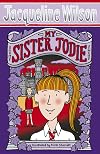
My Sister Jodie is destined to be one of my favourite Jacqueline Wilson novels - the same humourous style and conversational tone deals with the same kinds of childhood angst, yet this one is a bit different - even apart from the shock ending.
The whole setting - a crumbling but atmospheric gothic mansion, turned into an odd sort of boarding school - gives plenty of scope for literary references and allusions and the book takes full advantage. Most satisfyingly for me, Mrs Wilberforce shares show more her library with Pearl and takes the opportunity to openly resent the sentimental and fanciful endings of those children's classics like The Secret Garden and Heidi and What Katy Did where a paralysed or otherwise disabled child becomes whole through the ministrations of some small but saintly heroine. (Hear, hear.)
So, as far as Jacqueline Wilson's books are ever "about" something, this one is about endings. In particular it is about how, in real life, endings are rarely "happy" - and about how, in real life, endings are not even "endings" at all, because something always happens next. show less
The whole setting - a crumbling but atmospheric gothic mansion, turned into an odd sort of boarding school - gives plenty of scope for literary references and allusions and the book takes full advantage. Most satisfyingly for me, Mrs Wilberforce shares show more her library with Pearl and takes the opportunity to openly resent the sentimental and fanciful endings of those children's classics like The Secret Garden and Heidi and What Katy Did where a paralysed or otherwise disabled child becomes whole through the ministrations of some small but saintly heroine. (Hear, hear.)
So, as far as Jacqueline Wilson's books are ever "about" something, this one is about endings. In particular it is about how, in real life, endings are rarely "happy" - and about how, in real life, endings are not even "endings" at all, because something always happens next. show less
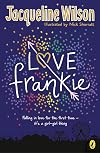
Ok but I think I love this book-
I love how honest it is. Jaqueline isn’t afraid to write about the hard stuff in kid’s lives, and coming out and falling in love as a young person I believe isn’t really talked about enough in literature. I loved Sam and Frankie’s friendship, but I absolutely despised Sally. I don’t read a lot of Jacqueline Wilson’s books anymore. In fact, I haven’t picked one up since I was 10 years old. However, when I saw this book in the store I desperately show more wanted to read it. I suggest you do the same. Overall, I loved it! I give it a four simply because of the ending. It’s kinda a paper towns (by John green) style ending. You like the book, but the ending doesn’t give it justice!! show less
I love how honest it is. Jaqueline isn’t afraid to write about the hard stuff in kid’s lives, and coming out and falling in love as a young person I believe isn’t really talked about enough in literature. I loved Sam and Frankie’s friendship, but I absolutely despised Sally. I don’t read a lot of Jacqueline Wilson’s books anymore. In fact, I haven’t picked one up since I was 10 years old. However, when I saw this book in the store I desperately show more wanted to read it. I suggest you do the same. Overall, I loved it! I give it a four simply because of the ending. It’s kinda a paper towns (by John green) style ending. You like the book, but the ending doesn’t give it justice!! show less
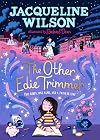
An enjoyable Jacqueline Wilson. Edie Trimmer is a Typical Jacqueline Wilson hero, loving drama and writing stories and being the centre of attention. When all her friends are chosen to be in Oliver and she is not, she is actually remarkably mature about it, but she is very sad. Then she finds herself travelling through time back to Victorian England! She is an impoverished orphan and has a sequence of grim adventures, will she ever work out how to get home?
It is definitely doing that common show more Jacqueline Wilson thing of 'let us teach the children about famous books by including them in my book', which I don't have a problem with at all, although maybe now I am in my 40s I would be better off reading Oliver than Wilson's homage to it.
The most interesting thing in this book was probably the character of Missus and Evie's response to her. She really does take Evie in off the street and feed her and give her a trade. But she really does lock her in the house all day and force her to sew dolls. The ambiguity of the character contrasted with Evie's Very Modern Ideas of what is good and how this woman is Horrid is interesting. There is something deep and true and sad in how kids can hate someone and feel horribly abused by them when they think they are trying to do their best and mother them.
The abusive police were also well done. Probably easier to write in a children's book because they're Victorian Police, but the fact she gets a serious headwound from one, and he just says 'well, I'll tell everyone you did it, and you'll make it worse for yourself if you complain' is true and brutal!
I was not expecting the framing of the 'realistic' reason. Edie is convinced she's travelled back in time and lived this other life, but in modern times she is in a deep coma. Which the doctors think is caused by repressing her feelings, and that all her nice mature 'it's OK for my friend to be picked not me' has led to this, rather than her just saying 'yes, I do feel a bit jealous and upset, and that's OK.' Which is an interesting modern message!
The ending is saccharine and unrealistic, but it's Jacqueline Wilson, and particularly if you view it through the lens of a story of Evie's imagining, rather than a true time travel story, is very much in character. And I quite liked Great White Man Charles Dickens singlehandedly saves the day and invents institutions that are Nice To People. show less
It is definitely doing that common show more Jacqueline Wilson thing of 'let us teach the children about famous books by including them in my book', which I don't have a problem with at all, although maybe now I am in my 40s I would be better off reading Oliver than Wilson's homage to it.
The most interesting thing in this book was probably the character of Missus and Evie's response to her. She really does take Evie in off the street and feed her and give her a trade. But she really does lock her in the house all day and force her to sew dolls. The ambiguity of the character contrasted with Evie's Very Modern Ideas of what is good and how this woman is Horrid is interesting. There is something deep and true and sad in how kids can hate someone and feel horribly abused by them when they think they are trying to do their best and mother them.
The abusive police were also well done. Probably easier to write in a children's book because they're Victorian Police, but the fact she gets a serious headwound from one, and he just says 'well, I'll tell everyone you did it, and you'll make it worse for yourself if you complain' is true and brutal!
I was not expecting the framing of the 'realistic' reason. Edie is convinced she's travelled back in time and lived this other life, but in modern times she is in a deep coma. Which the doctors think is caused by repressing her feelings, and that all her nice mature 'it's OK for my friend to be picked not me' has led to this, rather than her just saying 'yes, I do feel a bit jealous and upset, and that's OK.' Which is an interesting modern message!
The ending is saccharine and unrealistic, but it's Jacqueline Wilson, and particularly if you view it through the lens of a story of Evie's imagining, rather than a true time travel story, is very much in character. And I quite liked Great White Man Charles Dickens singlehandedly saves the day and invents institutions that are Nice To People. show less
Lists
BBC Big Read (7)
Awards


You May Also Like


Associated Authors
Statistics
- Works
- 288
- Also by
- 20
- Members
- 22,850
- Popularity
- #924
- Rating
- 3.7
- Reviews
- 267
- ISBNs
- 1,905
- Languages
- 27
- Favorited
- 22

