
Malorie Blackman
Author of Noughts and Crosses
About the Author
Disambiguation Notice:
(yid) VIAF:22419968
Series
Works by Malorie Blackman
Associated Works
New Daughters of Africa: An International Anthology of Writing by Women of African Descent (2019) — Contributor — 117 copies, 1 review
Flights of Fancy: Creative Inspiration from Ten Award-Winning Authors and Illustrators (2019) — Contributor — 35 copies, 10 reviews
Dare to be Different - A Cebration Of Freedom In association With Amnesty International (1999) — Contributor — 13 copies
Tagged
Common Knowledge
- Legal name
- Blackman, Oneta Malorie
- Birthdate
- 1962-02-08
- Gender
- female
- Education
- Thames Polytechnic
National Film and Television School
Marlborough College - Occupations
- documentation assistant
systems progammer
database manager
writer - Awards and honors
- Eleanor Farjeon Award (2005)
Order of the British Empire ( [2008])
Children's Laureate (2013-2015)
PEN Pinter Prize (2022) - Nationality
- England
UK - Birthplace
- Clapham, London, England, UK
- Places of residence
- London, England, UK
Kent, England, UK - Map Location
- England, UK
- Disambiguation notice
- VIAF:22419968
Members
Discussions
Noughts and Crosses Signed on the Website for £75 in Folio Society Devotees (January 2025)
British Author Challenge December 2023: Malorie Blackman & E. M. Forster in 75 Books Challenge for 2023 (December 2023)
Reviews

This is the story of Callum and Sephy (Persephone). One white the other black, separated by the system on racist grounds. Black is the dominant race with the white minority suffering racial prejudice. Right from the start you are struck by the racial injustice and loss of hope in the minority community, as gradually everything is taken away from them.. The integration of schools echoes the civil rights movement in sixties America. How standing up for what is right has unforeseen consequences show more and a price to pay.
Likening the story to Romeo and Juliet almost trivialises the bigger picture which goes far beyond two families. This book examines how institutions (school, justice, employment and politics), affect the individual and how socialisation reinforces and shapes the wider society. Why the use of language matters, not only in how we see ourselves, but how we view other people. The value of work and the denigration and loss imposed by society when it is absent or lost. The breakdown of relationships through poverty and hardship.
The pace of this novel is measured and dynamic, not letting up for a second, yet not feeling rushed either. Written alternatively from both Callum and Sephy’s point of view, we get a view of race from both sides. How family dynamics and loyalties cause friction on both sides, echoing the problems in wider society. It is interesting that Callum’s family is more united and separate than Sephy’s middle class ideal, with a father who pursues power, a mother who drinks and a sister who wants to escape the family home.
The characters are well drawn, both Callum and Sephy are relatable and although we do not see much of their parents, we do feel their concern for their children’s future. The siblings Jude and Minerva are both the older rebellious sister and brother who challenge the system on their terms. Sephy and Callum naively believe things can change through acts of will and non-violent means. Love conquers all.
The ending is logical and satisfying. It is not a miracle cure, it does not give false hope, like the rest of the book it just states the facts. The addition of the short story An Eye for an Eye really enhances the ending and I look forward to reading the rest of the series. show less
Likening the story to Romeo and Juliet almost trivialises the bigger picture which goes far beyond two families. This book examines how institutions (school, justice, employment and politics), affect the individual and how socialisation reinforces and shapes the wider society. Why the use of language matters, not only in how we see ourselves, but how we view other people. The value of work and the denigration and loss imposed by society when it is absent or lost. The breakdown of relationships through poverty and hardship.
The pace of this novel is measured and dynamic, not letting up for a second, yet not feeling rushed either. Written alternatively from both Callum and Sephy’s point of view, we get a view of race from both sides. How family dynamics and loyalties cause friction on both sides, echoing the problems in wider society. It is interesting that Callum’s family is more united and separate than Sephy’s middle class ideal, with a father who pursues power, a mother who drinks and a sister who wants to escape the family home.
The characters are well drawn, both Callum and Sephy are relatable and although we do not see much of their parents, we do feel their concern for their children’s future. The siblings Jude and Minerva are both the older rebellious sister and brother who challenge the system on their terms. Sephy and Callum naively believe things can change through acts of will and non-violent means. Love conquers all.
The ending is logical and satisfying. It is not a miracle cure, it does not give false hope, like the rest of the book it just states the facts. The addition of the short story An Eye for an Eye really enhances the ending and I look forward to reading the rest of the series. show less
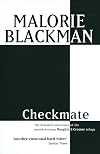
After a predictable prologue to reveal a key piece of information, the opening chapter is stunning in its understated approach to horror: Callie Rose, a mixed race child in a racially intolerant world, is preparing to commit a shocking act at a young age. After this, the novel shifts continuously between the past and the present, including different viewpoints to allow you to witness over time the fragmentation of Callie's relationship with Sephy, her Cross mother, and her gradual show more disillusionment with her world. This is a well executed structure, which means that everything is clearly interconnected but Blackman is still able to surprise us along the way.
After the depressing feel of 'Knife Edge', the second in the trilogy, this is a novel that has a steep path to climb to find some hope for the future, but Blackman manages, perhaps by sheer dint of emotional weight, to suggest possibilities through the believable but terrifying choices her characters are forced to make. As the resolution to the series, this book does include the requisite happy endings while still leaving some room to guess about romantic possibilities. The author's final pages seem designed to suggest that love is the key to all meaning, but the necessary actions of major characters suggest otherwise, leaving a slightly uncomfortable resolution in which Blackman could be seen to argue for the necessity of violence and betrayal. It is worth reading this novel simply to consider what message Blackman wants to put across and whether or not she succeeds. However, the clear language and engaging characters also make this a compelling read.
Overall, this is an emotionally grueling series which sets up key parallels to encourage people to think again about the racially divided world which they inhabit, often thoughtlessly. However, it is not as simple as a treatise on racism; Blackman writes thoughtfully about human relationships and how we treat our families, our friends and our lovers, forcing us to recognise the unintended impacts that we can have on each other. show less
After the depressing feel of 'Knife Edge', the second in the trilogy, this is a novel that has a steep path to climb to find some hope for the future, but Blackman manages, perhaps by sheer dint of emotional weight, to suggest possibilities through the believable but terrifying choices her characters are forced to make. As the resolution to the series, this book does include the requisite happy endings while still leaving some room to guess about romantic possibilities. The author's final pages seem designed to suggest that love is the key to all meaning, but the necessary actions of major characters suggest otherwise, leaving a slightly uncomfortable resolution in which Blackman could be seen to argue for the necessity of violence and betrayal. It is worth reading this novel simply to consider what message Blackman wants to put across and whether or not she succeeds. However, the clear language and engaging characters also make this a compelling read.
Overall, this is an emotionally grueling series which sets up key parallels to encourage people to think again about the racially divided world which they inhabit, often thoughtlessly. However, it is not as simple as a treatise on racism; Blackman writes thoughtfully about human relationships and how we treat our families, our friends and our lovers, forcing us to recognise the unintended impacts that we can have on each other. show less
After the disappointment of Knife Edge, the previous book in this trilogy, I wasn't sure which way this one was going to go. After spending the afternoon racing through it, I am pleased to announce that Checkmate is as good as Noughts and Crosses which I adored. YAY!
While Knife Edge seemed to be lacking the edginess and the intensity of plot I found in Noughts and Crosses, Checkmate did not have that problem. It was angsty, it was powerful, it was emotional. The lives of these characters are show more still not at ease, all of them still fighting with the ghosts of their collective past and poor Callie Rose, dragged into the middle of it all, is just trying to work out who she is and where she belongs.
Sephy has changed dramatically since Noughts and Crosses but at times I can see her old self shine through and what's more is that I see her in Callie. The development of mother and daughter was flawless - all their fights, arguments, mistakes on both parts, and in the end their love for each other, tied together by the memory of Callum. Callum, though killed in the first book, is an overhanging presence in all their lives, even all those years later. [And I always knew that letter was a fake!]
Meggie has changed dramatically in this book. Her vindictiveness was quite surprising and I would have thought she would have treated Sephy better. I also don't know how they managed to live in the same house for more than ten years hardly speaking to one another. I believed Sephy was well within her rights to be angry and upset, and also that Meggie had reason to worry - but of course went about it all the wrong way. The problem with these characters is that they've all been broken and hurt so many times they don't know who to trust. I guess this is why the ending gave me so much to be hopeful for. I found myself not caring which boys or men were in either of Callie or Sephy's lives, but mainly caring about their relationship with each other. Makes you wish they had had that conversation a long time ago.
When you care about characters (as I inevitably do) reading a book where they make so much trouble and cause so much pain for each other can be very hard! However, I very much enjoyed this 'conclusion' to the 'trilogy' (though I have another book??) and I don't mind about the extra book as again I find myself unable to let go. show less
While Knife Edge seemed to be lacking the edginess and the intensity of plot I found in Noughts and Crosses, Checkmate did not have that problem. It was angsty, it was powerful, it was emotional. The lives of these characters are show more still not at ease, all of them still fighting with the ghosts of their collective past and poor Callie Rose, dragged into the middle of it all, is just trying to work out who she is and where she belongs.
Sephy has changed dramatically since Noughts and Crosses but at times I can see her old self shine through and what's more is that I see her in Callie. The development of mother and daughter was flawless - all their fights, arguments, mistakes on both parts, and in the end their love for each other, tied together by the memory of Callum. Callum, though killed in the first book, is an overhanging presence in all their lives, even all those years later. [And I always knew that letter was a fake!]
Meggie has changed dramatically in this book. Her vindictiveness was quite surprising and I would have thought she would have treated Sephy better. I also don't know how they managed to live in the same house for more than ten years hardly speaking to one another. I believed Sephy was well within her rights to be angry and upset, and also that Meggie had reason to worry - but of course went about it all the wrong way. The problem with these characters is that they've all been broken and hurt so many times they don't know who to trust. I guess this is why the ending gave me so much to be hopeful for. I found myself not caring which boys or men were in either of Callie or Sephy's lives, but mainly caring about their relationship with each other. Makes you wish they had had that conversation a long time ago.
When you care about characters (as I inevitably do) reading a book where they make so much trouble and cause so much pain for each other can be very hard! However, I very much enjoyed this 'conclusion' to the 'trilogy' (though I have another book??) and I don't mind about the extra book as again I find myself unable to let go. show less
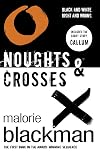
Noughts & Crosses follows Sephy and Callum, from childhood friendship through to the ways a racially polarised society repeatedly forces them apart.
The book generated huge contemporary discussion and still feels painfully relevant. By reversing racial hierarchies, placing Black society in the position of power while white citizens remain marginalised and treated as second class, it shifts familiar injustices into a perspective many younger readers may not otherwise encounter so directly. show more What lingers most are often the smaller details, from the absence of plasters for white skin tones to the anger and alienation that pull Callum and his brother toward extremism. It is very clearly a novel designed to provoke discussion, particularly for younger readers, and it remains uncomfortable in ways that still resonate.
At the same time, some elements feel tied to the era in which it was written. The central romance leans heavily into fairly traditional gender dynamics, and the pregnancy storyline felt more familiar and inevitable than surprising.
Still well worth reading, even if parts now feel predictable. A difficult book at times, but one that remains strikingly relevant. show less
The book generated huge contemporary discussion and still feels painfully relevant. By reversing racial hierarchies, placing Black society in the position of power while white citizens remain marginalised and treated as second class, it shifts familiar injustices into a perspective many younger readers may not otherwise encounter so directly. show more What lingers most are often the smaller details, from the absence of plasters for white skin tones to the anger and alienation that pull Callum and his brother toward extremism. It is very clearly a novel designed to provoke discussion, particularly for younger readers, and it remains uncomfortable in ways that still resonate.
At the same time, some elements feel tied to the era in which it was written. The central romance leans heavily into fairly traditional gender dynamics, and the pregnancy storyline felt more familiar and inevitable than surprising.
Still well worth reading, even if parts now feel predictable. A difficult book at times, but one that remains strikingly relevant. show less
Lists
Awards


You May Also Like


Associated Authors
Statistics
- Works
- 107
- Also by
- 12
- Members
- 8,550
- Popularity
- #2,812
- Rating
- 3.8
- Reviews
- 183
- ISBNs
- 514
- Languages
- 15
- Favorited
- 9
