

Michael Morpurgo
Author of War Horse
About the Author
British author Michael Morpurgo was born in St. Albans, Hertforshire in 1943. He attended the University of London and studied English and French. He became a primary school teacher in Kent for about ten years. He and his wife Clare started a charity called Farms for City Children. They currently show more own three farms where over 2000 children a year stay for a week and experience the countryside by taking part in purposeful farmwork. He has published over 100 books and several screenplays. He won the 1995 Whitbread Children's Book Award for The Wreck of the Zanzibar, the 1996 Nestle Smarties Book Prize for The Butterfly Lion, and the 2000 Children's Book Award for Kensuke's Kingdom. Private Peaceful won the 2005 Red House Children's Book Award and the Blue Peter Book of the Year Award. Five of his books have been made into movies and two have been adapted for television. He was named as the third Children's Laureate in May 2003. (Bowker Author Biography) show less
Image credit: Michael Morpurgo at the annual "Sunday Times Oxford Literary Festival" held at the Oxford Union March 28, 2004 in Oxford, England
Series
Works by Michael Morpurgo
Only Remembered: Powerful Words and Pictures About the War That Changed our World (2014) 27 copies, 1 review
Michael Morpurgo Collection Childrens 8 Books Set Boxed (King of the Cloud Forests, Escape from Shangri-La, Why the Whales Came, Kensuke's Kingdom, Long Way Home, The Wreck of the… (2012) 20 copies, 1 review
Beyond the Rainbow Warrior: A Collection of Stories to Celebrate 25 Years of Green Peace (1995) — Editor — 11 copies
The Birthday Duck: A classic new picture book from world-renowned author Michael Morpurgo (2021) 10 copies
Michael Morpurgo Collection 12 Books Box Set (Farm boy, Born to Run, Shadow, An Elephant in the Garden, The Amazing Story of Adolphus Tips... (2017) 8 copies
The Classic Morpurgo Collection (six novels): Kaspar; Born to Run; The Butterfly Lion; Running Wild; Alone on a Wide, Wide Sea; Farm Boy (2013) 3 copies
Carnival of the Animals [special edition book & audio recording] — Author — 2 copies
Le royaume de Kensuké 1437 1 copy
Bailey (title unclear) 1 copy
Crăciun fericit, bunicule! 1 copy
Animal Magic: Four Stories of the Great Outdoors: From Michael Morpurgo, author of the international phenomenon WAR HORSE (2025) 1 copy
El Regne de Kensuke 1 copy
Un vultur în zăpadă 1 copy
Alone on a wide wide sea 1 copy
Favourite Cat Stories: The Amazing Story of Adolphus Tips, Kaspar and The Butterfly Lion (2014) 1 copy
WARHORSE: Programme 1 copy
IL BAMBINO E IL LEONE 1 copy
The great war 1 copy
Stories from Mudpuddle Farm: "Mossop's Last Chance", "Albertine, Goose Queen", "Jigger's Day Off" (Jets) (1994) 1 copy
MORPURGO ASCOLTA LA LUNA 1 copy
Gold collection : Private peaceful - The amazing story of Adolphus Tips - Butterfly lion - Toro! Toro! (2008) 1 copy
Look at Me, I Need a Smile 1 copy
An Cheist Faoi Mozart 1 copy
Michael Morpurgo Three Powerful Stories: Friend or Foe, War Horse and White Horse of Zennor (2012) 1 copy
Kaspar Prionsa na gCat 1 copy
Le cygne argenté 1 copy
Associated Works
The Great War: Stories Inspired by Items from the First World War (2015) — Contributor — 119 copies, 18 reviews
Line of Fire: Diary of an Unknown Soldier (2011) — Introduction, some editions — 69 copies, 2 reviews
Flights of Fancy: Creative Inspiration from Ten Award-Winning Authors and Illustrators (2019) — Contributor — 35 copies, 10 reviews
J'aime lire magazine. N° 386, Mars 2009 : Un cadeau exceptionnel — Author — 1 copy
Contos Coragem 1 copy
Tagged
Common Knowledge
- Legal name
- Bridge, Michael Andrew (birth name)
- Other names
- Morpurgo, Michael
- Birthdate
- 1943-10-05
- Gender
- male
- Education
- King's College, University of London
Mount House, Devon
The King's School, Canterbury
Royal Military Academy, Sandhurst - Occupations
- teacher
writer
poet
playwright
philanthropist - Organizations
- Farms for City Children (co-founder)
- Awards and honors
- Order of the British Empire ( [1999] | [2006])
Children's Laureate (2003-2005)
Chevalier Des Arts et Des Lettres (2004)
Booksellers' Association Author of the Year (2005)
Savoy Hotel (writer-in-residence | 2007)
May Hill Arbuthnot Lecturer (2012) (show all 7)
Action for Children's Arts (J. M. Barrie Award|2016) - Relationships
- Morpurgo, Jack (stepfather)
Cammaerts, Emile (grandfather)
Morpurgo, Clare (wife) - Nationality
- UK
- Birthplace
- St Albans, Hertfordshire, England, UK
- Places of residence
- London, England, UK
Kent, England, UK
Devon, England, UK
St Albans, Hertfordshire, England, UK - Map Location
- England, UK
Members
Discussions
Main character doesn't know they are dead until the end in Name that Book (November 2024)
Books Illustrated Next Publication: War Horse in Fine Press Forum (July 2023)
YA war story with brothers in Name that Book (June 2013)
War Horse in Pro and Con (January 2012)
Reviews

A frail and elderly Lizzie tells the story of her youth in Dresden Germany during World War II. Her father was fighting on the Russian front. Her mother was a zookeeper and fearing for the safety of the young elephant, she brought the animal home each night to their private garden. But the war is taking a toll on everyone and when the bombing begins on a snowy February night the family must flee the burning city. How can they possibly evade enemy troops with an elephant in tow?
What a show more wonderful and heart-warming story! Inspired by true events, Morpurgo has crafted a tale of courage, perseverance, and kindness in the face of horrific deprivation. The author doesn’t dwell on the horrors of war, but he doesn’t skip them either. He shows that while nations may be enemies at war, individual people can (and do) disagree with their leaders. Morpurgo also takes the opportunity to show people doing what they believe is best and morally right despite the difficulty and even personal danger in doing so.
I had previously read War Horse by the same author, and did not warm to it. So I was a little hesitant to read this one, but I’m glad I did, because I loved this book. I think the difference, for me, was the narrator. The earlier book was told from the animal’s point of view and I found that awkward. In contrast, I was easily able to connect with Lizzie. I’m sorry there are no young children in my life because I kept wanting to read it aloud; I could easily imagine a teacher capturing the attention of a class with this story.
Update June 2024: I re-read this for a challenge and am so glad I revisited it! There are two young people in my life now, girls I met through my library’s summer pen-pal program and I can hardly wait to talk to them about this book! show less
What a show more wonderful and heart-warming story! Inspired by true events, Morpurgo has crafted a tale of courage, perseverance, and kindness in the face of horrific deprivation. The author doesn’t dwell on the horrors of war, but he doesn’t skip them either. He shows that while nations may be enemies at war, individual people can (and do) disagree with their leaders. Morpurgo also takes the opportunity to show people doing what they believe is best and morally right despite the difficulty and even personal danger in doing so.
I had previously read War Horse by the same author, and did not warm to it. So I was a little hesitant to read this one, but I’m glad I did, because I loved this book. I think the difference, for me, was the narrator. The earlier book was told from the animal’s point of view and I found that awkward. In contrast, I was easily able to connect with Lizzie. I’m sorry there are no young children in my life because I kept wanting to read it aloud; I could easily imagine a teacher capturing the attention of a class with this story.
Update June 2024: I re-read this for a challenge and am so glad I revisited it! There are two young people in my life now, girls I met through my library’s summer pen-pal program and I can hardly wait to talk to them about this book! show less
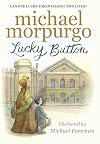
The idea behind this is excellent, I'm just a fraction worried that the execution could lead to unrealistic expectations.
I picked this up after a visit to the Foundling Hospital Museum in London, the original site where Thomas Coram set up a hospital for the poor and abandoned children of the city. It attracted a great deal of high brow support and holds things like Handel's will after he gifted the rights to The Messiah to the Hospital. If you are ever in the vicinity, it is well worth the show more time to visit. One of the most evocative items are the tokens that a mother would leave with the child. On entry, the children lost their original names and record of their parents, in order to have a clean start. If she were ever in a position to return and reclaim the infant, she could describe the token, or produce her half of the token and match it to the child's. These range from scraps of cloth to punched pennies, to buttons, like that included here. After a while, the London site became too crowded and dirty, and a new hospital and school was built on the outskirts of London. In the middle of the 20th Century, the buildings were transferred to a the county and became a conventional school.
In this book, Jonah is a student at the school. He is a loner, as he is also a carer for his mother, after she had an accident on a bicycle, involving a lorry. Since then, she has been largely confined to a wheelchair and suffers from what we infer as depression. Jonah struggles at school with bullies due to his shyness and not being able to partake in outside school activities. After a nasty bullying incident, he ends up in the school chapel, where he finds a button on the floor and, as a result, meets the ghost of a former foundling boy who relates his life story. It is not all a happy ending, but it is eventful and he explains how he comes to haunt the chapel. Part of his tale is about the button that Jonah picked up, that was his mother's token. In the end, Nat gives the button to Jonah and vanishes.
Its the last few pages that I take issue with. Jonah gets home and his mother's depression seems to have lifted, she has started playing the piano again and she is clearly in a much happier place. That strikes me as setting a very high expectation on anyone with depression that they can simply do something and lift themselves out of it.which is a shame, as I think this covers some bog and important issues. Child carers often feel isolated, as they cannot partake fully in school life. They may even be bullied for being different in that way. All of which should be talked about in this age group. It is very good, and would work well as a story for those who are struggling, there is hope of life, even if it doesn't turn out like the fairy tales. But that almost fairy tale ending undermines it, for me. show less
I picked this up after a visit to the Foundling Hospital Museum in London, the original site where Thomas Coram set up a hospital for the poor and abandoned children of the city. It attracted a great deal of high brow support and holds things like Handel's will after he gifted the rights to The Messiah to the Hospital. If you are ever in the vicinity, it is well worth the show more time to visit. One of the most evocative items are the tokens that a mother would leave with the child. On entry, the children lost their original names and record of their parents, in order to have a clean start. If she were ever in a position to return and reclaim the infant, she could describe the token, or produce her half of the token and match it to the child's. These range from scraps of cloth to punched pennies, to buttons, like that included here. After a while, the London site became too crowded and dirty, and a new hospital and school was built on the outskirts of London. In the middle of the 20th Century, the buildings were transferred to a the county and became a conventional school.
In this book, Jonah is a student at the school. He is a loner, as he is also a carer for his mother, after she had an accident on a bicycle, involving a lorry. Since then, she has been largely confined to a wheelchair and suffers from what we infer as depression. Jonah struggles at school with bullies due to his shyness and not being able to partake in outside school activities. After a nasty bullying incident, he ends up in the school chapel, where he finds a button on the floor and, as a result, meets the ghost of a former foundling boy who relates his life story. It is not all a happy ending, but it is eventful and he explains how he comes to haunt the chapel. Part of his tale is about the button that Jonah picked up, that was his mother's token. In the end, Nat gives the button to Jonah and vanishes.
Its the last few pages that I take issue with. Jonah gets home and his mother's depression seems to have lifted, she has started playing the piano again and she is clearly in a much happier place. That strikes me as setting a very high expectation on anyone with depression that they can simply do something and lift themselves out of it.which is a shame, as I think this covers some bog and important issues. Child carers often feel isolated, as they cannot partake fully in school life. They may even be bullied for being different in that way. All of which should be talked about in this age group. It is very good, and would work well as a story for those who are struggling, there is hope of life, even if it doesn't turn out like the fairy tales. But that almost fairy tale ending undermines it, for me. show less

This is a delightful novel about two children living on the small Scilly Isle of Bryher on the eve of the First World War, who befriend an outcast from the community, known as the Birdman, who hides a secret relating to the evacuation of the nearby island of Samson during his youth. It's a lovely story, which gives a good feel for the ebb and flow of island life, and shows how communities can, at their best, pull together to achieve a common goal, but at their worst seek to scapegoat an show more outsider. While this is nominally aimed at children, it's a great read for all ages, especially if you have been or will be going to the Scilly Isles. show less
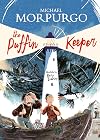
The New York Times blurb on the back calls this "a page turner young readers can finish over one stormy afternoon." I can't think of a better book to read, or read aloud to younger children, in a rain-spattered tent or even better, a lighthouse hostel, over the course of an inclement afternoon. I endorse The Puffin Keeper for use as an emergency vacation book.
I was delighted to receive a review copy of The Puffin Keeper from the publisher via LibraryThing Early Reviewers, and doubly show more delighted with the story itself. It's a children's novel told in first person as the life story of a young boy. When still a very small child, Allen and his mother are among thirty survivors of a shipwreck who are rescued by a taciturn lighthouse keeper, Ben Postlethwaite. With scarcely a word exchanged, Ben and Allen connect on a very deep level. For the rest of his childhood, Allen treasures Ben's painting of a ship ("just like ours") sailing past a lighthouse. It makes the misery of life with unsympathetic and tyrannical grandparents more bearable and lightens the darkness of boarding school. After school leaving, Allen seeks Ben out, but after a few months he receives call-up papers and has to enlist in the Navy.
The Puffin Keeper is a jewel of a story: small, precious, many-faceted, and perfect. After the interruptions of school, naval warfare, and a Nazi prison camp, Allen's life comes back to the lighthouse and a very satisfying ending. Although the themes are deep and nuanced, the story itself is positive: Allen "didn't like the war, but I liked being a sailor" and doesn't say much else about his experiences. He's shipwrecked, sent to the prison camp, escapes "just as I had run away from school, ran fast, but not fast enough." And the following page wraps up his wartime experiences. Most of the book is devoted to the things in Allen's life that bring him joy.
Since Benjamin Postlethwaite's art is such an important part of Allen's story, the choice of an illustrator was very important, and Benji Davies's work is perfect for this book. It's not often that a chapter book has plentiful and beautiful illustrations that support the text in such cooperation. show less
I was delighted to receive a review copy of The Puffin Keeper from the publisher via LibraryThing Early Reviewers, and doubly show more delighted with the story itself. It's a children's novel told in first person as the life story of a young boy. When still a very small child, Allen and his mother are among thirty survivors of a shipwreck who are rescued by a taciturn lighthouse keeper, Ben Postlethwaite. With scarcely a word exchanged, Ben and Allen connect on a very deep level. For the rest of his childhood, Allen treasures Ben's painting of a ship ("just like ours") sailing past a lighthouse. It makes the misery of life with unsympathetic and tyrannical grandparents more bearable and lightens the darkness of boarding school. After school leaving, Allen seeks Ben out, but after a few months he receives call-up papers and has to enlist in the Navy.
The Puffin Keeper is a jewel of a story: small, precious, many-faceted, and perfect. After the interruptions of school, naval warfare, and a Nazi prison camp, Allen's life comes back to the lighthouse and a very satisfying ending. Although the themes are deep and nuanced, the story itself is positive: Allen "didn't like the war, but I liked being a sailor" and doesn't say much else about his experiences. He's shipwrecked, sent to the prison camp, escapes "just as I had run away from school, ran fast, but not fast enough." And the following page wraps up his wartime experiences. Most of the book is devoted to the things in Allen's life that bring him joy.
Since Benjamin Postlethwaite's art is such an important part of Allen's story, the choice of an illustrator was very important, and Benji Davies's work is perfect for this book. It's not often that a chapter book has plentiful and beautiful illustrations that support the text in such cooperation. show less
 This review was written for LibraryThing Early Reviewers.
Lists
Best Young Adult (1)
Awards


You May Also Like


Associated Authors
Statistics
- Works
- 300
- Also by
- 25
- Members
- 31,566
- Popularity
- #626
- Rating
- 4.2
- Reviews
- 659
- ISBNs
- 1,901
- Languages
- 29
- Favorited
- 23


