
Benjamin Zephaniah (1958–2023)
Author of Refugee Boy
About the Author
Image credit: Courtesy of Allen and Unwin
Works by Benjamin Zephaniah
Associated Works
One Can Make a Difference: Original stories by the Dali Lama, Paul McCartney, Willie Nelson, Dennis Kucinch, Russel Simmons, Bridgitte Bardot, Martina ... Dozens of Other… (2008) — Contributor — 29 copies, 1 review
Peaky Blinders: The Complete Series — Actor — 2 copies
Tagged
Common Knowledge
- Legal name
- Zephaniah, Benjamin Obadiah Iqbal
- Birthdate
- 1958-04-15
- Date of death
- 2023-12-07
- Gender
- male
- Occupations
- poet
writer
actor - Organizations
- Vegan Society
Haven Distribution Books to Prisoners - Relationships
- Sissay, Lemn (friend)
- Cause of death
- brain tumor
- Nationality
- UK
- Birthplace
- Handsworth, Birmingham, England
- Places of residence
- Handsworth, Birmingham, England
London, England
Spalding, Lincolnshire, England
Chen Jia Gou, China - Map Location
- England, UK
Members
Reviews
[b:The Life and Rhymes of Benjamin Zephaniah: The Autobiography|36100995|The Life and Rhymes of Benjamin Zephaniah The Autobiography|Benjamin Zephaniah|https://i.gr-assets.com/images/S/compressed.photo.goodreads.com/books/1523892124l/36100995._SY75_.jpg|57685773] is a really involving autobiography of an amazingly talented poet, musician, writer, and activist. It covers Zephaniah’s childhood, wild teenage years, how his career began, and his travels and political activism. I found it show more witty, insightful, and wide-ranging. He writes in a serious and considered way about the racism he has faced and political battles fought over the decades, while also making fun of them. His writing strikes a great balance between sincerity and joking, which makes the whole book very readable. Here are some examples. On power:
On travel:
On refusing an OBE in 2003:
I found [b:The Life and Rhymes of Benjamin Zephaniah: The Autobiography|36100995|The Life and Rhymes of Benjamin Zephaniah The Autobiography|Benjamin Zephaniah|https://i.gr-assets.com/images/S/compressed.photo.goodreads.com/books/1523892124l/36100995._SY75_.jpg|57685773] interesting both as his personal story and for the background political history of 20th century Britain. I definitely want to further investigate Zephaniah’s poetry and other writing now. show less
The ability to get so many people to chant your words is a sort of power – a power one could easily manipulate. I’ve always loved watching those preachers in the United States that have churches like mini-empires, where it seems the audience doesn’t just worship God, it worships the preacher too. I don’t like them – actually I can’t stand them – but their followers are happy to give them their money, and in some extreme cases, their lives. It amazes me what people can do with a bit of charisma and a well-delivered promise of something better than this earthly existence. I’m astonished by such preachers’ ability to perform, even when they themselves don’t believe the ideas they preach.
When I stand on stage and tell the crowd to shout, or be silent, or ‘say after me’, and they do, I realise the power we have, even more so when they are connected with an idea I had one day when I was doing something as arbitrary as getting dressed. I’ve never thought of myself as someone with my own manifesto. I’ve never wanted to start a political party or launch my kind of movement. I want to inform people about what’s going on, and I don’t mind throwing in a few suggestions as to what can be done, but most of all I want to inspire people to think for themselves. Even if I say something in my poetry that I believe to be fact, I say it because I want them to think about it and not simply take my word for it. Power can easily be abused, but I’ve never been interested in that kind of power, or the abuse of it.
Having said all that, there was a time when, mainly to shock people (who needed shocking), I would say that I started a revolutionary movement called the IRA – the Independent Rasta Army.
On travel:
There is a common idea that when you go to a new country you can get a good feel for the place from taxi drivers, but I disagree; you get something from them, but it’s usually a very male-centric view. If I want to understand a country I talk to the women. Better still get to know the women. I have been to so many countries where the taxi drivers say, “Yeah, it’s great here, we’ve got freedom, we can do what we like”, and then you talk to the women and they tell the truth, “Oh no, we’re not allowed to do this, we’re not allowed to do that, and we have no freedom.” So I always say, talk to the women. In fact, I think you never really know a country until you’ve had sex in it and got arrested in it. If you’re on a quick visit, you could always have sex with the person who’s arresting you. But what do I know? This is only a theory, of course.
On refusing an OBE in 2003:
I say to anyone who accepts an award from the Queen and says it is ‘for their community’ – don’t keep the award, give it to the community. I knew what I did for my community, and I didn’t need a medal from the Queen to remind me. I hated the word ‘empire’, I hated the idea of empire, whether it was the Romans or the British or Christians or Muslims. In my little mind, anyone ruling over anybody else was wrong. And for those who would say that the Order of the British Empire doesn’t really have anything to do with the empire – and that it’s simply a word that’s been left attached to the award – I sat, if it’s just a word and not that important, then they can remove the word. But I still wouldn’t take it.
I found [b:The Life and Rhymes of Benjamin Zephaniah: The Autobiography|36100995|The Life and Rhymes of Benjamin Zephaniah The Autobiography|Benjamin Zephaniah|https://i.gr-assets.com/images/S/compressed.photo.goodreads.com/books/1523892124l/36100995._SY75_.jpg|57685773] interesting both as his personal story and for the background political history of 20th century Britain. I definitely want to further investigate Zephaniah’s poetry and other writing now. show less
From criminal subculture to the establishment.
Yet his parents had done well really, one from Jamaica the other Barbados both with decent jobs, but domestic violence intervened, Mum bailed out and took Ben with her. Consistent schooling came to an end.
Mum found another home with pastor who gave Ben a lot of support - and a partner in crime - but Pastor eventually ran off to USA rather than marry.
Ben lived off minor theft or providing services to people living a life under the horizon, show more until he realised that he was getting deeper into serious crime, and he didn't want to go to prison.
He had a history of poetry, in the churches first, then in clubs, so he decided to abandon his life of crime and escape to London, and to try to make a living doing poetry.
There he got into squats, or cooperatives, and gradually made a name for himself, eventually even settling down in a cottage in a Leicestershire village!
Along the way he gives frank accounts of his marriage and his infertility.
A revealing account of life in trouble, and without a home and no qualifications, sharing support from many people in similar situations. show less
Yet his parents had done well really, one from Jamaica the other Barbados both with decent jobs, but domestic violence intervened, Mum bailed out and took Ben with her. Consistent schooling came to an end.
Mum found another home with pastor who gave Ben a lot of support - and a partner in crime - but Pastor eventually ran off to USA rather than marry.
Ben lived off minor theft or providing services to people living a life under the horizon, show more until he realised that he was getting deeper into serious crime, and he didn't want to go to prison.
He had a history of poetry, in the churches first, then in clubs, so he decided to abandon his life of crime and escape to London, and to try to make a living doing poetry.
There he got into squats, or cooperatives, and gradually made a name for himself, eventually even settling down in a cottage in a Leicestershire village!
Along the way he gives frank accounts of his marriage and his infertility.
A revealing account of life in trouble, and without a home and no qualifications, sharing support from many people in similar situations. show less

This makes for an interesting listen, I often think that listening to poetry, rather than reading it, means you get to hear the rhythms inherent in the writer's speech that are not present in the written word. Thats especially true of this collection, read by the author. This is a mix of poems aimed at the younger reader. They are mostly fairly short, a few are presented in a short series. But that's not to say that they are all childish, there are some difficult themes in here, climate show more change, the environment, abuse, racism, all the unpleasantness of makes an appearance in some form. That's not to say that it is dark or oppressive, as it isn't. show less
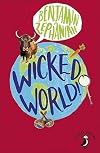
Benjamin Zephanaiah may be well known for his punchy reggae-inspired performance poetry, but he also quietly seems to have built up quite a career for himself as a children's writer. Wicked World! is the first of his collections for children I've had a chance to look at. It's a set of poems about how people from different parts of the world are all different and we should all do our best to live together happily - "Be cool mankind". The poems are quite charming and occasionally interestingly show more quirky, and the bold pen-and-ink illustrations by Sarah Symonds work well with them, but I had the feeling that it was all a bit too nice really to get the message across. show less
Lists
Awards


You May Also Like


Associated Authors
Statistics
- Works
- 44
- Also by
- 9
- Members
- 1,563
- Popularity
- #16,503
- Rating
- 3.6
- Reviews
- 22
- ISBNs
- 133
- Languages
- 4
- Favorited
- 3