
Alan Gibbons (1) (1953–)
Author of Shadow of the Minotaur
For other authors named Alan Gibbons, see the disambiguation page.
Series
Works by Alan Gibbons
Tagged
Common Knowledge
- Birthdate
- 1953
- Gender
- male
- Nationality
- UK
- Places of residence
- Liverpool, Merseyside, England, UK
- Associated Place (for map)
- England, UK
Members
Reviews
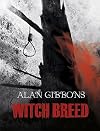
Witch Breed is different from the previous three books in this series. In these we saw Paul Rector very much in the middle of things from the moment he arrives in each new time period, and following the dramatic climax of Renegade you would be forgiven for expecting something pretty much the same from this book. However, there are moments throughout Witch Breed where you may find yourself wondering exactly who the main character is. Is it Paul? Or is it Grace Fletcher, soon to be trialled show more for witchcraft? Or perhaps it is Netty, Paul's 21st Century girlfriend who has been brought back in time by the evil Nathanael Rector as bait to lure and destroy Paul? The reason for this doubt is that for a large part of the book the story's viewpoint jumps around between characters, each having an important story requiring our attentio, and yet at no point does this become confusing - Mr Gibbons accomplishes it with seemingly effortless ease, and in doing so ratchets up the tension to even greater highs.
For a horror writer this is such a great period in British history to focus on. It is 1645, slap bang in the middle of the English Civil War, but more importantly it is the time when Matthew Hopkins, the so-called Witchfinder General, was travelling around Eastern England with his assistant John Stearne persecuting scores of innocent women and having them executed as witches. Sometimes when requiring a diabolically evil villain an author need look no further than the history books and Mr Gibbons' use of Hopkins and Stearne in the plot of Witch Breed is perfect.
Coming off the back of the failure he experienced in Renegade, we begin to see another side of Paul's character in Witch Breed. Whereas in previous books we saw him slowly gain in confidence, especially as he realised that he could acquire the powers of the demons he killed, we now see him have many moments of self-doubt and confusion. Can a boy really defeat the ancient evil of King Lud, given the demonic resources this creature has under his control? Is he just a pawn of Cormac and the Priests of Beltane? And then when Netty suddenly appears in the 17th Century all previous plans are out of the window as Paul's priorites shift, with potentially disastrous consequences. In the other books Paul has often had to rely on the assistance of others in order to reach his goals, but this help becomes even more essential in Witch Breed as we discover that despite everything he has been through, and the powers he has developed, Paul is still at heart a normal teenager, and still has many of the flaws, worries and doubts that any young person would have.
Of course, despite the nastiness of Hopkins and Stearne, there is still a Rector ancestor for Paul to contend with, and this time it is Nathanael. This Rector, though, is not given quite the page count that family members in the previous books have enjoyed, but we are still left in no doubt as to the shear evil and ruthlessness of this man. After the entourage of evil that surrounded Samuel Rector in the previous books I didn't think Alan Gibbons would be able to follow it up with a similarly memorable band of demonic followers for Nathanael. Oh me of little faith! Yet again, the author has created a terrifying bunch of monsters for Paul to pit his wits against, and these demon riders come with names such as Lamedog, Ratshade, Claypin, and my absolute favourite, Suckvenom.
If you love horror and haven't yet discovered this series then you must make it a priority - you will not be disappointed. show less
For a horror writer this is such a great period in British history to focus on. It is 1645, slap bang in the middle of the English Civil War, but more importantly it is the time when Matthew Hopkins, the so-called Witchfinder General, was travelling around Eastern England with his assistant John Stearne persecuting scores of innocent women and having them executed as witches. Sometimes when requiring a diabolically evil villain an author need look no further than the history books and Mr Gibbons' use of Hopkins and Stearne in the plot of Witch Breed is perfect.
Coming off the back of the failure he experienced in Renegade, we begin to see another side of Paul's character in Witch Breed. Whereas in previous books we saw him slowly gain in confidence, especially as he realised that he could acquire the powers of the demons he killed, we now see him have many moments of self-doubt and confusion. Can a boy really defeat the ancient evil of King Lud, given the demonic resources this creature has under his control? Is he just a pawn of Cormac and the Priests of Beltane? And then when Netty suddenly appears in the 17th Century all previous plans are out of the window as Paul's priorites shift, with potentially disastrous consequences. In the other books Paul has often had to rely on the assistance of others in order to reach his goals, but this help becomes even more essential in Witch Breed as we discover that despite everything he has been through, and the powers he has developed, Paul is still at heart a normal teenager, and still has many of the flaws, worries and doubts that any young person would have.
Of course, despite the nastiness of Hopkins and Stearne, there is still a Rector ancestor for Paul to contend with, and this time it is Nathanael. This Rector, though, is not given quite the page count that family members in the previous books have enjoyed, but we are still left in no doubt as to the shear evil and ruthlessness of this man. After the entourage of evil that surrounded Samuel Rector in the previous books I didn't think Alan Gibbons would be able to follow it up with a similarly memorable band of demonic followers for Nathanael. Oh me of little faith! Yet again, the author has created a terrifying bunch of monsters for Paul to pit his wits against, and these demon riders come with names such as Lamedog, Ratshade, Claypin, and my absolute favourite, Suckvenom.
If you love horror and haven't yet discovered this series then you must make it a priority - you will not be disappointed. show less
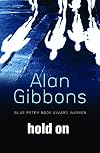
We hear this story in turn about from two sources – the diary of John, who we know from the start has died, and the recollections of school mate Annie. Although never a friend of John’s, they happened to meet some months before on holidays a long way from home. John is not someone she has paid any attention to - in fact she rather fancied one of the boys who turns out to have been tormenting John for years. But she learns from him something of the bullying he has suffered and sees first show more hand how harshly John’s father treats him.
Who is responsible for John’s death? Annie thinks she knows and returns to England bent on exposing the bullies. But could she be implicated? Her friendship with John stirred up feelings in him that were more than she wanted. Has she done the right thing? Can she accept that others have learned from this hard experience? Why didn’t John do more to expose the classmates who terrorised him? And did he really intend to kill himself?
Alan Gibbons stirs up emotions and asks us to put ourselves in the places of the major characters of this drama. Many of us will identify with the friends and teachers in the story who are very wary of causing a fuss, but also played their part. A gripping read. show less
Who is responsible for John’s death? Annie thinks she knows and returns to England bent on exposing the bullies. But could she be implicated? Her friendship with John stirred up feelings in him that were more than she wanted. Has she done the right thing? Can she accept that others have learned from this hard experience? Why didn’t John do more to expose the classmates who terrorised him? And did he really intend to kill himself?
Alan Gibbons stirs up emotions and asks us to put ourselves in the places of the major characters of this drama. Many of us will identify with the friends and teachers in the story who are very wary of causing a fuss, but also played their part. A gripping read. show less
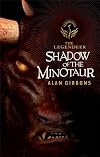
Myths are often used to tell the story of a rite of passage. Using the Greek lore of the Minotaur, this story recounts a present-day hero's journey as he transcends the veil between worlds. Using the instrument that most young adults (for whom the book is targeted) are well-familiar with, the tool to breech the barrier into the world of legend is via a more-real-than-virtual-reality computer game -- in which the gamer will find himself physically in a world that is no longer made up of bits show more and bytes, but is very real indeed. Not much different from the, more often than not, make-believe reality, that we sometimes conjure up in our labyrinthian minds, in which the very real beasts of worry, anger, jealousy, greed, etc. roam free. show less
I think this was the most painful book I have ever read. I don't mean at all that it was bad-- it was very well written, with plenty of variety in the style, but it was painful emotionally for me. I had to stop reading multiple times just so I wouldn't burst out crying. Suicide is a painful subject, but Alan Gibbons has done a wonderful job with showing how bullying can affect more than just one person.
Lists
Awards


You May Also Like


Associated Authors
Statistics
- Works
- 68
- Members
- 1,362
- Popularity
- #18,873
- Rating
- 3.4
- Reviews
- 24
- ISBNs
- 246
- Languages
- 11