

Jean Ure
Author of Plague
About the Author
Series
Works by Jean Ure
Malá baletka 1 copy
Melanie a já 1 copy
Dance With Death 1 copy
Register range and change — Editor — 1 copy
Totální cvok 1 copy
Rumanian Folk Tales 1 copy
Associated Works
Tagged
Common Knowledge
- Birthdate
- 1943
- Gender
- female
- Nationality
- UK
- Birthplace
- London, England, UK
- Places of residence
- Croydon, Surrey, England, UK
- Associated Place (for map)
- England, UK
Members
Discussions
Modern romance,blind teacher,teenage girl, read about 10 years ago in Name that Book (June 2016)
YA ballet fiction, gawky teenager, spoiled sister Rose favourite in family in Name that Book (April 2014)
Reviews

Maybe I shouldn't like this book, but I do.
A hundred years after the great plague wiped out nearly all of humanity, people live in small isolated communities. Daniel travels from Cornwall to London to try and find his great-grandmother's diary. But the main thing he finds is April Harriet's community.
I love the bold Young Adult 'this world doesn't need to make sense, we can just play with Big Ideas' of this book. I love the angry feminist 'all men are so terrible the only way to survive is show more tocastrate them all ' themes, and the way the book argues with them while giving them a platform. I love the power of the false dichotomy of Daniel's regressive society with no sex before marriage and no women in positions of leadership at all, and April's absolutely-no-violence, no-one actually called the leader even though it's clear who is.
I like the way it skirts round the possibility of a very predictable 'boy meets girl, they fall in love across the worlds and then run off into the sunset' plot, but makes it all a bit more complicated than that.
And I love all the characters. Even if they are in some lights very young adult and two dimensional, they are so very human and loveable. April, red headed and impulsive and passionate. David,mutilated to fit in to his society , trying to work out how to improve things for the better without smashing them up. And all the side characters, teenagers trading their relationships to find a better fit, bitter canteen workers, powerful doctors... It's a very rich world full of people-y people.
Or maybe I just love it because years ago I read it at exactly the right age? But I do. show less
A hundred years after the great plague wiped out nearly all of humanity, people live in small isolated communities. Daniel travels from Cornwall to London to try and find his great-grandmother's diary. But the main thing he finds is April Harriet's community.
I love the bold Young Adult 'this world doesn't need to make sense, we can just play with Big Ideas' of this book. I love the angry feminist 'all men are so terrible the only way to survive is show more to
I like the way it skirts round the possibility of a very predictable 'boy meets girl, they fall in love across the worlds and then run off into the sunset' plot, but makes it all a bit more complicated than that.
And I love all the characters. Even if they are in some lights very young adult and two dimensional, they are so very human and loveable. April, red headed and impulsive and passionate. David,
Or maybe I just love it because years ago I read it at exactly the right age? But I do. show less
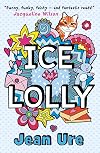
This beautifully drawn story is told in the first person by Laurel, whose Mum has died and who has had to go and live with her Aunt and Uncle and their two similarly aged children. One of the things I love about this book is how everyone is so very real - none of the sad things that happen to Lolly are pantomime villain cruelty, just normal human reactions to the inconvenience of Lolly's interruption of their lives. Prissy heartless Auntie Ellen is drawn razor sharply, but even as you hate show more her you can see how much she is being tested, faced with a withdrawn grieving child, 3000 second-hand books, and an ancient dribbly cat with vets bills attached. This is really a Find Your People story, Lolly is a weird child in all the best ways and just needs people around her who will understand her love of the smell of old books and her enjoyment of living in the city with lots of cultures.
Mostly this book is a finely drawn tragedy, where things go wrong for Laurel in unstoppable and predictable ways (of course the cat will be sick! Of course she will hide it from Auntie Ellen! Of course the other children won't want to sit next to someone who smells of cat sick!) but then the last chapterturns it around and wraps it all up in a very unexpected and slightly over the top fantasy happy ending. For it turns out Lolly's mum was planning to bring Lolly up with Andi (the book never says 'lover' or 'lesbians', you _could_ read it as a heterosexual couple of best friends deciding to have a cat and a child together, but you'd be really twisting the text!) but then Lolly's biological dad decided he wanted to be involved, and Andi just... got out of the picture to make things less complicated (it's so Well of Loneliness it's untrue). So Andi comes back, welcomes Lolly as her lost daughter, lets her move in with her, and cares about all the things Lolly and Sue cared about, like books and the ancient cat (who it turns out was her cat once.). It seems a pretty poor happy ending for Andi and Sue, Sue bringing up Lolly on her own for years and then dying without ever seeing Andi again, but I guess you can't have everything. show less
Mostly this book is a finely drawn tragedy, where things go wrong for Laurel in unstoppable and predictable ways (of course the cat will be sick! Of course she will hide it from Auntie Ellen! Of course the other children won't want to sit next to someone who smells of cat sick!) but then the last chapter

Reminiscent of Animal Ark, We Love Animals follows two tween girls, Clara and Jilly as they go about trying to make a difference for the animals they encounter. In the second installment, the girls are horrified when they find a donkey they name Daffodil all alone in a field of rubbish, scrap metal with no shelter and no nearby grass. They desperately want to help so they begin by visiting with food and clearing the field so Daffodil can walk freely.
This book bothered me a lot. I get that show more they want to help animals and that they're horrified by the situation but they literally know nothing about animals and have no real wish to find out. It's all well and good you're horrified but maybe try some research to find out how you can help before diving right in. Sure it was harder then - 1998 (the publication date) the internet existed but it wasn't widespread all you youngsters, but there was still a place called the library that had books and magazines and videos to help guide you in unfamiliar subjects. And most people had encyclopedia's in their homes anyway.
Before you start feeding a random donkey maybe you should try doing some research to find out what they eat, what they like, what's bad for them, etc. It's like giving a dog chocolate - it's poisonous to them. Plus in 1998 it was still illegal to abuse an animal - the RSPCA was in existence - report the animal owner.
Okay - they do end up trying to report the owner and trying to hire a library book but it takes them so long to come to this conclusion and they'd already been feeding the donkey for weeks by this point - so kind of stupid.
But it's not the only stupid thing. Clara becauses absolutely moronic in this installment. She ignores curfew, skips school and lies to her mother about where she is at least half the time - including when she finds the owner of the donkey by approaching random strangers in a run down street and then accusing them of animal cruelty - yeah I couldn't imagine all the things that could go wrong doing that. I get that this is a tween books and tweens don't always make the best choices but I think there's a line to making bad choices and outright encouraging anarchy. Okay and that was my dramatic comment for the day. But still I think tweens are impressionable and giving them a book where doing everything that happens in this book and saying it's all alright because it's all for the animals seems stupid. It's asking for trouble.
I didn't much like Clara at all for most of this book but this scene takes the cake.
I yelled at him - "Mud! Stop that!" - but he's not used to me being mad at him and I guess he thought it was all part of the game because two minutes later he actually jumped right onto the table and trampled on my math book, scrunching all the pages and even tearing a big hole in one of them. I screamed and walloped him and he went scooting out into the hall with his ears pulled back. "You stupid dog!" I yelled.
Ure, Jean. Daffy Down Donkey (p. 61). Barron's Educational Series. Paperback Edition.
Is she for real? This is the dog you rescued that's been abused and you hit him. How can you go on and on about loving animals and being against animal cruelty and then proceed to hit a dog. She feels bad about it later but I was pretty over this book by that point. It was just ridiculous and outrageous and horrible. I finished it but I don't know if I really want to read the next one. 1 star. show less
This book bothered me a lot. I get that show more they want to help animals and that they're horrified by the situation but they literally know nothing about animals and have no real wish to find out. It's all well and good you're horrified but maybe try some research to find out how you can help before diving right in. Sure it was harder then - 1998 (the publication date) the internet existed but it wasn't widespread all you youngsters, but there was still a place called the library that had books and magazines and videos to help guide you in unfamiliar subjects. And most people had encyclopedia's in their homes anyway.
Before you start feeding a random donkey maybe you should try doing some research to find out what they eat, what they like, what's bad for them, etc. It's like giving a dog chocolate - it's poisonous to them. Plus in 1998 it was still illegal to abuse an animal - the RSPCA was in existence - report the animal owner.
Okay - they do end up trying to report the owner and trying to hire a library book but it takes them so long to come to this conclusion and they'd already been feeding the donkey for weeks by this point - so kind of stupid.
But it's not the only stupid thing. Clara becauses absolutely moronic in this installment. She ignores curfew, skips school and lies to her mother about where she is at least half the time - including when she finds the owner of the donkey by approaching random strangers in a run down street and then accusing them of animal cruelty - yeah I couldn't imagine all the things that could go wrong doing that. I get that this is a tween books and tweens don't always make the best choices but I think there's a line to making bad choices and outright encouraging anarchy. Okay and that was my dramatic comment for the day. But still I think tweens are impressionable and giving them a book where doing everything that happens in this book and saying it's all alright because it's all for the animals seems stupid. It's asking for trouble.
I didn't much like Clara at all for most of this book but this scene takes the cake.
I yelled at him - "Mud! Stop that!" - but he's not used to me being mad at him and I guess he thought it was all part of the game because two minutes later he actually jumped right onto the table and trampled on my math book, scrunching all the pages and even tearing a big hole in one of them. I screamed and walloped him and he went scooting out into the hall with his ears pulled back. "You stupid dog!" I yelled.
Ure, Jean. Daffy Down Donkey (p. 61). Barron's Educational Series. Paperback Edition.
Is she for real? This is the dog you rescued that's been abused and you hit him. How can you go on and on about loving animals and being against animal cruelty and then proceed to hit a dog. She feels bad about it later but I was pretty over this book by that point. It was just ridiculous and outrageous and horrible. I finished it but I don't know if I really want to read the next one. 1 star. show less
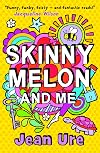
Brilliantly written, quirky, funny and very poignant if you are a child who knows what it is like to live in a family whose parents have divorced and remarried. Also loved the way that the mother was able to write to her friend to let off steam and these letters gave her perspective of the family dynamics which were in opposition to those of her daughter. Cherry's mother has just re-married, much to Cherry's disgust. The worst thing about her step-father is his name: Roland Butter. Can you show more imagine? Cherry's best friend, Skinny Melon, is a sounding board for all Cherry's angsts - Roland's allergies for one - who wants a wimpy step-father, all sniffly and red-eyed? All this and curried compost school dinners to contend with. But when Roland starts sending Cherry coded messages, her curiosity is aroused. Will she ever learn to live with, and even like, Roland Butter? The author has included drawn coded postcards that make you think about messages being sent for the pen of Roland Butter. As the story proceeds, Cherry's opinion of her step father mellows - brilliant story well written. show less
Lists
Awards


You May Also Like


Associated Authors
Statistics
- Works
- 185
- Also by
- 5
- Members
- 2,147
- Popularity
- #11,977
- Rating
- 3.6
- Reviews
- 26
- ISBNs
- 571
- Languages
- 11
- Favorited
- 3