
Bruce Coville
Author of Jeremy Thatcher, Dragon Hatcher
About the Author
Bruce Coville was born in Syracuse, New York, on May 16, 1950. He spent one year at Duke University in North Carolina. Coville started working seriously at becoming a writer when he was seventeen. He was not able to start selling stories right away, so he had many other jobs, including toymaker, show more gravedigger, cookware salesman, and assembly line worker. Eventually, Coville became an elementary teacher, and worked with second and fourth graders. Coville married Katherine Dietz an artist, and they began trying to create books together. It wasn't until 1977 that they finally sold their first book, The Foolish Giant. They joined together on two other books after that, Sarah's Unicorn and The Monster's Ring, and followed them with Goblins in the Castle, Aliens Ate My Homework, and The World's Worst Fairy Godmother. (Bowker Author Biography) show less
Disambiguation Notice:
Bruce Coville wrote a couple of books in the Planet Builders series, under the pseudonym Robyn Tallis (which was used by other authors in the rest of the series).
Series
Works by Bruce Coville
The Unicorn Treasury: Stories, Poems, and Unicorn Lore (1988) — Editor; Contributor — 291 copies, 3 reviews
Bruce Coville's Book of Monsters: Tales to Give You the Creeps (1993) — Editor, Contributor — 278 copies, 3 reviews
Bruce Coville's Book of Nightmares: Tales to Make You Scream (1995) — Editor, Contributor — 227 copies, 1 review
Bruce Coville's Book of Aliens: Tales to Warp Your Mind (1994) — Editor, Contributor — 216 copies, 4 reviews
Bruce Coville's Book of Ghosts: Tales to Haunt You (1994) — Editor, Contributor — 206 copies, 3 reviews
Bruce Coville's Book of Spine Tinglers: Tales to Make You Shiver (1996) — Author/Compiler/Editor — 136 copies, 1 review
Bruce Coville's Book of Monsters II: More Tales to Give You the Creeps (1996) — Editor, Contributor — 125 copies
Bruce Coville's Book of Magic: Tales to Cast a Spell on You (1996) — Editor, Contributor — 122 copies
Bruce Coville's Book of Aliens II: More Tales to Warp Your Mind (1996) — Editor, Contributor — 72 copies
Bruce Coville's Book of Spine Tinglers II: More Tales to Make You Shiver (1997) — Editor, Contributor — 52 copies
Bruce Coville's Book of Ghosts II: More Tales to Haunt You (1997) — Editor, Contributor — 51 copies, 1 review
Bruce Coville's Book of Magic II: More Tales to Cast a Spell on You (1997) — Editor, Contributor — 50 copies
Bruce Coville's Book of Nightmares II: More Tales to Make You Scream (1997) — Editor, Contributor — 49 copies
Moongobble and Me Magical Collection: The Dragon of Doom; The Weeping Werewolf; The Evil Elves; The Mischief Monster; The Naughty Nork (2020) 3 copies
Bruce Coville's Box of Thrills and Chills: Book of Aliens, Book of Ghosts, Book of Monsters & Book of Nightmares (1996) 3 copies
Read On! II: A Sequential Reading Series Workbook 4, The Vote (Literacy Volunteers of America) (1987) 3 copies
Sixth-Grade Alien 3 Books in 1: Sixth Grade Alien; I Shrank My Teacher; Missing-One Brain! (2023) 1 copy
Juliet Dove, Queen of Love & the Monster's Ring [With Headphones] (Magic Shop Books (Playaway)) (2006) 1 copy
The Monsters of Morley Manor 1 copy
Homeward Bound (2011) 1 copy
Jennifer Murdey's Toad 1 copy
Associated Works
Twenty Thousand Leagues Under the Sea (1869) — Introduction, some editions — 21,193 copies, 283 reviews
The Goose Girl (2003) — Director, producer, & cast member, some editions — 4,730 copies, 187 reviews
The Dragon Book: Magical Tales from the Masters of Modern Fantasy (2009) — Contributor — 485 copies, 14 reviews
The Letter Q: Queer Writers' Notes to their Younger Selves (2012) — Contributor — 297 copies, 5 reviews
13: Thirteen Stories That Capture the Agony and Ecstasy of Being Thirteen (2003) — Contributor — 241 copies, 4 reviews
2041: Twelve Short Stories About the Future by Top Science Fiction Writers (1991) — Contributor — 182 copies, 4 reviews
Twice Told: Original Stories Inspired by Original Artwork (2006) — Contributor — 121 copies, 4 reviews
Dragons and Dreams: A Collection of New Fantasy and Science Fiction Stories (1986) — Contributor — 46 copies, 2 reviews
Spaceships and Spells: A Collection of New Fantasy and Science-fiction Stories (1987) — Contributor — 24 copies
MidAmeriCon II Souvenir Book — Contributor — 1 copy
Locus, July 2011 (606) — Contributor — 1 copy
Aliens Stole My Body [2020 film] — Original novel — 1 copy
Tagged
Common Knowledge
- Canonical name
- Coville, Bruce
- Legal name
- Coville, Bruce Farrington
- Other names
- Farrington, Beatrice
Tallis, Robyn - Birthdate
- 1950-05-16
- Gender
- male
- Education
- Duke University
- Occupations
- fantasy writer
- Organizations
- Science Fiction and Fantasy Writers of America
- Awards and honors
- E.E. Smith Memorial Award for Imaginative Fiction (2000)
- Relationships
- Coville, Katherine (wife)
- Nationality
- USA
- Birthplace
- Syracuse, New York, USA
- Places of residence
- New York, New York, USA
- Disambiguation notice
- Bruce Coville wrote a couple of books in the Planet Builders series, under the pseudonym Robyn Tallis (which was used by other authors in the rest of the series).
- Associated Place (for map)
- New York, USA
Members
Discussions
Found: YA books fantasy in Name that Book (August 2024)
Name That Book: Children's Scary Story about Moon in Name that Book (May 2017)
YA short story, boy does hw, nice & evil numbers in Name that Book (October 2015)
Magic:Witch and Unciorn: Can remember the girl's name in Name that Book (August 2012)
Reviews

I have never quite understood the fascination that some people have for unicorns. As mythological creatures go, unicorns are pretty uninteresting: neither looking like a horse nor having a horn is particularly impressive and the sexual implications of only being able to be ridden by a virginal maiden are somewhat creepy. Bruce Coville, on the other hand, loves unicorns, and the anthology A Glory of Unicorns containing twelve short stories about the beasts is the result. The title is a show more reference to Coville's belief that like a group of lions is called a pride, and a group of geese is called a gaggle, that a group of unicorns should be called a "glory", which is a pretty clear indication of how he feels about unicorns.
But it seems that merely writing about a horse with a horn and a penchant for virginal women isn't enough to make a good story. Almost all of the stories in this collection resort to pumping up unicorns by adding additional magical powers to them. In Coville's own story, The Guardian of Memory, the unicorns are able to magically travel between our world and their safer, magical world. Likewise, in Beyond the Fringe by Gregory Maguire unicorns are able to magically hide in the fringes of carpets and tapestries. In many of these stories, the fact that the mythological creature at their focus is a unicorn is almost entirely irrelevant: a Pegasus, or a satyr, or a dragon would do just as well. In The New Girl by Sean Stewart the unicorn is mostly a unicorn, and even seems to have the standard mythological preference for virginal girls, but the story is fairly modest - a girl seeking to be free of the suffocating small town life comes to understand the plight of the unicorn the town keeps as a combination first aid kit and good luck charm. Despite its quiet nature, the story is decent, and the only one in which the unicorn in the story is by and large just a unicorn.
Of all the stories, the most intricate one is probably The Ugly Unicorn by Jessica Amanda Salmonson, which is set in a fantasy version of China with dozens of different kinds of unicorns. Once again, it turns out that simply being a horned horse-like creature isn't sufficient to make for a good fantasy story, so we have elephant-unicorns, dragon-unicorns, and tiger-unicorns and curative properties attributed to unicorn horns (to be fair, this is not entirely without precedent, as some traditional myths ascribe antivenin properties to unicorn horns, but not the ability to restore sight) and the ability to change shape. As with many of the stories in the book, the fact that one of the central characters is a unicorn isn't really that important - he could have been a fairy or an elf and the story would have worked equally well. Despite it being a good story, it isn't really a unicorn story at all, it is a fairy realm story dressed up with unicorns. Another fairy realm story in which unicorns are used is Child of Faerie by Gail Kimberly, in which a girl is faced with the choice to stay on Earth with her human family, or abandon them and return with her unicorn to the land of fairy. Once again, the unicorn is somewhat extraneous to the plot, as it could have been replaced by almost any fairy realm type creature without affecting the course of the story in any way.
In some cases, the unicorn has additional magical attributes, but is used metaphorically, as a means of showing a girl growing into adulthood, as in Tearing Down the Unicorns by Janni Lee Simner. Or the unicorn is the bringer of dreams (and is coincidentally named Dreams) as in Stealing Dreams by Ruth O'Neill. The Unicorns of Kabustan by Alethea Eason uses unicorns as a metaphor for peace, and gives them the ability to fly and communicate telepathically to boot, managing to pump unicorn attributes up and make them a literary device at the same time. Another story using unicorns as a metaphor is Story Hour by Katherine Coville, in which a grandmother tells the tale of how a unicorn went from being real to being held in her heart. The story is related as a story that within a story that may or may not be true. It is one of the weakest stories in the book, but to be fair, all of the "unicorn as metaphor" stories in the book are pretty bad and in all of them, there isn't anything particularly unique to unicorns that is used in the story.
Both A Song for Croaker Nordge by Nancy Varian Berberick and Greg Labarbera and The Healing Truth by Kathryn Lay are also "unicorn as metaphor" stories that deserve to be singled out as particularly awful, although for wholly different reasons. In A Song for Croaker Nordge the unicorn is creepily sexualized as only responding to the singing of a girl, and serves as a metaphor for death. Making the story even creepier is the fact that the girl in question is singing to unknowingly summon the unicorn that represents death for her own father. And even creepier is the fact that her father knows that girls can summon unicorns by singing because his now dead wife used to do so, and he has taught his daughter the trick. The interplay between incestuous overtones of the father-daughter relationship, sex, and death is really unsettling. The Healing Truth, on the other hand, is a very weak version of the Pinocchio story. The protagonist is a crippled girl with a penchant for lying. She finds an ugly unicorn that only she can see. For others to see, and for the unicorn to become beautiful, the protagonist must convince others to believe in the unicorn, and to do that she must regain the trust of those around her despite her reputation as a serial liar. Of course the little morality play works itself out exactly as one might expect, and in the most transparently facile way possible. Both of these stories are just weak, one because it is inherently icky, the other because it is so very childish in tone.
While someone who is a unicorn enthusiast may find the book more satisfying than I did, I suspect that they might be somewhat put off by the fact that the unicorns are, for the most part, not really unicorns. They are flying, invisible, telepathic, mystically healing, beasts that hide in walls and carpets and walk between universes. It seems that the unicorns in most of the stories are simply ciphers onto which any kind of magical or otherworldly attribute can be mapped. As a result, most of the stories are only "unicorn" stories by almost random happenstance, and could have just as easily been stories in which elves, pixies, or simply "magic" had been used to replace the unicorn. In short, I found the book entirely useless for demonstrating what is special about unicorns. From my perspective, this makes the book little more than a collection of generic magic stories of uneven quality and as a result I can't give it more than a mediocre recommendation.
This review has also been posted to my blog Dreaming About Other Worlds. show less
But it seems that merely writing about a horse with a horn and a penchant for virginal women isn't enough to make a good story. Almost all of the stories in this collection resort to pumping up unicorns by adding additional magical powers to them. In Coville's own story, The Guardian of Memory, the unicorns are able to magically travel between our world and their safer, magical world. Likewise, in Beyond the Fringe by Gregory Maguire unicorns are able to magically hide in the fringes of carpets and tapestries. In many of these stories, the fact that the mythological creature at their focus is a unicorn is almost entirely irrelevant: a Pegasus, or a satyr, or a dragon would do just as well. In The New Girl by Sean Stewart the unicorn is mostly a unicorn, and even seems to have the standard mythological preference for virginal girls, but the story is fairly modest - a girl seeking to be free of the suffocating small town life comes to understand the plight of the unicorn the town keeps as a combination first aid kit and good luck charm. Despite its quiet nature, the story is decent, and the only one in which the unicorn in the story is by and large just a unicorn.
Of all the stories, the most intricate one is probably The Ugly Unicorn by Jessica Amanda Salmonson, which is set in a fantasy version of China with dozens of different kinds of unicorns. Once again, it turns out that simply being a horned horse-like creature isn't sufficient to make for a good fantasy story, so we have elephant-unicorns, dragon-unicorns, and tiger-unicorns and curative properties attributed to unicorn horns (to be fair, this is not entirely without precedent, as some traditional myths ascribe antivenin properties to unicorn horns, but not the ability to restore sight) and the ability to change shape. As with many of the stories in the book, the fact that one of the central characters is a unicorn isn't really that important - he could have been a fairy or an elf and the story would have worked equally well. Despite it being a good story, it isn't really a unicorn story at all, it is a fairy realm story dressed up with unicorns. Another fairy realm story in which unicorns are used is Child of Faerie by Gail Kimberly, in which a girl is faced with the choice to stay on Earth with her human family, or abandon them and return with her unicorn to the land of fairy. Once again, the unicorn is somewhat extraneous to the plot, as it could have been replaced by almost any fairy realm type creature without affecting the course of the story in any way.
In some cases, the unicorn has additional magical attributes, but is used metaphorically, as a means of showing a girl growing into adulthood, as in Tearing Down the Unicorns by Janni Lee Simner. Or the unicorn is the bringer of dreams (and is coincidentally named Dreams) as in Stealing Dreams by Ruth O'Neill. The Unicorns of Kabustan by Alethea Eason uses unicorns as a metaphor for peace, and gives them the ability to fly and communicate telepathically to boot, managing to pump unicorn attributes up and make them a literary device at the same time. Another story using unicorns as a metaphor is Story Hour by Katherine Coville, in which a grandmother tells the tale of how a unicorn went from being real to being held in her heart. The story is related as a story that within a story that may or may not be true. It is one of the weakest stories in the book, but to be fair, all of the "unicorn as metaphor" stories in the book are pretty bad and in all of them, there isn't anything particularly unique to unicorns that is used in the story.
Both A Song for Croaker Nordge by Nancy Varian Berberick and Greg Labarbera and The Healing Truth by Kathryn Lay are also "unicorn as metaphor" stories that deserve to be singled out as particularly awful, although for wholly different reasons. In A Song for Croaker Nordge the unicorn is creepily sexualized as only responding to the singing of a girl, and serves as a metaphor for death. Making the story even creepier is the fact that the girl in question is singing to unknowingly summon the unicorn that represents death for her own father. And even creepier is the fact that her father knows that girls can summon unicorns by singing because his now dead wife used to do so, and he has taught his daughter the trick. The interplay between incestuous overtones of the father-daughter relationship, sex, and death is really unsettling. The Healing Truth, on the other hand, is a very weak version of the Pinocchio story. The protagonist is a crippled girl with a penchant for lying. She finds an ugly unicorn that only she can see. For others to see, and for the unicorn to become beautiful, the protagonist must convince others to believe in the unicorn, and to do that she must regain the trust of those around her despite her reputation as a serial liar. Of course the little morality play works itself out exactly as one might expect, and in the most transparently facile way possible. Both of these stories are just weak, one because it is inherently icky, the other because it is so very childish in tone.
While someone who is a unicorn enthusiast may find the book more satisfying than I did, I suspect that they might be somewhat put off by the fact that the unicorns are, for the most part, not really unicorns. They are flying, invisible, telepathic, mystically healing, beasts that hide in walls and carpets and walk between universes. It seems that the unicorns in most of the stories are simply ciphers onto which any kind of magical or otherworldly attribute can be mapped. As a result, most of the stories are only "unicorn" stories by almost random happenstance, and could have just as easily been stories in which elves, pixies, or simply "magic" had been used to replace the unicorn. In short, I found the book entirely useless for demonstrating what is special about unicorns. From my perspective, this makes the book little more than a collection of generic magic stories of uneven quality and as a result I can't give it more than a mediocre recommendation.
This review has also been posted to my blog Dreaming About Other Worlds. show less
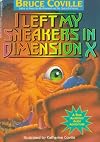
When I was a boy, in elementary school, there was a book that swept through the droves of wide-eyed kiddies of East Elementary School like wildfire. I don't know which boy it was that was playing with matches, but someone read the book first. And then his friends did. And then before long, every boy in school was caught up in Rod Allbright's alien adventure. The book was Aliens Ate my Homework by Bruce Coville. It must have been a local incident, as the book doesn't seem to be very popular show more now, but I have fond memories of reading it so long ago, and still remember how all the boys were so enthusiastic about it, myself included.
I Left My Sneakers in Dimension X is the sequel. I've had it sitting in a box for years but oddly, never read it. Maybe I grew up too fast, moved on to more mature books, and Rod Allbright's 2nd adventure was left unread for all these years. I didn't know I would be introduced to his bratty cousin, who would ruin his summer vacation by spending the whole summer at his house, only as soon as summer vacation arrives they would be kidnapped by Smorkus Flinders, a giant alien monster from Dimension X. I didn't know that the dust-covered little book would re-introduce me to the Ferkel and it's intergalactic crew, and that despite it being clearly intended for younger audiences, that I would still be swept away with Rod's adventures in a strange dimension; with shapshifters and Chaos Castles, and macaroni skies. The humor that had me cracking up when I was in 4th grade, although cheesy now, still had me chuckling a little as I remembered my younger self laughing at those awful jokes.
Of course, my inner adult, lacking that child-like wonder that puts curmudgeonry in a stupor, wants to complain a little. The story is left incomplete. Aliens Ate my Homework could be read by itself, but this one requires you to continue with the series to find out what happens. Of course the humor isn't what it was when I was a child, and obviously the books lost that magic they contained all those years ago. I know I know, bah humbug, right?
Ok, so maybe you can't go home again. That's fine, you can still visit the neighborhood, and every neighborhood has a Memory Lane for someone. I'm glad I read this book, it brought back a lot of memories and ultimately I'm leaving it with a satisfied smile on my face, and I didn't mar my pristine memories of childhood reading. I would certainly have to recommend these books to anyone with a child in the latter half of elementary school. I know I had a lot of fun reading the first book at that age! show less
I Left My Sneakers in Dimension X is the sequel. I've had it sitting in a box for years but oddly, never read it. Maybe I grew up too fast, moved on to more mature books, and Rod Allbright's 2nd adventure was left unread for all these years. I didn't know I would be introduced to his bratty cousin, who would ruin his summer vacation by spending the whole summer at his house, only as soon as summer vacation arrives they would be kidnapped by Smorkus Flinders, a giant alien monster from Dimension X. I didn't know that the dust-covered little book would re-introduce me to the Ferkel and it's intergalactic crew, and that despite it being clearly intended for younger audiences, that I would still be swept away with Rod's adventures in a strange dimension; with shapshifters and Chaos Castles, and macaroni skies. The humor that had me cracking up when I was in 4th grade, although cheesy now, still had me chuckling a little as I remembered my younger self laughing at those awful jokes.
Of course, my inner adult, lacking that child-like wonder that puts curmudgeonry in a stupor, wants to complain a little. The story is left incomplete. Aliens Ate my Homework could be read by itself, but this one requires you to continue with the series to find out what happens. Of course the humor isn't what it was when I was a child, and obviously the books lost that magic they contained all those years ago. I know I know, bah humbug, right?
Ok, so maybe you can't go home again. That's fine, you can still visit the neighborhood, and every neighborhood has a Memory Lane for someone. I'm glad I read this book, it brought back a lot of memories and ultimately I'm leaving it with a satisfied smile on my face, and I didn't mar my pristine memories of childhood reading. I would certainly have to recommend these books to anyone with a child in the latter half of elementary school. I know I had a lot of fun reading the first book at that age! show less
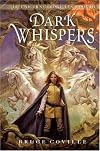
This is my second or third reading of a book that I waited for years to come out, I can definitely say that it did not disappoint! Bruce Coville's world of Luster has expanded so much since the first, rather short, book [Into the Land of the Unicorns] that I feel he's really understands that his readers are growing up and that the story needs to as well.
We see all of our favorite characters here: Cara, Lightfoot, the Squijim, the Dimblethum, M'Gama, Finder, Belle, and more. As well new show more characters to fall in love with: Fallon, Rajiv, Ian, and the never-before-encountered centaurs, as Cara undertakes a dangerous mission to discover the story about the Whisperer and the dark history that the unicorns don't want to remember. All of this is leading up to the final volume [The Last Hunt] when Beloved will make her final attempt to wipe the unicorns from existence forever.
I can say that I was a teen when I started this series, and, as an adult in her thirties, I never grow tired of it. [[Bruce Coville]] is just as adept as world building as some of the great fantasy storytellers. Don't let the fact that the characters are unicorns turn you off of this amazing series. show less
We see all of our favorite characters here: Cara, Lightfoot, the Squijim, the Dimblethum, M'Gama, Finder, Belle, and more. As well new show more characters to fall in love with: Fallon, Rajiv, Ian, and the never-before-encountered centaurs, as Cara undertakes a dangerous mission to discover the story about the Whisperer and the dark history that the unicorns don't want to remember. All of this is leading up to the final volume [The Last Hunt] when Beloved will make her final attempt to wipe the unicorns from existence forever.
I can say that I was a teen when I started this series, and, as an adult in her thirties, I never grow tired of it. [[Bruce Coville]] is just as adept as world building as some of the great fantasy storytellers. Don't let the fact that the characters are unicorns turn you off of this amazing series. show less
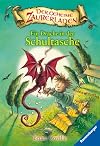
Eins meiner Lieblingsbücher als Kind, hab es öfter gelesen.
Jetzt das erste Mal so semi erwachsen (22) wieder und hui, es ist alles, was es immer war: Eine wunderschöne warme Kindergeschichte, deren Hauptfigur (Jeremy, ein künstlerisch veranlagter, büchernärrischer Sechstklässler) empathisch und vorsichtig agieren muss, um ein Drachenbaby auszubrüten und großzuziehen (Herausforderungen kommen auch dadurch hinzu, dass ein Mädchen aus seiner Klasse in ihn verknallt ist, und sein Vater show more eine Tierarztpraxis inklusive gefühltem Privatzoo besitzt). Als Kind mochte ich Jeremy und irgendwie mochte ich die Bibliothekarin Frau Kreuz auch immer, die ja in einigen "Geschichte aus dem Zauberladen" vorkommt, aber wen ich jetzt erst richtig zu schätzen weiß: Jeremys Vater.
Alleine schon für die Stelle: Als Jeremy nicht in die Schule gehen möchte, entgegnet sein Vater: "Ich kann dich gut verstehen. Schulen sind repressive Institutionen, welche die Massen zur Anpassung erziehen. Trotzdem ist es bequemer für mich, dich dorthin zu schicken, als dass du hier die ganze Zeit im Weg stehst."
Ein tolles Buch, vor allem, aber nicht nur für Kinder empfehlenswert. show less
Jetzt das erste Mal so semi erwachsen (22) wieder und hui, es ist alles, was es immer war: Eine wunderschöne warme Kindergeschichte, deren Hauptfigur (Jeremy, ein künstlerisch veranlagter, büchernärrischer Sechstklässler) empathisch und vorsichtig agieren muss, um ein Drachenbaby auszubrüten und großzuziehen (Herausforderungen kommen auch dadurch hinzu, dass ein Mädchen aus seiner Klasse in ihn verknallt ist, und sein Vater show more eine Tierarztpraxis inklusive gefühltem Privatzoo besitzt). Als Kind mochte ich Jeremy und irgendwie mochte ich die Bibliothekarin Frau Kreuz auch immer, die ja in einigen "Geschichte aus dem Zauberladen" vorkommt, aber wen ich jetzt erst richtig zu schätzen weiß: Jeremys Vater.
Alleine schon für die Stelle: Als Jeremy nicht in die Schule gehen möchte, entgegnet sein Vater: "Ich kann dich gut verstehen. Schulen sind repressive Institutionen, welche die Massen zur Anpassung erziehen. Trotzdem ist es bequemer für mich, dich dorthin zu schicken, als dass du hier die ganze Zeit im Weg stehst."
Ein tolles Buch, vor allem, aber nicht nur für Kinder empfehlenswert. show less
Lists
Favorite Series (1)
LGBTQIA Horror (1)
My Wishlist - YA (2)
1990s (4)
Girl Detectives (3)
Ghosts (3)
1980s (3)
Summer Books (1)
Five star books (1)
Awards


You May Also Like


Associated Authors
Statistics
- Works
- 197
- Also by
- 34
- Members
- 27,871
- Popularity
- #731
- Rating
- 4.0
- Reviews
- 409
- ISBNs
- 1,098
- Languages
- 8
- Favorited
- 39
