

Christopher H. Bidmead (1941–2025)
Author of Logopolis (Doctor Who)
About the Author
Image credit: Tardis Wikia
Works by Christopher H. Bidmead
Associated Works
In●Vision: Season 17 Overview (1993) — Contributor "The Script Editor's Guide to the Doctor Who Galaxy" — 2 copies
Tagged
Common Knowledge
- Canonical name
- Bidmead, Christopher H.
- Legal name
- Bidmead, Christopher Hamilton
- Birthdate
- 1941-01-18
- Date of death
- 2025-08-06
- Gender
- male
- Occupations
- script editor (Doctor Who)
computer journalist (Personal Computer World) - Nationality
- UK
- Birthplace
- London, England, UK
- Places of residence
- London, England, UK (birth)
- Associated Place (for map)
- London, England, UK
Members
Reviews

If you wanted a textbook on how to write a novelisation, Frontios is pretty much it. The original story is one of the twentieth century show’s neglected gems, an eerie tale of an isolated human colony under siege that perhaps was compromised by the limitations of the TV show. Bidmead takes his original story and, assisted by Nigel Robinson’s editorial directive, frees it of those constraints.
Most obvious is the writer being freed of budgetary worries. He’s better able to get the sense show more of struggle across now that he doesn’t have to worry about how many extras or the quality of achievable effects. He can bring an epic sense of scale to simple achievement of surviving, painting with a few words that what we see is the remnants of a colony of originally thousands. The tension of people under permanent, almost unimaginable pressure becomes more understandable, even before the attacks are considered. He’s free to give the impression that this is all held together with sticky tape, and that sticky tape is peeling away with supplies running out.
The other area where this is really effective is in the portrayal of the book’s antagonists, the Tractators. There was originally a notion of gracefulness to the creatures, hence professional dancers being employed to work the costumes. As realised on screen they were overly clumsy, capable of little but a slow shuffle. Bidmead rectifies that with relish, freeing the creatures from their design limitations. And he doesn’t limit it to simple physical capabilities, the conception of the Tractator culture is superior in a way the show’s timeslot would never have allowed. The Tractators employ actual machinery on screen, though they use humans as batteries. Bidmead’s vision is far more relentlessly logical and stomach churning. Instead of scavenging machinery (where did they get that technological capability?) they purely scavenge humans, constructing their machinery purely from meat and bone. There’s a zestful relish to the horror of the translation and mining machines, again more effective than would ever have been allowed on screen.
The expansion isn’t purely restricted to cheap shock though – no writer’s better at capturing this Doctor than the writer who had a hand in his creation. He’s more playful and frustrated here than generally written, and the sly enjoyment of the scenes where he makes Tegan out to be an android are a highlight. Tegan’s great too, frustrated and snarky without being unlikable. Perhaps the only element I regret being lost is Mark Strickson’s intense performance, but such is the penalty of translating a performed text to a different medium.
There are also minor rearrangements to what was seen on screen, Bidmead being wise enough to not worry about building his story around cliffhangers. Frontios is a vindication of Nigel Robinson’s ambitious approach to the Target range, both in pursuing the original authors to novelise their work and looking for more than straightforward transcriptions of the TV shows. Few TV shows show the gap between ambition and realisation as much as twentieth century Doctor Who, none benefit so much from that gap being discarded. This is the perfect example of the kernel of genius being allowed to flower by the author being allowed space to recreate their vision. show less
Most obvious is the writer being freed of budgetary worries. He’s better able to get the sense show more of struggle across now that he doesn’t have to worry about how many extras or the quality of achievable effects. He can bring an epic sense of scale to simple achievement of surviving, painting with a few words that what we see is the remnants of a colony of originally thousands. The tension of people under permanent, almost unimaginable pressure becomes more understandable, even before the attacks are considered. He’s free to give the impression that this is all held together with sticky tape, and that sticky tape is peeling away with supplies running out.
The other area where this is really effective is in the portrayal of the book’s antagonists, the Tractators. There was originally a notion of gracefulness to the creatures, hence professional dancers being employed to work the costumes. As realised on screen they were overly clumsy, capable of little but a slow shuffle. Bidmead rectifies that with relish, freeing the creatures from their design limitations. And he doesn’t limit it to simple physical capabilities, the conception of the Tractator culture is superior in a way the show’s timeslot would never have allowed. The Tractators employ actual machinery on screen, though they use humans as batteries. Bidmead’s vision is far more relentlessly logical and stomach churning. Instead of scavenging machinery (where did they get that technological capability?) they purely scavenge humans, constructing their machinery purely from meat and bone. There’s a zestful relish to the horror of the translation and mining machines, again more effective than would ever have been allowed on screen.
The expansion isn’t purely restricted to cheap shock though – no writer’s better at capturing this Doctor than the writer who had a hand in his creation. He’s more playful and frustrated here than generally written, and the sly enjoyment of the scenes where he makes Tegan out to be an android are a highlight. Tegan’s great too, frustrated and snarky without being unlikable. Perhaps the only element I regret being lost is Mark Strickson’s intense performance, but such is the penalty of translating a performed text to a different medium.
There are also minor rearrangements to what was seen on screen, Bidmead being wise enough to not worry about building his story around cliffhangers. Frontios is a vindication of Nigel Robinson’s ambitious approach to the Target range, both in pursuing the original authors to novelise their work and looking for more than straightforward transcriptions of the TV shows. Few TV shows show the gap between ambition and realisation as much as twentieth century Doctor Who, none benefit so much from that gap being discarded. This is the perfect example of the kernel of genius being allowed to flower by the author being allowed space to recreate their vision. show less

Doctor Who fans know that the TARDIS takes the shape of a British police box because of a broken chameleon circuit; it’s supposed to be able to take any shape, but the circuit got stuck in its most recognizable form. Determined to fix the problem, the Fourth Doctor and Adric go to Logopolis, a planet with astounding powers of mathematical calculation, to get the chameleon circuit fixed. But then the Master has to show up…
This is notable as the story that introduces Tegan and features the show more Fourth Doctor’s regeneration into the Fifth Doctor. It’s a delightfully weird story filled with scientific and mathematical technobabble. The novelization was pretty good, although perhaps lacking a final proofread (“pouring over documents”, “led” being spelled “lead”, etc.). Recommended for fans of the show. show less
This is notable as the story that introduces Tegan and features the show more Fourth Doctor’s regeneration into the Fifth Doctor. It’s a delightfully weird story filled with scientific and mathematical technobabble. The novelization was pretty good, although perhaps lacking a final proofread (“pouring over documents”, “led” being spelled “lead”, etc.). Recommended for fans of the show. show less

Like all Doctor Who novelizations, Castrovalva is a fairly slight book, but unlike most, it's interesting even if you've seen the television serial. The written word captures Bidmead's ideas much better than a BBC budget ever could, and is all the better for it. The regulars are all well-written (unsurprising, as he created most of them!), and the ideas (the TARDIS caught in Event One, the recursive occlusion, block transfer computation) shine. (originally written December 2007)
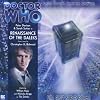
Renaissance of the Daleks has all kinds of weirdness in it: historical soldiers from Rhodes, the Battle of the Crater and 'Nam, plus also an attempt to prevent the Dalek Invasion of Earth from happening, plus (as ever in a Bidmead story) a place with a privileged location in the whole of space-time, plus Daleks of all sizes - the smaller they are, the nastier they get. It is an ambitious piece that didn't quite reach what it was looking for (and Bidmead slightly dissociated himself from the show more final version) but worth listening to, apart from one absolutely terrible member of the guest cast. show less
Lists
You May Also Like


Associated Authors
Statistics
- Works
- 9
- Also by
- 2
- Members
- 1,089
- Popularity
- #23,588
- Rating
- 3.3
- Reviews
- 19
- ISBNs
- 25