
Alan Heathcock
Author of Volt: Stories
Works by Alan Heathcock
Associated Works
Tagged
Common Knowledge
- Birthdate
- 1971-03-08
- Gender
- male
- Education
- Bowling Green State University (MFA)
- Occupations
- professor
short story writer - Organizations
- Boise State University
- Agent
- Sarah Burnes (The Gernert Company)
- Nationality
- USA
- Birthplace
- Frankfort, Kentucky, USA
- Places of residence
- Chicago, Illinois, USA
Boise, Idaho, USA
Bowling Green, Ohio, USA
Frankfort, Kentucky, USA - Associated Place (for map)
- USA
Members
Reviews
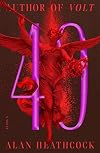
The Publisher Says: From the award-winning author Alan Heathcock comes an American myth of the future: a vision of civil war, spectacle, and disaster of biblical proportions.
In a future America ravaged by natural disaster, pandemic, and political unrest, a fundamentalist faction emerges. As the Novae Terrae gain power, enticing civilians with bread and circuses, a civil war breaks out between its members and the US government.
Mazzy Goodwin, a young soldier, only wants to find her little show more sister, Ava Lynn. One day, she wakes in a bomb crater to find wings emerged from her back. Has she died? Been gifted wings by God? Undergone a military experiment?
The world sees a miracle. Mazzy is coaxed into seeing it as an opportunity: to become the angel-like figurehead of the revolution, in return for being reunited with her sister. Her journey leads her to New Los Angeles, where the Novae have set up the headquarters for their propaganda machine—right in the ruins of Hollywood. Aided by friends old and new, she must navigate a web of deceit while staying true to herself.
Told in sharp, haunting prose, as cinematic as it is precise, Alan Heathcock’s 40 is a dizzyingly fantastical novel about the dangers of blind faith, the temptation of spectacle, and the love of family. In a tale by turns mythic and tragic, one heroine must come to terms with the consequences of her decisions—and face the challenges of building a new world.
I RECEIVED A DRC FROM THE PUBLISHER VIA NETGALLEY. THANK YOU.
My Review: Regulars to this blog will recognize the name Alan Heathcock from my warbling my fool lungs out about his collection, Volt: Stories. One big reason for that is that Author Heathcock does not mess around when he makes his imagery work your brain:
I don't know how much clearer the man can be than that. I can feel these words, see the world through their gravity lens, perceive the distorted light that comes from every other direction than the original one to form the ghost of the initial thought behind them.
Which is why I, devout atheist and committed anti-religion crusader, read a whole novel about a post-apocalyptic world run by and for evangelical evil-doers with hearts colder than emptiest space. Which is why I'm here telling you to go and get one of these books, these beautifully designed books (that jacket design!), or to pre-order the Kindle version so you'll open the device tomorrow morning and join Mazzy and Ava Lynn in the hellscape that Jo Sam the evangelist of doom designed and brought forth.
Betrayal is only the beginning of Mazzy's journey. It's certainly true that she's not a trusting, sunny-hearted soul for a single second of her life. Her sister Ava Lynn calls out the only tenderness she allows herself to externalize. The child, whose fate is not ever easy, confounds Mazzy in her extremely self-possessed certainty. Mazzy being incapable of a single sustained good mood for more than the absolute minimum of time, she envies Ava Lynn and vows to protect her. Which, this being a novel, means that Mazzy is unable to do so.
The amount of manipulative chicanery Mazzy experiences after she (unexpectedly and without external stimulus) becomes winged is, of course, the bulk of the novel's action. Her bewingèd state makes her very valuable to the evildoers around Jo Sam the evangelist, unsurprisingly, and so they use Ava Lynn to extort obedience out of Mazzy. The sheer outrage I experienced over this...! It's an effective tool, of course, the safety of one's child (dead mother) being hard coded into our protective circle by evolution. That it is never a violent threat, "we will hurt her," made me able to continue to read the story. They keep Mazzy from being with Ava Lynn to keep her working for their vile controlling cause.
The day dawns, of course, when Mazzy is no longer suitable for their use; a series of things occurs that, in several moments, made me think I was being played by Author Heathcock. It's a pleasure to report that he played fair...but the ending of the story is still a major surprise. Yes, I saw the twist coming, but I think that's to be expected. A truly successful twist, in this case, means the expected event occurs but something you-the-reader would've dismissed as improbable happens after. Job done, Author Heathcock.
I'll say that, after reading many, many chosen-one narratives and even more post-apocalyptic religion-used-for-evil tales over the past seven decades, I'm not sorry I read this one. I think it's well-made and well-written, I suspect it's something the author has allowed to simmer for a very long time before committing to words for others to read, and I'm pleased with the results he has achieved. show less
In a future America ravaged by natural disaster, pandemic, and political unrest, a fundamentalist faction emerges. As the Novae Terrae gain power, enticing civilians with bread and circuses, a civil war breaks out between its members and the US government.
Mazzy Goodwin, a young soldier, only wants to find her little show more sister, Ava Lynn. One day, she wakes in a bomb crater to find wings emerged from her back. Has she died? Been gifted wings by God? Undergone a military experiment?
The world sees a miracle. Mazzy is coaxed into seeing it as an opportunity: to become the angel-like figurehead of the revolution, in return for being reunited with her sister. Her journey leads her to New Los Angeles, where the Novae have set up the headquarters for their propaganda machine—right in the ruins of Hollywood. Aided by friends old and new, she must navigate a web of deceit while staying true to herself.
Told in sharp, haunting prose, as cinematic as it is precise, Alan Heathcock’s 40 is a dizzyingly fantastical novel about the dangers of blind faith, the temptation of spectacle, and the love of family. In a tale by turns mythic and tragic, one heroine must come to terms with the consequences of her decisions—and face the challenges of building a new world.
I RECEIVED A DRC FROM THE PUBLISHER VIA NETGALLEY. THANK YOU.
My Review: Regulars to this blog will recognize the name Alan Heathcock from my warbling my fool lungs out about his collection, Volt: Stories. One big reason for that is that Author Heathcock does not mess around when he makes his imagery work your brain:
"...I knew it'd come to this, you say. I knew I was right. The power of knowing the despair you ordered has finally come to pass makes you feel like a god. Let's be honest. It's what you want. You want this world to collapse. Want people to be every awful thing."
–and–
Grief was a demon of possession. When people talked of time healing wounds, they only meant that over time you become accustomed to that demon inside you, and what at first felt like an invasive presence, alien and nefarious, slowly became integrated into your being, the imp of sorrow crouched within you for the remainder of your days.
I don't know how much clearer the man can be than that. I can feel these words, see the world through their gravity lens, perceive the distorted light that comes from every other direction than the original one to form the ghost of the initial thought behind them.
Which is why I, devout atheist and committed anti-religion crusader, read a whole novel about a post-apocalyptic world run by and for evangelical evil-doers with hearts colder than emptiest space. Which is why I'm here telling you to go and get one of these books, these beautifully designed books (that jacket design!), or to pre-order the Kindle version so you'll open the device tomorrow morning and join Mazzy and Ava Lynn in the hellscape that Jo Sam the evangelist of doom designed and brought forth.
Betrayal is only the beginning of Mazzy's journey. It's certainly true that she's not a trusting, sunny-hearted soul for a single second of her life. Her sister Ava Lynn calls out the only tenderness she allows herself to externalize. The child, whose fate is not ever easy, confounds Mazzy in her extremely self-possessed certainty. Mazzy being incapable of a single sustained good mood for more than the absolute minimum of time, she envies Ava Lynn and vows to protect her. Which, this being a novel, means that Mazzy is unable to do so.
The amount of manipulative chicanery Mazzy experiences after she (unexpectedly and without external stimulus) becomes winged is, of course, the bulk of the novel's action. Her bewingèd state makes her very valuable to the evildoers around Jo Sam the evangelist, unsurprisingly, and so they use Ava Lynn to extort obedience out of Mazzy. The sheer outrage I experienced over this...! It's an effective tool, of course, the safety of one's child (dead mother) being hard coded into our protective circle by evolution. That it is never a violent threat, "we will hurt her," made me able to continue to read the story. They keep Mazzy from being with Ava Lynn to keep her working for their vile controlling cause.
The day dawns, of course, when Mazzy is no longer suitable for their use; a series of things occurs that, in several moments, made me think I was being played by Author Heathcock. It's a pleasure to report that he played fair...but the ending of the story is still a major surprise. Yes, I saw the twist coming, but I think that's to be expected. A truly successful twist, in this case, means the expected event occurs but something you-the-reader would've dismissed as improbable happens after. Job done, Author Heathcock.
I'll say that, after reading many, many chosen-one narratives and even more post-apocalyptic religion-used-for-evil tales over the past seven decades, I'm not sorry I read this one. I think it's well-made and well-written, I suspect it's something the author has allowed to simmer for a very long time before committing to words for others to read, and I'm pleased with the results he has achieved. show less
Rating: 4.5* of five
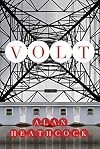
The Book Description: A blistering collection of stories from an exhilarating new voice
One man kills another after neither will move his pickup truck from the road. A female sheriff in a flooded town attempts to cover up a murder. When a farmer harvesting a field accidentally runs over his son, his grief sets him off walking, mile after mile. A band of teens bent on destruction runs amok in a deserted town at night. As these men and women lash out at the inscrutable churn show more of the world around them, they find a grim measure of peace in their solitude.
Throughout Volt, Alan Heathcock’s stark realism is leavened by a lyric energy that matches the brutality of the surface. And as you move through the wind-lashed landscape of these stories, faint signs of hope appear underfoot. In Volt, the work of a writer who’s hell-bent on wrenching out whatever beauty this savage world has to offer, Heathcock’s tales of lives set afire light up the sky like signal flares touched off in a moment of desperation.
My Review: When reviewing collections, it's hard to know what to say about them whole and entire unless they're linked stories. With a group of stories like this book is, it's easiest and, IMO, best to adopt what I've called “The Bryce Method” in honor of an online friend who introduced me to the technique: A summary opinion, plus a short line or a quote from each story, together with a rating for the story. So as my summary opinion, I offer this: Bleak is not always to be avoided. Sometimes art needs shadows to prove there's light. These stories aren't feel-gooders, and shouldn't be attempted by those in need of uplift. There is none here, but not one of these tough, scrappy folks is gonna lie down and die any time soon. They're too scared of the God they're sure they'll meet on the Other Side.
The stories in book order:
“The Staying Freight” gives new and chilling meaning to “Took a walk, Be back soon.” Why? Coming back is going backwards. Winslow Nettles needs, and needs badly, to go forwards.
“Smoke” is a horrible moment in a no-better-than-you man's life, one that changes him forever and not for better. How can one human bear a burden of sin alone? Better, when you're afraid of the god that you've invented, to load some onto an innocent other. Horrifying, and just beautiful.
“Peacekeeper” brings justice to a world where there isn't any, courtesy of the local grocery-store manager turned Sheriff. Is lying always wrong? After reading this, you won't think so. A beautiful and thought-provoking modern morality tale, complete with purifying flood.
“Furlough” couldn't be more horrible: A man, not a dumb kid, leads a young woman to the kind of rough justice that makes a civilized person's stomach churn. That he hates it, that it is vile and cruel in his eyes, is probably worse than the resulting nightmare. Spare, elegant, and horrifying.
“Fort Apache” sets the purposeless present and the vacant future against the void inside adolescent souls and the results explode into fire, chaos, and that angst of inchoate longing that humans will do anything to escape.
“The Daughter” sets a mother lost to random accident, a daughter whose grief severs her ties to reality wile making the whole world painfully abrasive, and a mother-of-all-storms loose in a cornfield maze. Returning to life, such as it is, is always painful, but it takes the pain of a neighbor's child to turn the daughter's rage outward again.
“Lazarus” is the least successful story, to my mind anyway, but it's still head and shoulders above most anything else I've read this century. When a man is wreathed in the smoke of sacrifices to his vicious god, how can he offer moral guidance? By remaining empty. Then what's needed most, right then and there, can fill you up and come out for who needs it. “It's your song, son...It's not for me to name.” (p179)
“Volt” sets the Sheriff, sworn officer of the court, against everything her hometown's about, and against her own ideas of justice instead of the law, as she cooperates with the city cops in bringing a convicted felon/Iraq war veteran in for a court date.
Well. There it is. The people who fight for the rights of us all don't have the privileges of us few. And we wonder how come there are so many walking wounded out there screaming their pain with their guns and dancing to the tune of radio mullahs whose hate and bile spewing nonsense feels just like their listeners do inside.
These are beautiful and brave and sad and wrenching demands for anyone with fifteen dollars to spend on a frippery like a book, or with enough luck to live where there's a library, to pay attention.
Ours is not the only world. No oceans separate us from the enemies we've made within. show less
The Book Description: A blistering collection of stories from an exhilarating new voice
One man kills another after neither will move his pickup truck from the road. A female sheriff in a flooded town attempts to cover up a murder. When a farmer harvesting a field accidentally runs over his son, his grief sets him off walking, mile after mile. A band of teens bent on destruction runs amok in a deserted town at night. As these men and women lash out at the inscrutable churn show more of the world around them, they find a grim measure of peace in their solitude.
Throughout Volt, Alan Heathcock’s stark realism is leavened by a lyric energy that matches the brutality of the surface. And as you move through the wind-lashed landscape of these stories, faint signs of hope appear underfoot. In Volt, the work of a writer who’s hell-bent on wrenching out whatever beauty this savage world has to offer, Heathcock’s tales of lives set afire light up the sky like signal flares touched off in a moment of desperation.
My Review: When reviewing collections, it's hard to know what to say about them whole and entire unless they're linked stories. With a group of stories like this book is, it's easiest and, IMO, best to adopt what I've called “The Bryce Method” in honor of an online friend who introduced me to the technique: A summary opinion, plus a short line or a quote from each story, together with a rating for the story. So as my summary opinion, I offer this: Bleak is not always to be avoided. Sometimes art needs shadows to prove there's light. These stories aren't feel-gooders, and shouldn't be attempted by those in need of uplift. There is none here, but not one of these tough, scrappy folks is gonna lie down and die any time soon. They're too scared of the God they're sure they'll meet on the Other Side.
The stories in book order:
“The Staying Freight” gives new and chilling meaning to “Took a walk, Be back soon.” Why? Coming back is going backwards. Winslow Nettles needs, and needs badly, to go forwards.
“Smoke” is a horrible moment in a no-better-than-you man's life, one that changes him forever and not for better. How can one human bear a burden of sin alone? Better, when you're afraid of the god that you've invented, to load some onto an innocent other. Horrifying, and just beautiful.
“Peacekeeper” brings justice to a world where there isn't any, courtesy of the local grocery-store manager turned Sheriff. Is lying always wrong? After reading this, you won't think so. A beautiful and thought-provoking modern morality tale, complete with purifying flood.
“Furlough” couldn't be more horrible: A man, not a dumb kid, leads a young woman to the kind of rough justice that makes a civilized person's stomach churn. That he hates it, that it is vile and cruel in his eyes, is probably worse than the resulting nightmare. Spare, elegant, and horrifying.
“Fort Apache” sets the purposeless present and the vacant future against the void inside adolescent souls and the results explode into fire, chaos, and that angst of inchoate longing that humans will do anything to escape.
“The Daughter” sets a mother lost to random accident, a daughter whose grief severs her ties to reality wile making the whole world painfully abrasive, and a mother-of-all-storms loose in a cornfield maze. Returning to life, such as it is, is always painful, but it takes the pain of a neighbor's child to turn the daughter's rage outward again.
“Lazarus” is the least successful story, to my mind anyway, but it's still head and shoulders above most anything else I've read this century. When a man is wreathed in the smoke of sacrifices to his vicious god, how can he offer moral guidance? By remaining empty. Then what's needed most, right then and there, can fill you up and come out for who needs it. “It's your song, son...It's not for me to name.” (p179)
“Volt” sets the Sheriff, sworn officer of the court, against everything her hometown's about, and against her own ideas of justice instead of the law, as she cooperates with the city cops in bringing a convicted felon/Iraq war veteran in for a court date.
...”One world was like it was back home, where folks ate cheeseburgers and kids had sleepovers and ball games and people went to work and got angry over stupid shit that didn't matter. Like their TV ain't no good, or they ain't got the right sneakers. Some shit like that.… But then there's another world, where folks ain't got a goddamn thing, and these motherfuckers'll try any damn thing to blow your ass to dust. Sarge says it was up to us to keep them worlds apart, and if we thought that shit that happened over there wouldn't make it back to some little girl's sleepover then we had our heads full-way up our asses. ...Supposed to rally us, I guess. ...But then I had to go back out that next day and the next and all I come to think on was how I ain't never had no sleepovers or ball games or none of that shit, and didn't none of it make a damn lick of sense.”p204
Well. There it is. The people who fight for the rights of us all don't have the privileges of us few. And we wonder how come there are so many walking wounded out there screaming their pain with their guns and dancing to the tune of radio mullahs whose hate and bile spewing nonsense feels just like their listeners do inside.
These are beautiful and brave and sad and wrenching demands for anyone with fifteen dollars to spend on a frippery like a book, or with enough luck to live where there's a library, to pay attention.
Ours is not the only world. No oceans separate us from the enemies we've made within. show less
Thank you to NetGalley and the publishers for an advanced copy in exchange for my honest review!
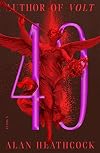
40 was a baffling read. I had first been drawn in by the cover of the novel. A classical rendition of an angel proudly holding a trumpet aloft, but instead of the expected soft golds or blues, is entirely blood red, whilst walking through a hot pink 40. After being curious about what sort of novel could have such an eye-catching cover, I looked at the plot blurb. The setting is in a show more post-apocalyptic world, the enemy a powerhouse of a cult that has taken over the city of Los Angeles. A girl who becomes the figurehead of a revolution, just to get her sister back. The same girl who had awoken in a bomb crater with mysterious wings on her back! All of it sounded fascinating! Just like the type of book I would love to dive into! I was sorely disappointed. I almost put this book on the DNF list by the second chapter; I only made it to the end because I wanted to know what would happen with the sister. 40 feels contrived. Events happen within the plot just to add some drama. Sections of the story read oddly, and the plot jumped from place to place. The writing style itself was also painful at points. It felt more like a rough draft than a finished story. The characters themselves felt artificial. Like strawmen simply placed so the protagonist can have something to interact with. The main character herself, Mazzy, felt hollow. She didn't feel like much of a character. (I agree with someone else who said she felt a LOT like a Katniss rip-off. Not saying that was intentional, but the similarities were glaring.) There were speeches in certain scenes that felt as if they were meant to be read as a "deep, introspective message to the masses" but they came off as shallow. I would also like to note that the "twist" was painfully obvious. I knew what was coming the second that character was introduced. The ending of the novel also felt insanely bizarre. I believe I understand what it was supposed to be referencing when it comes to Bible stories, but it felt insane and out of place. Simply put, I did not like 40. After finishing the novel, I was struck with the memory of this scene from "Burn After Reading". It sums up how I felt finishing this novel.
"What did we learn Palmer?" "
"I don't know sir."
"I don't know either. I guess we learned not to do it again. I'll be f*cked if I know what we did though." show less
40 was a baffling read. I had first been drawn in by the cover of the novel. A classical rendition of an angel proudly holding a trumpet aloft, but instead of the expected soft golds or blues, is entirely blood red, whilst walking through a hot pink 40. After being curious about what sort of novel could have such an eye-catching cover, I looked at the plot blurb. The setting is in a show more post-apocalyptic world, the enemy a powerhouse of a cult that has taken over the city of Los Angeles. A girl who becomes the figurehead of a revolution, just to get her sister back. The same girl who had awoken in a bomb crater with mysterious wings on her back! All of it sounded fascinating! Just like the type of book I would love to dive into! I was sorely disappointed. I almost put this book on the DNF list by the second chapter; I only made it to the end because I wanted to know what would happen with the sister. 40 feels contrived. Events happen within the plot just to add some drama. Sections of the story read oddly, and the plot jumped from place to place. The writing style itself was also painful at points. It felt more like a rough draft than a finished story. The characters themselves felt artificial. Like strawmen simply placed so the protagonist can have something to interact with. The main character herself, Mazzy, felt hollow. She didn't feel like much of a character. (I agree with someone else who said she felt a LOT like a Katniss rip-off. Not saying that was intentional, but the similarities were glaring.) There were speeches in certain scenes that felt as if they were meant to be read as a "deep, introspective message to the masses" but they came off as shallow. I would also like to note that the "twist" was painfully obvious. I knew what was coming the second that character was introduced. The ending of the novel also felt insanely bizarre. I believe I understand what it was supposed to be referencing when it comes to Bible stories, but it felt insane and out of place. Simply put, I did not like 40. After finishing the novel, I was struck with the memory of this scene from "Burn After Reading". It sums up how I felt finishing this novel.
"What did we learn Palmer?" "
"I don't know sir."
"I don't know either. I guess we learned not to do it again. I'll be f*cked if I know what we did though." show less
Volt: Stories apparently is Alan Heathcock's first short story collection, and it's an impressive one. All eight stories take place in a beaten down U.S. farm town named Krafton, and some characters, like tenacious former grocer store manager and now sheriff Helen Farraley, appear in more than one. The stories therefore loosely tie together in various ways. My thanks to Richard for recommending this one.
The first story, "Staying Freight", features the aftermath of a terrible farming accident show more that kills a young boy. His father struggles to accept it, and in doing so. at one point finds himself in a nearby town taking punches for betting money. Escape, and the inability to really do so, is a theme of a number of the stories. These stories are often grim in their details, but true to life, and they demonstrate the resiliency the town's citizens have even in dark circumstances.
Krafton is not a home for celebrities or displays of wealth. Every penny and bit of happiness is hard-earned and precious. As one character, Jorgen Denmore, describes it, a sergeant urged him and his fellow soldiers in an overseas war to protect the world "back home, where folks ate cheeseburgers and kids had sleepovers and ballgames and people went to work and got angry over stupid shit that didn't matter. Like their TV ain't no good, or they ain't got the right sneakers. Some shit like that." While it was "supposed to rally us, I guess", all Jorgen, whose family is on the bottom rung of the town's ladder, can think is "how I ain't never had no sleepovers or ball games or none of that shit, and didn't none of it make a damn lick of sense."
In one story, faced with someone who committed a horrific act, Helen wreaks justice that is in the community's best interest, even though she knows community members wouldn't approve the means she uses. In another, she treats the criminal with compassion, as she knows he has a good heart and remembers him from when they were kids. Another woman explains how some go wrong, like her son: "You think some are bad or evil or whatnot, but somewhere along the way they were someone's baby, suckling the teat like anybody. Then something puts a volt in 'em and they ain't the same no more. You might think a man like Harlan don't care much what his mama thinks. But I shunned him and he couldn't ever shake it." Helen's view, expressed elsewhere: "Some are guilty the moment you lay eyes on them, and what the law ought to do is stop 'em 'fore they can do what they're born to do."
Heathcock obviously has deep feelings for his characters and their circumstances, and admires them for the way they handle the cards they've been dealt. It's a tough world, and there's room for compassion and kindness, but you better be ready to rise up to meet it when the time comes. show less
The first story, "Staying Freight", features the aftermath of a terrible farming accident show more that kills a young boy. His father struggles to accept it, and in doing so. at one point finds himself in a nearby town taking punches for betting money. Escape, and the inability to really do so, is a theme of a number of the stories. These stories are often grim in their details, but true to life, and they demonstrate the resiliency the town's citizens have even in dark circumstances.
Krafton is not a home for celebrities or displays of wealth. Every penny and bit of happiness is hard-earned and precious. As one character, Jorgen Denmore, describes it, a sergeant urged him and his fellow soldiers in an overseas war to protect the world "back home, where folks ate cheeseburgers and kids had sleepovers and ballgames and people went to work and got angry over stupid shit that didn't matter. Like their TV ain't no good, or they ain't got the right sneakers. Some shit like that." While it was "supposed to rally us, I guess", all Jorgen, whose family is on the bottom rung of the town's ladder, can think is "how I ain't never had no sleepovers or ball games or none of that shit, and didn't none of it make a damn lick of sense."
In one story, faced with someone who committed a horrific act, Helen wreaks justice that is in the community's best interest, even though she knows community members wouldn't approve the means she uses. In another, she treats the criminal with compassion, as she knows he has a good heart and remembers him from when they were kids. Another woman explains how some go wrong, like her son: "You think some are bad or evil or whatnot, but somewhere along the way they were someone's baby, suckling the teat like anybody. Then something puts a volt in 'em and they ain't the same no more. You might think a man like Harlan don't care much what his mama thinks. But I shunned him and he couldn't ever shake it." Helen's view, expressed elsewhere: "Some are guilty the moment you lay eyes on them, and what the law ought to do is stop 'em 'fore they can do what they're born to do."
Heathcock obviously has deep feelings for his characters and their circumstances, and admires them for the way they handle the cards they've been dealt. It's a tough world, and there's room for compassion and kindness, but you better be ready to rise up to meet it when the time comes. show less
Lists
Awards


You May Also Like


Associated Authors
Statistics
- Works
- 2
- Also by
- 2
- Members
- 280
- Popularity
- #83,033
- Rating
- 3.9
- Reviews
- 13
- ISBNs
- 12
- Languages
- 2
- Favorited
- 2
