
Frank Bill
Author of Crimes in Southern Indiana: Stories
Works by Frank Bill
Donnybrook [short story] 1 copy
Associated Works
Tagged
Common Knowledge
- Birthdate
- 1974
- Gender
- male
- Agent
- Stacia Decker (Donald Maass Literary Agency)
- Nationality
- USA
- Associated Place (for map)
- USA
Members
Reviews
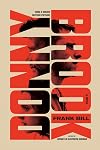
A brutal, radge (good Scottish term) possibly OTT story of various characters heading towards an underground bare knuckle fighting competition deep in the middle of the backwoods of Indiana. All the characters are loathsome in some ways, and you have no sympathy/empathy for any of them overall. Very well written though but extremely graphic in the violence. Hillbilly noir with a heavy helping of meth.
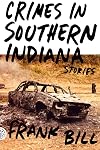
Bill Hicks had a bit about how he "could buy a trailer, I know that much about them from watching COPS". That's what it feels like reading these stories of low level, petty crime. Frank Bill is no Cormac McCarthy with his ponderous, weighty themes, he's closer to Elmore Leonard writing about mostly pathetic hoodlums and people caught up in the wake of circumstance - but there's none of Leonard's comedy here. It's played straight and brutal, half the characters end up dead.
Despite being a show more short story collection they're semi-connected through time, place and person. There's even an opening to his novel Donnybrook toward the end. Perhaps because of the relentlessness of this series of crimes you get numb to reading through it. It can't really pack that strong a punch when it's the COPS highlight reel, there's just not enough time to get invested in each sorry fate. show less
Despite being a show more short story collection they're semi-connected through time, place and person. There's even an opening to his novel Donnybrook toward the end. Perhaps because of the relentlessness of this series of crimes you get numb to reading through it. It can't really pack that strong a punch when it's the COPS highlight reel, there's just not enough time to get invested in each sorry fate. show less
Good God. Quentin Tarantino’s Winesburg, Ohio.
There was so much perfect imagery, and such a breakneck pace, and so much thrilling action in which I was actually really vested, that what this book didn’t have—a trajectory of plot, some overarching element which took the individual stories beyond the tragedy of their environment—didn’t occur to me until a day after I’d finished it. And maybe it doesn’t need one. But it has so many other aspects that we have come to see as show more masterful in various forms of 21st century literature—a nearly flawless choreography of bloodshed, a precise sense of what details were needed for the story’s setting and action to continue unimpeded, quick and visceral stakes for each of the characters—that I don't mind its structure at all. The string of stories did build to the last one, and each story was satisfying in one way or another, most ways being justice with someone buried in the backyard.
“Hill Clan Cross” certainly sets the tone for the book. Halfway through the story I was not sure what was going to happen, considering 90% of the characters we had met so far were dead. The story is valuable as an opening story because it sets the limits of what these men are willing to do to each other: as much as they can do to each other (murder in the woods) and what drives them to that. Crimes which any of us would hold grudges for: theft, double-crossing, sloppiness. Mistakes, lack of perfection. It shows how they value blood relations and that they are not beyond killing their own for breaking a rule. Having read the full book, this story seems almost simplistic—it serves as a good introduction to the characters in that way, and to the book as a whole; it serves to steel one’s stomach.
“These Old Bones” made me so damn happy. On a second look I couldn’t believe it was only five pages long. I was born ready for a woman to wield the rifle, and Josephine did us all proud in the specific way that someone who has endured far more than we ever will can inspire our hearts to thrill with the barest association—identified gender.
“All the Awful” brought the rest of the lengths Bill was willing to go in this book to light. The women still rose, still banded together, and it was, in the end, their choice to be merciful. It almost seems as if Bill is weaving a new mythology of a broken, barbarian world in which people establish their own moral codes, not unlike the ideas of a morally bankrupt medieval time period, or the appeal of the wild west. Setting this mythology in our living memory gives a different kind of hope to the way these people wield their power, the power all of us have, of killing or letting live, of what to do with not just a single moment of our lives but each and every one.
“The Penance of Scoot McCutcheon” fucking broke me. Bill never lets us believe the world these people live in is simple, or the decisions they make are simple, but in this story he reveals the ruthlessness of that complication, and how the dimensionality or the consequences of our decisions does not excuse us from making them. His stakes are lives, his lessons writ large in blood, but that is perhaps the best medium for his message.
“Officer Down (Tweakers)” combines the time and space dimensions that Bill had been weaving throughout these stories. Because of the relationship Moon has to Rusty, we can see that there is more to this Southern Indiana than grudges made of dirt and alcohol. And because of what happens between him and Ina, not even detailed (does Bill ever detail anything?), we can see that all these ties break, even the ones people anchor themselves to. This one did feel a bit like a setup—not that it felt bad, since this was still just the cusp of the book, but it felt like a conscious nod that these characters would be coming back, that circles would be made in the dust, that like these characters we would not easily or soon be free.
“The Need.” “It’s what happened when a southern Indiana farm boy scored high on the ASVAB test before entering the military… Wayne wanted to serve his country, use his God-given abilities. Unfortunately, God had other plans.”
“Beautiful even in Death” was the beginning of a realization of how much people drink while driving trucks in this book. This humanized the 19-year-old whose mug shot we see when he goes to county jail. We don’t know what’s happened to anybody else and the worst we can do is not believe them, although sometimes it seems that’s all we can do.
“The Accident” explains why a man mows his lawn at 2:00 in the morning, and makes us want to, I think. Stanley’s painful and close narration brought me in. The twist at the end seemed unfathomable and I think that is the size of Bill’s project: he doesn’t make us relate to his characters, he just explains them to us emotionally, lays out what has happened to them, and then we are in the same place. No tedious connections or nostalgia necessary.
“The Old Mechanic” is a song in the same tune as its predecessor, interestingly enough. It hearkens back to “The Need” in attempting to explain what happens after a war, to the soldiers. There are a couple of nicely done things in this story, first, the span of time covered. Both the past and the present are vivid, and the distinction—names—is clear and effective. The young man’s fear is present with us and helps to keep interest throughout the piece, as he discovers his grandfather, and at the end, we are convinced somehow that he is safe, though there is just as much possibility on the page that is unwritten that the grandfather rediscovered a mistaken target for his rage.
“Rough Company” shows us exactly what this kind of place will do to a child.
“A Coon Hunter’s Noir” has a hell of a twist, and J.W. is one of the most honorable characters in this book, though he does go after someone else with a vengeance and gasoline and a match for what he sees as an injustice. No one can blame her; she wanted a child and was betrayed by her own body. And in the end what are a few years in the pen?
“Amphetamine Twitch” couldn’t have ended well. I have no idea if Bill is good at conveying drug addiction or not but he sure gives that impression. The thing about it is that it all fits into the larger picture Bill is drawing of the place, and in this way the collection really does remind me of Winesburg: there is no moral, just a lot of people living in the same place in the same way despite all the differences in their habits and names and homes. He connects people, he disfigures them by proximity and by showing us only their ugliest moments, their grotesques.
“Old Testament Wisdom” is the only chapter in the book with an epigraph, and brings us back to memories of the first few stories. The image of a teenage girl as a cobra in her softball uniform is one of my favorite descriptions, perhaps, that I have ever read, and that is how men should do it when they write about teenage girls. Also, a brilliant example of showing different points of view with different amounts of information, and a textbook example of how to conduct arms fire between many people with differing results for the budding writer.
“Trespassing between Heaven and Hell” seems to dissect for us Everett’s heart, which is already broken, and when his brother cuffs him it seems like the natural, perfect ending. The thing about Bill’s endings is that they are always unexpected because of the huge number of variables in every situation, but they are simultaneously inevitable when looked back on. He doesn’t let anyone scrape out of any situation unscathed, perhaps because that is how things work, maybe trespassing a bit into the moralization of How Things Work, but not so much that it feels like sermonizing.
“A Rabbit in the Lettuce Patch” is the antidote for “These Old Bones.” I think the redeeming turn of events was the way Ida had her own way and though she was just a housewife she had a decent chance, even when things were hopeless, because of who she was and the wit she kept on her. We don’t feel sorry for Bill’s characters, which is good. He doesn’t give us Sunday School puppets for some kind of modern morality show. Ida dies, in this one, and that’s actually a kind of irrelevant fact, in the scheme of everything else she does.
“Cold, Hard Love” was a trip. Feeling weird afterwards felt like kinkshaming. But this story, which opens up the world of brutal fighting for the sake of money, which makes conflict into profit in preparation for the next story, seems to show us why we feel the way we do, culturally, about people fighting each other for money, other people profiting off that, the way it is blood money one way or another.
“Crimes in Southern Indiana” lived up to the build that the rest of the book gave it. It is the most well-woven, the most complex, the most detailed of the stories. And like Winesburg, this climactic story does not give us a sudden panorama that solves the rest of the stories, but merely goes even deeper into a single one. The others were vignettes and this is the oil painting. Some elements surprised me, but made sense in context—I had heard of certain elements hinted at in other stories. Bill wove these well and tightly, with a good knotting technique.
I could tell this book a lot of ways. The first sentence of this mess of words is only one. Another would be “modern hunting Southern Gothic where everything happens, instead of nothing.” Bill reminds me of some of the Serious Realistic Writers I had to read in school, but he takes things the whole nine yards, finishes the job, and leaves us under six feet of dirt in the backyard. I’d do it again. Still seems like an imposition to suggest anyone else should, but in a heartbeat, I’d do it again. show less
There was so much perfect imagery, and such a breakneck pace, and so much thrilling action in which I was actually really vested, that what this book didn’t have—a trajectory of plot, some overarching element which took the individual stories beyond the tragedy of their environment—didn’t occur to me until a day after I’d finished it. And maybe it doesn’t need one. But it has so many other aspects that we have come to see as show more masterful in various forms of 21st century literature—a nearly flawless choreography of bloodshed, a precise sense of what details were needed for the story’s setting and action to continue unimpeded, quick and visceral stakes for each of the characters—that I don't mind its structure at all. The string of stories did build to the last one, and each story was satisfying in one way or another, most ways being justice with someone buried in the backyard.
“These Old Bones” made me so damn happy. On a second look I couldn’t believe it was only five pages long. I was born ready for a woman to wield the rifle, and Josephine did us all proud in the specific way that someone who has endured far more than we ever will can inspire our hearts to thrill with the barest association—identified gender.
“All the Awful” brought the rest of the lengths Bill was willing to go in this book to light. The women still rose, still banded together, and it was, in the end, their choice to be merciful. It almost seems as if Bill is weaving a new mythology of a broken, barbarian world in which people establish their own moral codes, not unlike the ideas of a morally bankrupt medieval time period, or the appeal of the wild west. Setting this mythology in our living memory gives a different kind of hope to the way these people wield their power, the power all of us have, of killing or letting live, of what to do with not just a single moment of our lives but each and every one.
“The Penance of Scoot McCutcheon” fucking broke me. Bill never lets us believe the world these people live in is simple, or the decisions they make are simple, but in this story he reveals the ruthlessness of that complication, and how the dimensionality or the consequences of our decisions does not excuse us from making them. His stakes are lives, his lessons writ large in blood, but that is perhaps the best medium for his message.
“Officer Down (Tweakers)” combines the time and space dimensions that Bill had been weaving throughout these stories. Because of the relationship Moon has to Rusty, we can see that there is more to this Southern Indiana than grudges made of dirt and alcohol. And because of what happens between him and Ina, not even detailed (does Bill ever detail anything?), we can see that all these ties break, even the ones people anchor themselves to. This one did feel a bit like a setup—not that it felt bad, since this was still just the cusp of the book, but it felt like a conscious nod that these characters would be coming back, that circles would be made in the dust, that like these characters we would not easily or soon be free.
“The Need.” “It’s what happened when a southern Indiana farm boy scored high on the ASVAB test before entering the military… Wayne wanted to serve his country, use his God-given abilities. Unfortunately, God had other plans.”
“Beautiful even in Death” was the beginning of a realization of how much people drink while driving trucks in this book. This humanized the 19-year-old whose mug shot we see when he goes to county jail. We don’t know what’s happened to anybody else and the worst we can do is not believe them, although sometimes it seems that’s all we can do.
“The Accident” explains why a man mows his lawn at 2:00 in the morning, and makes us want to, I think. Stanley’s painful and close narration brought me in. The twist at the end seemed unfathomable and I think that is the size of Bill’s project: he doesn’t make us relate to his characters, he just explains them to us emotionally, lays out what has happened to them, and then we are in the same place. No tedious connections or nostalgia necessary.
“The Old Mechanic” is a song in the same tune as its predecessor, interestingly enough. It hearkens back to “The Need” in attempting to explain what happens after a war, to the soldiers. There are a couple of nicely done things in this story, first, the span of time covered. Both the past and the present are vivid, and the distinction—names—is clear and effective. The young man’s fear is present with us and helps to keep interest throughout the piece, as he discovers his grandfather, and at the end, we are convinced somehow that he is safe, though there is just as much possibility on the page that is unwritten that the grandfather rediscovered a mistaken target for his rage.
“Rough Company” shows us exactly what this kind of place will do to a child.
“A Coon Hunter’s Noir” has a hell of a twist, and J.W. is one of the most honorable characters in this book, though he does go after someone else with a vengeance and gasoline and a match for what he sees as an injustice. No one can blame her; she wanted a child and was betrayed by her own body. And in the end what are a few years in the pen?
“Amphetamine Twitch” couldn’t have ended well. I have no idea if Bill is good at conveying drug addiction or not but he sure gives that impression. The thing about it is that it all fits into the larger picture Bill is drawing of the place, and in this way the collection really does remind me of Winesburg: there is no moral, just a lot of people living in the same place in the same way despite all the differences in their habits and names and homes. He connects people, he disfigures them by proximity and by showing us only their ugliest moments, their grotesques.
“Old Testament Wisdom” is the only chapter in the book with an epigraph, and brings us back to memories of the first few stories. The image of a teenage girl as a cobra in her softball uniform is one of my favorite descriptions, perhaps, that I have ever read, and that is how men should do it when they write about teenage girls. Also, a brilliant example of showing different points of view with different amounts of information, and a textbook example of how to conduct arms fire between many people with differing results for the budding writer.
“Trespassing between Heaven and Hell” seems to dissect for us Everett’s heart, which is already broken, and when his brother cuffs him it seems like the natural, perfect ending. The thing about Bill’s endings is that they are always unexpected because of the huge number of variables in every situation, but they are simultaneously inevitable when looked back on. He doesn’t let anyone scrape out of any situation unscathed, perhaps because that is how things work, maybe trespassing a bit into the moralization of How Things Work, but not so much that it feels like sermonizing.
“A Rabbit in the Lettuce Patch” is the antidote for “These Old Bones.” I think the redeeming turn of events was the way Ida had her own way and though she was just a housewife she had a decent chance, even when things were hopeless, because of who she was and the wit she kept on her. We don’t feel sorry for Bill’s characters, which is good. He doesn’t give us Sunday School puppets for some kind of modern morality show. Ida dies, in this one, and that’s actually a kind of irrelevant fact, in the scheme of everything else she does.
“Cold, Hard Love” was a trip. Feeling weird afterwards felt like kinkshaming. But this story, which opens up the world of brutal fighting for the sake of money, which makes conflict into profit in preparation for the next story, seems to show us why we feel the way we do, culturally, about people fighting each other for money, other people profiting off that, the way it is blood money one way or another.
“Crimes in Southern Indiana” lived up to the build that the rest of the book gave it. It is the most well-woven, the most complex, the most detailed of the stories. And like Winesburg, this climactic story does not give us a sudden panorama that solves the rest of the stories, but merely goes even deeper into a single one. The others were vignettes and this is the oil painting. Some elements surprised me, but made sense in context—I had heard of certain elements hinted at in other stories. Bill wove these well and tightly, with a good knotting technique.
I could tell this book a lot of ways. The first sentence of this mess of words is only one. Another would be “modern hunting Southern Gothic where everything happens, instead of nothing.” Bill reminds me of some of the Serious Realistic Writers I had to read in school, but he takes things the whole nine yards, finishes the job, and leaves us under six feet of dirt in the backyard. I’d do it again. Still seems like an imposition to suggest anyone else should, but in a heartbeat, I’d do it again. show less
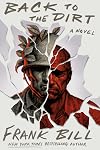
This is a very dark, and disturbing book, even for this author.
It is 2 stories melted together. Which is very well explained why it is this way in the afterward.
Story one is about:
Miles- a Steroid addicted late fifties ex Vietnam vet with serious anger management issues and suffers from PTSD and hallucinates from his time in Vietnam.
Shelby- a 30-year-old stripper who Dates Miles.
Wylie- Shelby’s twin brother who is a degenerate opioid addicted mess.
Whitey- Wylie and Shelby’s father, who show more is a reprehensible Vietnam vet, and alcoholic.
Nathaniel – an ex-cop whose brother and sister-in-law are killed in the beginning of the book.
The second story is about Mile’s time in Vietnam, and is told in remembrances, flashbacks and a ongoing discussion with a dead soldier friend. Miles time in Vietnam makes Apocalypse Now look like a Disney cartoon.
The book takes place in the span of a couple of days.
Be warned this book is filled with seriously dark themes, that are not hinted at, but instead are told in very graphic detail.
These authors books are always a hard look at people considered to be forgotten and unneeded in our country, you know middle class blue collar workers. But you can’t read this authors stuff and not learn something about these types of people. show less
It is 2 stories melted together. Which is very well explained why it is this way in the afterward.
Story one is about:
Miles- a Steroid addicted late fifties ex Vietnam vet with serious anger management issues and suffers from PTSD and hallucinates from his time in Vietnam.
Shelby- a 30-year-old stripper who Dates Miles.
Wylie- Shelby’s twin brother who is a degenerate opioid addicted mess.
Whitey- Wylie and Shelby’s father, who show more is a reprehensible Vietnam vet, and alcoholic.
Nathaniel – an ex-cop whose brother and sister-in-law are killed in the beginning of the book.
The second story is about Mile’s time in Vietnam, and is told in remembrances, flashbacks and a ongoing discussion with a dead soldier friend. Miles time in Vietnam makes Apocalypse Now look like a Disney cartoon.
The book takes place in the span of a couple of days.
Be warned this book is filled with seriously dark themes, that are not hinted at, but instead are told in very graphic detail.
These authors books are always a hard look at people considered to be forgotten and unneeded in our country, you know middle class blue collar workers. But you can’t read this authors stuff and not learn something about these types of people. show less
Lists
Awards


You May Also Like


Associated Authors
Statistics
- Works
- 12
- Also by
- 2
- Members
- 418
- Popularity
- #58,320
- Rating
- 3.6
- Reviews
- 24
- ISBNs
- 39
- Languages
- 5
- Favorited
- 2