
Tom Franklin
Author of Crooked Letter, Crooked Letter
About the Author
Tom Franklin is the New York Times bestselling author of Crooked Letter, Crooked Letter, which won the Los Angeles Times Book Prize and the Crime Writers' Association's Gold Dagger Award. His previous works include Poachers, Hell at the Breech, and Smonk. Franklin co-authored The Tilted World with show more wife Beth Ann Fennelly. He teaches in the University of Mississippi's MFA program. (Bowker Author Biography) show less
Works by Tom Franklin
Devilwood: A Novel 2 copies
Associated Works
Don't Quit Your Day Job: Acclaimed Authors and the Day Jobs They Quit (2010) — Contributor — 45 copies
The Best of the Best American Mystery Stories: The First Ten Years (2014) — Contributor — 39 copies, 1 review
From Sea to Stormy Sea: 17 Stories Inspired by Great American Paintings (2019) — Contributor — 31 copies, 3 reviews
By His Hands, We Shall Be Fed: A Collection of Recipes — Contributor — 1 copy
Tagged
Common Knowledge
- Canonical name
- Franklin, Tom
- Legal name
- Franklin, Thomas G.
- Birthdate
- 1963-07-07
- Gender
- male
- Education
- University of Arkansas (MFA)
University of South Alabama (BA|English) - Occupations
- novelist
- Organizations
- University of Mississippi
- Awards and honors
- Guggenheim Fellowship (2001)
- Agent
- Sobel Weber Associates, Inc.
- Relationships
- Fennelly, Beth Ann (wife)
- Nationality
- USA
- Birthplace
- Dickinson, Alabama, USA
- Places of residence
- Oxford, Mississippi, USA
- Associated Place (for map)
- USA
Members
Reviews

I closed this book and held it for awhile. I read all the blurbs and the information about Tom Franklin. I even read through the tiresome list of names in the acknowledgments section at the back. I was not ready to let this book go.
Set in southeastern Mississippi, in a dying mill town, Crooked Letter, Crooked Letter tells the story of 32 Jones, who is the constable of tiny Chabot, which means he runs a speed trap to fill the town's coffers and directs traffic during shift changes at the show more mill. Anything bigger than simple assault he passes on to his boss, the chief investigator in Fulsom, the town up the road, large enough to have a Wal-Mart. Larry Ott is an outcast. Suspected in the disappearance of a girl who lived nearby when he was a teenager, he's lived under the small town suspicion that he got away with something for decades. He was an outcast back in high school, too; a reader and a nerd. But, for a short time, when they were boys, they were friends of a sort, loneliness pulling them together despite the fact that 32 is black and Larry white, in a time and place where that matters a lot.
Now another girl's gone missing and the natural suspect is Larry Otts.
Dripping with atmosphere like a Spanish moss infested tree, Franklin makes rural Mississippi, both past and present, the central character of show less
Set in southeastern Mississippi, in a dying mill town, Crooked Letter, Crooked Letter tells the story of 32 Jones, who is the constable of tiny Chabot, which means he runs a speed trap to fill the town's coffers and directs traffic during shift changes at the show more mill. Anything bigger than simple assault he passes on to his boss, the chief investigator in Fulsom, the town up the road, large enough to have a Wal-Mart. Larry Ott is an outcast. Suspected in the disappearance of a girl who lived nearby when he was a teenager, he's lived under the small town suspicion that he got away with something for decades. He was an outcast back in high school, too; a reader and a nerd. But, for a short time, when they were boys, they were friends of a sort, loneliness pulling them together despite the fact that 32 is black and Larry white, in a time and place where that matters a lot.
Now another girl's gone missing and the natural suspect is Larry Otts.
Dripping with atmosphere like a Spanish moss infested tree, Franklin makes rural Mississippi, both past and present, the central character of show less
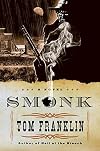
How to do justice to this weird and wonderful book in a review? It is profane, funny, and engrossing from start to finish. This is a book where life has a very low value, indeed. The author deftly weaves together the story of a teenage prostitute, a con-turned-Bailiff, a Northerner and his so-called Christian Deputies, the Bailiff's son, and of course, the title character, Mr. E.O. Smonk, a really bad guy who may nevertheless have his reasons.
The book reads more like a Western than anything show more else, despite being set in Alabama in 1911. (It is a sort of remote part of Alabama, to be sure.) But I don't think any landscape like the one Franklin presents has ever existed--this book's setting pretty much stands alone, and at the center of the mystery is the town of Old Texas (which is also a real place in Alabama). Franklin maneuvers his cast of characters through this landscape and a series of encounters with each other and various other oddballs and misfits. He almost overdoes it, especially in the book's great revelation--but somehow it all works. If you aren't easily offended by graphic descriptions of just about everything, this is a book you must read.
But don't read it if you have anything against glass eyes and their travels. show less
The book reads more like a Western than anything show more else, despite being set in Alabama in 1911. (It is a sort of remote part of Alabama, to be sure.) But I don't think any landscape like the one Franklin presents has ever existed--this book's setting pretty much stands alone, and at the center of the mystery is the town of Old Texas (which is also a real place in Alabama). Franklin maneuvers his cast of characters through this landscape and a series of encounters with each other and various other oddballs and misfits. He almost overdoes it, especially in the book's great revelation--but somehow it all works. If you aren't easily offended by graphic descriptions of just about everything, this is a book you must read.
But don't read it if you have anything against glass eyes and their travels. show less
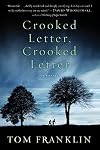
This story takes place in rural Mississippi, starting in the 1970's. Larry Ott is a white, shy boy, a constant disappointment to his father. He befriends Silas "32" Jones, a black boy that lives with his mother in a shack on Larry's father's land. But after Larry is accused of murdering a girl that disappeared and Silas goes off to college, their friendship ends.
Twenty-plus years later, Silas is the town constable and Larry lives a solitary existence, ostracized by the community though never show more convicted of the girl's murder. Another girl has disappeared, Larry is a suspect and Silas is no longer able to ignore his former friend.
This literary suspense novel was riveting! It moves fluidly between past and present, giving us bits of information but never enough to draw conclusions until the end. Both Larry and Silas are very complex characters. Despite what Larry is suspected of doing, he comes across as very sympathetic and sad. He was considered a 'weirdo' as a child and the cloud of suspicion that hangs over him does not help him as an adult. His childhood friendship with Silas was secret due to race issues and the now adult and popular Silas does not want to admit to having once been friendly with 'scary Larry' as he is now known. All the characters are well-written, well-developed and the writing sharp and descriptive of a small Southern town. Though part mystery, it is also about friendship and secrets and never leaving your past behind.
I really, really enjoyed this novel, whose title is taken from a rhyme that was used to teach children how to spell Mississippi. This is one of those books that is so good you want to put it down so you can make it last longer. Unfortunately, I was way to hooked to do that. Instead, I will just have to read more by this fantastic author.
I feel like I have been on a streak of great reads lately and this is no exception.
my rating- 5/5 show less
Twenty-plus years later, Silas is the town constable and Larry lives a solitary existence, ostracized by the community though never show more convicted of the girl's murder. Another girl has disappeared, Larry is a suspect and Silas is no longer able to ignore his former friend.
This literary suspense novel was riveting! It moves fluidly between past and present, giving us bits of information but never enough to draw conclusions until the end. Both Larry and Silas are very complex characters. Despite what Larry is suspected of doing, he comes across as very sympathetic and sad. He was considered a 'weirdo' as a child and the cloud of suspicion that hangs over him does not help him as an adult. His childhood friendship with Silas was secret due to race issues and the now adult and popular Silas does not want to admit to having once been friendly with 'scary Larry' as he is now known. All the characters are well-written, well-developed and the writing sharp and descriptive of a small Southern town. Though part mystery, it is also about friendship and secrets and never leaving your past behind.
I really, really enjoyed this novel, whose title is taken from a rhyme that was used to teach children how to spell Mississippi. This is one of those books that is so good you want to put it down so you can make it last longer. Unfortunately, I was way to hooked to do that. Instead, I will just have to read more by this fantastic author.
I feel like I have been on a streak of great reads lately and this is no exception.
my rating- 5/5 show less

The Tilted Word is written by husband and wife team, author Tom Franklin and poet Beth Ann Fennelly. Set during the catastrophic 1927 flooding of the Mississippi this is a beautifully written story that includes murder, bootlegging and unexpected love.
Revenuers Ted Ingersoll and Ham Johnson arrive in Hobnob Landing with a mission to locate the local bootlegger and the murderer of the missing two revenuers that were last known to be in Hobnob. On the way, they unexpectedly find an abandoned show more baby at a crime scene. While Ham travels on, Ingersoll takes the baby and tries to find a family for him. He ends up coming on to Hobnob and placing the baby with Dixie Clay Holliver, little knowing that she is married to the bootlegger that they are searching for. On her part, Dixie Clay is living a life of mourning and regret. Mourning the baby she lost and regret over her marriage to the slimy, corrupt Jesse. Dixie falls in love with her new baby and she and Ingersoll bond over their concern and caring of the infant. While the romance is slow and gentle, both the tension and the river continue to rise.
The Tilted World is a gripping story and one in which the reader cannot help but root for Dixie Clay and Ingersoll to not only find each other, but save the baby and themselves from the devastating flood. Considering that there were two authors, the story is smoothly knit together and 1927 rural Mississippi comes alive on these pages. show less
Revenuers Ted Ingersoll and Ham Johnson arrive in Hobnob Landing with a mission to locate the local bootlegger and the murderer of the missing two revenuers that were last known to be in Hobnob. On the way, they unexpectedly find an abandoned show more baby at a crime scene. While Ham travels on, Ingersoll takes the baby and tries to find a family for him. He ends up coming on to Hobnob and placing the baby with Dixie Clay Holliver, little knowing that she is married to the bootlegger that they are searching for. On her part, Dixie Clay is living a life of mourning and regret. Mourning the baby she lost and regret over her marriage to the slimy, corrupt Jesse. Dixie falls in love with her new baby and she and Ingersoll bond over their concern and caring of the infant. While the romance is slow and gentle, both the tension and the river continue to rise.
The Tilted World is a gripping story and one in which the reader cannot help but root for Dixie Clay and Ingersoll to not only find each other, but save the baby and themselves from the devastating flood. Considering that there were two authors, the story is smoothly knit together and 1927 rural Mississippi comes alive on these pages. show less
Lists
Awards


You May Also Like


Associated Authors
Statistics
- Works
- 15
- Also by
- 22
- Members
- 4,233
- Popularity
- #5,937
- Rating
- 3.9
- Reviews
- 359
- ISBNs
- 100
- Languages
- 5
- Favorited
- 15

